Rami K. Isaac – författare
779 kr
Läs direkt efter köp
Tourism and Hospitality in Conf lict-Ridden Destinations provides insight into the various types of current and post-conf lict destinations worldwide and the steps that might be taken to transform them into future tourist destinations.
Through both a conceptual and demonstrative approach, this book examines the steps destination management organizations as well as destination marketers need to take in order to improve their image in the eye of potential tourists. It also questions the extent to which tourism can alter the image of a destination and the possible destination marketing strategies that can be undertaken.
Analysis of a wide selection of international case studies in countries ranging from Palestine to Myanmar to Northern Ireland provides a thorough and far-reaching academic study. Written by an international and multidisciplinary team of leading academics, this book will be of great interest to students, researchers and academics in the tourism as well as development studies disciplines.
779 kr
Läs direkt efter köp
Tourism and Hospitality in Conf lict-Ridden Destinations provides insight into the various types of current and post-conf lict destinations worldwide and the steps that might be taken to transform them into future tourist destinations.
Through both a conceptual and demonstrative approach, this book examines the steps destination management organizations as well as destination marketers need to take in order to improve their image in the eye of potential tourists. It also questions the extent to which tourism can alter the image of a destination and the possible destination marketing strategies that can be undertaken.
Analysis of a wide selection of international case studies in countries ranging from Palestine to Myanmar to Northern Ireland provides a thorough and far-reaching academic study. Written by an international and multidisciplinary team of leading academics, this book will be of great interest to students, researchers and academics in the tourism as well as development studies disciplines.
779 kr
Läs direkt efter köp
This book provides original, innovative, and international tourism research that is embedded in interdisciplinary and transdisciplinary theoretical and methodological thought in the study of dark tourism.
It is almost 25 years since the idea of dark tourism was introduced and presented into the field of tourism studies. The impact of this idea was greater, which attracted a great deal of attention from different researchers and practitioners with a good range of disciplines and farther tourism studies. This edited volume aims to capture a glimpse of the types of cutting-edge thinking and academic research in the domain of dark tourism studies as well as encourage and advance theoretical, conceptual, and empirical research on dark tourism. The book also addresses several future research directions focusing on the experience and emotions of visitors at ‘dark tourism’ sites.
This book will be valuable reading for students, researchers and academics interested in dark tourism. Other interested stakeholders including those in the tourism industry, government bodies and community groups will also find this volume relevant.
The chapters in this book were originally published as a special issue of the Journal of Heritage Tourism.
759 kr
Läs direkt efter köp
This book provides original, innovative, and international tourism research that is embedded in interdisciplinary and transdisciplinary theoretical and methodological thought in the study of dark tourism.
It is almost 25 years since the idea of dark tourism was introduced and presented into the field of tourism studies. The impact of this idea was greater, which attracted a great deal of attention from different researchers and practitioners with a good range of disciplines and farther tourism studies. This edited volume aims to capture a glimpse of the types of cutting-edge thinking and academic research in the domain of dark tourism studies as well as encourage and advance theoretical, conceptual, and empirical research on dark tourism. The book also addresses several future research directions focusing on the experience and emotions of visitors at ‘dark tourism’ sites.
This book will be valuable reading for students, researchers and academics interested in dark tourism. Other interested stakeholders including those in the tourism industry, government bodies and community groups will also find this volume relevant.
The chapters in this book were originally published as a special issue of the Journal of Heritage Tourism.
2 250 kr
Skickas inom 10-15 vardagar
658 kr
Skickas inom 10-15 vardagar
658 kr
Skickas inom 10-15 vardagar
2 495 kr
Skickas inom 10-15 vardagar
681 kr
Skickas inom 10-15 vardagar
2 423 kr
Skickas inom 10-15 vardagar
858 kr
Skickas inom 5-8 vardagar
2 423 kr
Skickas inom 10-15 vardagar
745 kr
Läs direkt efter köp
This book brings together in one volume, the various types of interventions that can steer tourism towards positive impacts (and/or prevent negative impacts) on the destinations where tourism is taking place.
Interventions in tourism studies have been viewed primarily as ‘public interventions’ and mainly in the sphere of public policies, planning, and development. This book, however, adopts a larger viewpoint by considering the concept of intervention in areas other than the public sector. The purpose, therefore, is to look into different meanings and uses of the notion of intervention which might involve the initiatives of a variety of actors or agents across locales, borders or scales, as well as how the impacts of tourism on a place have been dealt with. To this end, the book examines tourism interventions and their role in making or breaking places, as initiated and implemented by a variety of stakeholders (public/private sector, NGOs and local communities), by exploring the realities of tourism interventions and how they are utilized to alleviate the negative impacts of tourism; innovative and successful interventions that have contributed to tourism’s making of places; and the way in which certain interventions have not been particularly successful or ‘failing forward’. This significant volume moves beyond considerations of ‘just’ policy or ‘just’ marketing, and brings together different forms of action or inaction in one category, which is a useful response to the variety of actors and initiatives in the tourism space.
This book provides students, researchers, and academics with new insight and understanding of how best to sustainably develop, promote, and manage tourism, and how to help destinations become more resilient in the face of future crises.
745 kr
Läs direkt efter köp
This book brings together in one volume, the various types of interventions that can steer tourism towards positive impacts (and/or prevent negative impacts) on the destinations where tourism is taking place.
Interventions in tourism studies have been viewed primarily as ‘public interventions’ and mainly in the sphere of public policies, planning, and development. This book, however, adopts a larger viewpoint by considering the concept of intervention in areas other than the public sector. The purpose, therefore, is to look into different meanings and uses of the notion of intervention which might involve the initiatives of a variety of actors or agents across locales, borders or scales, as well as how the impacts of tourism on a place have been dealt with. To this end, the book examines tourism interventions and their role in making or breaking places, as initiated and implemented by a variety of stakeholders (public/private sector, NGOs and local communities), by exploring the realities of tourism interventions and how they are utilized to alleviate the negative impacts of tourism; innovative and successful interventions that have contributed to tourism’s making of places; and the way in which certain interventions have not been particularly successful or ‘failing forward’. This significant volume moves beyond considerations of ‘just’ policy or ‘just’ marketing, and brings together different forms of action or inaction in one category, which is a useful response to the variety of actors and initiatives in the tourism space.
This book provides students, researchers, and academics with new insight and understanding of how best to sustainably develop, promote, and manage tourism, and how to help destinations become more resilient in the face of future crises.
797 kr
Läs direkt efter köp
This significant volume critically explores the implications of tourism safety and security and how communities in tourism destinations try to be resilient in the face of these impacts.
Written by leading scholars, this book offers new insight into the conceptual and practical knowledge of community resilience due to tourism security and safety issues. Chapters examine these topics through an integrated community perspective to provide comprehensive consideration of the interconnected facets of a community, encompassing social, economic, environmental and cultural dimensions when evaluating and addressing matters pertaining to tourism management, safety, security and resilience. This book is structured around different conceptual, theoretical and practical strategies employed by destinations to foster and sustain community resilience, particularly during periods of crises, as well as communities in the context of tourism recovery. It examines this across geographical borders and in many different contexts (not just locations) of tourism or types of tourism, such as religious tourism, and different types of crises, including natural disasters, pandemics and terrorism.
This book is an essential reading for all tourism students, researchers and academics as well as for those interested in conflict and crises recovery.
797 kr
Läs direkt efter köp
This significant volume critically explores the implications of tourism safety and security and how communities in tourism destinations try to be resilient in the face of these impacts.
Written by leading scholars, this book offers new insight into the conceptual and practical knowledge of community resilience due to tourism security and safety issues. Chapters examine these topics through an integrated community perspective to provide comprehensive consideration of the interconnected facets of a community, encompassing social, economic, environmental and cultural dimensions when evaluating and addressing matters pertaining to tourism management, safety, security and resilience. This book is structured around different conceptual, theoretical and practical strategies employed by destinations to foster and sustain community resilience, particularly during periods of crises, as well as communities in the context of tourism recovery. It examines this across geographical borders and in many different contexts (not just locations) of tourism or types of tourism, such as religious tourism, and different types of crises, including natural disasters, pandemics and terrorism.
This book is an essential reading for all tourism students, researchers and academics as well as for those interested in conflict and crises recovery.
797 kr
Läs direkt efter köp
797 kr
Läs direkt efter köp
695 kr
Skickas inom 10-15 vardagar
2 250 kr
Skickas inom 10-15 vardagar
2 255 kr
Skickas inom 10-15 vardagar
824 kr
Läs direkt efter köp
Tourism in Palestine has been receiving an increasingly important profile given its economic and religious importance and the significant role it plays in Israeli-Palestinian relations, representation of Palestinian statehood and identity, and wider Middle Eastern politics. Nevertheless, Palestine, like much of the Middle East as a whole, remains extremely underrepresented in tourism literature. This title aims to fill this void by being the first book dedicated to exploring the significance of tourism in relationship to Palestine.
The book examines the role of tourism in Palestine at three main levels. First, it provides an overview of destination management and marketing issues for the tourism industry in Palestine and addresses not only the visitor markets and the economic significance of tourism but also the realities of the difficulties of destination management, marketing and promotion of the Palestinian state. Second, it provides a series chapters and case studies that interrogate not only the various forms of tourism in Palestine but also its economic, social, environmental and spiritual importance. This section also conveys a dimension to tourism in Palestine that is not usually appreciated in the Western mainstream media. The third section indicates the way in which tourism in Palestine highlights broader questions and debates in tourism studies and the way in which travel in the region is framed in wider discourses. A significant dimension of the book is the attention it gives to the different voices of stakeholders in Palestinian tourism at varying levels of scale.
This timely volume will offer the reader significant insight into the challenges and issues of tourism in this area now and in the future. It will benefit those interested in tourism, Middle East studies, politics, economics, development studies and geography.
795 kr
Läs direkt efter köp
Tourism in Palestine has been receiving an increasingly important profile given its economic and religious importance and the significant role it plays in Israeli-Palestinian relations, representation of Palestinian statehood and identity, and wider Middle Eastern politics. Nevertheless, Palestine, like much of the Middle East as a whole, remains extremely underrepresented in tourism literature. This title aims to fill this void by being the first book dedicated to exploring the significance of tourism in relationship to Palestine.
The book examines the role of tourism in Palestine at three main levels. First, it provides an overview of destination management and marketing issues for the tourism industry in Palestine and addresses not only the visitor markets and the economic significance of tourism but also the realities of the difficulties of destination management, marketing and promotion of the Palestinian state. Second, it provides a series chapters and case studies that interrogate not only the various forms of tourism in Palestine but also its economic, social, environmental and spiritual importance. This section also conveys a dimension to tourism in Palestine that is not usually appreciated in the Western mainstream media. The third section indicates the way in which tourism in Palestine highlights broader questions and debates in tourism studies and the way in which travel in the region is framed in wider discourses. A significant dimension of the book is the attention it gives to the different voices of stakeholders in Palestinian tourism at varying levels of scale.
This timely volume will offer the reader significant insight into the challenges and issues of tourism in this area now and in the future. It will benefit those interested in tourism, Middle East studies, politics, economics, development studies and geography.
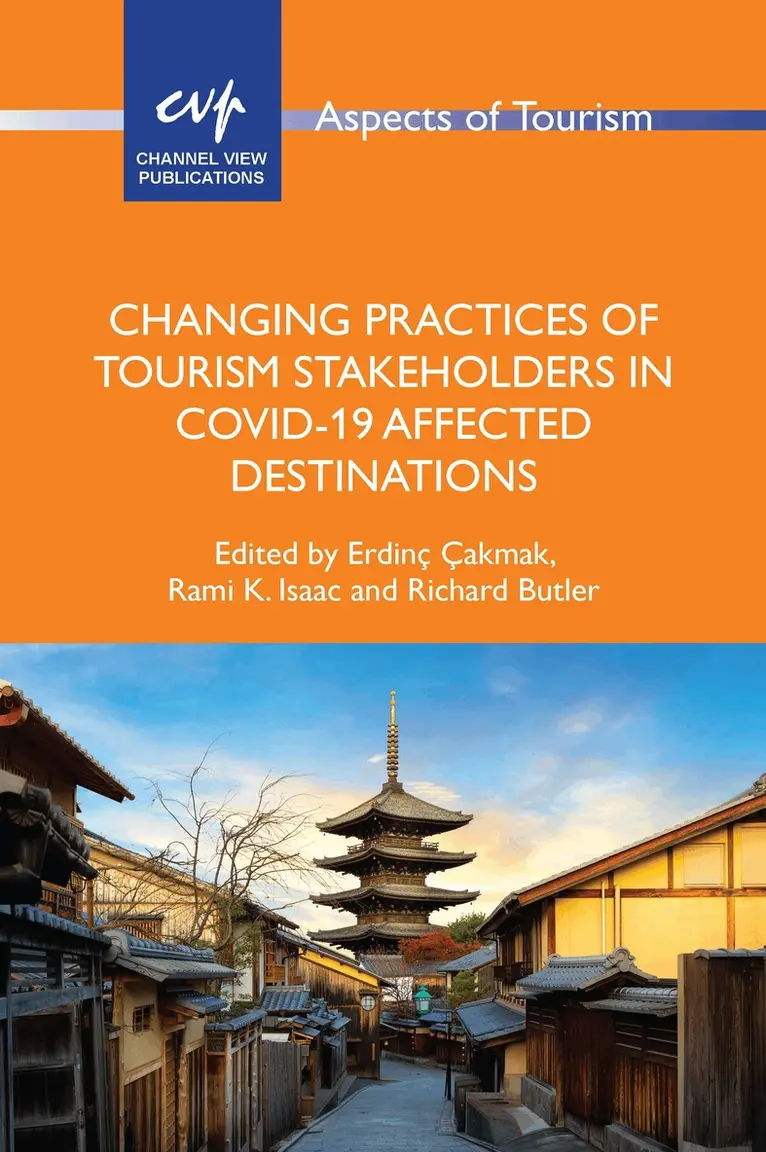
Changing Practices of Tourism Stakeholders in Covid-19 Affected Destinations
559 kr
Skickas
Changing Practices of Tourism Stakeholders in Covid-19 Affected Destinations
1 952 kr
Skickas inom 5-8 vardagar