Ramona Ilea – författare
2 649 kr
Skickas inom 10-15 vardagar
874 kr
Läs direkt efter köp
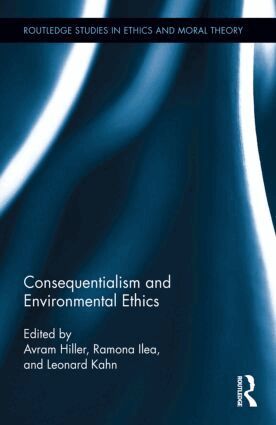
This volume works to connect issues in environmental ethics with the best work in contemporary normative theory. Environmental issues challenge contemporary ethical theorists to account for topics that traditional ethical theories do not address to any significant extent. This book articulates and evaluates consequentialist responses to that challenge. Contributors provide a thorough and well-rounded analysis of the benefits and limitations of the consequentialist perspective in addressing environmental issues. In particular, the contributors use consequentialist theory to address central questions in environmental ethics, such as questions about what kinds of things have value; about decision-making in light of the long-term, intergenerational nature of environmental issues; and about the role that a state’s being natural should play in ethical deliberation.
874 kr
Läs direkt efter köp
This volume works to connect issues in environmental ethics with the best work in contemporary normative theory. Environmental issues challenge contemporary ethical theorists to account for topics that traditional ethical theories do not address to any significant extent. This book articulates and evaluates consequentialist responses to that challenge. Contributors provide a thorough and well-rounded analysis of the benefits and limitations of the consequentialist perspective in addressing environmental issues. In particular, the contributors use consequentialist theory to address central questions in environmental ethics, such as questions about what kinds of things have value; about decision-making in light of the long-term, intergenerational nature of environmental issues; and about the role that a state’s being natural should play in ethical deliberation.
778 kr
Skickas inom 10-15 vardagar
736 kr
Skickas inom 10-15 vardagar
2 643 kr
Skickas inom 10-15 vardagar
925 kr
Läs direkt efter köp
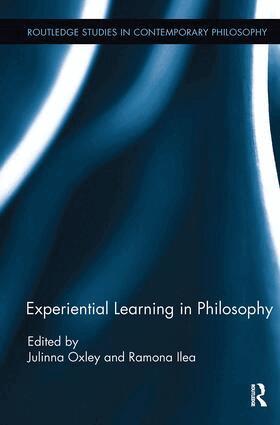
In this volume, Julinna Oxley and Ramona Ilea bring together essays that examine and defend the use of experiential learning activities to teach philosophical terms, concepts, arguments, and practices. Experiential learning emphasizes the importance of student engagement outside the traditional classroom structure. Service learning, studying abroad, engaging in large-scale collaborative projects such as creating blogs, websites and videos, and practically applying knowledge in a reflective, creative and rigorous way are all forms of experiential learning. Taken together, the contributions to Experiential Learning in Philosophy argue that teaching philosophy is about doing philosophy with others. The book is divided into two sections: essays that engage in the philosophical debate about defining and implementing experiential learning, and essays that describe how to integrate experiential learning into the teaching of philosophy. Experiential Learning in Philosophy provides a timely reflection on best practices for teaching philosophical ideals and theories, an examination of the evolution of the discipline of philosophy and its adoption (or reclamation) of active modes of learning, and an anticipation of the ways in which pedagogical practices will continue to evolve in the 21st century.
925 kr
Läs direkt efter köp
In this volume, Julinna Oxley and Ramona Ilea bring together essays that examine and defend the use of experiential learning activities to teach philosophical terms, concepts, arguments, and practices. Experiential learning emphasizes the importance of student engagement outside the traditional classroom structure. Service learning, studying abroad, engaging in large-scale collaborative projects such as creating blogs, websites and videos, and practically applying knowledge in a reflective, creative and rigorous way are all forms of experiential learning. Taken together, the contributions to Experiential Learning in Philosophy argue that teaching philosophy is about doing philosophy with others. The book is divided into two sections: essays that engage in the philosophical debate about defining and implementing experiential learning, and essays that describe how to integrate experiential learning into the teaching of philosophy. Experiential Learning in Philosophy provides a timely reflection on best practices for teaching philosophical ideals and theories, an examination of the evolution of the discipline of philosophy and its adoption (or reclamation) of active modes of learning, and an anticipation of the ways in which pedagogical practices will continue to evolve in the 21st century.