Ramses Wessel – författare
Visar alla böcker från författaren Ramses Wessel. Handla med fri frakt och snabb leverans.
3 produkter
3 produkter
E-bok
PDF, Engelska, 20121 865 kr
Läs direkt efter köp
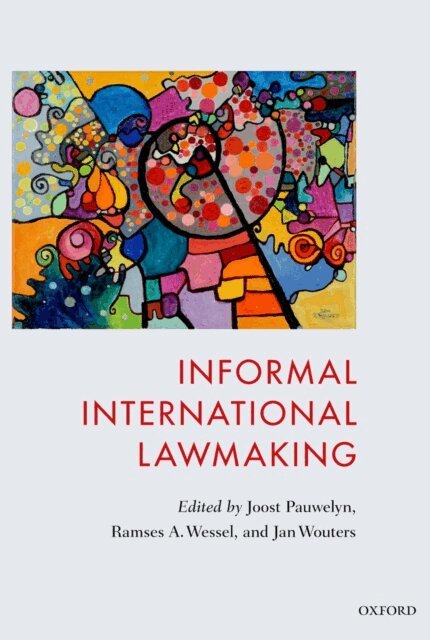
Many international norms that have emerged in recent years are not set out in formal treaties. They are not concluded in formal international organizations. They frequently involve actors other than formal state representatives. In the realm of finance, health, security, or the environment, international lawmaking is increasingly 'informal': It takes place in networks or loosely organized fora; it involves a multitude of stakeholders including regulators, experts, professional organizations and other non-state actors; it leads to guidelines, standards or best practices. This book critically assesses the concept of informal international lawmaking, its legal nature, and impact at the national and international level. It examines whether it is on the rise, as is often claimed, and if so, what the implications of this are. It addresses what actors are involved in its creation, the processes utilized, and the informal output produced. The book frames informal international lawmaking around three axes: output informality (novel types of norms), process informality (norm-making in networks outside international organizations), and actor informality (the involvement of public agencies and regulators, private actors, and international organizations). Fundamentally, the book is concerned with whether this informality causes problems in terms of keeping transnational lawmaking accountable. By empirically analysing domestic processes of norm elaboration and implementation, the book addresses the key question of how to benefit from the effectiveness of informal international lawmaking without jeopardizing the accountability necessary in the process of making law.
E-bok
Engelska, 20121 347 kr
Läs direkt efter köp
Many international norms that have emerged in recent years are not set out in formal treaties. They are not concluded in formal international organizations. They frequently involve actors other than formal state representatives. In the realm of finance, health, security, or the environment, international lawmaking is increasingly ''informal'': It takes place in networks or loosely organized fora; it involves a multitude of stakeholders including regulators, experts,professional organizations and other non-state actors; it leads to guidelines, standards or best practices. This book critically assesses the concept of informal international lawmaking, its legal nature, and impact at the national and international level. It examines whether it is on the rise, asis often claimed, and if so, what the implications of this are. It addresses what actors are involved in its creation, the processes utilized, and the informal output produced.The book frames informal international lawmaking around three axes: output informality (novel types of norms), process informality (norm-making in networks outside international organizations), and actor informality (the involvement of public agencies and regulators, private actors, and international organizations). Fundamentally, the book is concerned with whether this informality causes problems in terms of keeping transnational lawmaking accountable. By empirically analysing domesticprocesses of norm elaboration and implementation, the book addresses the key question of how to benefit from the effectiveness of informal international lawmaking without jeopardizing the accountability necessary in the process of making law.
Inbunden, Engelska, 2012
2 604 kr
Skickas inom 5-8 vardagar
Many international norms that have emerged in recent years are not set out in formal treaties. They are not concluded in formal international organizations. They frequently involve actors other than formal state representatives. In the realm of finance, health, security, or the environment, international lawmaking is increasingly 'informal': It takes place in networks or loosely organized fora; it involves a multitude of stakeholders including regulators, experts, professional organizations and other non-state actors; it leads to guidelines, standards or best practices. This book critically assesses the concept of informal international lawmaking, its legal nature, and impact at the national and international level. It examines whether it is on the rise, as is often claimed, and if so, what the implications of this are. It addresses what actors are involved in its creation, the processes utilized, and the informal output produced.The book frames informal international lawmaking around three axes: output informality (novel types of norms), process informality (norm-making in networks outside international organizations), and actor informality (the involvement of public agencies and regulators, private actors, and international organizations). Fundamentally, the book is concerned with whether this informality causes problems in terms of keeping transnational lawmaking accountable. By empirically analysing domestic processes of norm elaboration and implementation, the book addresses the key question of how to benefit from the effectiveness of informal international lawmaking without jeopardizing the accountability necessary in the process of making law.