Randal Johnson - Böcker
Visar alla böcker från författaren Randal Johnson. Handla med fri frakt och snabb leverans.
8 produkter
8 produkter
1 890 kr
Skickas inom 3-6 vardagar
336 kr
Skickas inom 3-6 vardagar
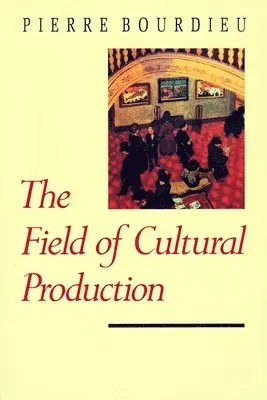
During the last two decades, sociologist Pierre Bourdieu has become a dominant force in cultural activity ranging from taste in music and art to choices in food and lifestyles. The Field of Cultural Production brings together Bourdieu's major essays on art and literature and provides the first introduction to Bourdieu's writings and theory of a cultural field that situates artistic works within the social conditions of their production, circulation, and consumption. Bourdieu develops a highly original approach to the study of literary and artistic works, addressing many of the key issues that have preoccupied literary art and cultural criticism in the last twentieth century: aesthetic value and canonicity, intertextuality, the institutional frameworks of cultural practice, the social role of intellectuals and artists, and structures of literary and artistic authority. Bourdieu elaborates a theory of the cultural field which situates artistic works within the social conditions of their production, circulation, and consumption.He examines the individuals and institutions involved in making cultural products what they are: not only the writers and artists, but also the publishers, critics, dealers, galleries, and academies. He analyzes the structure of the cultural field itself as well as its position within the broader social structures of power. The essays in his volume examine such diverse topics as Flaubert's point of view, Manet's aesthetic revolution, the historical creation of the pure gaze, and the relationship between art and power. The Field of Cultural Porduction will be of interest to students and scholars from a wide range of disciplines: sociology and social theory, literature, art, and cultural studies.
383 kr
Skickas inom 7-10 vardagar
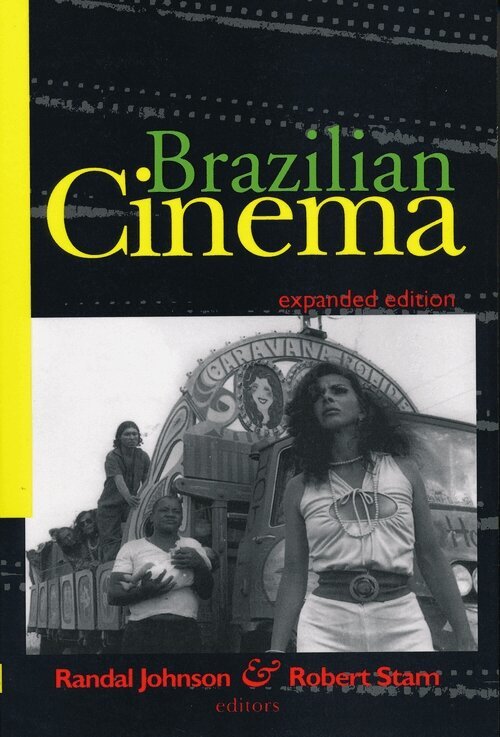
From the documentary to the cinema novo and cannibalism, from Nelson Pereira dos Santos's Vidas Secas to music in the films of Glauber Rocha, this third, revised edition is a century-spanning introduction to the story of a medium that flourished in one of the most developed of 'underdeveloped' nations.
245 kr
Skickas inom 7-10 vardagar
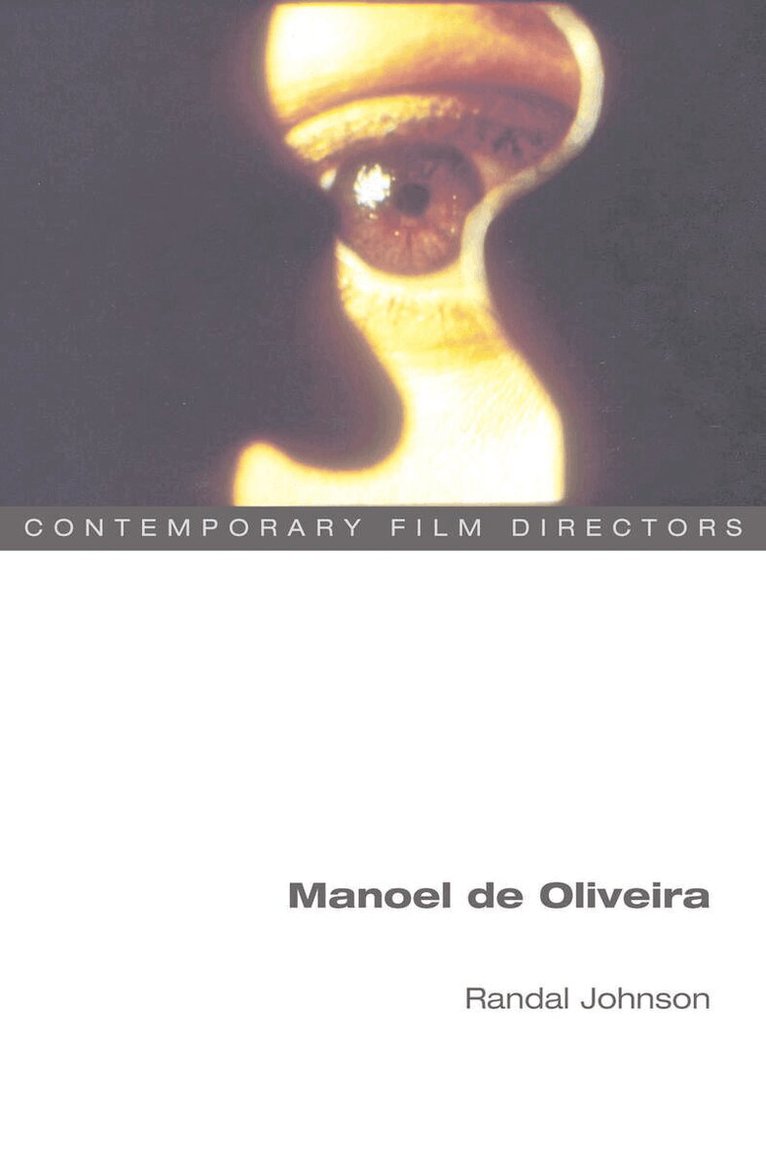
Understanding the iconoclastic work of a lifelong cinematic pioneerManoel de Oliveira's eighty-five year career made him a filmmaking icon and a cultural giant in his native Portugal. A lifelong cinematic pioneer, Oliveira merged distinctive formal techniques with philosophical treatments of universal themes--frustrated love, aging, nationhood, evil, and divine grace--in films that always moved against mainstream currents.Randal Johnson navigates Oliveira's massive feature film oeuvre. Locating the director's work within the broader context of Portuguese and European cinema, Johnson discusses historical and political influences on Oliveira's work, particularly Portugal's transformation from dictatorship to social democracy. He ranges from Oliveira's early concerns with cinematic specificity to hybrid discourses that suggest a tenuous line between film and theater on the one hand, and between fiction and documentary on the other.A rare English-language portrait of the director, Manoel de Oliveira invites students and scholars alike to explore the work of one of the cinema's greatest and most prolific artists.
276 kr
Skickas inom 10-15 vardagar
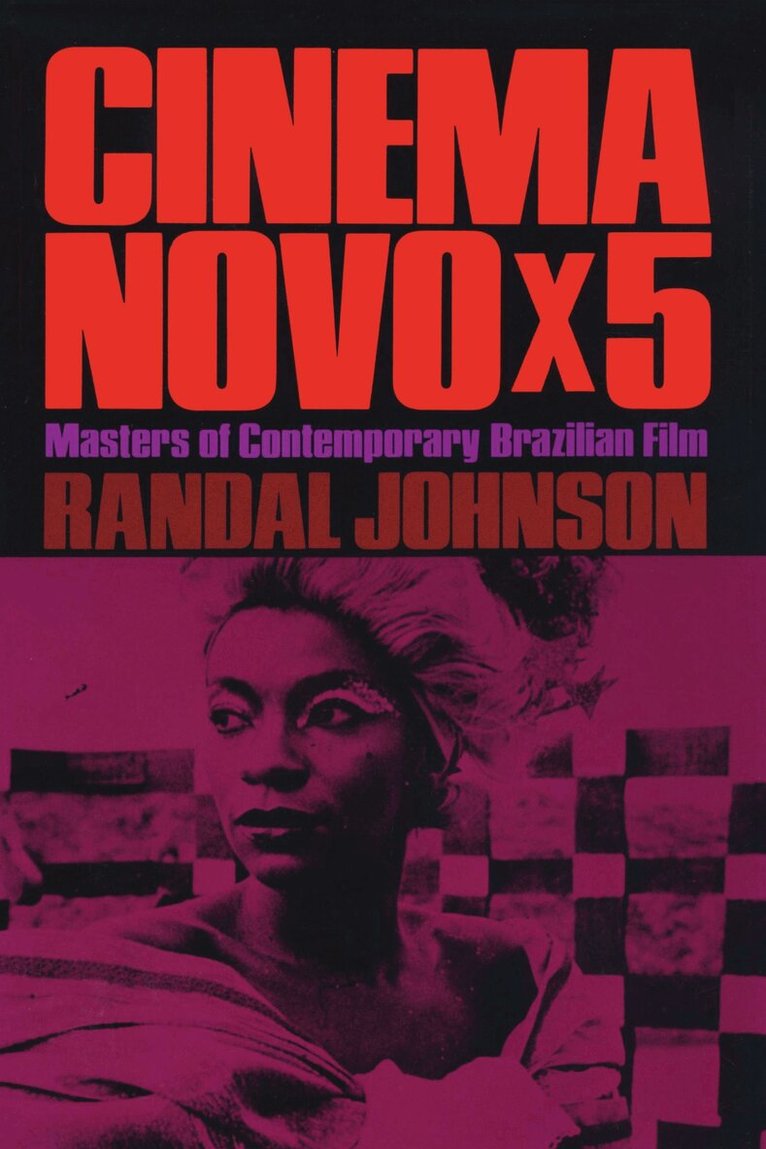
With such stunning films as Dona Flor and Her Two Husbands, Bye Bye Brazil, and Pixote, Brazilian cinema achieved both critical acclaim and popular recognition in the 1970s and 1980s, becoming the premier cinema of Latin America and one of the largest film producers in the western world. But the success of Brazilian film at home and abroad came after many years of struggle by filmmakers determined to create a strong film industry in Brazil. At the forefront of this struggle were the filmmakers of Cinema Novo, the internationally acclaimed movement whose flowering in the 1960s marked the birth of modern Brazilian film. Cinema Novo x 5 places the success of Brazilian cinema in perspective by examining the films of the five leaders of this groundbreaking movement-Andrade, Diegues, Guerra, Rocha, and dos Santos. By exploring the individuality of these masters of contemporary Brazilian film, Randal Johnson reveals the astonishing stylistic and thematic diversity of Cinema Novo. His emphasis is on the films themselves, as well as their makers’ distinctive cinematic vision and views of what cinema should be and is. At the same time, he provides a wealth of valuable background information to enhance readers’ understanding of the historical, cultural, and economic context in which Cinema Novo was born and flourished.
663 kr
Skickas inom 7-10 vardagar
Looking back through the prism of the severe economic crisis for filmmaking in the 1980s, The Film Industry in Brazil explores the unusual relationship between the state-supported industry, which often produced politically radical films, and the authoritarian regime that had held sway for twenty years. To ground his analysis, Johnson covers the early years of the film industry, 1898-1930; attempts at industrialization during the 1930s and 1940s; film industry congresses and government film boards, 1950-1966; the National Film Institute, 1966-1975; and the expansion of the state's role from 1969 through 1980.Well-conceived, carefully researched and documented, Johnson's study fills a major gap in film studies by tracing the development of this industry in Brazil, focusing specifically on its relationship to the state.
823 kr
Skickas inom 7-10 vardagar
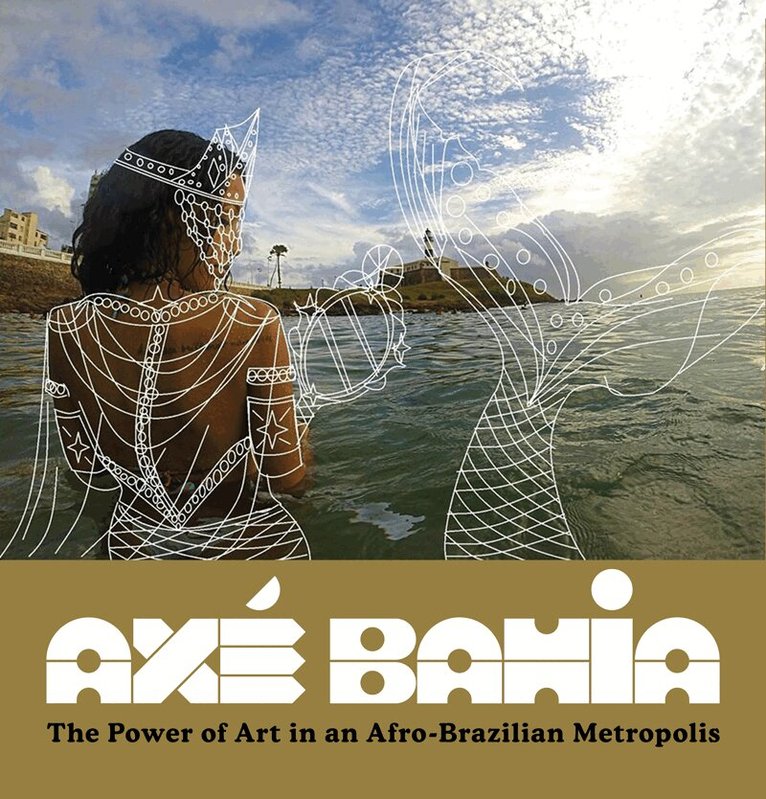
Axé Bahia examines the unique cultural role played by Salvador, the coastal capital of the Brazilian state of Bahia. An internationally renowned center of Afro-Brazilian culture, Salvador has been a vibrant and important hub of African-inspired artistic practices in Latin America since the 1940s. This volume represents the most comprehensive investigation in the United States of Bahian arts to date and features essays by eighteen international scholars. While adding to popular understandings of core expressions of African heritage, such as the religion Candomblé, the essays explore in depth the complexities of race and cultural affiliation in Brazil and the provocative ways in which artists have experienced and responded creatively to prevailing realities of Afro-Brazilian identity in Bahia. Lavishly illustrated, the book features works by artists ranging from modernists, among them Mário Cravo Neto, Rubem Valentim, and Pierre Verger, to contemporary artists Rommulo Vieira Conceicao, Caetano Dias, Helen Salomao, Ayrson Heráclito, and others—including a stunning array of sculpture, painting, photography, video, and installation art. The exhibition was part of the Getty's Pacific Standard Time: LA/LA initiative.
2 297 kr
Skickas inom 11-20 vardagar
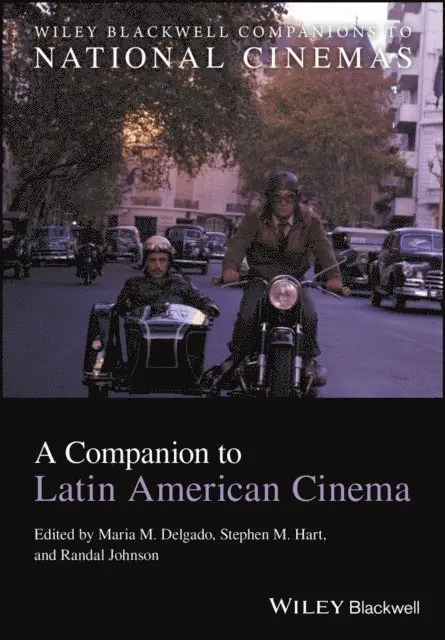
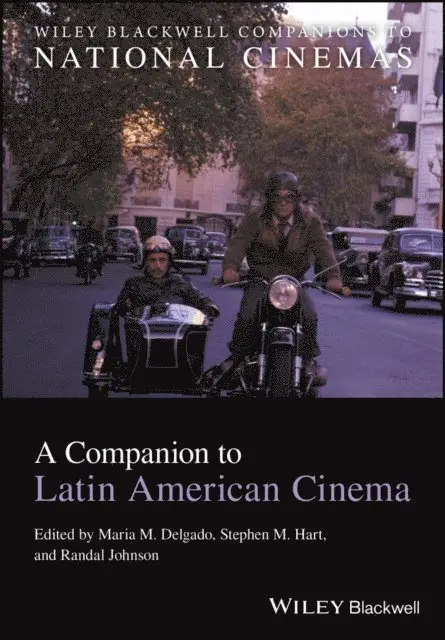
A Companion to Latin American Cinema offers a wide-ranging collection of newly commissioned essays and interviews that explore the ways in which Latin American cinema has established itself on the international film scene in the twenty-first century. Features contributions from international critics, historians, and scholars, along with interviews with acclaimed Latin American film directorsIncludes essays on the Latin American film industry, as well as the interactions between TV and documentary production with feature film cultureCovers several up-and-coming regions of film activity such as nations in Central AmericaOffers novel insights into Latin American cinema based on new methodologies, such as the quantitative approach, and essays contributed by practitioners as well as theorists