Randall Lockwood – författare
Visar alla böcker från författaren Randall Lockwood. Handla med fri frakt och snabb leverans.
4 produkter
4 produkter
Häftad, Engelska, 1997
449 kr
Skickas inom 10-15 vardagar
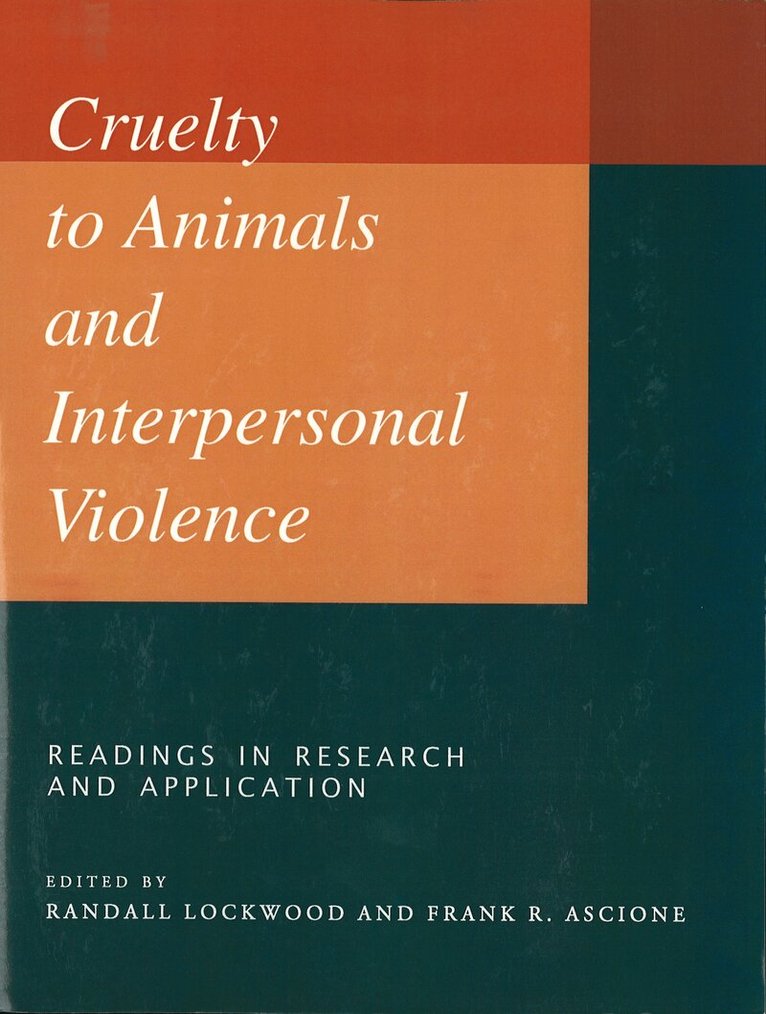
The landscapes of violence have become too familiar, too close to home. Despite decades of scientific research, we are only beginning to understand the roots of violence that connect child maltreatment, spouse and partner abuse, and aggression in our neighborhoods and communities. Cruelty to animals is often part of these landscapes of violence – at times, a strong link to destructive interpersonal relationships. Research on this link has recently received increased attention. However, the layperson, student, and professional interested in this link often face the daunting task of locating the critical references in this area of inquiry. Cruelty to Animals and Interpersonal Violence presents in one volume historical, philosophical, and research sources that explore the maltreatment of animals and the ways people hurt each other. Diverse disciplines are represented among the readings, including psychology and psychiatry, criminology, social work, veterinary science, and anthropology. A bibliography of related books and articles is provided for readers who wish to pursue this topic in greater detail.
Häftad, Engelska, 2014
324 kr
Skickas inom 10-15 vardagar
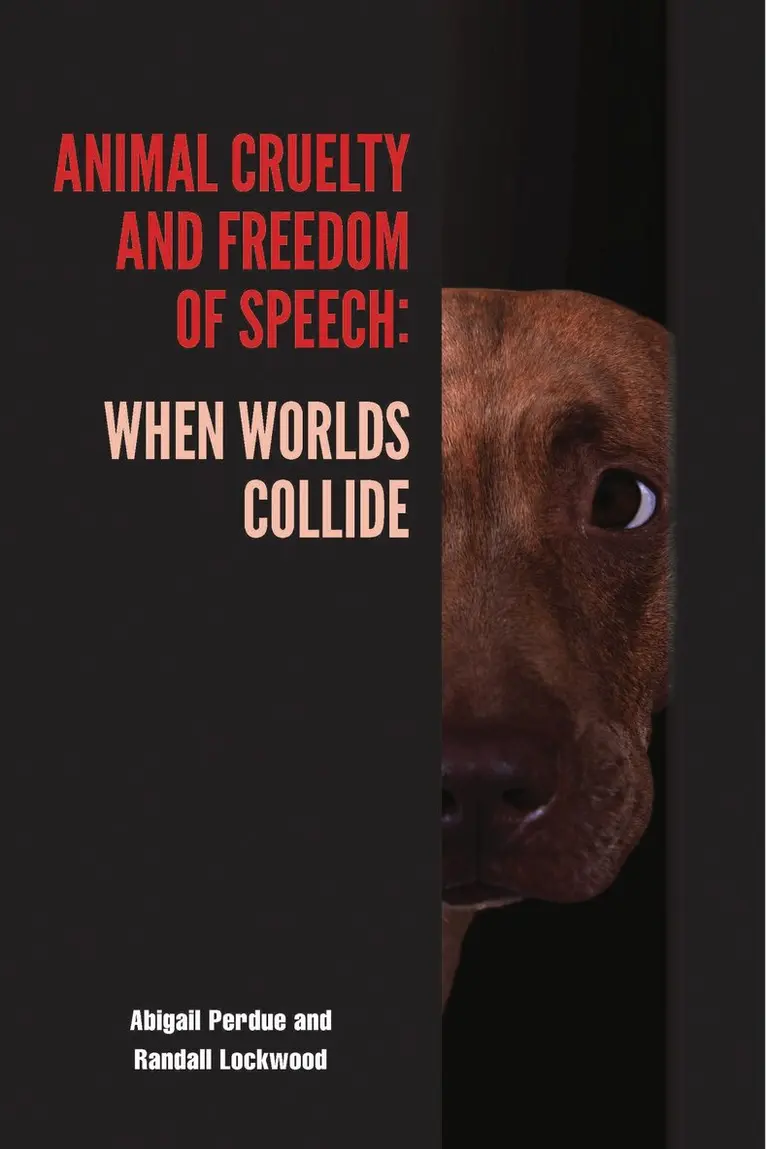
A collaboration between an attorney and an animal protection advocate, this work utilises the extremely controversial and high-profile “crush video” case, US v. Stevens, to explore how American society attempts to balance the protection of free speech and the prevention of animal cruelty. Starting from the detailed case study of a single prominent ruling, the authors provide a masterful survey of important issues facing society in the area of animal welfare. The Stevens case included various “hot topic” elements connected to the role of government as arbiter of public morality, including judicial attitudes to sexual deviance and dogfighting.
E-bok
PDF, Engelska, 2014211 kr
Läs direkt efter köp
A collaboration between an attorney and an animal protection advocate, this work utilizes the extremely controversial and high-profile "crush video" case, US v. Stevens, to explore how American society attempts to balance the protection of free speech and the prevention of animal cruelty. Starting from the detailed case study of a single prominent ruling, the authors provide a masterful survey of important issues facing society in the area of animal welfare. The Stevens case included various "hot topic" elements connected to the role of government as arbiter of public morality, including judicial attitudes to sexual deviance and dogfighting. Because it is one of only two animal rights cases that the US Supreme Court has handled, and the only case discussing the competing interests of free speech and animal cruelty, it will be an important topic for discussion in constitutional and animal law courses for decades to come. The Stevens case arose from the first conviction under 18 USC § 48 (Section 48), a federal law enacted in 1999, which criminalized the creation, sale, and/or possession of certain depictions of animal cruelty. The US Congress intended Section 48 to end the creation and interstate trafficking of depictions of animal cruelty in which animals are abused or even killed for entertainment''s sake. Proponents of Section 48 predicted that countless benefits to both humans and animals would flow from its enforcement. Opponents of the law argued that it was too far-reaching and would stifle protected speech. Critics of Section 48 appeared to have prevailed when the US Supreme Court struck the law down as unconstitutionally overbroad. Although a law tailored to address the Supreme Court''s concerns was quickly enacted, the free speech/animal cruelty controversy is far from over.
E-bok
Engelska, 2014211 kr
Läs direkt efter köp
A collaboration between an attorney and an animal protection advocate, this work utilizes the extremely controversial and high-profile "crush video" case, US v. Stevens, to explore how American society attempts to balance the protection of free speech and the prevention of animal cruelty. Starting from the detailed case study of a single prominent ruling, the authors provide a masterful survey of important issues facing society in the area of animal welfare. The Stevens case included various "hot topic" elements connected to the role of government as arbiter of public morality, including judicial attitudes to sexual deviance and dogfighting. Because it is one of only two animal rights cases that the US Supreme Court has handled, and the only case discussing the competing interests of free speech and animal cruelty, it will be an important topic for discussion in constitutional and animal law courses for decades to come. The Stevens case arose from the first conviction under 18 USC § 48 (Section 48), a federal law enacted in 1999, which criminalized the creation, sale, and/or possession of certain depictions of animal cruelty. The US Congress intended Section 48 to end the creation and interstate trafficking of depictions of animal cruelty in which animals are abused or even killed for entertainment''s sake. Proponents of Section 48 predicted that countless benefits to both humans and animals would flow from its enforcement. Opponents of the law argued that it was too far-reaching and would stifle protected speech. Critics of Section 48 appeared to have prevailed when the US Supreme Court struck the law down as unconstitutionally overbroad. Although a law tailored to address the Supreme Court''s concerns was quickly enacted, the free speech/animal cruelty controversy is far from over.