Randall Styers – författare
Visar alla böcker från författaren Randall Styers. Handla med fri frakt och snabb leverans.
6 produkter
6 produkter
E-bok
Engelska, 2004534 kr
Läs direkt efter köp
Since the emergence of religious studies and the social sciences as academic disciplines, the concept of "magic" has played a major role in defining religion and in mediating the relation of religion to science. Across these disciplines, magic has regularly been configured as a definitively non-modern phenomenon, juxtaposed to distinctly modern models of religion and science. Yet this notion of magic has remained stubbornly amorphous. In Making Magic, Randall Styers seeks to account for the extraordinary vitality of scholarly discourse purporting to define and explain magic despite its failure to do just that. He argues that this persistence can best be explained in light of the Western drive to establish and secure distinctive norms for modern identity, norms based on narrow forms of instrumental rationality, industrious labor, rigidly defined sexual roles, and the containment of wayward forms of desire. Magic has served to designate a form of alterity or deviance against which dominant Western notions of appropriate religious piety, legitimate scientific rationality, and orderly social relations are brought into relief. Scholars have found magic an invaluable tool in their efforts to define the appropriate boundaries of religion and science. On a broader level, says Styers, magical thinking has served as an important foil for modernity itself. Debates over the nature of magic have offered a particularly rich site at which scholars have worked to define and to contest the nature of modernity and norms for life in the modern world.
Häftad, Engelska, 2004
434 kr
Skickas inom 5-8 vardagar
Since the emergence of religious studies and the social sciences as academic disciplines, the idea of "magic" has played a major role in defining religion and in mediating the relation of religion to science. Across these disciplines, magic has regularly been configured as a definitively non-modern phenomenon, juxtaposed to the distinctly modern models of religion and science. As a category, however, magic has remained stubbornly amorphous. In Making Magic, Randall Styers seeks to account for the extraordinary vitality of scholarly discourse purporting to define and explain magic despite its failure to do just that. He argues that it can best be explained in light of the European and Euro-American drive to establish and secure their own identity as normative: rational-scientific, judicial-ethical, industrious, productive, and heterosexual. Magic has served to designate a form of alterity or deviance against which dominant Western notions of appropriate religious piety, legitimate scientific rationality, and orderly social relations are brought into relief.
E-bok
PDF, Engelska, 2004458 kr
Läs direkt efter köp
Since the emergence of religious studies and the social sciences as academic disciplines, the concept of "magic" has played a major role in defining religion and in mediating the relation of religion to science. Across these disciplines, magic has regularly been configured as a definitively non-modern phenomenon, juxtaposed to distinctly modern models of religion and science. Yet this notion of magic has remained stubbornly amorphous. In Making Magic, Randall Styers seeks to account for the extraordinary vitality of scholarly discourse purporting to define and explain magic despite its failure to do just that. He argues that this persistence can best be explained in light of the Western drive to establish and secure distinctive norms for modern identity, norms based on narrow forms of instrumental rationality, industrious labor, rigidly defined sexual roles, and the containment of wayward forms of desire. Magic has served to designate a form of alterity or deviance against which dominant Western notions of appropriate religious piety, legitimate scientific rationality, and orderly social relations are brought into relief. Scholars have found magic an invaluable tool in their efforts to define the appropriate boundaries of religion and science. On a broader level, says Styers, magical thinking has served as an important foil for modernity itself. Debates over the nature of magic have offered a particularly rich site at which scholars have worked to define and to contest the nature of modernity and norms for life in the modern world.
Inbunden, Engelska, 2017
899 kr
Skickas inom 5-8 vardagar
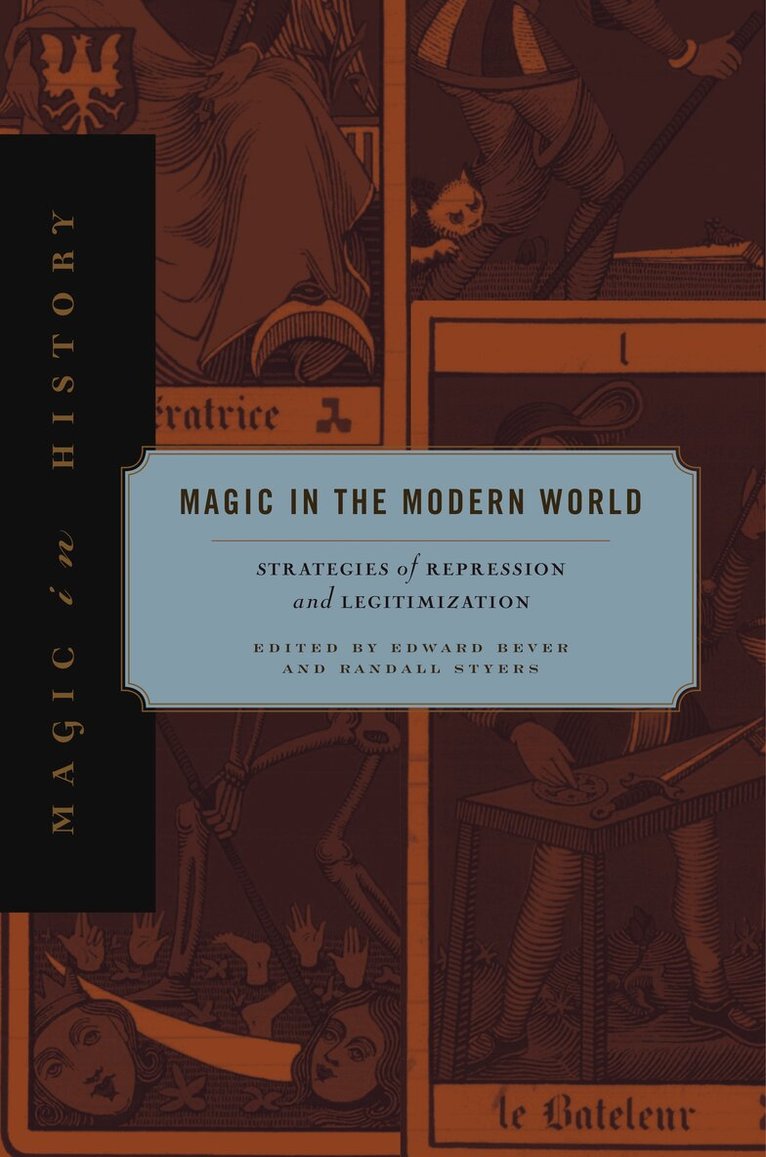
This collection of essays considers the place of magic in the modern world, first by exploring the ways in which modernity has been defined in explicit opposition to magic and superstition, and then by illuminating how modern proponents of magic have worked to legitimize their practices through an overt embrace of evolving forms such as esotericism and supernaturalism.Taking a two-track approach, this book explores the complex dynamics of the construction of the modern self and its relation to the modern preoccupation with magic. Essays examine how modern “rational” consciousness is generated and maintained and how proponents of both magical and scientific traditions rationalize evidence to fit accepted orthodoxy. This book also describes how people unsatisfied with the norms of modern subjectivity embrace various forms of magic—and the methods these modern practitioners use to legitimate magic in the modern world.A compelling assessment of magic from the early modern period to today, Magic in the Modern World shows how, despite the dominant culture’s emphatic denial of their validity, older forms of magic persist and develop while new forms of magic continue to emerge.In addition to the editors, contributors include Egil Asprem, Erik Davis, Megan Goodwin, Dan Harms, Adam Jortner, and Benedek Láng.
Häftad, Engelska, 2018
436 kr
Skickas
This collection of essays considers the place of magic in the modern world, first by exploring the ways in which modernity has been defined in explicit opposition to magic and superstition, and then by illuminating how modern proponents of magic have worked to legitimize their practices through an overt embrace of evolving forms such as esotericism and supernaturalism.Taking a two-track approach, this book explores the complex dynamics of the construction of the modern self and its relation to the modern preoccupation with magic. Essays examine how modern “rational” consciousness is generated and maintained and how proponents of both magical and scientific traditions rationalize evidence to fit accepted orthodoxy. This book also describes how people unsatisfied with the norms of modern subjectivity embrace various forms of magic—and the methods these modern practitioners use to legitimate magic in the modern world.A compelling assessment of magic from the early modern period to today, Magic in the Modern World shows how, despite the dominant culture’s emphatic denial of their validity, older forms of magic persist and develop while new forms of magic continue to emerge.In addition to the editors, contributors include Egil Asprem, Erik Davis, Megan Goodwin, Dan Harms, Adam Jortner, and Benedek Láng.
E-bok
PDF, Engelska, 20101 088 kr
Läs direkt efter köp
Light Against Darkness is comprised of articles that put on display the power and pervasiveness of dualistic thought. Dualism has proved a potent cultural tool for clarifying and ordering reality. Particularly in times of social stress and psychological insecurity, it can offer a valuable conceptual grid that provides orientation to the world and a clear sense of identity. At the same time, though, there are important questions to be asked about the social effects of binary thinking. As history amply illustrates, dualistic notions can readily be deployed to legitimate cultural demonization and to rationalize violence. At a deeper level, a dualist worldview can also obscure the possibilities to be found in multiplicity.The articles in this volume treat Dualism across a wide historical spectrum and from multiple methodological perspectives. The studies are organized around the religious and cultural contexts of Ancient Judaism and they include contributions from leading voices on ancient Persia, Israel, Greece, and Egypt.Experts on modern religious and philosophical thought not only lend context to concepts applied to the ancient world, but engage recent European and American experiments in binary thought. All of the studies contribute to a richer and more complete portrait of dualism in ancient Judaism.