Randy J. LaPolla – författare
Visar alla böcker från författaren Randy J. LaPolla. Handla med fri frakt och snabb leverans.
7 produkter
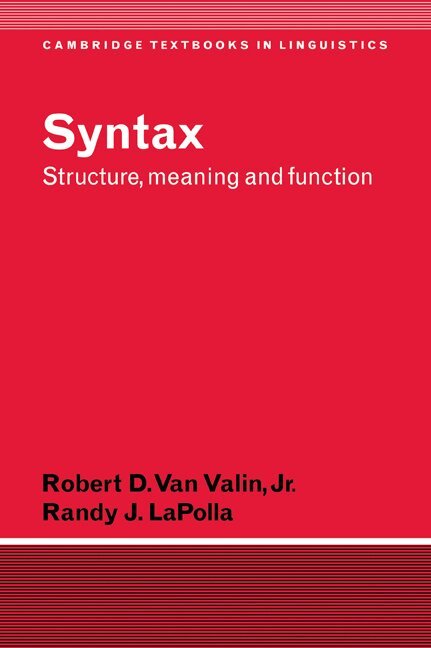
Syntax
Structure, Meaning, and Function
Av Robert D. van Valin Jr, Randy J. LaPolla
Häftad, 1997
874 kr
Lägg i varukorg
This book is an introduction to syntactic theory and analysis which can be used for both introductory and advanced courses in theoretical syntax. Offering an alternative to the standard generative view of the subject, it deals with the major issues in syntax with which all theories are concerned. …
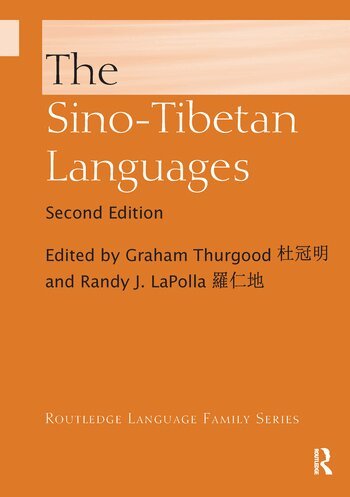
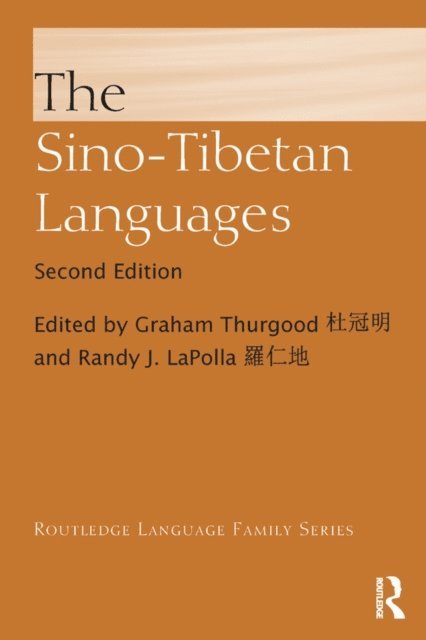
Sino-Tibetan Languages
Av Graham Thurgood, Randy J. LaPolla
Häftad, 2020
967 kr
Lägg i varukorg
There are more native speakers of Sino-Tibetan languages than of any other language family in the world. Our records of these languages are among the oldest for any human language, and the amount of active research on them has multiplied in the last few decades. Now in its second edition and fully …
Sino-Tibetan Languages
Av Graham Thurgood, Randy J. LaPolla
Inbunden, 2016
7805 kr
Lägg i varukorg
There are more native speakers of Sino-Tibetan languages than of any other language family in the world. Our records of these languages are among the oldest for any human language, and the amount of active research on them has multiplied in the last few decades. Now in its second edition and fully …
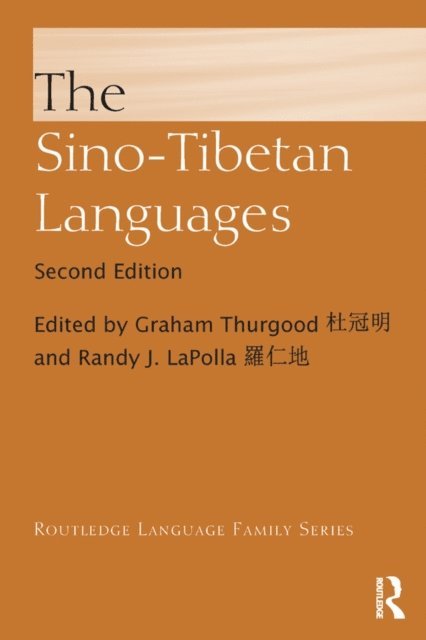
Sino-Tibetan Languages
Av Randy J. LaPolla, Graham Thurgood
E-bok, 2016
1117 kr
Lägg i varukorg
There are more native speakers of Sino-Tibetan languages than of any other language family in the world. Our records of these languages are among the oldest for any human language, and the amount of active research on them has multiplied in the last few decades. Now in its second edition and fully …
Sino-Tibetan Languages
Av Randy J. LaPolla, Graham Thurgood
E-bok, 2016
1117 kr
Lägg i varukorg
There are more native speakers of Sino-Tibetan languages than of any other language family in the world. Our records of these languages are among the oldest for any human language, and the amount of active research on them has multiplied in the last few decades. Now in its second edition and fully …
Grammar of Qiang
With annotated texts and glossary
Av Chenglong Huang, Randy J. LaPolla
E-bok, 2008
2569 kr
Lägg i varukorg
This book is a full reference grammar of Qiang, one of the minority languages of southwest China, spoken by about 70,000 Qiang and Tibetan people in Aba Tibetan and Qiang Autonomous Prefecture in northern Sichuan Province. It belongs to the Qiangic branch of Tibeto-Burman (one of the two major …