Ranjan Chakrabarti – författare
Visar alla böcker från författaren Ranjan Chakrabarti. Handla med fri frakt och snabb leverans.
5 produkter
5 produkter
Inbunden, Engelska, 2020
1 025 kr
Skickas
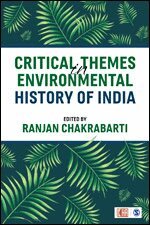
A first of its kind in India, the book addresses the fundamental questions of environmental concern and enquires into the complex patterns of human–nature interaction within the discipline of environmental history in India. This book delves into history to examine a number of critical themes, such as waterbodies and water, forests, land use, wildlife and the issue of the history of climate in India. It focuses on the methodological and historiographical aspects of environmental history and raises new questions to open up new windows leading to fresh research questions. The book argues that environmental history would serve as an important gateway to the history of the human–nature relationship, for example, exploring the role of water history would help in understanding the present context of water crisis in Indian cities. Critical Themes in Environmental History of India is a powerful reminder of the fact that in the context of Indian history it is now necessary to listen to the voice of nature more carefully.
Inbunden, Engelska, 2022
496 kr
Skickas inom 5-8 vardagar
Inbunden, Engelska, 2022
606 kr
Skickas inom 5-8 vardagar
Inbunden, Engelska, 2012
1 080 kr
Skickas inom 10-15 vardagar
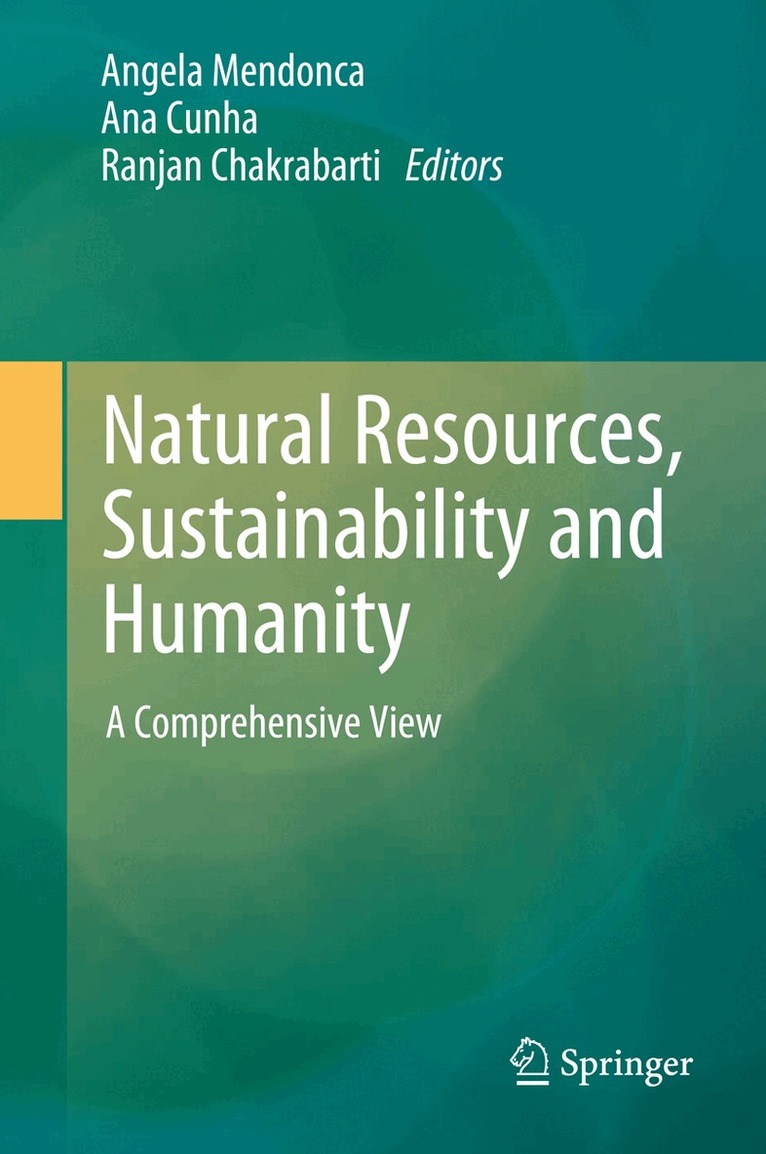
Shortly, this book is the written up-graded version of the topics discussed during the Small Meeting of the 2nd International School Congress: Natural Resources, Sustainability and Humanity, held in Braga, Portugal, 5-8 May 2010 with the diverse participation of scientists, educators and governmental representatives. The Earth hosts an immense ecosystem, colonized by millions of species for billions of years but only for a few tens of thousands of years by humans. Environmental history tells though that it was humankind that shaped the environment as no other species. History, geography, religion and politics among other reasons have differentiated populations with respect to access to safe food and water, education, health, and to space and natural resource utilization. The globalization era of trade, information and communication is shortening distances and increasing overall wealth, but, as is pointed out in this book, it is also contributing to the propagation of diseases, and to the modification or even destruction of native ecosystems by exotic invasive species.Man is the only species that has the perception of its history, evolution, of the consequences of its decisions, and that there is a future ahead. It is also the only species that has the potential to change it. This awareness can be a source of anxiety and contradictory behaviours, but it is also the key to changing attitudes towards the construction of a common sustainable home, by committed education, interdisciplinary approaches, mobilization and empowerment of people and political consonant actions.
Häftad, Engelska, 2014
1 080 kr
Skickas inom 10-15 vardagar
Shortly, this book is the written up-graded version of the topics discussed during the Small Meeting of the 2nd International School Congress: Natural Resources, Sustainability and Humanity, held in Braga, Portugal, 5-8 May 2010 with the diverse participation of scientists, educators and governmental representatives. The Earth hosts an immense ecosystem, colonized by millions of species for billions of years but only for a few tens of thousands of years by humans. Environmental history tells though that it was humankind that shaped the environment as no other species. History, geography, religion and politics among other reasons have differentiated populations with respect to access to safe food and water, education, health, and to space and natural resource utilization. The globalization era of trade, information and communication is shortening distances and increasing overall wealth, but, as is pointed out in this book, it is also contributing to the propagation of diseases, and to the modification or even destruction of native ecosystems by exotic invasive species.Man is the only species that has the perception of its history, evolution, of the consequences of its decisions, and that there is a future ahead. It is also the only species that has the potential to change it. This awareness can be a source of anxiety and contradictory behaviours, but it is also the key to changing attitudes towards the construction of a common sustainable home, by committed education, interdisciplinary approaches, mobilization and empowerment of people and political consonant actions.