Raphael Rauch – författare
Visar alla böcker från författaren Raphael Rauch. Handla med fri frakt och snabb leverans.
4 produkter
4 produkter
E-bok
Engelska, 20221 143 kr
Läs direkt efter köp
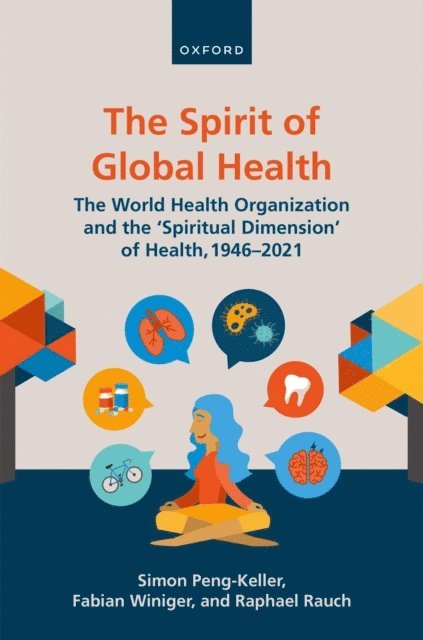
Since the beginning of the World Health Organization, many of its staff members, regional offices, member states, and directors-general have grappled with the question of what a ''spiritual dimension'' of health looks like, and how it might enrich the health policies advocated by their organisations. Contrary to the wide-spread perception that ''spirituality'' is primarily related to palliative care and has emerged relatively recently within the organisation, this study shows that its history is considerably longer and more complex, and has been closely connected to the WHO''s ethical aspirations, its quest for more holistic and equitable healthcare, and its struggle with the colonial legacy of international health organisations. While such ideals and struggles silently motivated many of the key actors and policies - such as the provision of universal primary healthcare - which for decades have embodied the organisation''s loftiest aspirations, the WHO''s official relationship with ''spirituality'' advanced in fits, leaps, and setbacks. At times creative and interdisciplinary, at others deeply political, this process was marked by cycles of institutional forgetting and remembering. Rather than as a triumph of religious lobbyists, this book argues, the ''spiritual dimension'' of health may be better understood as a ''ghost'' that has haunted - and continues to haunt - the WHO as it comes to terms with its mandate of advancing health as a state of ''complete well-being'' available to all.
Inbunden, Engelska, 2022
1 350 kr
Skickas inom 7-10 vardagar
Since the beginning of the World Health Organization, many of its staff members, regional offices, member states, and directors-general have grappled with the question of what a 'spiritual dimension' of health looks like, and how it might enrich the health policies advocated by their organisations. Contrary to the wide-spread perception that 'spirituality' is primarily related to palliative care and has emerged relatively recently within the organisation, this study shows that its history is considerably longer and more complex, and has been closely connected to the WHO's ethical aspirations, its quest for more holistic and equitable healthcare, and its struggle with the colonial legacy of international health organisations. While such ideals and struggles silently motivated many of the key actors and policies - such as the provision of universal primary healthcare - which for decades have embodied the organisation's loftiest aspirations, the WHO's official relationship with 'spirituality' advanced in fits, leaps, and setbacks. At times creative and interdisciplinary, at others deeply political, this process was marked by cycles of institutional forgetting and remembering. Rather than as a triumph of religious lobbyists, this book argues, the 'spiritual dimension' of health may be better understood as a 'ghost' that has haunted - and continues to haunt - the WHO as it comes to terms with its mandate of advancing health as a state of 'complete well-being' available to all.
E-bok
PDF, Tyska, 2019297 kr
Läs direkt efter köp
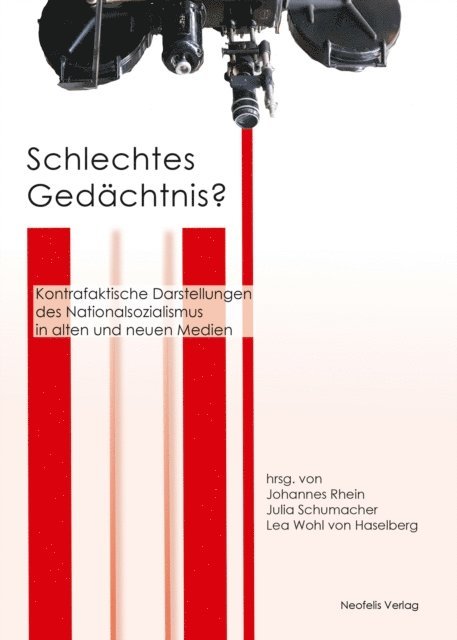
Seit Beginn des 21. Jahrhunderts erleben kontrafaktische NSDarstellungen einen Boom, der stark von audiovisuellen Medien geprägt ist. Längst finden sich solche Produktionen nicht mehr nur in Genre-Nischen, sondern erreichen ein breites Publikum. Kinofilme wie Inglourious Basterds, Serien wie The Man in the High Castle oder Computerspiele wie Wolfenstein weichen drastisch und erkennbar vom historischen Geschehen ab. Durch die Freiheit, die sie im Umgang mit der Vergangenheit an den Tag legen, sperren sie sich gegen Erwartungen an die audiovisuelle Repräsentation des Nationalsozialismus: Sie entziehen sich Fragen der Angemessenheit und unterlaufen didaktische Anliegen. Gegenüber den Konventionen der Erinnerungskultur bilden kontrafaktische Darstellungen eine Geste der Provokation. Das stellt dieser Band zur Diskussion und liefert dazu Ansätze aus unterschiedlichen Disziplinen, Einblicke in verschiedene mediale Kontexte und eine Vielzahl von Beispielen.
E-bok
PDF, Tyska, 2022153 kr
Läs direkt efter köp
Jüdische Filmgeschichte, davon geht dieser Band aus, steht quer zu Erzählungen des Nationalkinos. Sie lässt sich deshalb am besten von den Rändern der Filmgeschichte her schreiben. Im Rahmen des Forschungsnetzwerks "Deutsch-jüdische Filmgeschichte der BRD" ist deshalb eine besondere Form kollaborativen Schreibens erkundet worden: Zu elementaren Stichworten werden kurze Texte unterschiedlicher Autor*innen versammelt, die ihren Fokus jeweils auf einzelne Anekdoten, Details und Irregularitäten legen, die zwar besonders auffällig oder beziehungsreich sind, die aber im wissenschaftlich und methodisch reflektierten Schreiben dennoch oft nur den Status von Fußnoten erlangen.Dabei sind es durchaus methodische Überlegungen, die es geboten erscheinen lassen, eine deutsch-jüdische Filmgeschichte nach 1945 auf einer solchen Basis zu entwickeln: Die Jüdischkeit zahlreicher Filmschaffender in der Bundesrepublik kommt nämlich in der kanonischen Filmhistoriografie in der Regel nur durch vereinzelte Biografismen oder implizit verbleibende Zuschreibungen zur Geltung oder wird als lebensgeschichtliches Datum erwähnt. In jedem Fall gewinnt sie kein eigenes filmgeschichtliches Profil, sondern bleibt bruchstückhaft.Die Kompilation solcher historiografischer Bruchstücke kann es jedoch ermöglichen, so die These, durch Serialität die darin enthaltenen Muster erkennbar zu machen und zugleich ein Mosaik unterschiedlicher Erfahrungen zu gewinnen. Darüber hinaus ermöglicht das kollaborative Schreiben, eine Vielzahl von Autor*innen, die mit ganz unterschiedlichen Perspektiven und mit spezifischen Expertisen zu einer Vielzahl von Archivbeständen, Nachlässen und Filmen arbeiten, zusammenzubringen und zueinander in Beziehung zu setzen.Diese Serie wurde in der Zeitschrift Medaon bereits erprobt und erscheint nun in erweiterter Form auch als Buch.Mit Beiträgen von Tobias Ebbrecht-Hartmann, Imme Klages, Simone Nowicki, Johannes Praetorius-Rhein, Raphael Rauch, Naomi Rolef, Claudia Sandberg, Ulrike Schneider, Lisa Schoß, Julia Schumacher, Tirza Seene und Lea Wohl von Haselberg.