Ratana Chuenpagdee – författare
Transdisciplinarity for Small-Scale Fisheries Governance
Analysis and Practice
1 082 kr
Skickas inom 10-15 vardagar
1 404 kr
Skickas inom 10-15 vardagar
1 834 kr
Skickas inom 10-15 vardagar
2 303 kr
Läs direkt efter köp
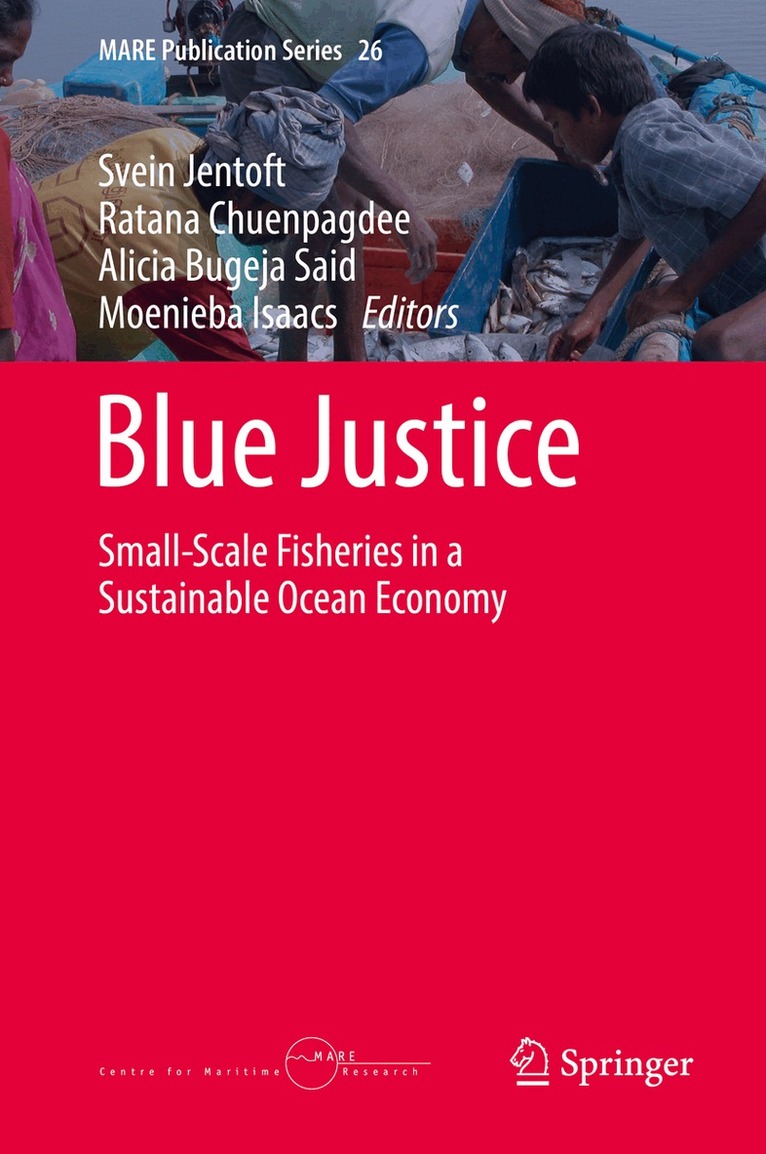
For small-scale fisheries around the world, the Blue Growth and Blue Economy initiatives may provide sustainable development, but only insofar as they align with the global consensus enshrined in the Voluntary Guidelines for Securing Sustainable Small-Scale Fisheries in the context of Food Security and Poverty Eradication. If states do nothing to fulfill the promises they made when they endorsed these guidelines in 2014, the Blue Economy will come at a loss for small-scale fisheries and further their marginalization in the ocean economy. Under the umbrella of Blue Justice, this book demonstrates that these risks are real and must be considered as states implement their sustainable ocean development plans. These are human rights issues, which are embedded into governance principles and institutions and which make a difference for small-scale fisheries people in their daily lives. In stressing the importance of policies and institutions that build on the experiences of small-scale fisheries people in the contexts in which they operate, this book draws on case studies of small-scale fisheries from countries on all continents to clarify what Blue Justice entails for small-scale fisheries and make suggestions for real change.
“Through the Blue Justice paradigm, this book flags the relevance of recognizing the potential impact that different factors, including the Blue Economy approach, could bring to fishing communities, their livelihoods, cultural traditions, and other potential multidimensional conflicts. Vulnerability in fishing communities can increase and inequalities can be reinforced at different levels if individuals and community capabilities are not strengthened… A first of its kind, not to be missed, this book is informative, purposeful, and pertinent in an era of change”.
Silvia Salas, CINVESTAV, Marine Resources Department, Mérida, Mexico
"The studies reveal that Blue Justice is a ‘governability’ issue, which requires establishing ‘right’ institutions, that are transdisciplinary (integrated), participatory, and holistic. It is implicit from these writings that the SSF Guidelines and Blue Growth initiatives do not form two different discourses, and that the implementation of the former would resolve many of the justice issues caused by the latter, in favor of small-scale fisheries and their communities".
Oscar Amarasinghe, Professor & Chancellor, Ocean University of Sri Lanka and President, Sri Lanka Forum for Small Scale Fisheries (SLFSSF)
1 834 kr
Skickas inom 10-15 vardagar
1 512 kr
Skickas inom 10-15 vardagar
1 686 kr
Läs direkt efter köp
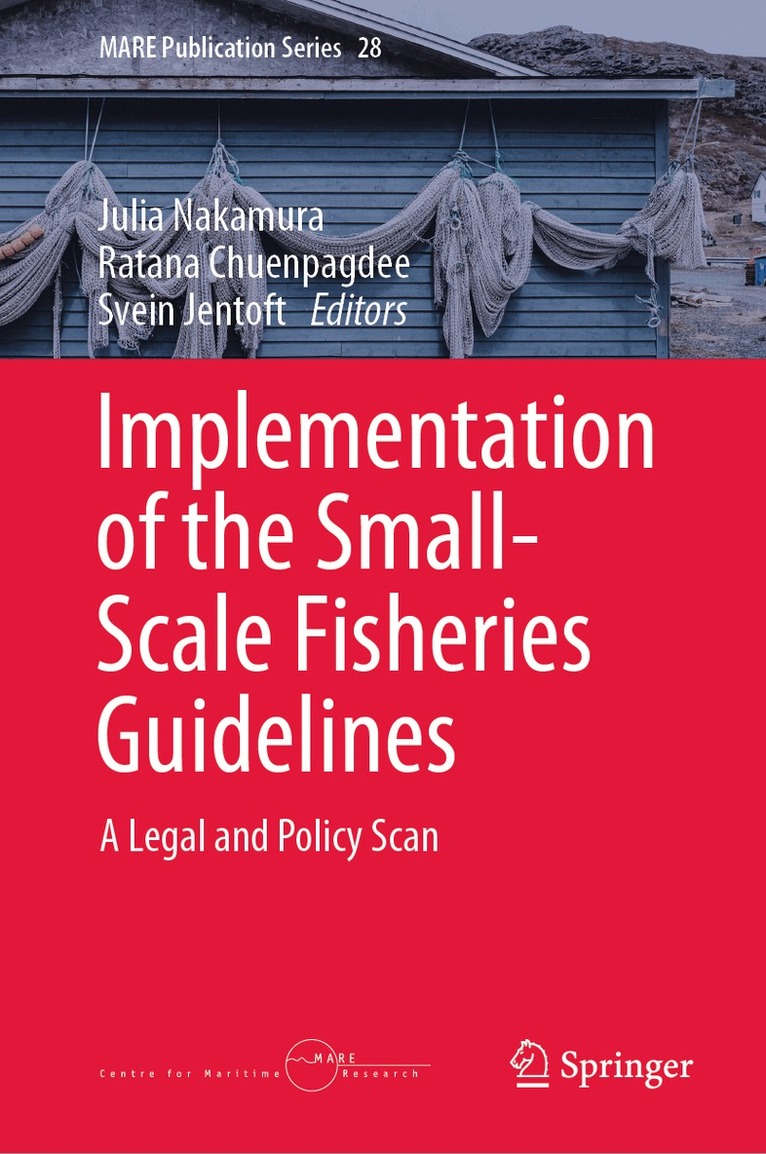
This book provides a transdisciplinary assessment of multiple countries’ legal and policy frameworks vis-à-vis the Voluntary Guidelines for Securing Sustainable Small-Scale Fisheries in the Context of Food Security and Poverty Eradication, adopted in 2014 by the Committee on Fisheries of the Food and Agriculture Organization of the United Nations. Based on an appraisal framework used to facilitate the unpacking of those frameworks, this book collects country experiences and regional perspectives on a range of cross-cutting issues underpinning the protection of the rights and the promotion of justice for small-scale fishers and their communities.
This book aims to be the first collection to present a systematic and in-depth assessment of existing national legal and policy frameworks vis-à-vis the SSF Guidelines. This assessment is done through the transdisciplinary and collaborative work of researchers, governments, and civil society organizations for the analysis of the cross-thematic questions, which the contributors of this book aim to address. Firstly, what are the relevant laws and policies that matter for securing rights of small-scale fishers and their communities? How are small-scale fisheries defined by national laws and policies? How are small-scale fisheries treated (i.e., specifically or generally) in these instruments? Are there specific provisions and references to small-scale fisheries or any of its associated terminologies (e.g., artisanal, subsistence, traditional, indigenous)? Secondly, how the relevant instruments address the 8 small-scale fisheries key issues outlined in that rapid appraisal study? What are the strengths and gaps in these instruments? Do they address issues that are not covered by the SSF Guidelines? Do they contribute to clarifying other legal issues that are relevant for sustainable small-scale fisheries? Finally, since the book also aims to explore the accessibility of these legal and policy instruments for those to which they matter the most (the small-scale fishers), the following questions were also considered: What challenges do they face in knowing and understanding the relevant laws and policies in place? Which tools, measures and processes are available in the countries to ensure small-scale fishers can claim for their rights? To what extent judicial courts have recognized and/or granted rights to small-scale fishers?
Chapters 11, 19 and 20 are available open access under a Creative Commons Attribution 4.0 International License via link.springer.com.
1 391 kr
Skickas inom 10-15 vardagar
1 669 kr
Skickas inom 11-20 vardagar
1 619 kr
Skickas inom 10-15 vardagar
1 977 kr
Läs direkt efter köp
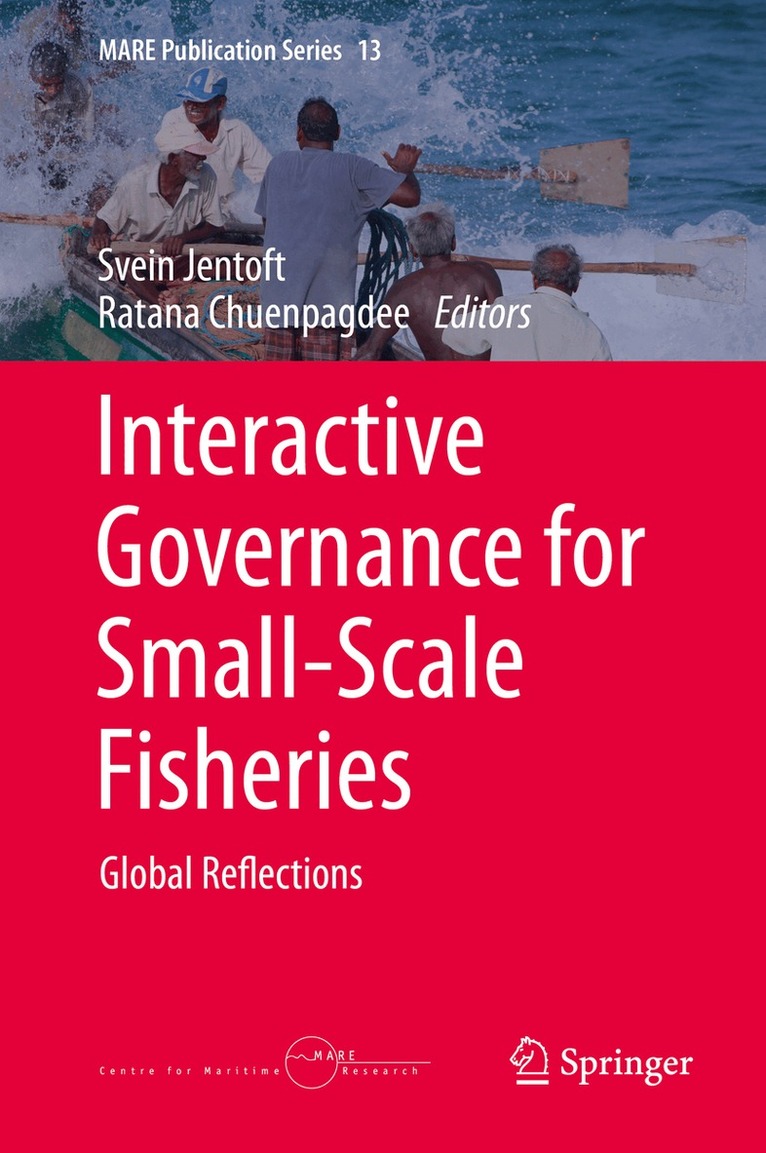
Drawing on more than 30 case studies from around the world, this book offers a multitude of examples for improving the governance of small-scale fisheries. Contributors from some 36 countries argue that reform, transformation and innovation are vital to achieving sustainable small-scale fisheries - especially for mitigating the threats and vulnerabilities of global change. For this to happen, governing systems must be context-specific and the governability of small-scale fisheries properly assessed. The volume corresponds well with the Voluntary Guidelines for Securing Sustainable Small-Scale Fisheries adopted in 2014, spearheaded by the United Nations Food and Agriculture Organization (FAO). These affirm the importance of small-scale fisheries for food security, nutrition, livelihoods, rural development and poverty reduction. The book arises from the project Too Big To Ignore: Global Partnership for Small-Scale Fisheries Research (TBTI).
"A nuanced, diverse, vibrant and local-specific collection of essays – just as the small-scale fisheries around the world - dealt with by this versatile array of authors. Following on the heels of the recently adopted FAO Small-Scale Fisheries Guidelines, here is an erudite compendium which I heartily recommend to policy makers, academics and activists who wish to come to terms with the complex issue of governance of this important field of human activity."
John Kurien - Founding Member of the International Collective in Support of Fishworkers (ICSF), and Former Professor, Centre for Development Studies, Trivandrum, India
"Likely to become a classic in its field, this book is about small-scale fisheries and interactive governance – governance which is negotiated, deliberated upon, and communicated among stakeholders who often share governing responsibilities. The authors show that interactive governance is not just a normative theory but a phenomenon that can be studiedempirically, here with 34 case studies from as many countries around the world, north and south, east and west. Such "force of example" enables the editors to put together well-developed arguments and sometimes surprising conclusions about the way ahead. A must-read for managers, practitioners, stakeholders, and students!"
Fikret Berkes - University of Manitoba, Canada, and author of Coasts for People
1 619 kr
Skickas inom 10-15 vardagar
Small-Scale Fisheries Guidelines
Global Implementation
1 512 kr
Skickas inom 10-15 vardagar
1 841 kr
Läs direkt efter köp
The collection of case studies sets the platform for an interactive dialogue space for researchers, policy makers, civil society and small-scale fishing communities to start the conversation about the monitoring and evaluation of the implementation of the SSF Guidelines at local, national, regional and global levels. An added value is that it helps add focus to our work as civil society activists involved in ensuring the application of the SSF Guidelines.Naseegh Jaffer – General Secretary, World Forum of Fisher People (WFFP)
This collection offers many ways in which institutions enabling small-scale fisheries can protect and promote sustainability, food security, customary tenure, self-management, and market access, while fostering such benefits as ecosystem-based management, protected areas, incorporation of local knowledge, and poverty alleviation. You will want to put this book in the hands of policy-makers and practitioners immediately -- and for years to come.Evelyn Pinkerton – Professor, Simon Fraser University, Canada
1 404 kr
Skickas inom 10-15 vardagar
1 687 kr
Läs direkt efter köp
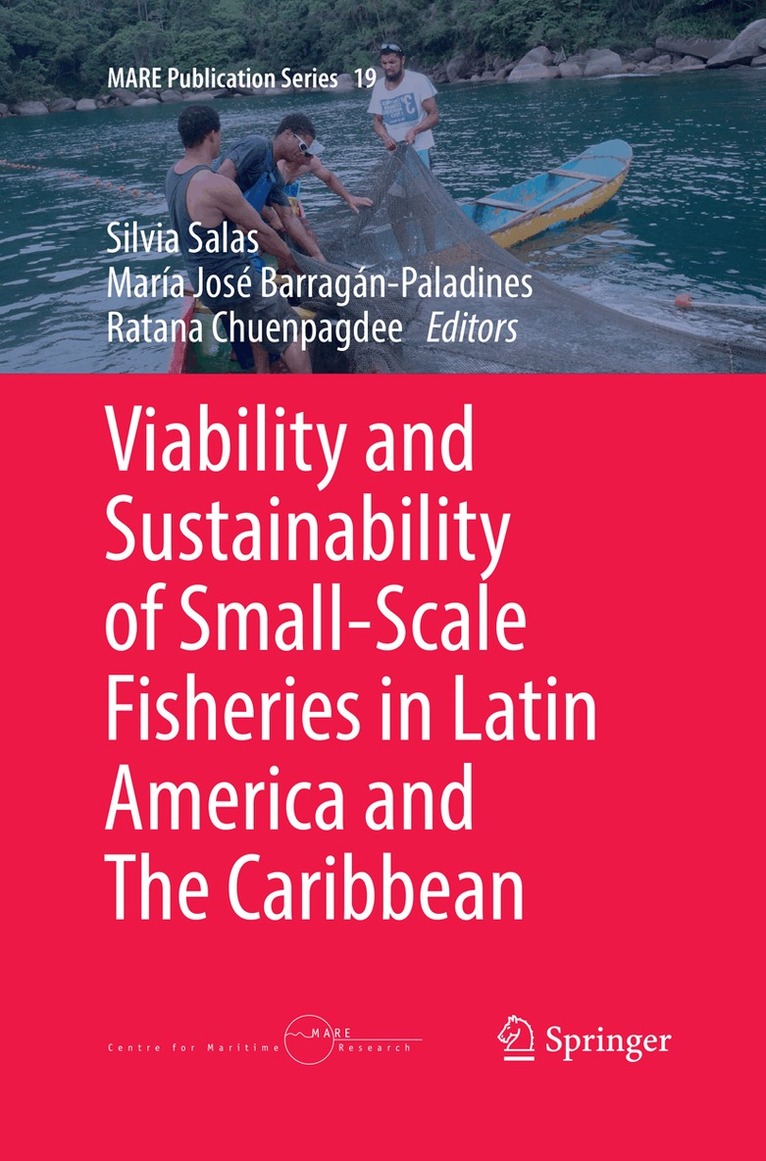
One of the main goals in fisheries governance is to promote viability and sustainability in small-scale fishing communities. This is not an easy task given external and internal pressure, including environmental change and competition with other economic sectors searching for development in the coastal region. A comprehensive understanding of small-scale fisheries in their own context, and from a regional perspective, is an important step in supporting the implementation of the Voluntary Guidelines on Securing Sustainable Small-Scale Fisheries (SSF Guidelines). This book contributes to the global effort by offering knowledge, insights and lessons about small-scale fisheries in Latin America and the Caribbean. The 20 case studies included in the book make explicit the various dimensions that are intrinsic to small-scale fisheries in the region, and identify conditions and situations that affect the wellbeing of fishing communities. The book offers insights regarding the challenges faced by small-scale fisheries in the region, and, aligning with the objectives of the SSF Guidelines, provides lessons and experiences about how to make small-scale fishing communities viable while maintaining sustainable fisheries.
This important book illustrates the complexity, diversity, and dynamics of small-scale fisheries in the Latin American and Caribbean region and presents experiences, tools, and approaches to lead towards sustainable and viable fisheries. The reader will gain a new understanding on the range of actions, approaches, and information needed for their successful management.
John F. Caddy, International Fisheries Expert
This book, prepared by the Too Big To Ignore partnership, constitutes a very valuable resource for policy makers, fisheries scientists, non-governmental organizations, civil society organizations, and fishing communities interested in putting in place sound management strategies, research, and actions to contribute to the sustainability of small-scale fisheries and food security in Latin America and the Caribbean region.
Juan Carlos Seijo, Professor of Fisheries Bioeconomics at Marist University of Merida1 512 kr
Skickas inom 10-15 vardagar
Transdisciplinarity for Small-Scale Fisheries Governance
Analysis and Practice
1 512 kr
Skickas inom 10-15 vardagar
1 379 kr
Läs direkt efter köp
The importance of small-scale fisheries for sustainable livelihoods and communities, food security, and poverty eradication is indisputable. With the endorsement of the ‘Voluntary Guidelines for Securing Sustainable Small-Scale Fisheries’, FAO member states recognize that governments, civil society organizations, and research communities all have a role to play in helping small-scale fisheries achieve these goals. This book argues that policies targeting small-scale fisheries need to be based on a solid and holistic knowledge foundation, and support the building of governance capacity at local, national, and global levels. The book provides rich illustrations from around the world of why such knowledge production needs to be transdisciplinary, drawing from multiple disciplinary perspectives and the knowledge that small-scale fisheries actors have, in order to identify problems and explore innovative solutions.
Transdisciplinarity for Small-Scale Fisheries Governance: Analysis and Practice, edited by Ratana Chuenpagdee and Svein Jentoft, successfully demonstrates how small-scale fisheries are important and what social and political conditions are conducive to their wellbeing. The volume contributes tremendously to building capacity of fisheries communities and policy-makers to make the ideals of small-scale fisheries a reality. It establishes the ecological, social, and economic sense behind small-scale fisheries. A milestone reference for all those who believe in small-scale fisheries and are keen to defend them with quality evidence!
— Sebastian Mathew, Executive Director, International Collective in Support of Fishworkers (ICSF)
The Small-Scale Fisheries Guidelines guiding principles call for holistic and integrated approaches for their implementation. This book will help a new generation of scientists, policy-makers, and small-scale fisheries actors make the fundamental connections between different disciplinesin science, traditional knowledge, and policy to guide a collective process towards sustainable small-scale fisheries. The book contains an inspiring collection of practical cases from around the world, complemented by deep dives into dimensions of small-scale fisheries, like food security, stewardship, climate change, and gender, which all call for transdisciplinary approaches.
— Nicole Franz, Fisheries and Aquaculture Department, Food and Agriculture Organization of the United Nations (FAO) Rome, Italy
1 073 kr
Skickas inom 10-15 vardagar
1 379 kr
Läs direkt efter köp
Following from Fish for Life – Interactive Governance for Fisheries (Kooiman et al., 2005), which presents an interdisciplinary and intersectoral approach to the governance of capture and aquaculture fisheries, this volume pursues what interactive governance theory and the governability perspective contribute to the resolution of key fisheries problems, these include overfishing, unemployment and poverty, food insecurity, and social injustice. Since these problems are varied and can be felt among governments, resource users and communities globally, the diagnosis must be holistic, and take account of principles, institutions, and operational conditions. The authors argue that ‘wicked problems’ and institutional limitations are inherent to each setting, and must be included in the analysis. The volume thereby offers a new lens and a systematic approach for analysing the nature of problems and challenges concerning the governance of fisheries, explores where these problems are situated, and how potential solutions may be found.
”It now seems clear that the crisis in the world’s fisheries [is] a much larger and more complex problem than many had imagined. Yet, examining it through the lens of governability may offer the best hope for alleviating it--as well as alleviating similar crises in other social systems.” James R. McGoodwin (Professor Emeritus, University of Colorado)
1 073 kr
Skickas inom 10-15 vardagar