Ratna Kapur – författare
Visar alla böcker från författaren Ratna Kapur. Handla med fri frakt och snabb leverans.
12 produkter
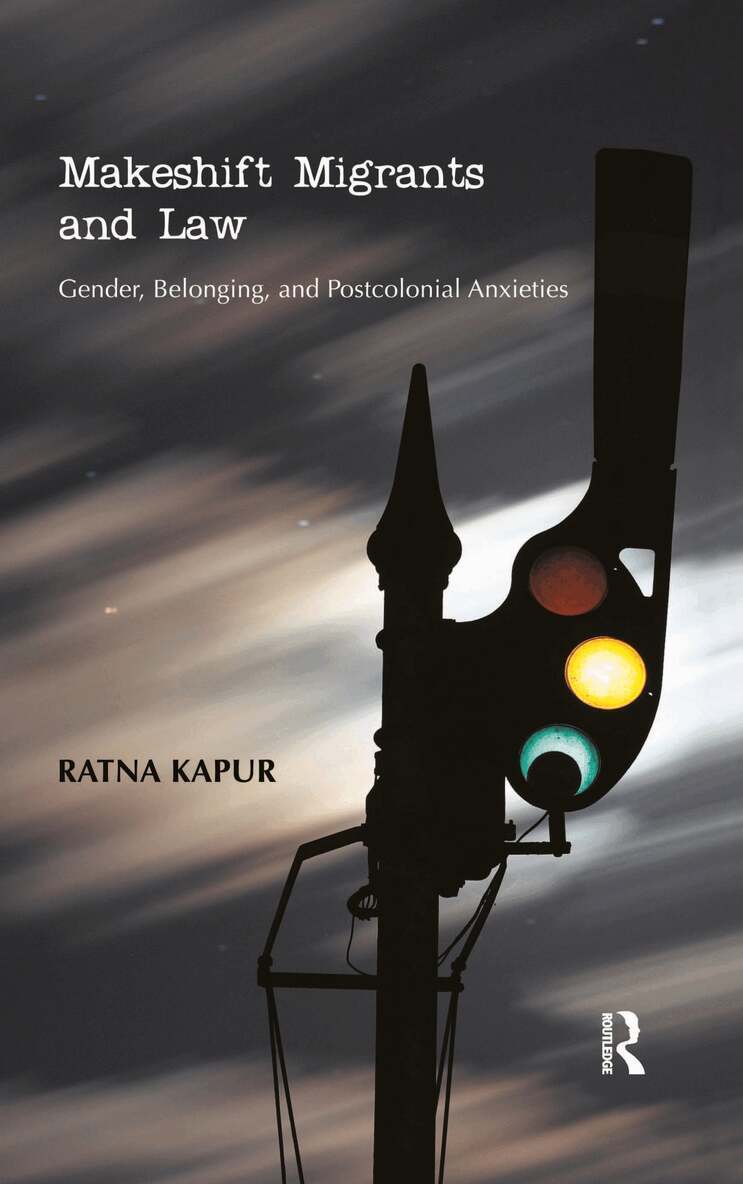
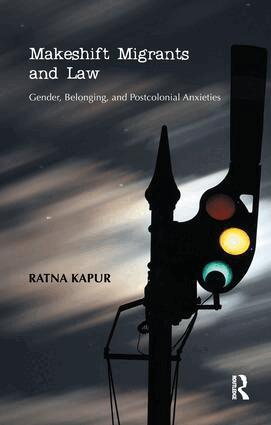
Makeshift Migrants and Law
Gender, Belonging, and Postcolonial Anxieties
Av Ratna Kapur
Inbunden, 2010
2468 kr
Lägg i varukorg
This book unmasks the cultural and gender stereotypes that inform the legal regulation of the migrant. It critiques the postcolonial perspective on how belonging and non-belonging are determined by the sexual, cultural, and familial norms on which law is based as well as the historical backdrop of …
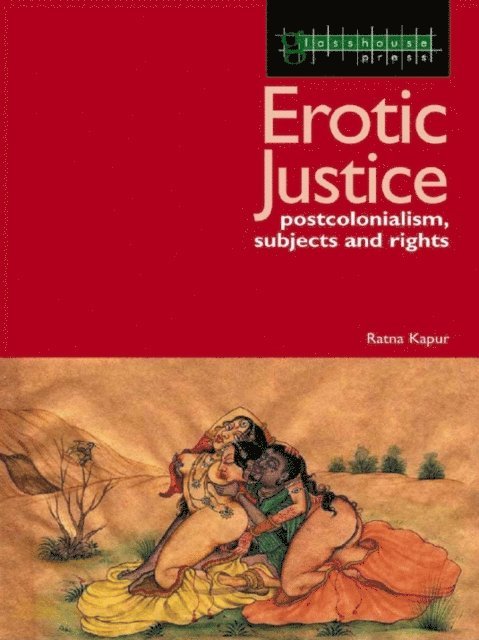
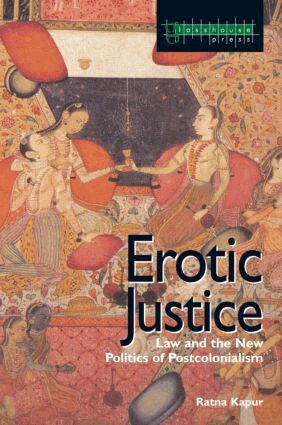
Erotic Justice
Law and the New Politics of Postcolonialism
Av Ratna Kapur
E-bok, 2013
1294 kr
Lägg i varukorg
The essays in Erotic Justice address the ways in which law has been implicated in contemporary debates dealing with sexuality, culture and `different'' subjects - including women, sexual minorities, Muslims and the transnational migrant. Law is analyzed as a discursive terrain, where these …
Erotic Justice
Law and the New Politics of Postcolonialism
Av Ratna Kapur
E-bok, 2013
1294 kr
Lägg i varukorg
The essays in Erotic Justice address the ways in which law has been implicated in contemporary debates dealing with sexuality, culture and `different'' subjects - including women, sexual minorities, Muslims and the transnational migrant. Law is analyzed as a discursive terrain, where these …
Makeshift Migrants and Law
Gender, Belonging, and Postcolonial Anxieties
Av Ratna Kapur
E-bok, 2012
935 kr
Lägg i varukorg
This book unmasks the cultural and gender stereotypes that inform the legal regulation of the migrant. It critiques the postcolonial perspective on how belonging and non-belonging are determined by the sexual, cultural, and familial norms on which law is based as well as the historical backdrop of …
Makeshift Migrants and Law
Gender, Belonging, and Postcolonial Anxieties
Av Ratna Kapur
E-bok, 2012
956 kr
Lägg i varukorg
This book unmasks the cultural and gender stereotypes that inform the legal regulation of the migrant. It critiques the postcolonial perspective on how belonging and non-belonging are determined by the sexual, cultural, and familial norms on which law is based as well as the historical backdrop of …
Erotic Justice
Law and the New Politics of Postcolonialism
Av Ratna Kapur
Inbunden, 2016
2317 kr
Lägg i varukorg
The essays in Erotic Justice address the ways in which law has been implicated in contemporary debates dealing with sexuality, culture and `different' subjects - including women, sexual minorities, Muslims and the transnational migrant. Law is analyzed as a discursive terrain, where these different …
Makeshift Migrants and Law
Gender, Belonging, and Postcolonial Anxieties
Av Ratna Kapur
Häftad, 2016
813 kr
Lägg i varukorg
This book unmasks the cultural and gender stereotypes that inform the legal regulation of the migrant. It critiques the postcolonial perspective on how belonging and non-belonging are determined by the sexual, cultural, and familial norms on which law is based as well as the historical backdrop of …
Gender, Alterity and Human Rights
Freedom in a Fishbowl
Av Ratna Kapur
Inbunden, 2018
1913 kr
Lägg i varukorg
'Long admired for her pioneering work on gender, neo-liberalism and human rights, in this volume Ratna Kapur builds on that scholarship to offer a bold and wide ranging set of arguments that will add immensely to the many current debates about human rights and their efficacy in this age of …
Gender, Alterity and Human Rights
Freedom in a Fishbowl
Av Ratna Kapur
E-bok, 2018
328 kr
Lägg i varukorg
''Long admired for her pioneering work on gender, neo-liberalism and human rights, in this volume Ratna Kapur builds on that scholarship to offer a bold and wide ranging set of arguments that will add immensely to the many current debates about human rights and their efficacy in this age of …
Gender, Alterity and Human Rights
Freedom in a Fishbowl
Av Ratna Kapur
Häftad, 2020
353 kr
Lägg i varukorg
'Long admired for her pioneering work on gender, neo-liberalism and human rights, in this volume Ratna Kapur builds on that scholarship to offer a bold and wide ranging set of arguments that will add immensely to the many current debates about human rights and their efficacy in this age of …
Erotic Justice
Law and the New Politics of Postcolonialism
Av Ratna Kapur
Häftad, 2005
1121 kr
Lägg i varukorg
The essays in Erotic Justice address the ways in which law has been implicated in contemporary debates dealing with sexuality, culture and `different' subjects - including women, sexual minorities, Muslims and the transnational migrant. Law is analyzed as a discursive terrain, where these different …
Género, alteridad y derechos humanos
Libertad en una pecera
Av Ratna Kapur
E-bok, 2024
188 kr
Lägg i varukorg
Este libro explora las posibilidades imaginarias de la libertad tras la crítica a los derechos humanos. Al abordar esta cuestión con respecto al género y la alteridad, Kapur se concentra de manera específica en cómo, a la luz de esa crítica, deberíamos considerar la libertad una vez que las …