Rauno V. Alatalo – författare
Visar alla böcker från författaren Rauno V. Alatalo. Handla med fri frakt och snabb leverans.
4 produkter
4 produkter
Häftad, Engelska, 2014
891 kr
Skickas inom 3-6 vardagar
The evolution of leks--clusters of small territories where males congregate and display in order to attract mates--is of central issue in behavioral ecology, because of the insights it offers into female mate choice, sexual selection, and the evolution of mating systems. In the first book on the subject, Jacob Hoglund and Rauno Alatalo draw together existing knowledge on two main aspects of lekking. Why do leks evolve in some species and not in others? Why do females of certain lekking species select their mates even though such behavior reaps few or no material benefits for them? In each case they emphasize the importance of understanding the selective forces that act on individuals in natural populations. Hoglund and Alatalo synthesize the available information on lekking in all animal groups and suggest new areas of research. Originally published in 1995. The Princeton Legacy Library uses the latest print-on-demand technology to again make available previously out-of-print books from the distinguished backlist of Princeton University Press. These editions preserve the original texts of these important books while presenting them in durable paperback and hardcover editions.The goal of the Princeton Legacy Library is to vastly increase access to the rich scholarly heritage found in the thousands of books published by Princeton University Press since its founding in 1905.
Inbunden, Engelska, 2016
2 281 kr
Skickas inom 3-6 vardagar
The evolution of leks--clusters of small territories where males congregate and display in order to attract mates--is of central issue in behavioral ecology, because of the insights it offers into female mate choice, sexual selection, and the evolution of mating systems. In the first book on the subject, Jacob Hoglund and Rauno Alatalo draw together existing knowledge on two main aspects of lekking. Why do leks evolve in some species and not in others? Why do females of certain lekking species select their mates even though such behavior reaps few or no material benefits for them? In each case they emphasize the importance of understanding the selective forces that act on individuals in natural populations. Hoglund and Alatalo synthesize the available information on lekking in all animal groups and suggest new areas of research. Originally published in 1995. The Princeton Legacy Library uses the latest print-on-demand technology to again make available previously out-of-print books from the distinguished backlist of Princeton University Press. These editions preserve the original texts of these important books while presenting them in durable paperback and hardcover editions.The goal of the Princeton Legacy Library is to vastly increase access to the rich scholarly heritage found in the thousands of books published by Princeton University Press since its founding in 1905.
E-bok
PDF, Engelska, 2010876 kr
Läs direkt efter köp
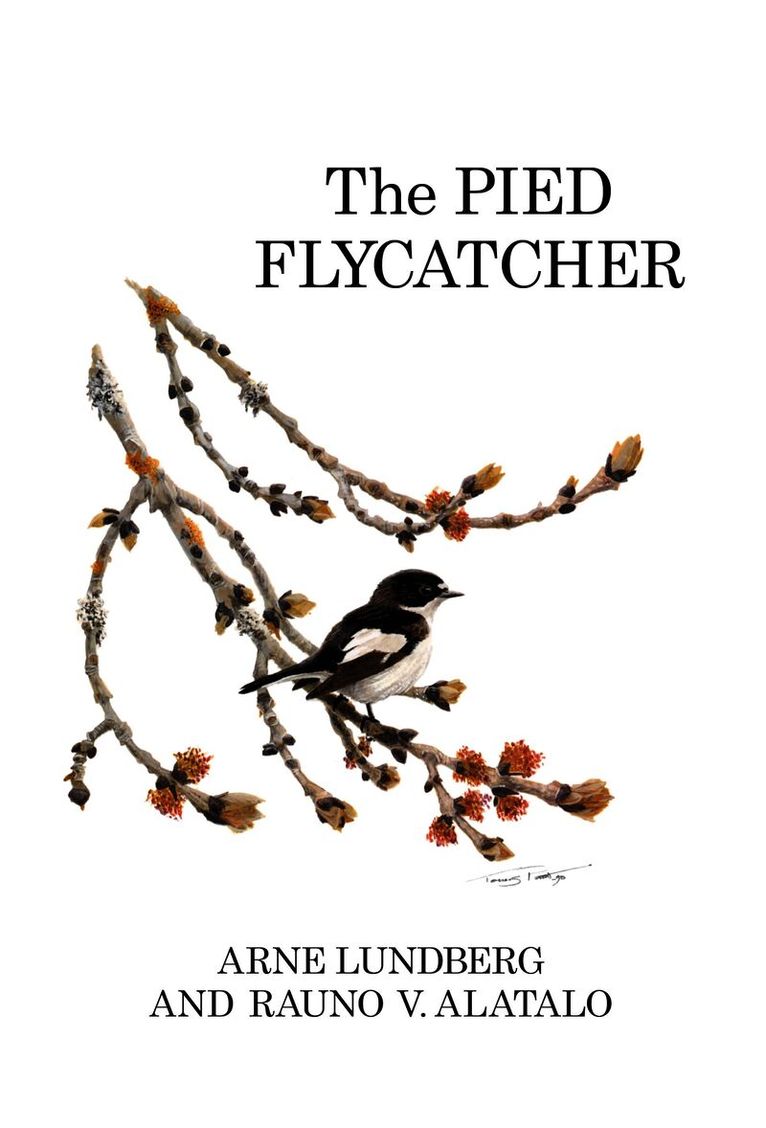
The Pied Flycatcher is one of Europe''s best-studied species.The first detailed work on it was begun in the 1930s by German ornithologists, but it was Lars von Haartman''s Finnish study that both established long-term research on the species and founded many of the central themes of modern ornithology. Soon after, in the late 1940s, Bruce Campbell set up an intensive project in southwest England, which also still runs to this day. Many other eminent ornithologists followed and in 1979 Arne Lundberg and Rauno Alatalo started their own work in Sweden, Finland and latterly the north of England.A Palaearctic migrant, the Pied Flycatcher is notable for its very variable male plumage and complex territorial and polygynous breeding system. They take readily to nest boxes and have provided excellent opportunities for the study of a wide range of biological problems.This broad review of the species provides not only a detailed biology of this fascinating little bird, but a commentary on many of the most interesting problems in bird behaviour and ecology.Illustrated by Tomas Part.
E-bok
Engelska, 2010876 kr
Läs direkt efter köp
The Pied Flycatcher is one of Europe''s best-studied species. The first detailed work on it was begun in the 1930s by German ornithologists, but it was Lars von Haartman''s Finnish study that both established long-term research on the species and founded many of the central themes of modern ornithology. Soon after, in the late 1940s, Bruce Campbell set up an intensive project in southwest England, which also still runs to this day. Many other eminent ornithologists followed and in 1979 Arne Lundberg and Rauno Alatalo started their own work in Sweden, Finland and latterly the north of England. A Palaearctic migrant, the Pied Flycatcher is notable for its very variable male plumage and complex territorial and polygynous breeding system. They take readily to nest boxes and have provided excellent opportunities for the study of a wide range of biological problems. This broad review of the species provides not only a detailed biology of this fascinating little bird, but a commentary on many of the most interesting problems in bird behaviour and ecology. Illustrated by Tomas Part.