Ravi Naidu – författare
Visar alla böcker från författaren Ravi Naidu. Handla med fri frakt och snabb leverans.
33 produkter
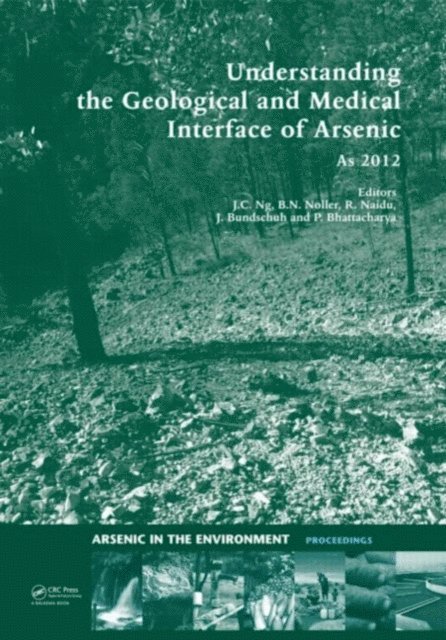
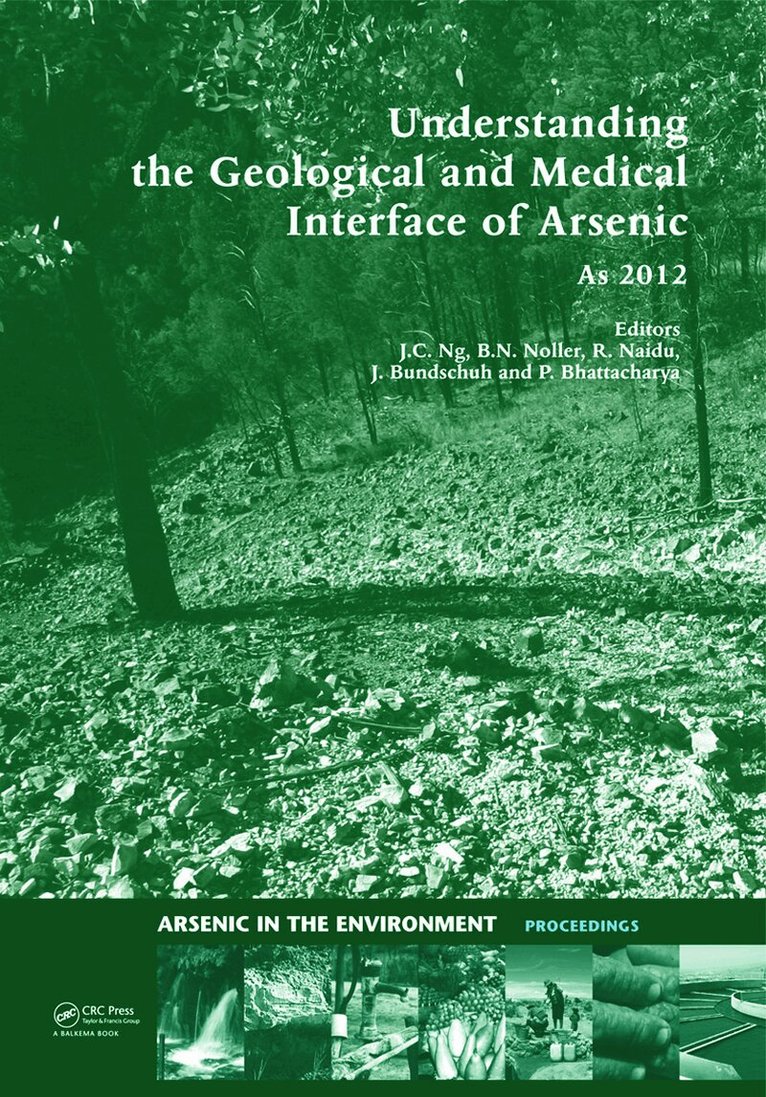
Understanding the Geological and Medical Interface of Arsenic - As 2012
Proceedings of the 4th International Congress on Arsenic in the Environment, 22-27 July 2012, Cairns, Australia
Av Prosun Bhattacharya, Jochen Bundschuh m. fl.
E-bok, 2012
3745 kr
Lägg i varukorg
The congress "Arsenic in the Environment" offers an international, multi- and interdisciplinary discussion platform for arsenic research aimed at practical solutions of problems with considerable social impact, as well as focusing on cutting edge and breakthrough research in physical, chemical, …
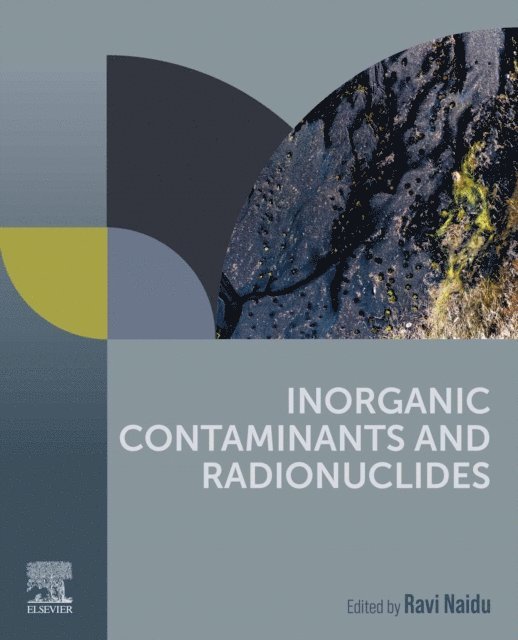
Inorganic Contaminants and Radionuclides
Av Ravi Naidu
Häftad, 2023
1586 kr
Lägg i varukorg
Inorganic Contaminants and Radionuclides is a single reference covering common inorganic contaminants in detail, including their distribution in the environment, challenges linked to management, geogenic sources, anthropogenic sources, exposure and effects, international agreements and legislation …
Organic Contaminants
Av Ravi Naidu
Häftad, 2024
1586 kr
Kommande
Organic Contaminants is a single reference covering common organic contaminants in detail, including their distribution in the environment, challenges linked to management, geogenic sources, anthropogenic sources, exposure and effects, international agreements and legislation relating to the …
Inorganic Contaminants and Radionuclides
Av Ravi Naidu
E-bok, 2023
2206 kr
Lägg i varukorg
Inorganic Contaminants and Radionuclides is a single reference covering common inorganic contaminants in detail, including their distribution in the environment, challenges linked to management, geogenic sources, anthropogenic sources, exposure and effects, international agreements and legislation …
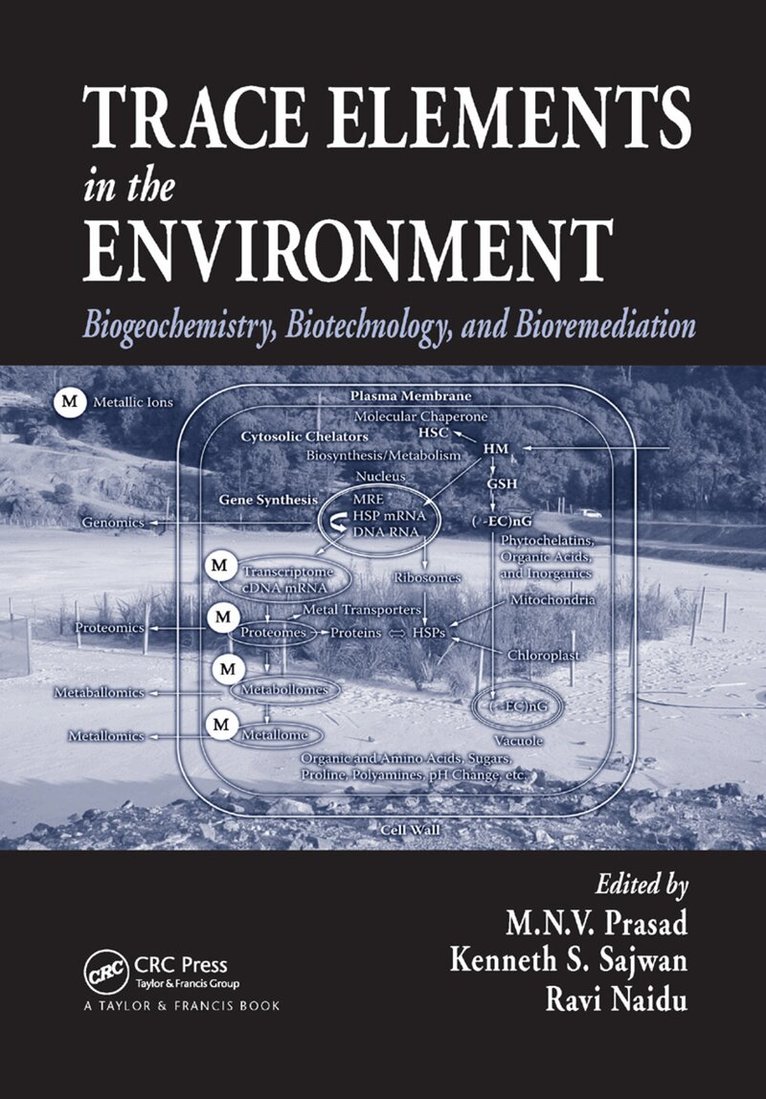
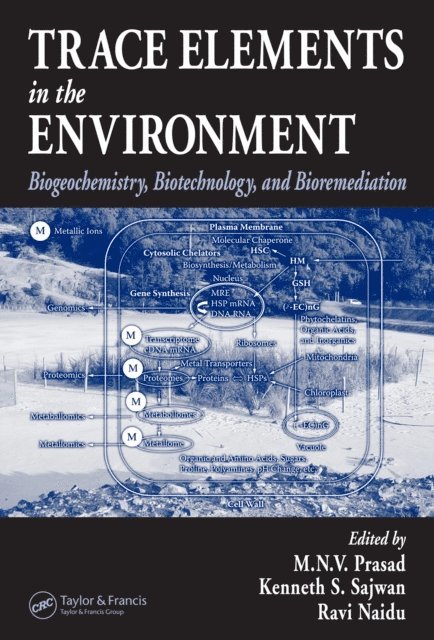
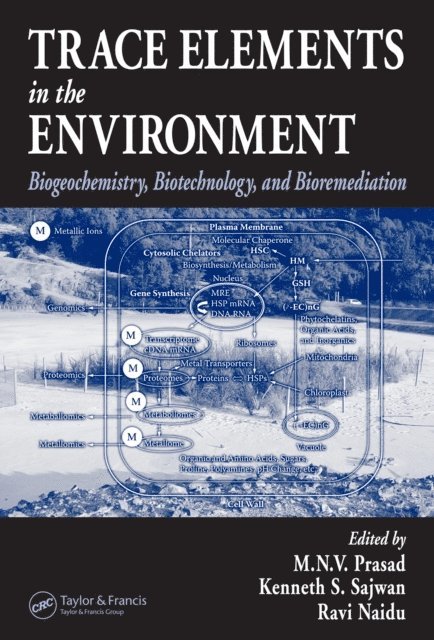
Trace Elements in the Environment
Biogeochemistry, Biotechnology, and Bioremediation
Av M.N.V. Prasad, Kenneth S. Sajwan m. fl.
Häftad, 2019
1070 kr
Lägg i varukorg
New analytical techniques have enhanced current understanding of the behavior of trace and ultratrace elements in the biogeochemical cycling, chemical speciation, bioavailability, bioaccumulation, and as applied to the phytoremediation of contaminated soils. Addressing worldwide regulatory, …
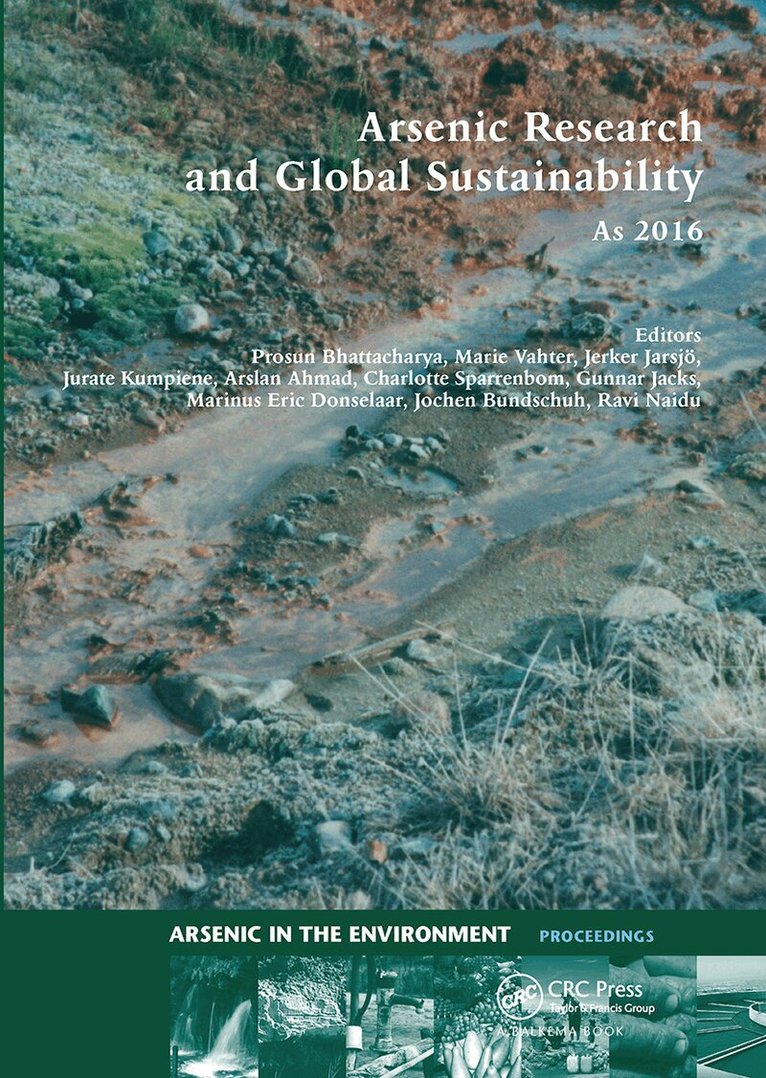
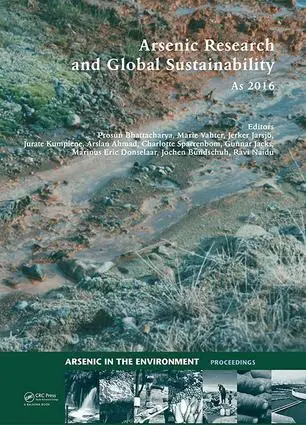
Arsenic Research and Global Sustainability
Proceedings of the Sixth International Congress on Arsenic in the Environment (As2016), June 19-23, 2016, Stockholm, Sweden
Av Prosun Bhattacharya, Marie Vahter m. fl.
Häftad, 2020
793 kr
Lägg i varukorg
The Congress "Arsenic in the Environment" offers an international, multi- and interdisciplinary discussion platform for research and innovation aimed towards a holistic solution to the problem posed by the environmental toxin arsenic, with considerable societal impact. The congress has focused on …
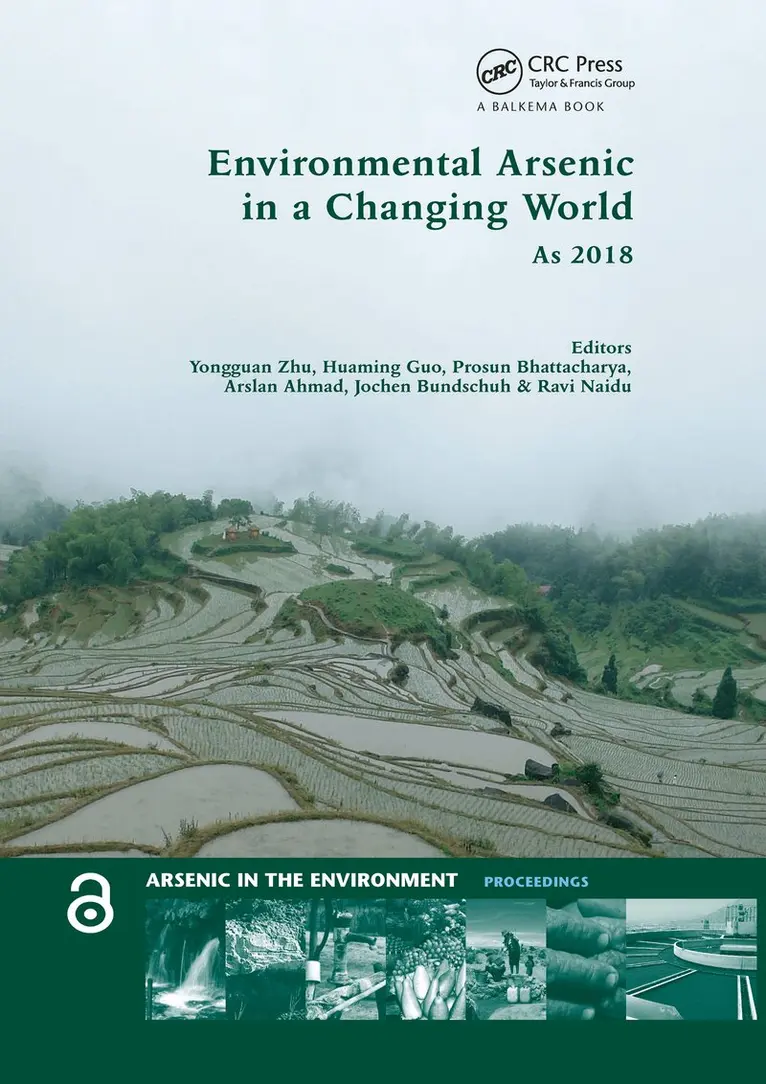
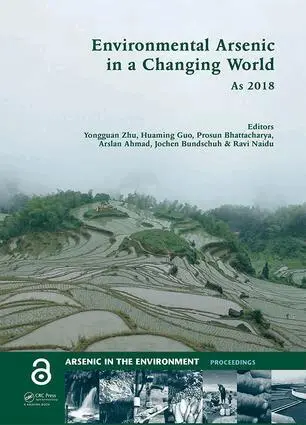
Environmental Arsenic in a Changing World
Proceedings of the 7th International Congress and Exhibition on Arsenic in the Environment (AS 2018), July 1-6, 2018, Beijing, P.R. China
Av Yongguan Zhu, Huaming Guo m. fl.
Häftad, 2021
817 kr
Lägg i varukorg
The Congress "Arsenic in the Environment" offers an international, multi- and interdisciplinary discussion platform for research and innovation aimed towards a holistic solution to the problem posed by the environmental toxin arsenic, with significant societal impact. The Congress has focused on …
Understanding the Geological and Medical Interface of Arsenic - As 2012
Proceedings of the 4th International Congress on Arsenic in the Environment, 22-27 July 2012, Cairns, Australia
Av Jack C. Ng, Barry N. Noller m. fl.
Inbunden, 2012
3112 kr
Lägg i varukorg
The congress "Arsenic in the Environment" offers an international, multi- and interdisciplinary discussion platform for arsenic research aimed at practical solutions of problems with considerable social impact, as well as focusing on cutting edge and breakthrough research in physical, chemical, …
Arsenic Research and Global Sustainability
Proceedings of the Sixth International Congress on Arsenic in the Environment (As2016), June 19-23, 2016, Stockholm, Sweden
Av Ravi Naidu, Jochen Bundschuh m. fl.
E-bok, 2016
935 kr
Lägg i varukorg
The Congress "Arsenic in the Environment" offers an international, multi- and interdisciplinary discussion platform for research and innovation aimed towards a holistic solution to the problem posed by the environmental toxin arsenic, with considerable societal impact. The congress has focused on …
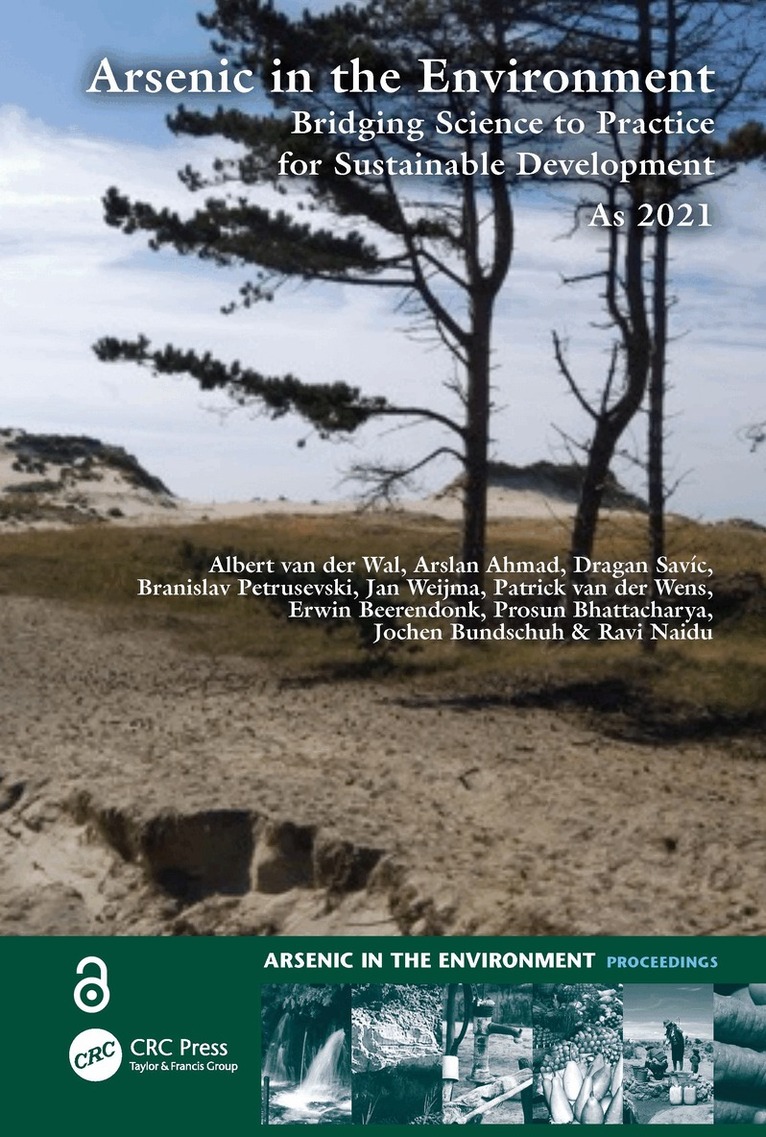
Arsenic in the Environment: Bridging Science to Practice for Sustainable Development As2021
Proceedings of the 8th International Congress and Exhibition on Arsenic in the Environment (As2021), June 7-9, 2021, Wageningen, The Netherlands
Av Albert van der Wal, Arslan Ahmad m. fl.
Inbunden, 2024
2744 kr
Lägg i varukorg
The Congress and Exhibition Series "Arsenic in the Environment" offers an international, multi- and interdisciplinary discussion platform for research and innovation aimed towards a holistic solution to the challenges posed by the environmental toxin arsenic, with global societal impact. The …
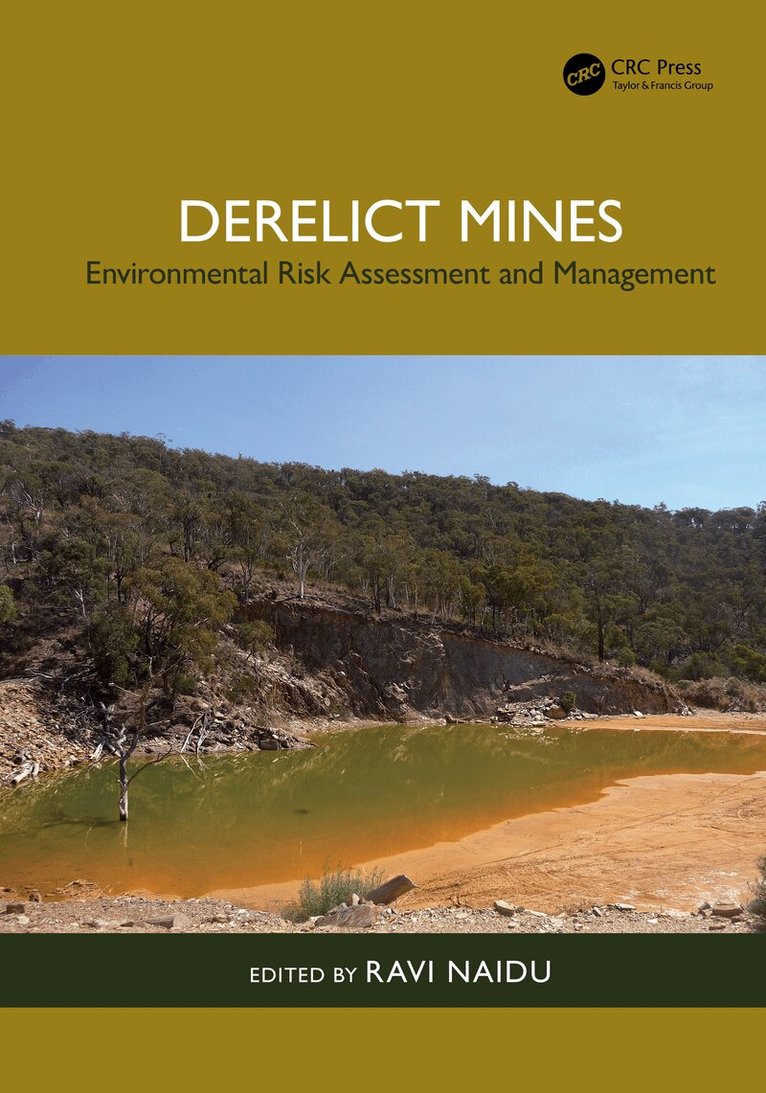
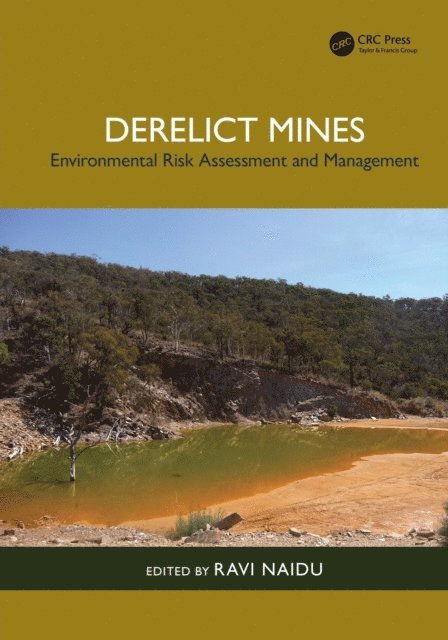
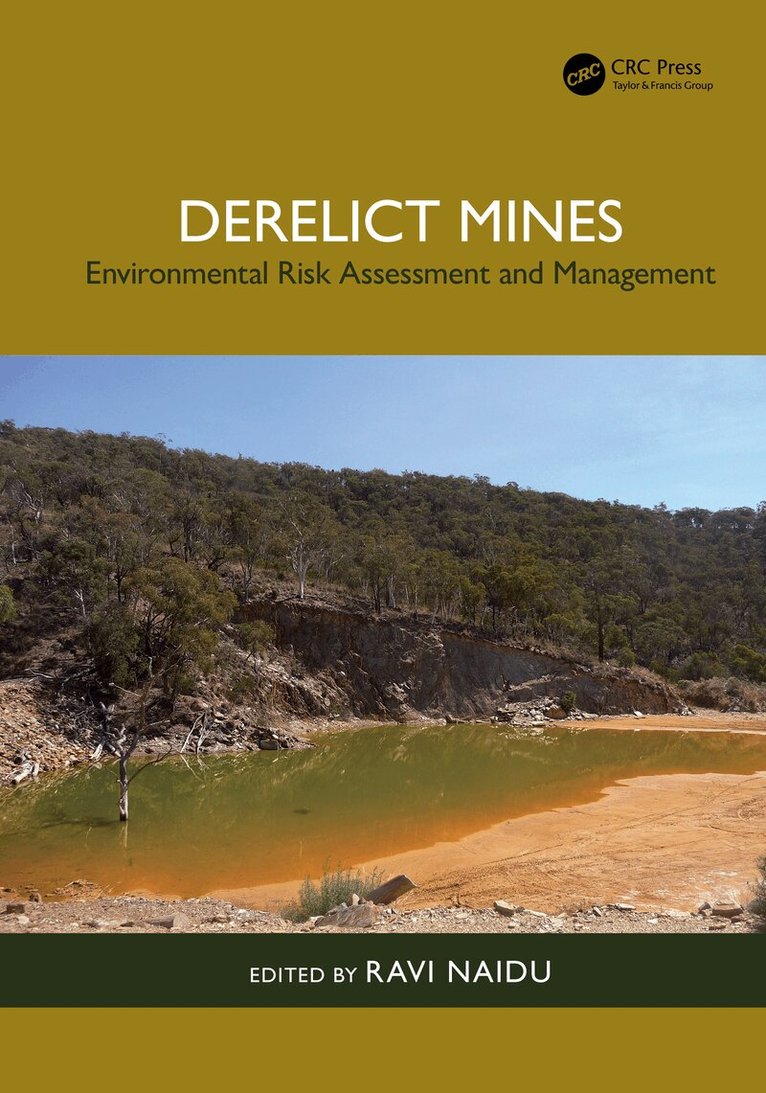
Derelict Mines
Environmental Risk Assessment and Management
Av Ravi Naidu
Häftad, 2026
847 kr
Lägg i varukorg
Mine areas left behind by companies that no longer exist are defined as derelict mines – those that were operated and closed at a time when most countries did not have adequate regulations requiring rehabilitation of the impacted mine areas. This book provides unique information on the extent and …
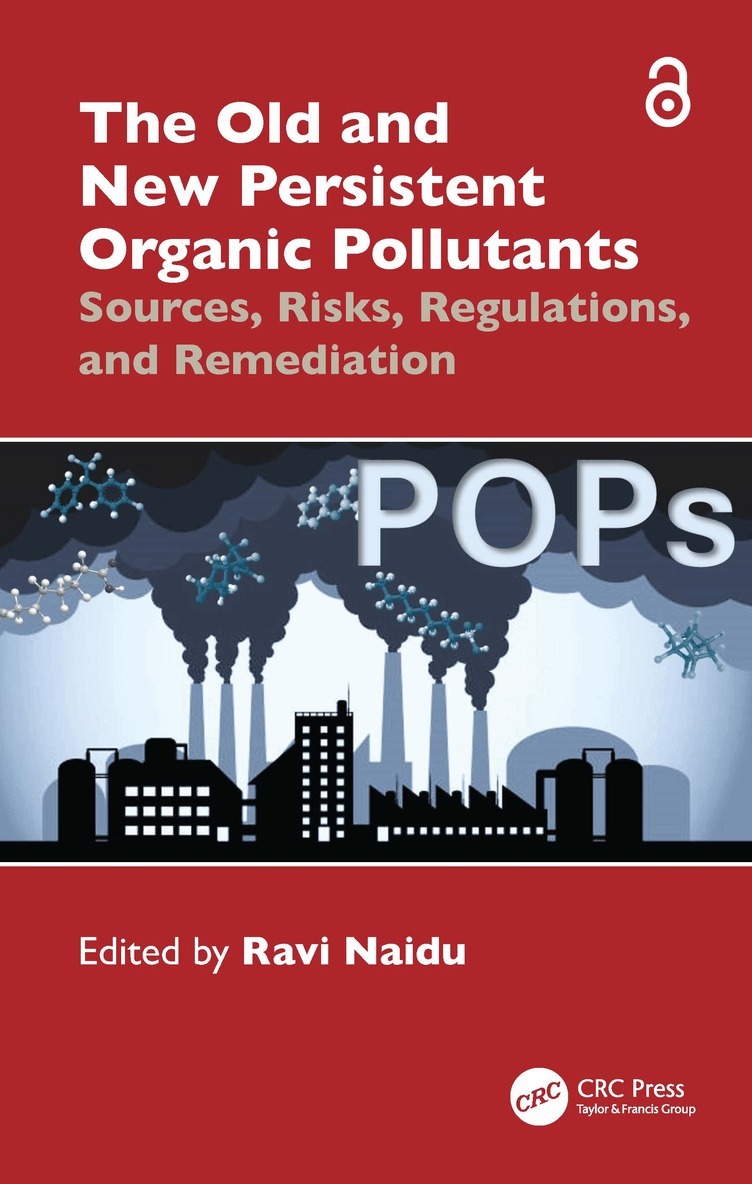
Old and New Persistent Organic Pollutants
Sources, Risks, Regulations, and Remediation
Av Ravi Naidu
Inbunden, 2025
2197 kr
Lägg i varukorg
Our understanding of persistent organic pollutants (POPs), their exposure pathways, and their impact on the environment and human health is constantly evolving and the list of new and emerging POPs is constantly changing. This book provides a comprehensive coverage of new and old hazardous …
Derelict Mines
Environmental Risk Assessment and Management
Av Ravi Naidu
E-bok, 2024
3065 kr
Lägg i varukorg
Mine areas left behind by companies that no longer exist are defined as derelict mines – those that were operated and closed at a time when most countries did not have adequate regulations requiring rehabilitation of the impacted mine areas. This book provides unique information on the extent and …
Derelict Mines
Environmental Risk Assessment and Management
Av Ravi Naidu
E-bok, 2024
2998 kr
Lägg i varukorg
Mine areas left behind by companies that no longer exist are defined as derelict mines – those that were operated and closed at a time when most countries did not have adequate regulations requiring rehabilitation of the impacted mine areas. This book provides unique information on the extent and …
Trace Elements in the Environment
Biogeochemistry, Biotechnology, and Bioremediation
Av Ravi Naidu, Kenneth S. Sajwan m. fl.
E-bok, 2005
1264 kr
Lägg i varukorg
New analytical techniques have enhanced current understanding of the behavior of trace and ultratrace elements in the biogeochemical cycling, chemical speciation, bioavailability, bioaccumulation, and as applied to the phytoremediation of contaminated soils. Addressing worldwide regulatory, …
Understanding the Geological and Medical Interface of Arsenic - As 2012
Proceedings of the 4th International Congress on Arsenic in the Environment, 22-27 July 2012, Cairns, Australia
Av Prosun Bhattacharya, Jochen Bundschuh m. fl.
E-bok, 2012
3664 kr
Lägg i varukorg
The congress "Arsenic in the Environment" offers an international, multi- and interdisciplinary discussion platform for arsenic research aimed at practical solutions of problems with considerable social impact, as well as focusing on cutting edge and breakthrough research in physical, chemical, …
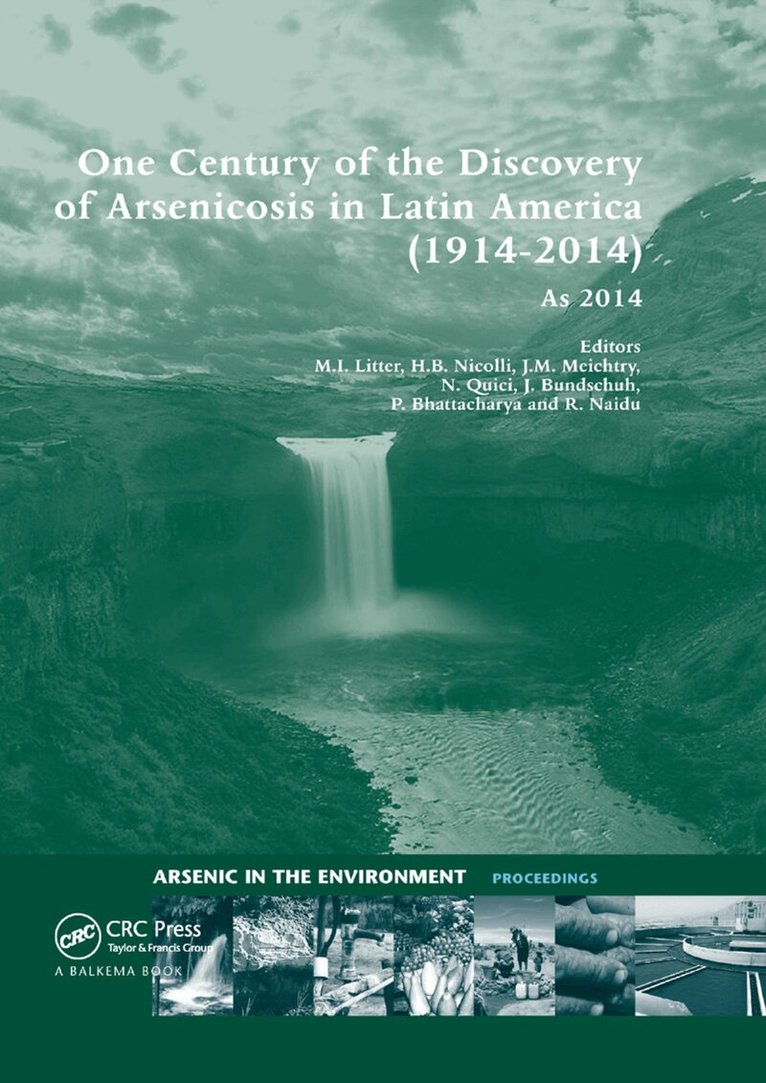
One Century of the Discovery of Arsenicosis in Latin America (1914-2014) As2014
Proceedings of the 5th International Congress on Arsenic in the Environment, May 11-16, 2014, Buenos Aires, Argentina
Av Marta I. Litter, Hugo B. Nicolli m. fl.
Inbunden, 2014
2197 kr
Lägg i varukorg
The Congress "Arsenic in the Environment" offers an international, multi- and interdisciplinary discussion platform for research aimed towards a holistic solution to the problem posed by the environmental toxin arsenic, with considerable societal impact. The congress has focused on cutting edge and …
Arsenic Research and Global Sustainability
Proceedings of the Sixth International Congress on Arsenic in the Environment (As2016), June 19-23, 2016, Stockholm, Sweden
Av Prosun Bhattacharya, Marie Vahter m. fl.
Inbunden, 2016
3065 kr
Lägg i varukorg
The Congress "Arsenic in the Environment" offers an international, multi- and interdisciplinary discussion platform for research and innovation aimed towards a holistic solution to the problem posed by the environmental toxin arsenic, with considerable societal impact. The congress has focused on …
Derelict Mines
Environmental Risk Assessment and Management
Av Ravi Naidu
Inbunden, 2024
2826 kr
Lägg i varukorg
Mine areas left behind by companies that no longer exist are defined as derelict mines – those that were operated and closed at a time when most countries did not have adequate regulations requiring rehabilitation of the impacted mine areas. This book provides unique information on the extent and …
One Century of the Discovery of Arsenicosis in Latin America (1914-2014) As2014
Proceedings of the 5th International Congress on Arsenic in the Environment, May 11-16, 2014, Buenos Aires, Argentina
Av Marta I. Litter, Hugo B. Nicolli m. fl.
Häftad, 2018
720 kr
Lägg i varukorg
The Congress "Arsenic in the Environment" offers an international, multi- and interdisciplinary discussion platform for research aimed towards a holistic solution to the problem posed by the environmental toxin arsenic, with considerable societal impact. The congress has focused on cutting edge and …
Environmental Arsenic in a Changing World
Proceedings of the 7th International Congress and Exhibition on Arsenic in the Environment (AS 2018), July 1-6, 2018, Beijing, P.R. China
Av Yongguan Zhu, Huaming Guo m. fl.
Inbunden, 2019
3156 kr
Lägg i varukorg
The Congress "Arsenic in the Environment" offers an international, multi- and interdisciplinary discussion platform for research and innovation aimed towards a holistic solution to the problem posed by the environmental toxin arsenic, with significant societal impact. The Congress has focused on …
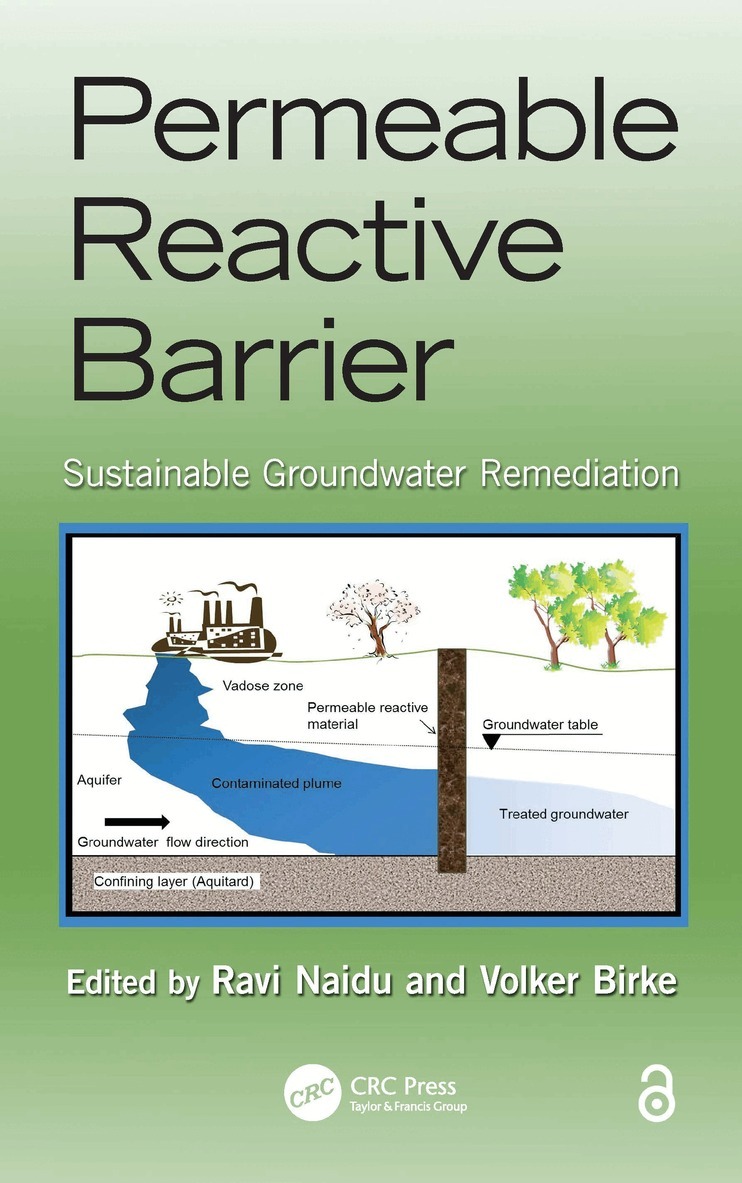
Permeable Reactive Barrier
Sustainable Groundwater Remediation
Häftad, 2020
735 kr
Lägg i varukorg
Remediation of groundwater is complex and often challenging. But the cost of pump and treat technology, coupled with the dismal results achieved, has paved the way for newer, better technologies to be developed. Among these techniques is permeable reactive barrier (PRB) technology, which allows …
Arsenic Research and Global Sustainability
Proceedings of the Sixth International Congress on Arsenic in the Environment (As2016), June 19-23, 2016, Stockholm, Sweden
Av Ravi Naidu, Jochen Bundschuh m. fl.
E-bok, 2016
935 kr
Lägg i varukorg
The Congress "Arsenic in the Environment" offers an international, multi- and interdisciplinary discussion platform for research and innovation aimed towards a holistic solution to the problem posed by the environmental toxin arsenic, with considerable societal impact. The congress has focused on …
One Century of the Discovery of Arsenicosis in Latin America (1914-2014) As2014
Proceedings of the 5th International Congress on Arsenic in the Environment, May 11-16, 2014, Buenos Aires, Argentina
Av Ravi Naidu, Prosun Bhattacharya m. fl.
E-bok, 2014
855 kr
Lägg i varukorg
The Congress "Arsenic in the Environment" offers an international, multi- and interdisciplinary discussion platform for research aimed towards a holistic solution to the problem posed by the environmental toxin arsenic, with considerable societal impact. The congress has focused on cutting edge and …
One Century of the Discovery of Arsenicosis in Latin America (1914-2014) As2014
Proceedings of the 5th International Congress on Arsenic in the Environment, May 11-16, 2014, Buenos Aires, Argentina
Av Ravi Naidu, Prosun Bhattacharya m. fl.
E-bok, 2014
855 kr
Lägg i varukorg
The Congress "Arsenic in the Environment" offers an international, multi- and interdisciplinary discussion platform for research aimed towards a holistic solution to the problem posed by the environmental toxin arsenic, with considerable societal impact. The congress has focused on cutting edge and …
Trace Elements in the Environment
Biogeochemistry, Biotechnology, and Bioremediation
Av Ravi Naidu, Kenneth S. Sajwan m. fl.
E-bok, 2005
1264 kr
Lägg i varukorg
New analytical techniques have enhanced current understanding of the behavior of trace and ultratrace elements in the biogeochemical cycling, chemical speciation, bioavailability, bioaccumulation, and as applied to the phytoremediation of contaminated soils. Addressing worldwide regulatory, …
Permeable Reactive Barrier
Sustainable Groundwater Remediation
Inbunden, 2014
2140 kr
Lägg i varukorg
Remediation of groundwater is complex and often challenging. But the cost of pump and treat technology, coupled with the dismal results achieved, has paved the way for newer, better technologies to be developed. Among these techniques is permeable reactive barrier (PRB) technology, which allows …
SAMPLING AND ASSESSMENT OF CONTAMINATED SITES
Av Naidu Ravi, Ravi Naidu m. fl.
Inbunden, 2026
2041 kr
Lägg i varukorg
Drawing on the expertise of researchers and professionals from around the globe, this volume focuses on providing a foundational framework for assessing the contamination of soil, surface water, and groundwater, and evaluating the human health risk factors of contamination. Chapters cover key …
Contaminants in Agricultural Soils
Challenges and Solutions
Av Distinguishe Naidu, Ravi ) Naidu
Inbunden, 2025
2687 kr
Lägg i varukorg
It’s been estimated that around 24 billion tonnes of fertile topsoil is lost each year due to historic and ongoing pollution. With increasing pressure placed upon land as a resource, there is an urgent need to make better use of existing agricultural land, as well as remediate contaminated land for …
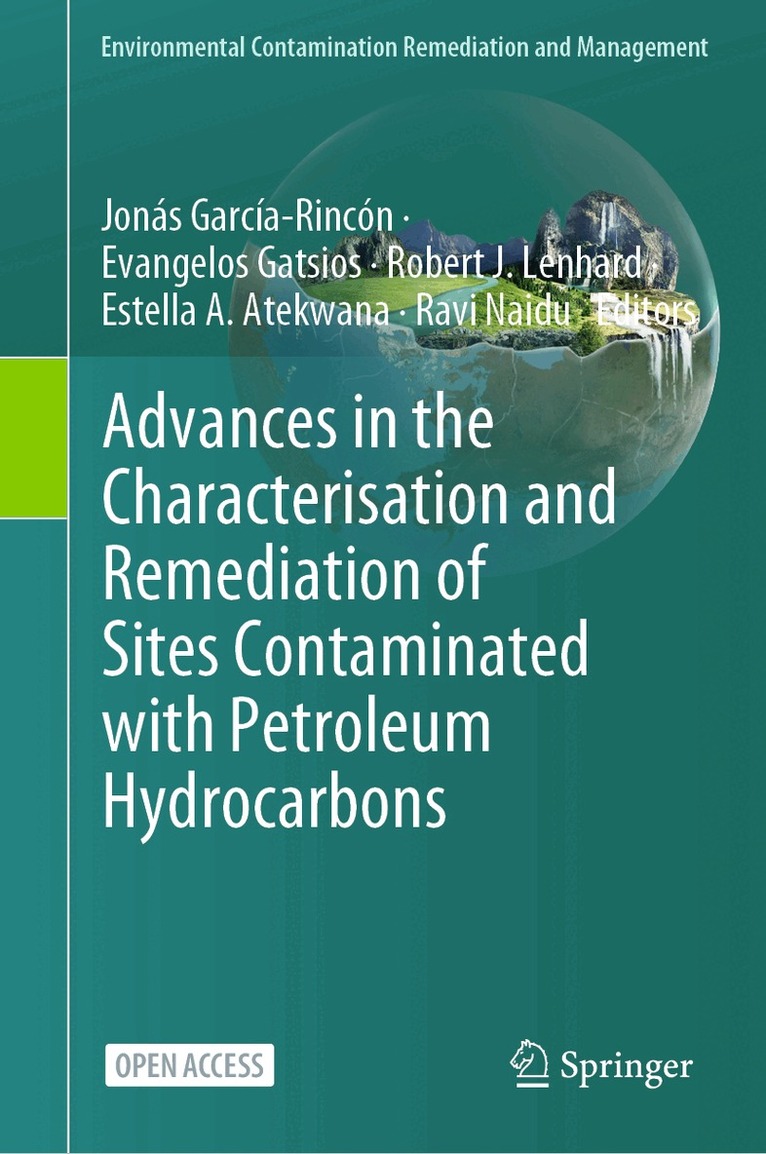
Advances in the Characterisation and Remediation of Sites Contaminated with Petroleum Hydrocarbons
Av Jonás García-Rincón, Evangelos Gatsios m. fl.
Inbunden, 2023
555 kr
Lägg i varukorg
This open access book synthesizes important advances in the assessment and management of soil and groundwater systems contaminated with petroleum hydrocarbons, especially in the form of light non-aqueous phase liquids (LNAPLs). LNAPL characterization and remediation is challenging due to the …