Rawad Hammad – författare
Visar alla böcker från författaren Rawad Hammad. Handla med fri frakt och snabb leverans.
8 produkter
8 produkter
Inbunden, Engelska, 2025
2 316 kr
Skickas inom 10-15 vardagar
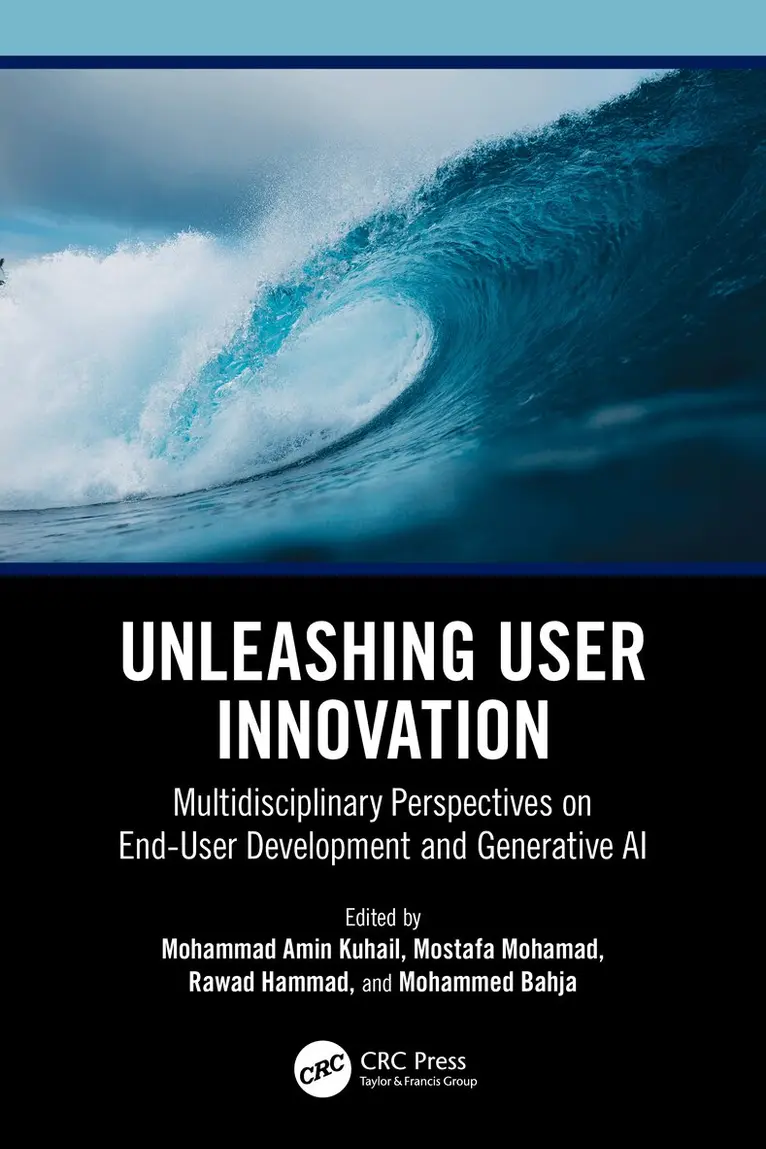
The convergence of End-User Development (EUD) and Generative Artificial Intelligence (GenAI) ushers in a transformative era in which creators and consumers are no longer sharply divided, and users are empowered to innovate as never before. Unleashing User Innovation: Multidisciplinary Perspectives on End-User Development and Generative AI explores this dynamic intersection by bringing together diverse perspectives to highlight how these technologies are reshaping how we interact, learn, and innovate.With the perspective that new challenges require user-driven solutions, the book explores how EUD allows non-technical users to adapt and create tools for their needs, while GenAI infuses the creative capability for creating human-like output, from natural language to multimedia. Together, EUD and GenAI can allow the democratization of innovation and open unimagined possibilities. The book:Traces the evolution of EUD with an overview of the tools designed for chatbot development.Examines the educational landscape and shows how GenAI empowers educators to use AI as consumers and collaborators in shaping educational futures.Presents state-of-the-art applications of GenAI in personalizing education to improve comprehension and support special education.Explores the versatility of GenAI applications in tourism and immersive experiences, public health, and financial systems.Covers major ethical, policy, and global considerations driving responsible AI deployment.By exploring the intersection of diverse fields, the book reveals how generative AI empowers individuals engaged in end-user development to unlock their creative potential. It emphasizes the role of generative AI in enabling these developers to create innovative software solutions effectively. With a focus on cutting-edge advancements, the book showcases how the integration of generative AI fosters a collaborative environment that bridges the gap between technical and non-technical users, thereby democratizing development and fostering innovation.
E-bok
PDF, Engelska, 2025883 kr
Läs direkt efter köp
The convergence of End-User Development (EUD) and Generative Artificial Intelligence (GenAI) ushers in a transformative era in which creators and consumers are no longer sharply divided, and users are empowered to innovate as never before. Unleashing User Innovation: Multidisciplinary Perspectives on End-User Development and Generative AI explores this dynamic intersection by bringing together diverse perspectives to highlight how these technologies are reshaping how we interact, learn, and innovate.With the perspective that new challenges require user-driven solutions, the book explores how EUD allows non-technical users to adapt and create tools for their needs, while GenAI infuses the creative capability for creating human-like output, from natural language to multimedia. Together, EUD and GenAI can allow the democratization of innovation and open unimagined possibilities. The book:Traces the evolution of EUD with an overview of the tools designed for chatbot development.Examines the educational landscape and shows how GenAI empowers educators to use AI as consumers and collaborators in shaping educational futures.Presents state-of-the-art applications of GenAI in personalizing education to improve comprehension and support special education.Explores the versatility of GenAI applications in tourism and immersive experiences, public health, and financial systems.Covers major ethical, policy, and global considerations driving responsible AI deployment.By exploring the intersection of diverse fields, the book reveals how generative AI empowers individuals engaged in end-user development to unlock their creative potential. It emphasizes the role of generative AI in enabling these developers to create innovative software solutions effectively. With a focus on cutting-edge advancements, the book showcases how the integration of generative AI fosters a collaborative environment that bridges the gap between technical and non-technical users, thereby democratizing development and fostering innovation.
E-bok
Engelska, 2025883 kr
Läs direkt efter köp
The convergence of End-User Development (EUD) and Generative Artificial Intelligence (GenAI) ushers in a transformative era in which creators and consumers are no longer sharply divided, and users are empowered to innovate as never before. Unleashing User Innovation: Multidisciplinary Perspectives on End-User Development and Generative AI explores this dynamic intersection by bringing together diverse perspectives to highlight how these technologies are reshaping how we interact, learn, and innovate.With the perspective that new challenges require user-driven solutions, the book explores how EUD allows non-technical users to adapt and create tools for their needs, while GenAI infuses the creative capability for creating human-like output, from natural language to multimedia. Together, EUD and GenAI can allow the democratization of innovation and open unimagined possibilities. The book:Traces the evolution of EUD with an overview of the tools designed for chatbot development.Examines the educational landscape and shows how GenAI empowers educators to use AI as consumers and collaborators in shaping educational futures.Presents state-of-the-art applications of GenAI in personalizing education to improve comprehension and support special education.Explores the versatility of GenAI applications in tourism and immersive experiences, public health, and financial systems.Covers major ethical, policy, and global considerations driving responsible AI deployment.By exploring the intersection of diverse fields, the book reveals how generative AI empowers individuals engaged in end-user development to unlock their creative potential. It emphasizes the role of generative AI in enabling these developers to create innovative software solutions effectively. With a focus on cutting-edge advancements, the book showcases how the integration of generative AI fosters a collaborative environment that bridges the gap between technical and non-technical users, thereby democratizing development and fostering innovation.
Inbunden, Engelska, 2023
3 600 kr
Skickas inom 5-8 vardagar
Inbunden, Engelska, 2021
3 411 kr
Skickas inom 5-8 vardagar
Inbunden, Engelska, 2022
1 930 kr
Skickas inom 10-15 vardagar
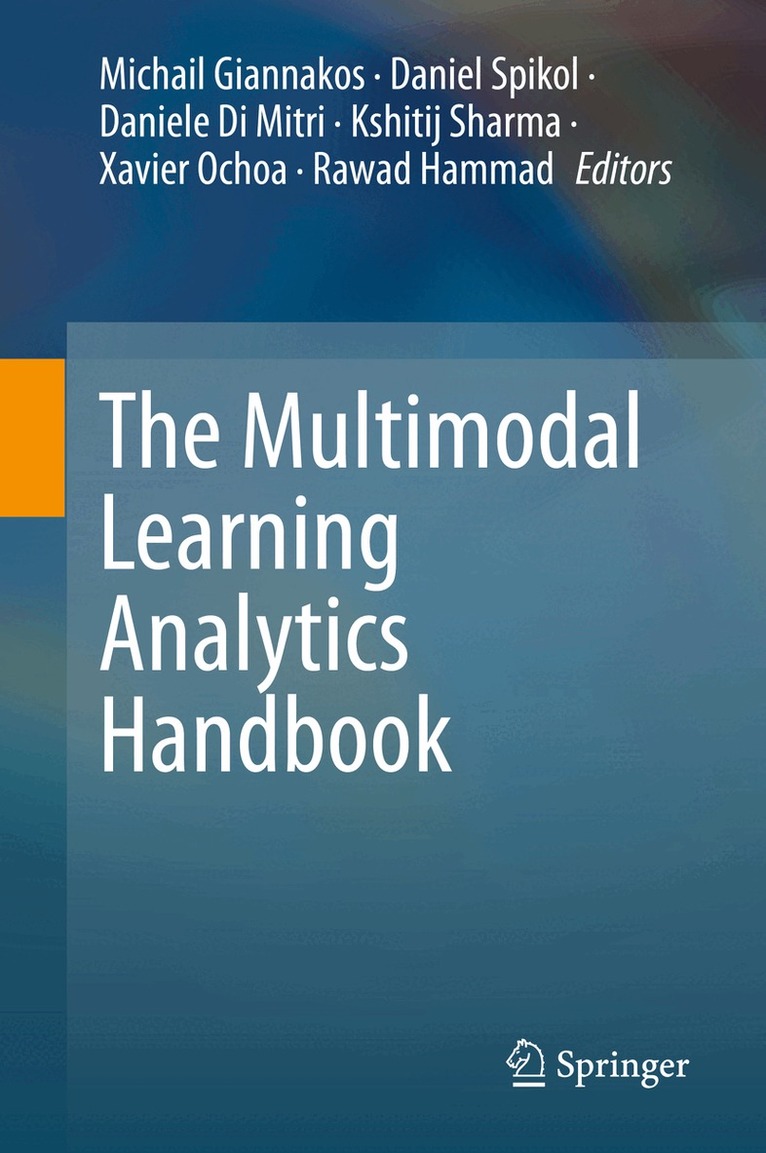
This handbook is the first book ever covering the area of Multimodal Learning Analytics (MMLA). The field of MMLA is an emerging domain of Learning Analytics and plays an important role in expanding the Learning Analytics goal of understanding and improving learning in all the different environments where it occurs. The challenge for research and practice in this field is how to develop theories about the analysis of human behaviors during diverse learning processes and to create useful tools that could augment the capabilities of learners and instructors in a way that is ethical and sustainable. Behind this area, the CrossMMLA research community exchanges ideas on how we can analyze evidence from multimodal and multisystem data and how we can extract meaning from this increasingly fluid and complex data coming from different kinds of transformative learning situations and how to best feed back the results of these analyses to achieve positive transformative actions on those learning processes.This handbook also describes how MMLA uses the advances in machine learning and affordable sensor technologies to act as a virtual observer/analyst of learning activities. The book describes how this “virtual nature” allows MMLA to provide new insights into learning processes that happen across multiple contexts between stakeholders, devices and resources. Using such technologies in combination with machine learning, Learning Analytics researchers can now perform text, speech, handwriting, sketches, gesture, affective, or eye-gaze analysis, improve the accuracy of their predictions and learned models and provide automated feedback to enable learner self-reflection. However, with this increased complexity in data, new challenges also arise. Conducting the data gathering, pre-processing, analysis, annotation and sense-making, in a way that is meaningful for learning scientists and other stakeholders (e.g., students or teachers), still pose challenges in this emergent field. This handbook aims to serve as a unique resource for state of the art methods and processes.Chapter 11 of this book is available open access under a CC BY 4.0 license at link.springer.com.
E-bok
Engelska, 20222 388 kr
Läs direkt efter köp
This handbook is the first book ever covering the area of Multimodal Learning Analytics (MMLA). The field of MMLA is an emerging domain of Learning Analytics and plays an important role in expanding the Learning Analytics goal of understanding and improving learning in all the different environments where it occurs. The challenge for research and practice in this field is how to develop theories about the analysis of human behaviors during diverse learning processes and to create useful tools that could augment the capabilities of learners and instructors in a way that is ethical and sustainable. Behind this area, the CrossMMLA research community exchanges ideas on how we can analyze evidence from multimodal and multisystem data and how we can extract meaning from this increasingly fluid and complex data coming from different kinds of transformative learning situations and how to best feed back the results of these analyses to achieve positive transformative actions on those learning processes.This handbook also describes how MMLA uses the advances in machine learning and affordable sensor technologies to act as a virtual observer/analyst of learning activities. The book describes how this “virtual nature” allows MMLA to provide new insights into learning processes that happen across multiple contexts between stakeholders, devices and resources. Using such technologies in combination with machine learning, Learning Analytics researchers can now perform text, speech, handwriting, sketches, gesture, affective, or eye-gaze analysis, improve the accuracy of their predictions and learned models and provide automated feedback to enable learner self-reflection. However, with this increased complexity in data, new challenges also arise. Conducting the data gathering, pre-processing, analysis, annotation and sense-making, in a way that is meaningful for learning scientists and other stakeholders (e.g., students or teachers), still pose challenges in this emergent field. This handbook aims to serve as a unique resource for state of the art methods and processes.
Chapter 11 of this book is available open access under a CC BY 4.0 license at link.springer.com.
Häftad, Engelska, 2023
1 930 kr
Skickas inom 10-15 vardagar
This handbook is the first book ever covering the area of Multimodal Learning Analytics (MMLA). The field of MMLA is an emerging domain of Learning Analytics and plays an important role in expanding the Learning Analytics goal of understanding and improving learning in all the different environments where it occurs. The challenge for research and practice in this field is how to develop theories about the analysis of human behaviors during diverse learning processes and to create useful tools that could augment the capabilities of learners and instructors in a way that is ethical and sustainable. Behind this area, the CrossMMLA research community exchanges ideas on how we can analyze evidence from multimodal and multisystem data and how we can extract meaning from this increasingly fluid and complex data coming from different kinds of transformative learning situations and how to best feed back the results of these analyses to achieve positive transformative actions on those learning processes.This handbook also describes how MMLA uses the advances in machine learning and affordable sensor technologies to act as a virtual observer/analyst of learning activities. The book describes how this “virtual nature” allows MMLA to provide new insights into learning processes that happen across multiple contexts between stakeholders, devices and resources. Using such technologies in combination with machine learning, Learning Analytics researchers can now perform text, speech, handwriting, sketches, gesture, affective, or eye-gaze analysis, improve the accuracy of their predictions and learned models and provide automated feedback to enable learner self-reflection. However, with this increased complexity in data, new challenges also arise. Conducting the data gathering, pre-processing, analysis, annotation and sense-making, in a way that is meaningful for learning scientists and other stakeholders (e.g., students or teachers), still pose challenges in this emergent field. This handbook aims to serve as a unique resource for state of the art methods and processes.Chapter 11 of this book is available open access under a CC BY 4.0 license at link.springer.com.