Ray M. Merrill - Böcker
Visar alla böcker från författaren Ray M. Merrill. Handla med fri frakt och snabb leverans.
7 produkter
7 produkter
2 059 kr
Skickas inom 10-15 vardagar
From the author of the bestselling Introduction to Epidemiology, this new book presents basic concepts and research methods used in environmental epidemiology and the application of environmental epidemiology to influencing human health and well-being. The first eight chapters cover basic concepts and research methods used in environmental epidemiology. The following chapters focus on the application of environmental epidemiology to specific environmental factors associated with health.Developed for an introductory course in environmental epidemiology, Environmental Epidemiology is ideal for undergraduate and graduate students in public health, as well as field public health workers. Features:Chapter topics represent fundamental concepts, research methods, and application areas in environmental epidemiology. Learning objectives are presented at the beginning of each chapter. The chapters are divided into concise sections with several examples. Tables and figures summarize and clarify important concepts and information. Key words are bolded in the text and defined. Study questions with descriptive answers are provided at the end of each chapter.
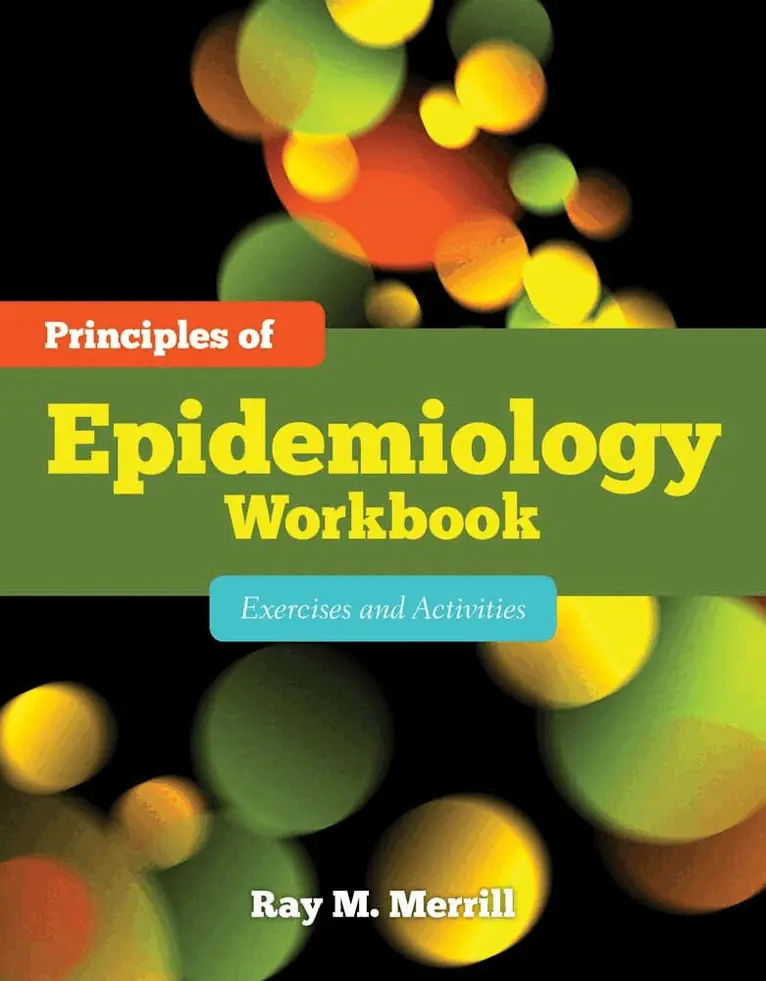
Principles of Epidemiology Workbook: Exercises and Activities
Exercises and Activities
Häftad, Engelska, 2010
1 648 kr
Skickas inom 3-6 vardagar
This workbook was written for students of epidemiology and serves as a supplement to any one of several introductory text books in epidemiology. Each chapter is divided into an introduction, a series of questions and detailed responses, and a series of Homework questions. At the end of each chapter is a table with a list of selected epidemiology text books with accompanying chapters in those books that the workbook chapter may supplement. The general learning outcomes (LOs) for this workbook are: .Become familiar with basic concepts and definitions commonly used in epidemiology2.Define a public health problem3.Identify appropriate uses and limitations of data and research design strategies for solving public health problems 4.Make relevant inferences from quantitative and qualitative data 5.Distinguish between statistical association and cause-effect relationships .Measure and describe patterns of disease incidence, prevalence, and mortality 7.Identify environmental factors and behaviors associated with health-related states or events 8.Be familiar with the steps for investigating disease outbreaks 9.Identify, calculate, and interpret common indices used in identifying the health status .Evaluate program effectiveness .Critically assess epidemiological research 2.Be able to communicate health findingsEach chapter features:• -2 mastery check questions with detailed answers •5 optional problems•A case study•A multiple choice, short answer quiz. (Answers to the cases and quizzes are provided as part of the online instructor resource package.)
1 050 kr
Skickas inom 7-10 vardagar
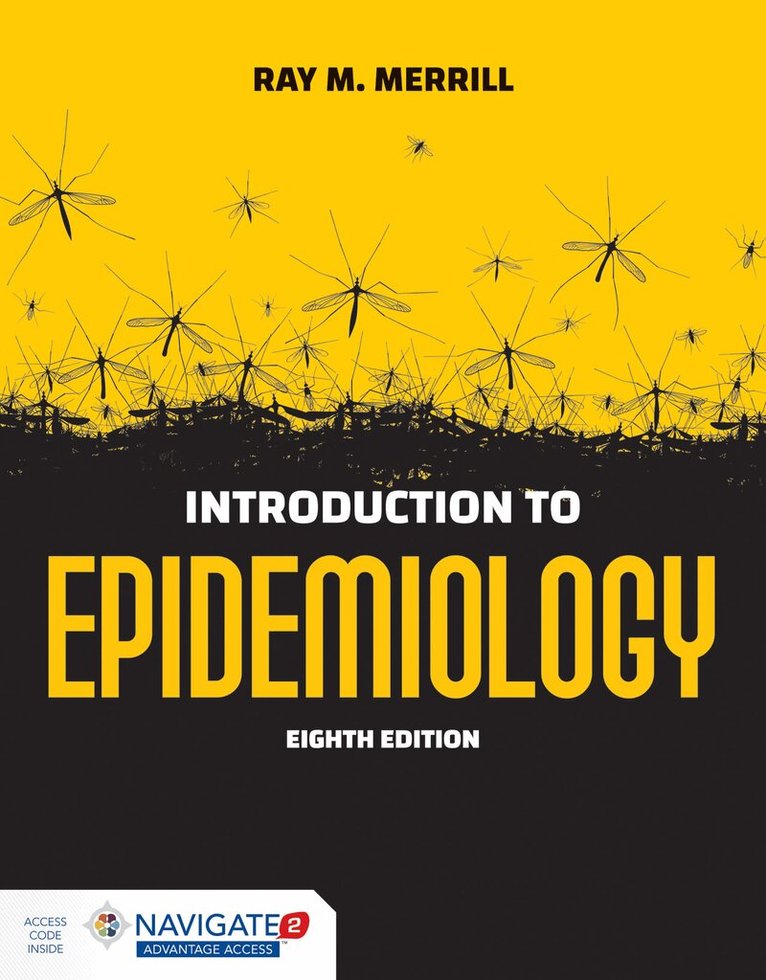
Recognized by Book Authority as one of the best Public Health books of all time, Introduction to Epidemiology is a comprehensive, reader-friendly introduction to this exciting field. Designed for students with minimal training in the biomedical sciences and statistics, this full-color text emphasizes the application of the basic principles of epidemiology according to person, place, and time factors in order to solve current, often unexpected, and serious public health problems.Students will learn how to identify and describe public health problems, formulate research hypotheses, select appropriate research study designs, manage and analyze epidemiologic data, interpret and apply results in preventing and controlling disease and health-related events. With real-world examples in the form of case studies and news files in each chapter, Introduction to Epidemiology is an accessible and effective approach to learning epidemiology.The Eighth Edition features:- Same organization as the prior edition allowing for easier transition- New or expanded coverage of the models of causation, methods of age adjustment, age-period cohort models, incubation and latency periods, and receiver operating characteristic (ROC) curves- Clearer connection between statistical inference and causal inference- New and updated practical examples and News Files help solidify concepts and show real-world application- Updated tables and figures throughout- Access to Navigate 2 online learning materials, including a comprehensive and interactive eBook, student practice activities and assessments, learning analytics reporting tools, and more- A built-in adaptive learning feature enables students to take self-assessments before or after reading a chapter. Based on their performance they can map out their own custom study plan that directs them to the areas of the text to review.
1 009 kr
Skickas inom 7-10 vardagar
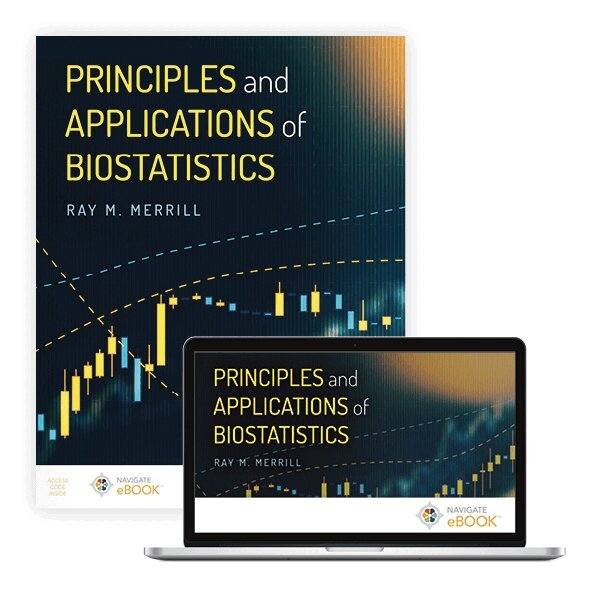
Principles and Applications of Biostatistics covers the primary concepts and methods that are required for a fundamental understanding of the use and interpretation of statistics for the biological and health sciences. The text presents ways in which biostatistics can effectively describe and assess problems (e.g., COVID-19) that threaten physical, mental, and social wellbeing. Data collection, analysis, presentation, and interpretation are covered in detail and supported with ample relevant examples and exercises incorporated throughout the book.Principles and Applications of Biostatistics covers the primary concepts and methods that are required for a fundamental understanding of the use and interpretation of statistics for the biological and health sciences. The text presents ways in which biostatistics can effectively describe and assess problems (e.g., COVID-19) that threaten physical, mental, and social wellbeing. Data collection, analysis, presentation, and interpretation are covered in detail and supported with ample relevant examples and exercises incorporated throughout the book.Key Features:•Practical questions follow each problem to encourage students to consider why the problem likely exists, help formulate hypotheses, and then statistically assess those hypotheses.•Abundant examples and assignment problems (many involving COVID-19) within each chapter cover a variety of application areas of biostatistics.•Well-designed, attractive graphics that help make statistics easier to comprehend are used to present concepts, functions, and data.•Applied focus encourages students to use computer applications (e.g. SAS MS Excel) to demonstrate data analysis.•Data analysis systems are used to obtain descriptive measures and basic plots (e.g. stem-and-leaf and box plots) for the purposes of exploratory data analysis.•P-values in hypothesis testing and confidence intervals in descriptive and analytic assessment are discussed and included on many of the computer printouts.
914 kr
Skickas inom 7-10 vardagar
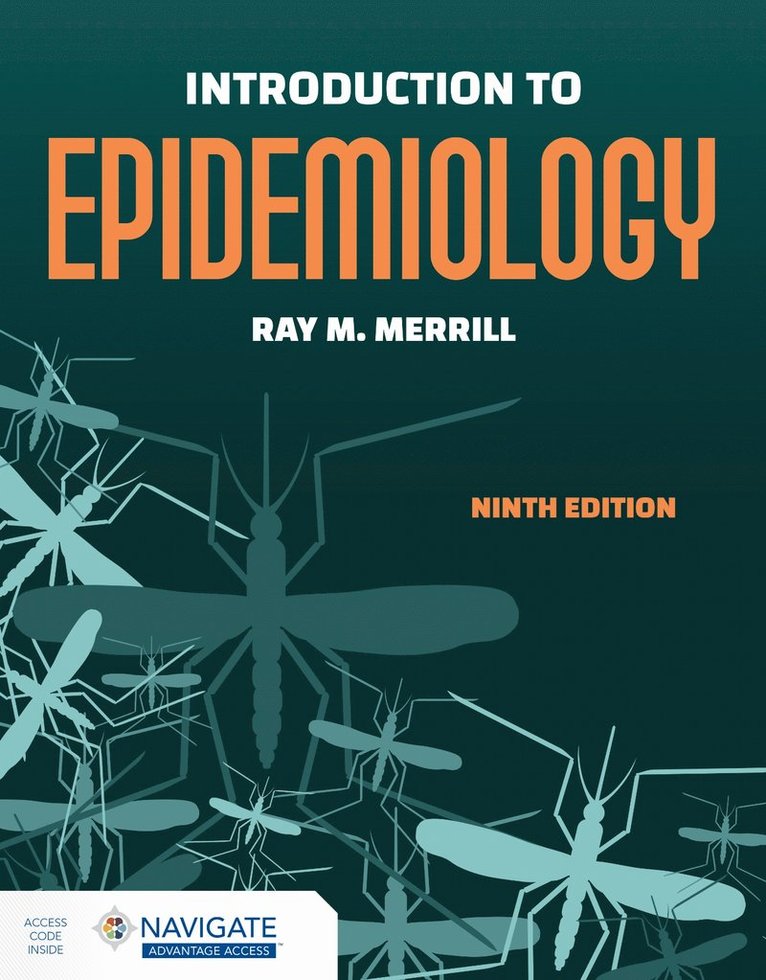
Introduction to Epidemiology is a comprehensive, reader-friendly introduction to this exciting field. Designed for students with minimal training in the biomedical sciences and statistics, this full-color text emphasizes the application of the basic principles of epidemiology according to person, place, and time factors in order to solve current, often unexpected, and serious public health problems. Students will learn how to identify and describe public health problems, formulate research hypotheses, select appropriate research designs, manage and analyze epidemiologic data, interpret and apply results in preventing and controlling disease and health-related events. With real-world examples in the form of case studies and news files in each chapter, Introduction to Epidemiology is an accessible and effective approach to learning epidemiology.Carefully revised throughout, the Ninth Edition offers:- New chapters on Epidemiology Study Plan (5) and on Social Epidemiology (13)- Greater emphasis on health equity and the social determinants of health throughout- New appendices on Careers in Epidemiology(II) and Pearson Correlation Coefficient and Regression Models (IV)- Significant restructuring of chapters (see transition guide)- Navigate Advantage Access (included with the text) a digital-only Access Code that unlocks a comprehensive and interactive eBook, student practice quizzes and assessments, PowerPoint slides, a full suite of instructor resources, and learning analytic reporting tools.
1 550 kr
Skickas inom 10-15 vardagar
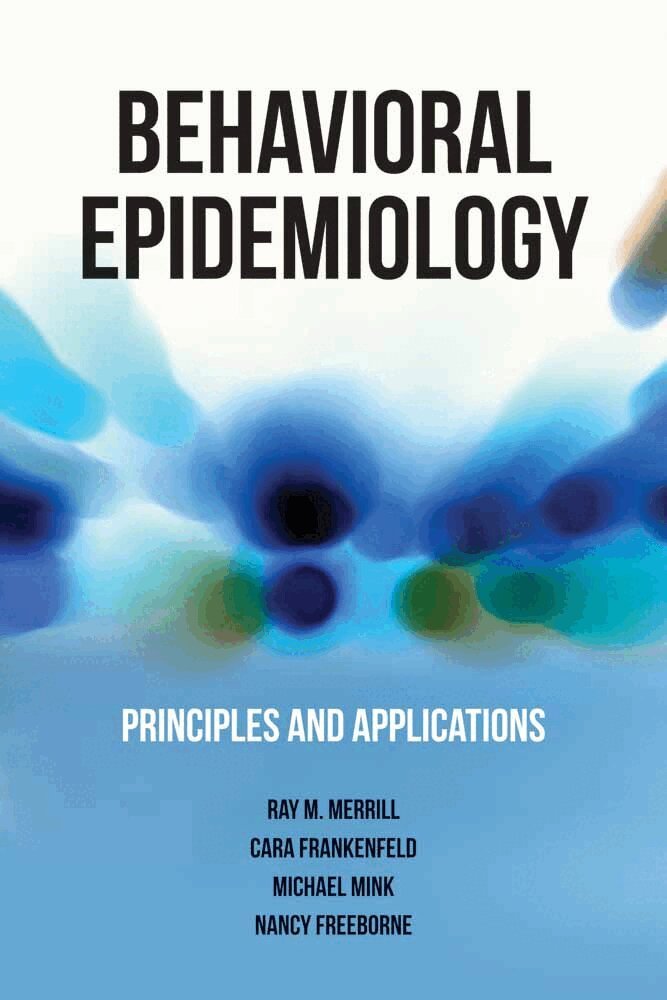
"…excellent coverage of the primary premise in clinical/(health) psychology that health conditions are largely behavior-associated, or a result of poor lifestyle choices. Good health is the result of careful planning and implementation of beneficial behaviors/practices."—Dr. Lisa Schneiter, Jefferson Community CollegeBehavioral Epidemiology: Principles and Applications is the first of its kind to bring together the disciplines of the social/behavioral sciences and epidemiology. The text reviews how we study health in relation to behaviors, the complexities of such studies, ways to minimize these complexities, and how to use this knowledge to prevent and control disease in human populations.By combining these disciplines, this book provides a foundation for students and researchers in the methods used to study behavior, drawing upon mutually successful methods, and discussing what to do when these disciplines overlap or interact. This text is ideal for master's level or early doctoral graduate students in the behavioral sciences, epidemiology, or public health, as well as researchers from other fields interested in an introduction to population-based research of behavior and health.Instructor Resources: Instructor's Manual, PowerPoint Lecture Slides, Test Bank