Raymond G. Stokes - Böcker
Visar alla böcker från författaren Raymond G. Stokes. Handla med fri frakt och snabb leverans.
9 produkter
9 produkter
Opting for Oil
The Political Economy of Technological Change in the West German Industry, 1945-1961
Häftad, Engelska, 2006
563 kr
Skickas inom 7-10 vardagar
This book investigates the causes, course and consequences of the shift in West German chemical technology from a coal to a petroleum basis between 1945 and 1961. It examines the historical underpinnings of the technological culture of the German chemical industry; changing political and economic constraints on technological decision-making in the post-war period; and the actual decision-making process within five individual firms. By addressing a wide variety of broader issues - including the origins and impact of the division of Germany; the effects of the Wirtschaftswunder, or economic miracle; European integration; and the changing role of the West German Federal Republic in the international political order - this book explains how West German industry regained and then retained a competitive position in world markets.
726 kr
Skickas inom 7-10 vardagar
The corporate history of BASF spans an era of German and international economic history that began with the rise of the 'new industries' as of the late nineteenth century and continues today in their confrontation with the new economy. This book examines BASF's corporate governance, financial system, industrial relations, system of qualification and relation to other companies. A corporate history of BASF promises more than an insight into the functioning of an industrial organisation. It also reveals the reasons for the extraordinary economic dynamics of the German empire and the enormous expansion of the world economy before World War I. BASF's history stands at the centre of Germany's wartime economy during two world wars and highlights both its strengths and weaknesses. Just as the IG Farben trust helped support Germany's course of politicoeconomic autarky after 1933, so it was that BASF helped facilitate West Germany's startlingly quick return to the world market. BASF has since been among the transnational companies whose efforts at the leading edge of economic and technological progress are paradigmatic for Germany's entry into the new economy of the twenty-first century.
Opting for Oil
The Political Economy of Technological Change in the West German Industry, 1945-1961
Inbunden, Engelska, 1994
902 kr
Skickas inom 7-10 vardagar
This book investigates the causes, course and consequences of the shift in West German chemical technology from a coal to a petroleum basis between 1945 and 1961. It examines the historical underpinnings of the technological culture of the German chemical industry; changing political and economic constraints on technological decision-making in the post-war period; and the actual decision-making process within five individual firms. By addressing a wide variety of broader issues - including the origins and impact of the division of Germany; the effects of the Wirtschaftswunder, or economic miracle; European integration; and the changing role of the West German Federal Republic in the international political order - this book explains how West German industry regained and then retained a competitive position in world markets.
1 838 kr
Skickas inom 7-10 vardagar
The corporate history of BASF spans an era of German and international economic history that began with the rise of the 'new industries' as of the late nineteenth century and continues today in their confrontation with the new economy. This book examines BASF's corporate governance, financial system, industrial relations, system of qualification and relation to other companies. A corporate history of BASF promises more than an insight into the functioning of an industrial organisation. It also reveals the reasons for the extraordinary economic dynamics of the German empire and the enormous expansion of the world economy before World War I. BASF's history stands at the centre of Germany's wartime economy during two world wars and highlights both its strengths and weaknesses. Just as the IG Farben trust helped support Germany's course of politicoeconomic autarky after 1933, so it was that BASF helped facilitate West Germany's startlingly quick return to the world market. BASF has since been among the transnational companies whose efforts at the leading edge of economic and technological progress are paradigmatic for Germany's entry into the new economy of the twenty-first century.
331 kr
Kommande
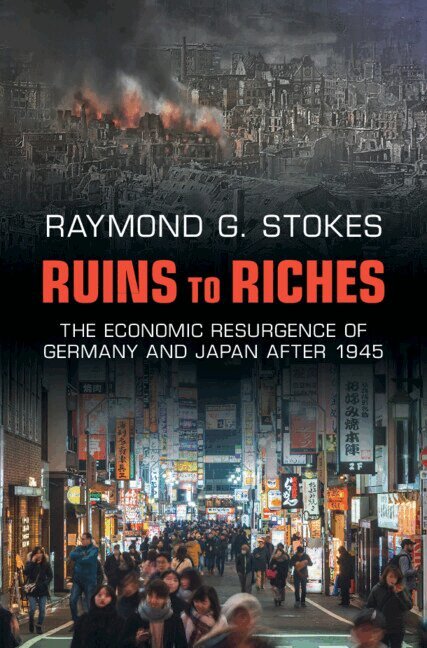
In 1945, Germany and Japan lay prostrate after total war and resounding defeat. By 1960, they had the second and fifth largest economies in the world respectively. This global leadership has been maintained ever since. How did these 'economic miracles' come to pass, and why were these two nations particularly adept at achieving them? Ray Stokes is the first to unpack these questions from comparative and international perspectives, emphasising both the individuals and companies behind this exceptional performance and the broader global political and economic contexts. He highlights the potent mixtures in both countries of judicious state action, effective industrial organisation, benign labour relations, and technological innovation, which they adapted constantly - sometimes painfully - to take full advantage of rapidly growing post-war international trade and globalisation. Together, they explain the spectacular resurgence of Deutschland AG and Japan Incorporated to global economic and technological leadership, which they have sustained to the present.
1 297 kr
Skickas inom 7-10 vardagar
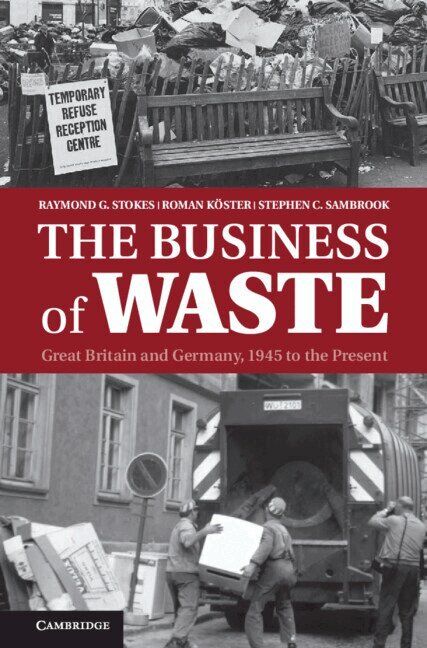
The advent of consumer societies in the United Kingdom and West Germany after 1945 led to the mass 'production' of garbage. This book compares the social, cultural and economic fallout of the growing volume and changing composition of waste in the two countries from 1945 to the present through sustained attention to changes in the business of handling household waste. Though the UK and Germany are similar in population density, degrees of urbanisation, and standardisation, the two countries took profoundly different paths from low-waste to throwaway societies, and more recently, towards the goal of 'zero-waste'. The authors explore evolving balances between public and private provision in waste services; the transformation of public cleansing into waste management; the role of government legislation and regulation; emerging conceptualisations of recycling and resource recovery; and the gradual shift of the industry's regulatory and business context from local to national and then to international.
1 119 kr
Skickas inom 7-10 vardagar
The industrial gases industry originated in 1886, when a London-based company began producing high-purity oxygen. Initially, purified oxygen was a solution in search of a problem, but demand for it soared early in the twentieth century with the emergence of welding technology. By then, dramatic technological improvements in air separation and purification had emerged, as had most key firms dominating the industry today. Building on air in the decades that followed, the firms expanded their product range and geographical reach to create applications that were essential to every manufacturing process in the modern world, from semiconductor production to oil refining, waste water treatment, and steel-making. This is the first scholarly history of this vital but invisible industry from its origins to the present. Based on unparalleled access to company and public archives, the book explores business and technological development, industrial evolution, and the industry's local roots and international and global reach.
396 kr
Skickas inom 7-10 vardagar
In 1945, Germany and Japan lay prostrate after total war and resounding defeat. By 1960, they had the second and fifth largest economies in the world respectively. This global leadership has been maintained ever since. How did these 'economic miracles' come to pass, and why were these two nations particularly adept at achieving them? Ray Stokes is the first to unpack these questions from comparative and international perspectives, emphasising both the individuals and companies behind this exceptional performance and the broader global political and economic contexts. He highlights the potent mixtures in both countries of judicious state action, effective industrial organisation, benign labour relations, and technological innovation, which they adapted constantly - sometimes painfully - to take full advantage of rapidly growing post-war international trade and globalisation. Together, they explain the spectacular resurgence of Deutschland AG and Japan Incorporated to global economic and technological leadership, which they have sustained to the present.
464 kr
Skickas inom 5-8 vardagar