Raymond Ian Gilbert – författare
581 kr
Skickas inom 10-15 vardagar
861 kr
Skickas inom 10-15 vardagar
2 386 kr
Skickas inom 10-15 vardagar
1 336 kr
Skickas inom 10-15 vardagar
1 541 kr
Läs direkt efter köp
Provides Step-by-Step Instruction
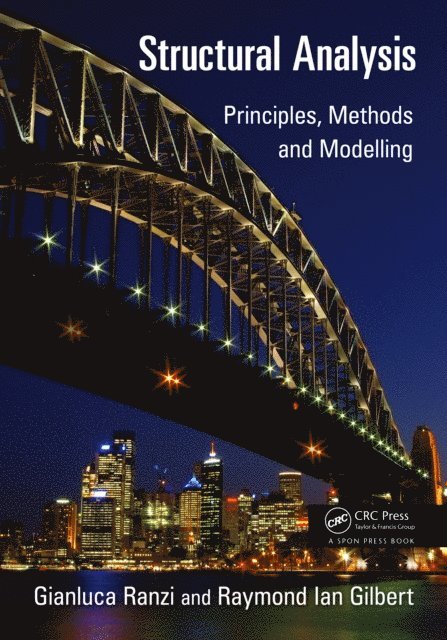
Structural Analysis: Principles, Methods and Modelling
outlines the fundamentals involved in analyzing engineering structures, and effectively presents the derivations used for analytical and numerical formulations. This text explains practical and relevant concepts, and lays down the foundation for a solid mathematical background that incorporates MATLAB® (no prior knowledge of MATLAB is necessary), and includes numerous worked examples.Effectively Analyze Engineering Structures
Divided into four parts, the text focuses on the analysis of statically determinate structures. It evaluates basic concepts and procedures, examines the classical methods for the analysis of statically indeterminate structures, and explores the stiffness method of analysis that reinforces most computer applications and commercially available structural analysis software. In addition, it covers advanced topics that include the finite element method, structural stability, and problems involving material nonlinearity.
MATLAB® files for selected worked examples are available from the book’s website. Resources available from CRC Press for lecturers adopting the book include:
A solutions manual for all the problems posed in the book Nearly 2000 PowerPoint presentations suitable for use in lectures for each chapter in the book Revision videos of selected lectures with added narration Figure slides
Structural Analysis: Principles, Methods and Modelling
exposes civil and structural engineering undergraduates to the essentials of structural analysis, and serves as a resource for students and practicing professionals in solving a range of engineering problems.990 kr
Läs direkt efter köp
2 782 kr
Skickas inom 10-15 vardagar
665 kr
Läs direkt efter köp
The design of structures in general, and prestressed concrete structures in particular, requires considerably more information than is contained in building codes. A sound understanding of structural behaviour at all stages of loading is essential. This textbook presents a detailed description and explanation of the behaviour of prestressed concrete members and structures both at service loads and at ultimate loads and, in doing so, provide a comprehensive and up-to-date guide to structural design.
Much of the text is based on first principles and relies only on the principles of mechanics and the properties of concrete and steel, with numerous worked examples. However, where the design requirements are code specific, this book refers to the provisions of Eurocode 2: Design of Concrete Structures and, where possible, the notation is the same as in Eurocode 2. A parallel volume is written to the Australian Standard for Concrete Structures AS3600-2009.
The text runs from an introduction to the fundamentals to in-depth treatments of more advanced topics in modern prestressed concrete structures. It suits senior undergraduate and graduate students and also practising engineers who want comprehensive introduction to the design of prestressed concrete structures. It retains the clear and concise explanations and the easy-to-read style of the first edition, but the content has been extensively re-organised and considerably expanded and updated. New chapters cover design procedures, actions and loads; prestressing systems and construction requirements; connections and detailing; and design concepts for prestressed concrete bridges. The topic of serviceability is developed extensively throughout.
All the authors have been researching and teaching the behaviour and design of prestressed concrete structures for over thirty-five years and the proposed new edition of the book reflects this wealth of experience. The work has also gained much from Professor Gilbert active and long-time involvement in the development of standards for concrete buildings and concrete bridges.
665 kr
Läs direkt efter köp
The design of structures in general, and prestressed concrete structures in particular, requires considerably more information than is contained in building codes. A sound understanding of structural behaviour at all stages of loading is essential. This textbook presents a detailed description and explanation of the behaviour of prestressed concrete members and structures both at service loads and at ultimate loads and, in doing so, provide a comprehensive and up-to-date guide to structural design.
Much of the text is based on first principles and relies only on the principles of mechanics and the properties of concrete and steel, with numerous worked examples. However, where the design requirements are code specific, this book refers to the provisions of Eurocode 2: Design of Concrete Structures and, where possible, the notation is the same as in Eurocode 2. A parallel volume is written to the Australian Standard for Concrete Structures AS3600-2009.
The text runs from an introduction to the fundamentals to in-depth treatments of more advanced topics in modern prestressed concrete structures. It suits senior undergraduate and graduate students and also practising engineers who want comprehensive introduction to the design of prestressed concrete structures. It retains the clear and concise explanations and the easy-to-read style of the first edition, but the content has been extensively re-organised and considerably expanded and updated. New chapters cover design procedures, actions and loads; prestressing systems and construction requirements; connections and detailing; and design concepts for prestressed concrete bridges. The topic of serviceability is developed extensively throughout.
All the authors have been researching and teaching the behaviour and design of prestressed concrete structures for over thirty-five years and the proposed new edition of the book reflects this wealth of experience. The work has also gained much from Professor Gilbert active and long-time involvement in the development of standards for concrete buildings and concrete bridges.
1 214 kr
Skickas inom 10-15 vardagar
1 411 kr
Läs direkt efter köp
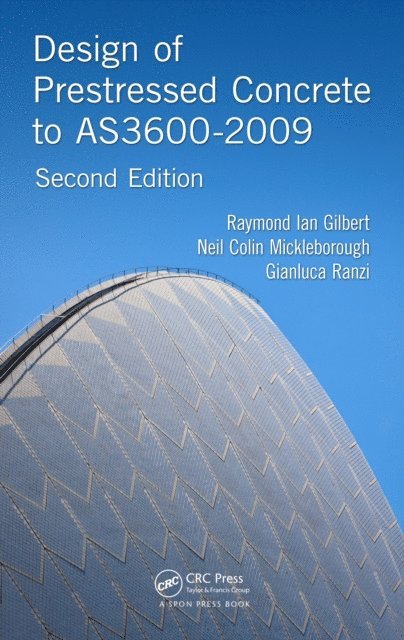
The design of structures in general, and prestressed concrete structures in particular, requires considerably more information than is contained in building codes. A sound understanding of structural behaviour at all stages of loading is essential. This textbook presents a detailed description and explanation of the behaviour of prestressed concrete members and structures, both at service loads and at ultimate loads, and in doing so, provides a comprehensive and up-to-date guide to structural design.
Much of the text is based on first principles and relies only on the principles of mechanics and the properties of concrete and steel, with numerous worked examples. However, where the design requirements are code specific, this book refers to the provisions of the Australian Standard for Concrete Structures (AS3600-2009) and, where possible, the notation is the same as in AS3600-2009. A parallel volume is written to Eurocode 2, the European Standard for the Design of Concrete Structures.
The text runs from an introduction to the fundamentals to in-depth treatments of more advanced topics in modern prestressed concrete structures. It suits senior undergraduate and graduate students, and also practising engineers who want a comprehensive guide to the design of prestressed concrete structures. It retains the clear and concise explanations and the easy-to-read style of the first edition, but the content has been extensively reorganised and considerably expanded and updated. New chapters cover design procedures, actions, and loads; prestressing systems and construction requirements; and connections and detailing. The topic of serviceability is developed extensively throughout.
The authors have been researching and teaching the behaviour and design of prestressed concrete structures for more than 35 years, and this updated edition of the book reflects this wealth of experience. The work has also gained much from Ian Gilbert’s active and long-time involvement in the development of the Australian Standards for Concrete Structures (AS3600-2009) and Concrete Bridges (AS5100.5-2012).
1 353 kr
Skickas inom 10-15 vardagar
1 541 kr
Läs direkt efter köp
Provides Step-by-Step Instruction
Structural Analysis: Principles, Methods and Modelling
outlines the fundamentals involved in analyzing engineering structures, and effectively presents the derivations used for analytical and numerical formulations. This text explains practical and relevant concepts, and lays down the foundation for a solid mathematical background that incorporates MATLAB® (no prior knowledge of MATLAB is necessary), and includes numerous worked examples.Effectively Analyze Engineering Structures
Divided into four parts, the text focuses on the analysis of statically determinate structures. It evaluates basic concepts and procedures, examines the classical methods for the analysis of statically indeterminate structures, and explores the stiffness method of analysis that reinforces most computer applications and commercially available structural analysis software. In addition, it covers advanced topics that include the finite element method, structural stability, and problems involving material nonlinearity.
MATLAB® files for selected worked examples are available from the book’s website. Resources available from CRC Press for lecturers adopting the book include:
A solutions manual for all the problems posed in the book Nearly 2000 PowerPoint presentations suitable for use in lectures for each chapter in the book Revision videos of selected lectures with added narration Figure slides
Structural Analysis: Principles, Methods and Modelling
exposes civil and structural engineering undergraduates to the essentials of structural analysis, and serves as a resource for students and practicing professionals in solving a range of engineering problems.990 kr
Läs direkt efter köp
1 411 kr
Läs direkt efter köp