Raymond K. Mulhern – författare
Visar alla böcker från författaren Raymond K. Mulhern. Handla med fri frakt och snabb leverans.
2 produkter
2 produkter
Inbunden, Engelska, 1994
1 354 kr
Skickas inom 5-8 vardagar
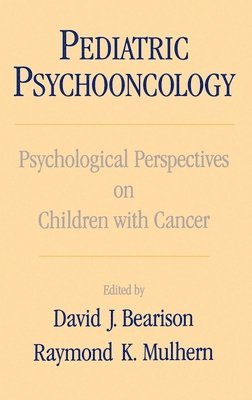
As the practice of paediatric oncology continues to advance and prognoses continue to improve, the course of treatment for children with poor prognoses becomes more biologically aggressive, more stressful, and more uncertain. Even for children who cannot be cured, new treatments have prolonged the survival of those with active disease and, consequently, medical interventions have complicated the dying process. For those who are cured, there are the lingering uncertainties of having undergone medical regimens whose adverse late effects are not yet fully understood. Consequently the field of paediatric oncology now encompasses more than strictly medical concerns. The conditions of treatment, survival, and dying have become the concerns of all health-care practitioners, including psychiatrists.This volume addresses a range of psychological issues - coping with paediatric cancer, pain and symptom management, medication compliance, sibling and family relations, care of the dying child, among others - pertaining to the practice of paediatric oncology. Each topic encompasses a substantial body of research that not only has theoretical but applied significance. Each chapter is written by a nationally recognized investigator in his or her respective area of inquiry and (1) contextually defines the research area, (2) discusses theoretical and methodological concerns of the area, (3) critically reviews and integrates research findings in the area, and (4) discusses unresolved research issues and suggests future research. The topics included are currently supported by sufficient empirical research to allow useful generalization of findings in the clinical setting.
E-bok
PDF, Engelska, 19941 132 kr
Läs direkt efter köp
Twenty to thirty years ago, the prognosis for children with cancer was dismal. Since then, remarkable advances in the treatment of childhood cancers have resulted in overall cure rates of 60 percent. In response to these improved prognoses, psychological frontiers of patient care and clinical research have evolved. Psychologists as well as mental health professionals from other disciplines are now routinely included in medical treatment planning and patient care. Psychosocial interventions with pediatric cancer patients and their families are guided by an increasingly sophisticated body of research findings that enhance their quality of life. With contributions from nationally recognized clinicians and researchers, this volume addresses the wide range of psychological issues inherent in pediatric oncology, including coping with pediatric cancer, pain and symptom management, medication compliance, neuropsychological effects of disease and therapy, sibling and family relations, bereavement, and care of the dying child. Each author carefully defines his or her research area, discusses theoretical and methodological concerns, critically reviews and integrates research findings, and discusses unresolved issues as well as future directions for research. This balanced and comprehensive overview of pediatric psychooncology is essential reading for all those interested in the treatment of children diagnosed with cancer.