Raymond Monelle – författare
Visar alla böcker från författaren Raymond Monelle. Handla med fri frakt och snabb leverans.
6 produkter
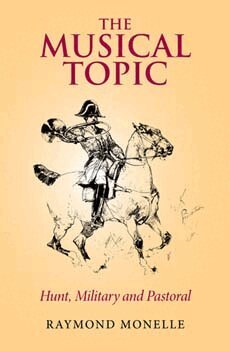
Musical Topic
Hunt, Military and Pastoral
Inbunden, 2006
415 kr
Lägg i varukorg
The Musical Topic discusses three tropes prominently featured in Western European music: the hunt, the military, and the pastoral. Raymond Monelle provides an in-depth cultural and historical study of musical topics—short melodic figures, harmonic or rhythmic formulae carrying literal or lexical …
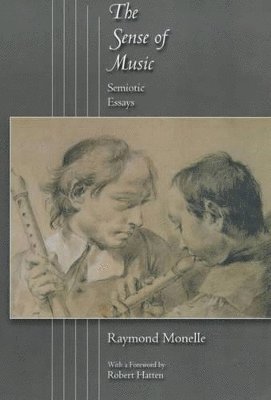
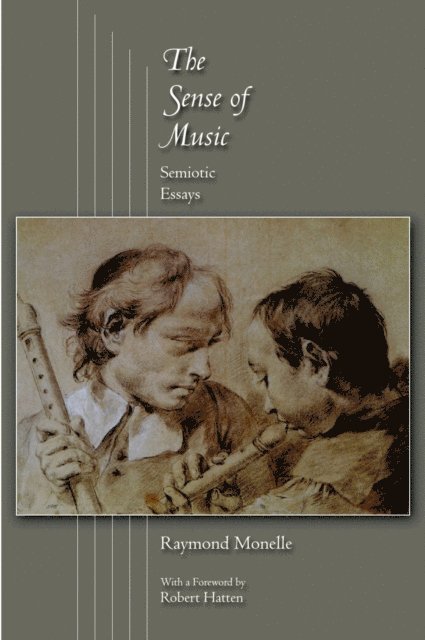
Sense of Music
Semiotic Essays
Häftad, 2000
591 kr
Lägg i varukorg
The fictional Dr. Strabismus sets out to write a new comprehensive theory of music. But music's tendency to deconstruct itself combined with the complexities of postmodernism doom him to failure. This is the parable that frames The Sense of Music, a novel treatment of music theory that reinterprets …
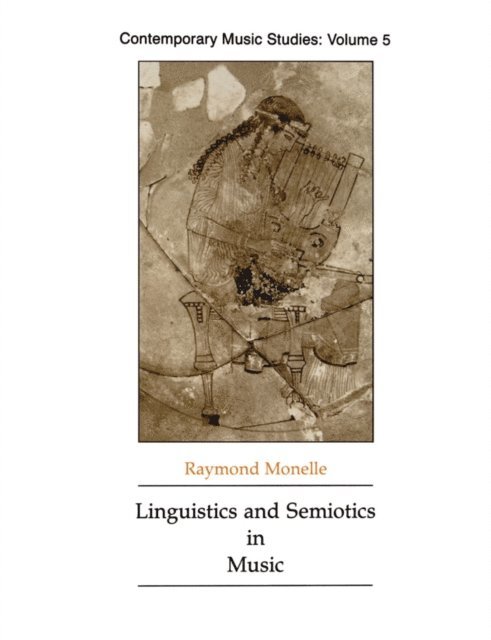
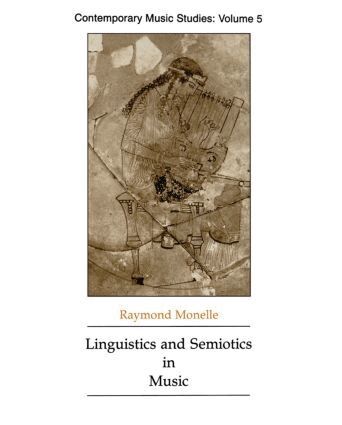
Linguistics and Semiotics in Music
E-bok, 2014
1692 kr
Lägg i varukorg
This handbook for advanced students explains the various applications to music of methods derived from linguistics and semiotics. The book is aimed at musicians familiar with the ordinary range of aesthetic and theoretical ideas in music; no specialized knowledge of linguistic or semiotic …
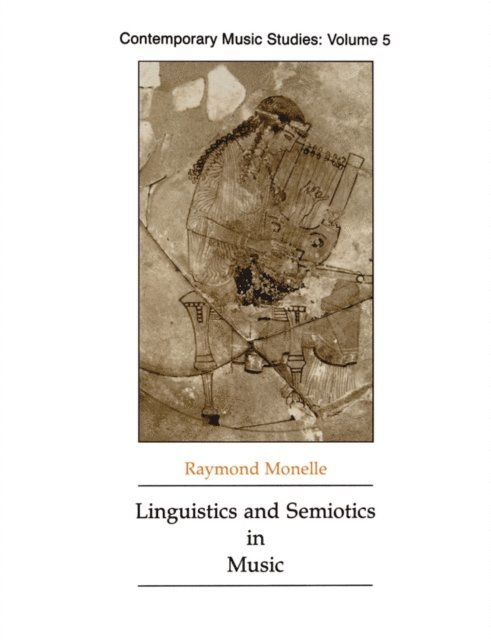
Linguistics and Semiotics in Music
E-bok, 2014
1730 kr
Lägg i varukorg
This handbook for advanced students explains the various applications to music of methods derived from linguistics and semiotics. The book is aimed at musicians familiar with the ordinary range of aesthetic and theoretical ideas in music; no specialized knowledge of linguistic or semiotic …
Sense of Music
Semiotic Essays
E-bok, 2010
808 kr
Lägg i varukorg
The fictional Dr. Strabismus sets out to write a new comprehensive theory of music. But music''s tendency to deconstruct itself combined with the complexities of postmodernism doom him to failure. This is the parable that frames The Sense of Music, a novel treatment of music theory that …
Linguistics and Semiotics in Music
Häftad, 1992
1462 kr
Lägg i varukorg
This handbook for advanced students explains the various applications to music of methods derived from linguistics and semiotics. The book is aimed at musicians familiar with the ordinary range of aesthetic and theoretical ideas in music; no specialized knowledge of linguistic or semiotic …