Raymond P. Motha – författare
Visar alla böcker från författaren Raymond P. Motha. Handla med fri frakt och snabb leverans.
9 produkter
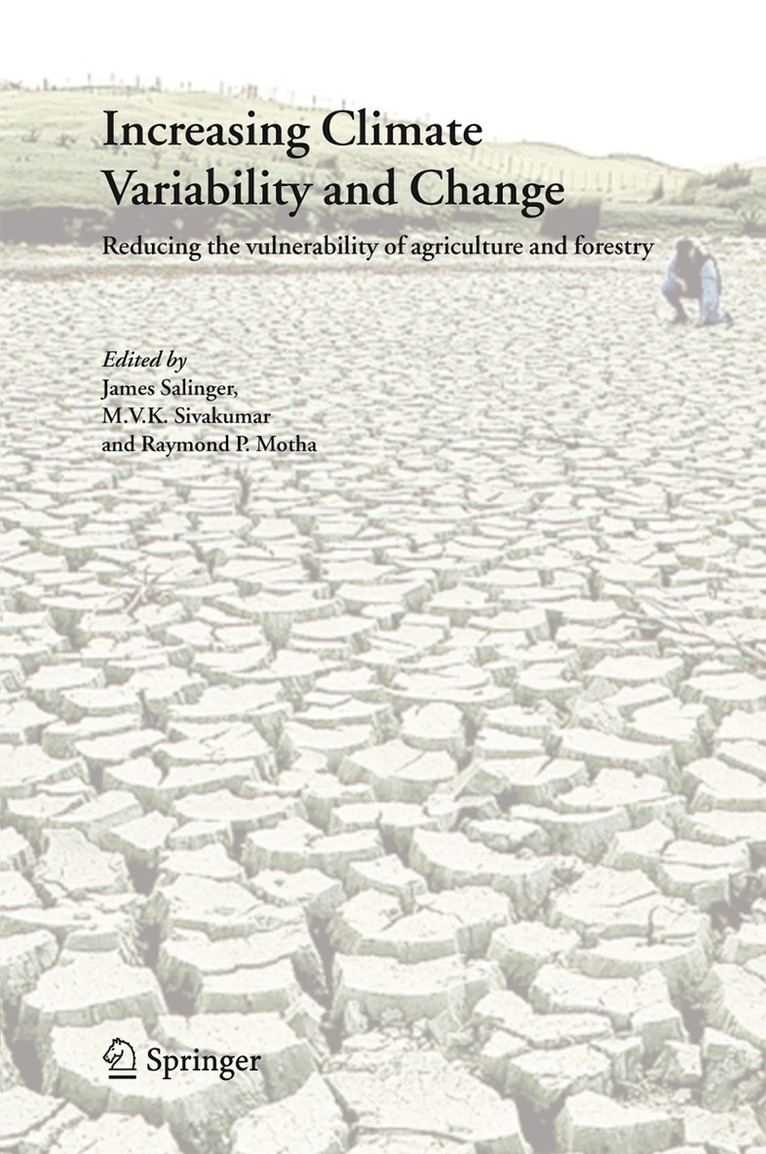
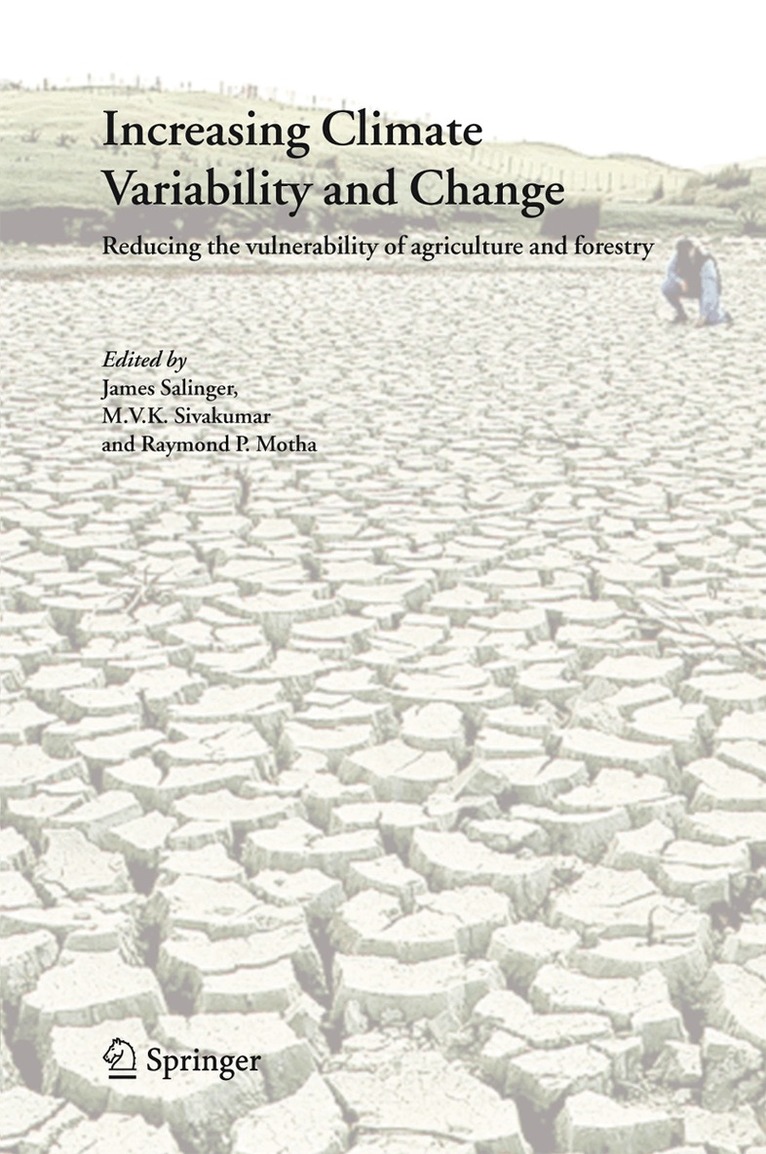
Increasing Climate Variability and Change
Reducing the Vulnerability of Agriculture and Forestry
Av James Salinger, Mannava VK Sivakumar m. fl.
Inbunden, 2005
1636 kr
Lägg i varukorg
One of the major challenges facing humankind is to provide an equitable standard of living for this and future generations: adequate food, water and energy, safe shelter and a healthy environment. Human-induced climate change, and increasing climate variability, as well as other global …
Increasing Climate Variability and Change
Reducing the Vulnerability of Agriculture and Forestry
Av Raymond P. Motha, Mannava VK Sivakumar m. fl.
E-bok, 2005
2044 kr
Lägg i varukorg
One of the major challenges facing humankind is to provide an equitable standard of living for this and future generations: adequate food, water and energy, safe shelter and a healthy environment. Human-induced climate change, and increasing climate variability, as well as other global …
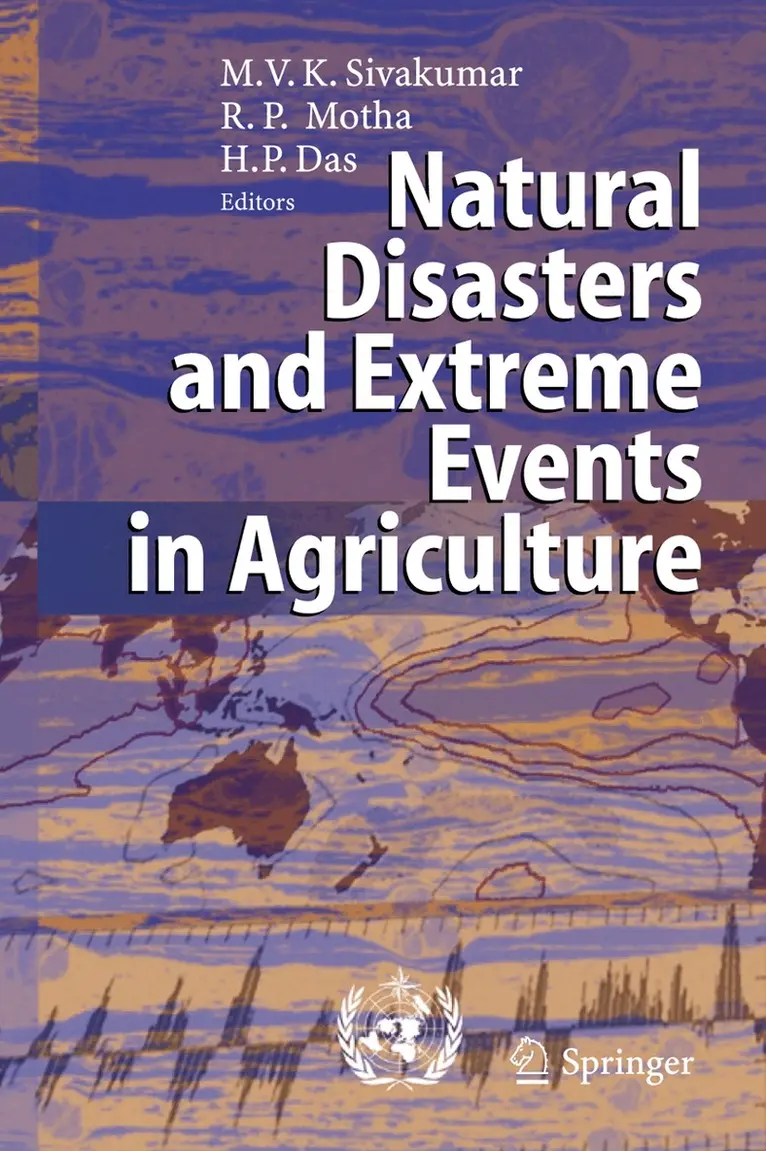
Natural Disasters and Extreme Events in Agriculture
Impacts and Mitigation
Av Mannava VK Sivakumar, Raymond P. Motha m. fl.
Inbunden, 2005
1636 kr
Lägg i varukorg
Agricultural production is highly dependent on weather, climate and water availability and is adversely affected by the weather and climate-related disasters. Droughts and natural disasters such as floods can result in crop failures, food insecurity, famine, loss of property and life, mass …
Natural Disasters and Extreme Events in Agriculture
Impacts and Mitigation
Av Haripada P. Das, Raymond P. Motha m. fl.
E-bok, 2005
2065 kr
Lägg i varukorg
Agricultural production is highly dependent on weather, climate and water availability and is adversely affected by the weather and climate-related disasters. Droughts and natural disasters such as floods can result in crop failures, food insecurity, famine, loss of property and life, mass …
Managing Weather and Climate Risks in Agriculture
Av Mannava VK Sivakumar, Raymond P. Motha
Inbunden, 2007
2244 kr
Lägg i varukorg
In many parts of the world, weather and climate are one of the biggest production risks and uncertainty factors impacting on agricultural systems performance and management. Both structural and non-structural measures can be used to reduce the impacts of the variability (including extremes) of …
Managing Weather and Climate Risks in Agriculture
Av Raymond P. Motha, Mannava VK Sivakumar
E-bok, 2008
2925 kr
Lägg i varukorg
In many parts of the world, weather and climate are one of the biggest production risks and uncertainty factors impacting on agricultural systems performance and management. Both structural and non-structural measures can be used to reduce the impacts of the variability (including extremes) of …
Natural Disasters and Extreme Events in Agriculture
Impacts and Mitigation
Av Mannava VK Sivakumar, Raymond P. Motha m. fl.
Häftad, 2010
1636 kr
Lägg i varukorg
Agricultural production is highly dependent on weather, climate and water availability and is adversely affected by the weather and climate-related disasters. Droughts and natural disasters such as floods can result in crop failures, food insecurity, famine, loss of property and life, mass …
Managing Weather and Climate Risks in Agriculture
Av Mannava VK Sivakumar, Raymond P. Motha
Häftad, 2010
2179 kr
Lägg i varukorg
In many parts of the world, weather and climate are one of the biggest production risks and uncertainty factors impacting on agricultural systems performance and management. Both structural and non-structural measures can be used to reduce the impacts of the variability (including extremes) of …
Increasing Climate Variability and Change
Reducing the Vulnerability of Agriculture and Forestry
Av James Salinger, Mannava VK Sivakumar m. fl.
Häftad, 2010
1636 kr
Lägg i varukorg
One of the major challenges facing humankind is to provide an equitable standard of living for this and future generations: adequate food, water and energy, safe shelter and a healthy environment. Human-induced climate change, and increasing climate variability, as well as other global …