Raymond Ruyer – författare
Visar alla böcker från författaren Raymond Ruyer. Handla med fri frakt och snabb leverans.
8 produkter
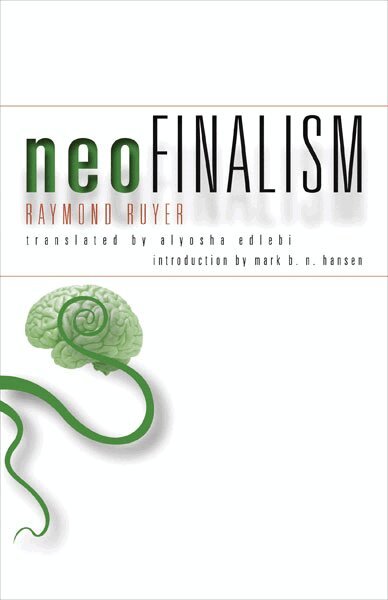
Neofinalism
Häftad, 2016
302 kr
Lägg i varukorg
Although little known today, Raymond Ruyer was a post–World War II French philosopher whose works and ideas were significant influences on major thinkers, including Deleuze, Guattari, and Simondon. With the publication of this translation of Neofinalism, considered by many to be Ruyer’s magnum …
Genesis of Living Forms
Inbunden, 2019
1208 kr
Lägg i varukorg
The philosophy of Raymond Ruyer was an important if subterranean influence on twentieth-century French thought, and explicitly engaged with by figures such as Maurice Merleau-Ponty, Georges Canguilhem, Gilbert Simondon, and Gilles Deleuze. The Genesis of Living Forms is Ruyer’s most focussed and …
Genesis of Living Forms
Häftad, 2019
459 kr
Lägg i varukorg
The philosophy of Raymond Ruyer was an important if subterranean influence on twentieth-century French thought, and explicitly engaged with by figures such as Maurice Merleau-Ponty, Georges Canguilhem, Gilbert Simondon, and Gilles Deleuze. The Genesis of Living Forms is Ruyer’s most focussed and …
Genesis of Living Forms
E-bok, 2019
499 kr
Lägg i varukorg
The philosophy of Raymond Ruyer was an important if subterranean influence on twentieth-century French thought, and explicitly engaged with by figures such as Maurice Merleau-Ponty, Georges Canguilhem, Gilbert Simondon, and Gilles Deleuze. The Genesis of Living Forms is Ruyer’s most focussed and …
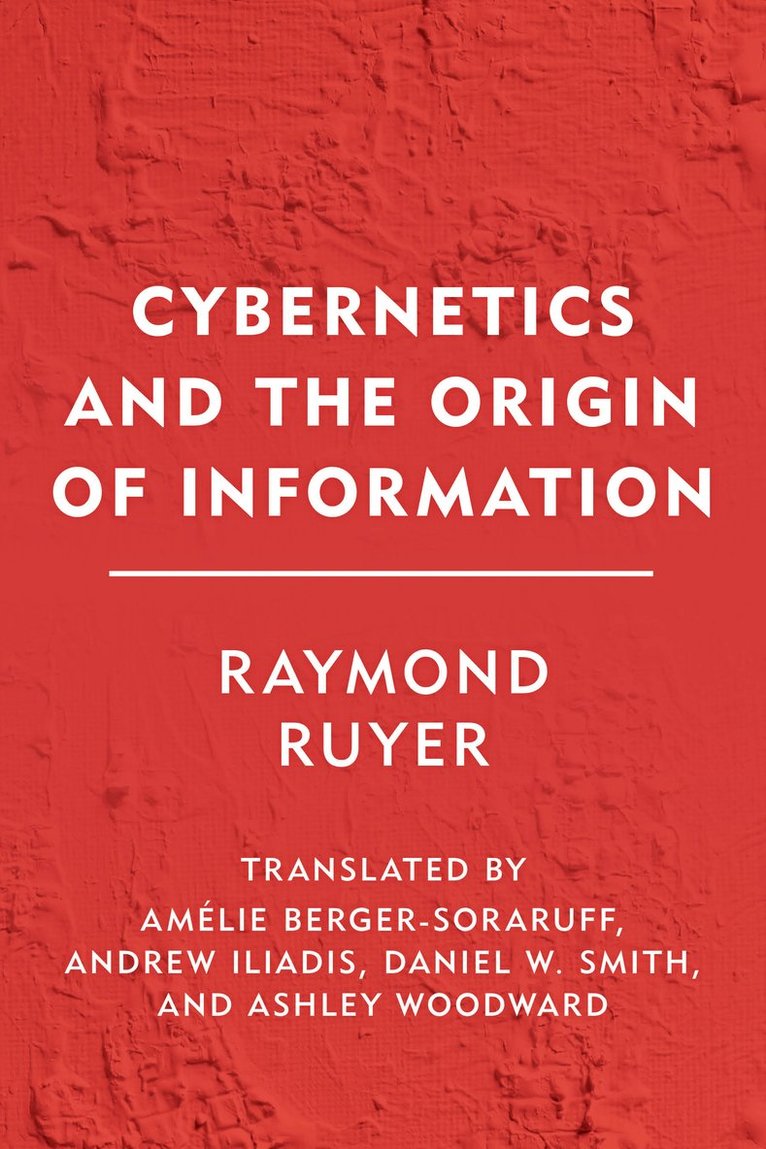
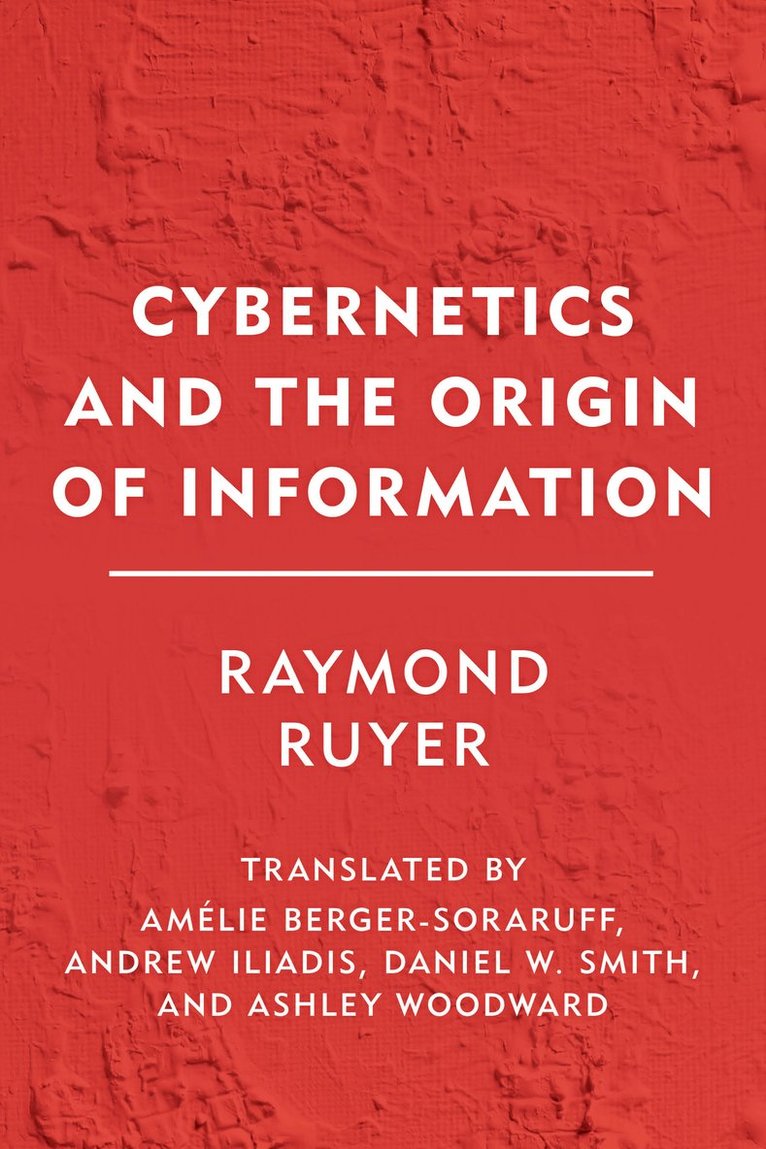
Cybernetics and the Origin of Information
Inbunden, 2023
1208 kr
Lägg i varukorg
One of the lost classics of French philosophy, Cybernetics and the Origin of Information has never before been published in English. Raymond Ruyer—who was a major influence on Simondon and Deleuze, among others—originally wrote this book, one of the first critiques of Norbert Wiener’s cybernetics …
Cybernetics and the Origin of Information
Häftad, 2023
459 kr
Lägg i varukorg
One of the lost classics of French philosophy, Cybernetics and the Origin of Information has never before been published in English. Raymond Ruyer—who was a major influence on Simondon and Deleuze, among others—originally wrote this book, one of the first critiques of Norbert Wiener’s cybernetics …
Cybernetics and the Origin of Information
E-bok, 2023
499 kr
Lägg i varukorg
One of the lost classics of French philosophy, Cybernetics and the Origin of Information has never before been published in English. Raymond Ruyer—who was a major influence on Simondon and Deleuze, among others—originally wrote this book, one of the first critiques of Norbert Wiener’s cybernetics …
Les Cent prochains siècles: Le destin historique de l'homme selon la Nouvelle Gnose américaine
Häftad, 2018
677 kr
Lägg i varukorg