Raymond S.T. Lee - Böcker
Visar alla böcker från författaren Raymond S.T. Lee. Handla med fri frakt och snabb leverans.
6 produkter
6 produkter
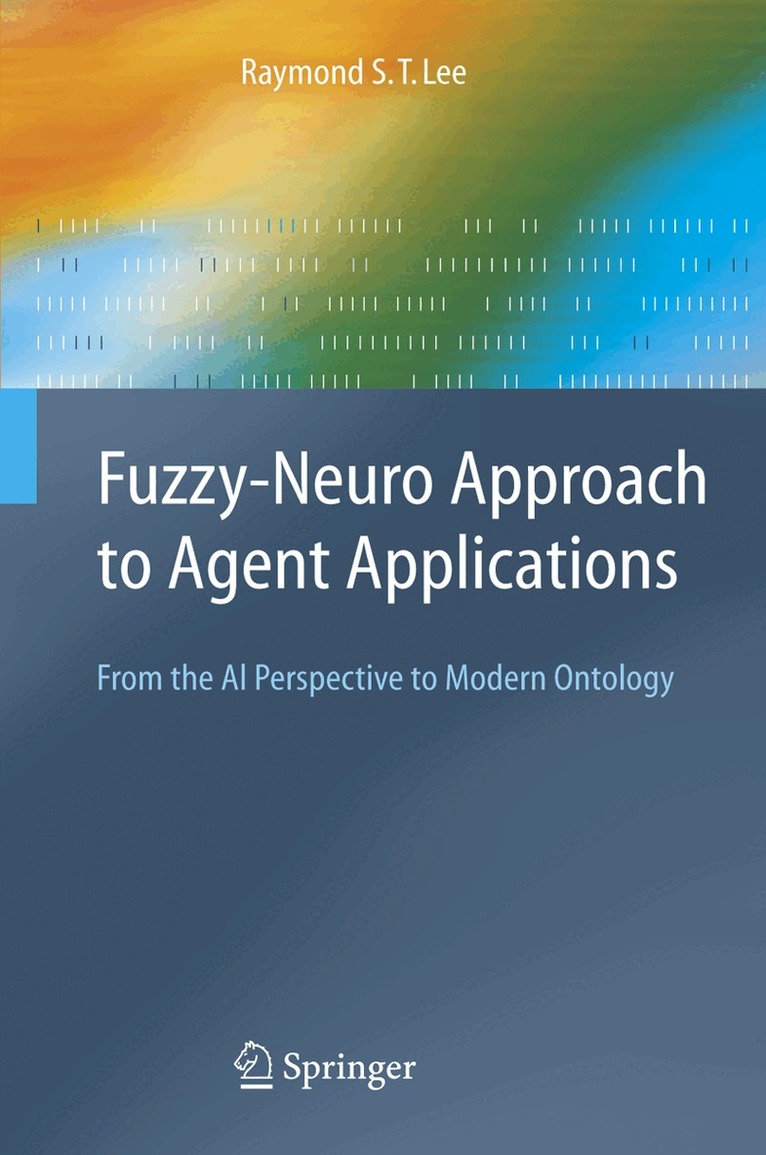
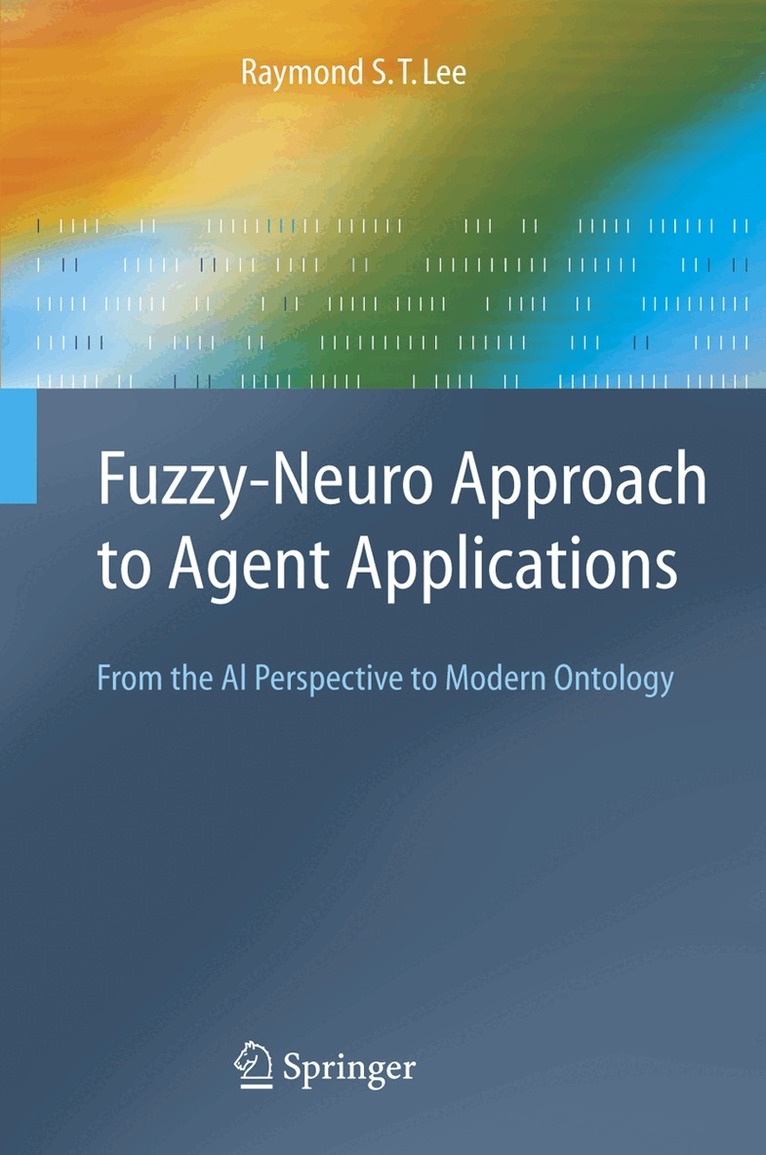
Fuzzy-Neuro Approach to Agent Applications
From the AI Perspective to Modern Ontology
Inbunden, Engelska, 2005
551 kr
Skickas inom 10-15 vardagar
The book provides a full explanation of the concepts and theories of intelligent agents and agent-based systems. Providing a comprehensive theoretical background, the author covers modern artificial intelligence topics such as ontologies, neural networks, chaos theory, fuzzy logics and genetic algorithms. Finally, the author details how the iJADK toolkit (intelligent Java agent development kit for intelligent e-business applications) can be used in the design and implementation phases of real applications. The book can be adopted as the main textbook for courses on intelligent agents, advanced topics in AI or contemporary AI technologies; application developers can use it as a complete technical guide and reference manual for the iJADK toolkit; and researchers can use it as a comprehensive reference book on modern AI techniques, and will benefit particularly from the books extensive literature survey.
Del 72 - Studies in Computational Intelligence
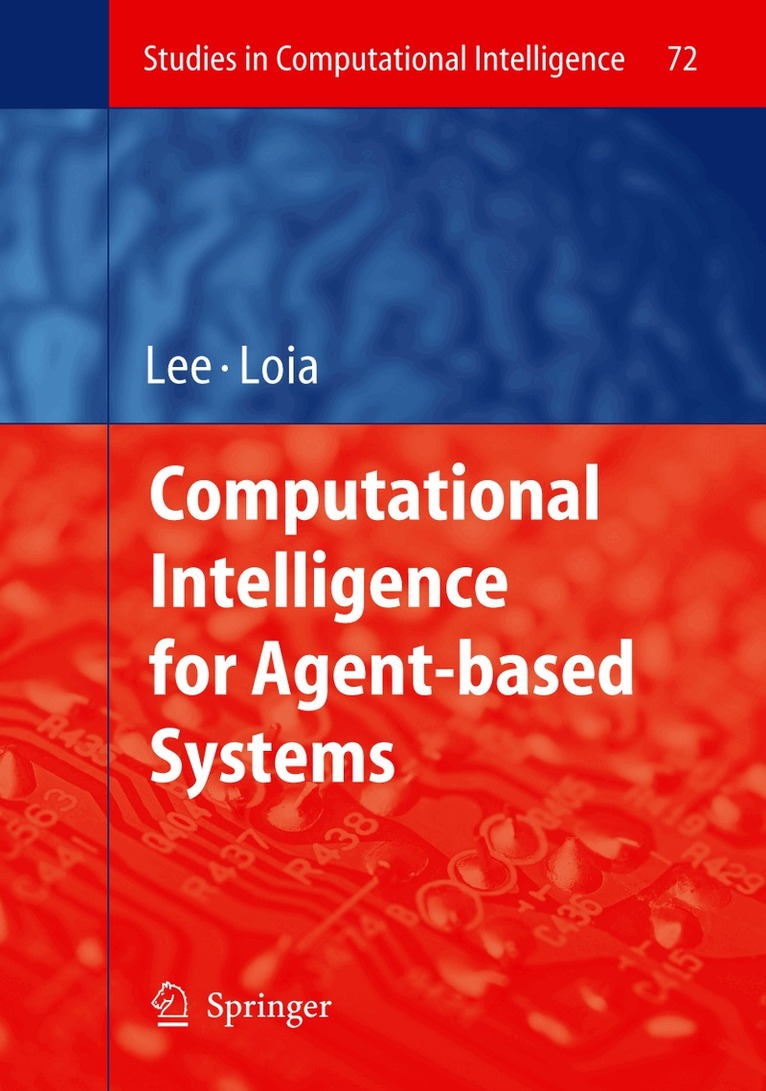
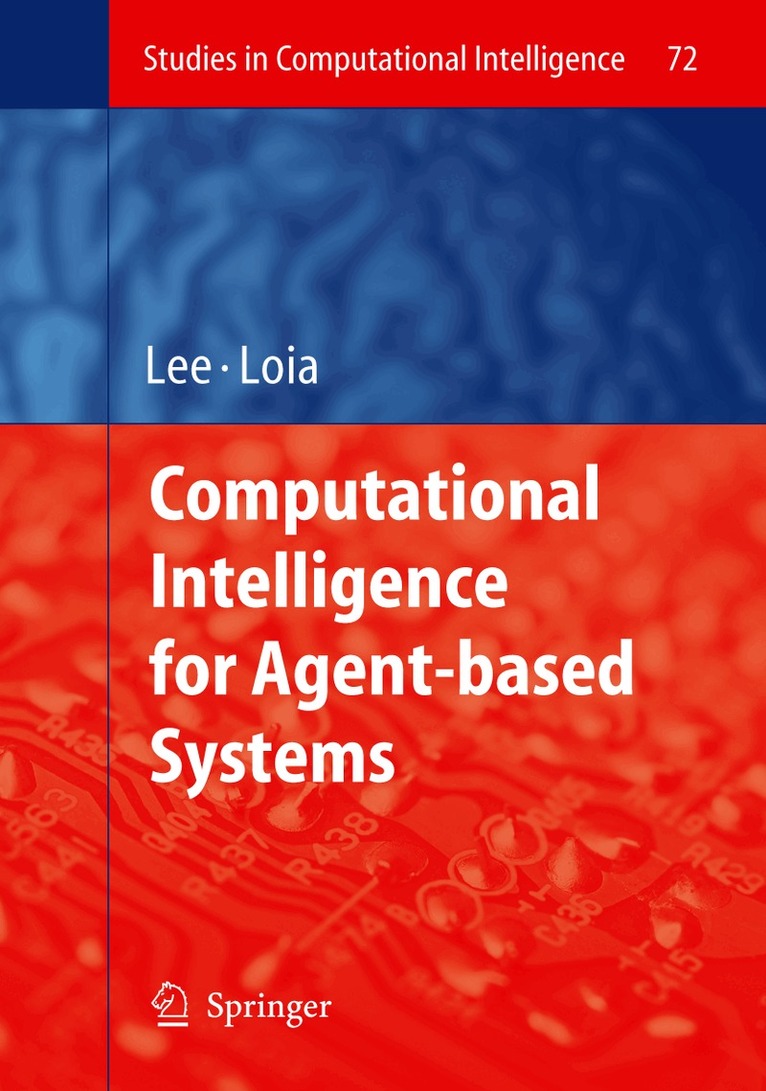
Computational Intelligence for Agent-based Systems
Inbunden, Engelska, 2007
1 095 kr
Skickas inom 10-15 vardagar
The scope of this volume is to give to the reader a wide scenario of recent works characterized by a synergistic combination of Soft Computing area with recent trends of Distributed Artificial Intelligence and Ambient Int- ligence. We edited this book for two basic motivations: the emergence of computational intelligence as a mature and integrated science, and the power of the agent paradigm in realizing complex and distributed environments. Computational Intelligence has nowadays a mature formal theory and robust implementation experiences. Intelligent agents have shown their inner ability in acquiring data and knowledge from and performing appropriate de- sions through a functional relation that maps percepts to actions. Compu- tional Intelligence inside Agents are extremely helpful to support the designer of agent-based systems in treating with unknown or ill-defined envir- ments so to better handle knowledge representation and reasoning under these assumptions. The formulation of cooperative strategies, the linguistic aspects of the communication, the local decision versus the global kno- edge, the actions and plans as distributed viewpoints could be characterized by an incomplete knowledge and by a fragmentation of logical inter- tions, faced often by a non-monotonic reasoning. While building “smart” environments many challenges arises. The system needs to interact with its users in order to obtain feedback in a non-intrusive way. Explicit/implicit feedback is needed to take decisions in near-real time.
Fuzzy-Neuro Approach to Agent Applications
From the AI Perspective to Modern Ontology
Häftad, Engelska, 2010
551 kr
Skickas inom 10-15 vardagar
Complete course on Intelligent Agent or AI with focus on contemporary and latest AI technologies and development Companion technical reference for agent developers/researchers who would like to adopt the iJADK toolkit to develop their own agent-based applications and projects The advanced section on modern ontology and ontological agents serves as research literature for AI researchers who would like to explore the advanced AI/agent topics that involve the contemporary research on ontological agents and applied ontology
Del 72 - Studies in Computational Intelligence
Computational Intelligence for Agent-based Systems
Häftad, Engelska, 2010
1 064 kr
Skickas inom 10-15 vardagar
The scope of this volume is to give to the reader a wide scenario of recent works characterized by a synergistic combination of Soft Computing area with recent trends of Distributed Artificial Intelligence and Ambient Int- ligence. We edited this book for two basic motivations: the emergence of computational intelligence as a mature and integrated science, and the power of the agent paradigm in realizing complex and distributed environments. Computational Intelligence has nowadays a mature formal theory and robust implementation experiences. Intelligent agents have shown their inner ability in acquiring data and knowledge from and performing appropriate de- sions through a functional relation that maps percepts to actions. Compu- tional Intelligence inside Agents are extremely helpful to support the designer of agent-based systems in treating with unknown or ill-defined envir- ments so to better handle knowledge representation and reasoning under these assumptions. The formulation of cooperative strategies, the linguistic aspects of the communication, the local decision versus the global kno- edge, the actions and plans as distributed viewpoints could be characterized by an incomplete knowledge and by a fragmentation of logical inter- tions, faced often by a non-monotonic reasoning. While building “smart” environments many challenges arises. The system needs to interact with its users in order to obtain feedback in a non-intrusive way. Explicit/implicit feedback is needed to take decisions in near-real time.
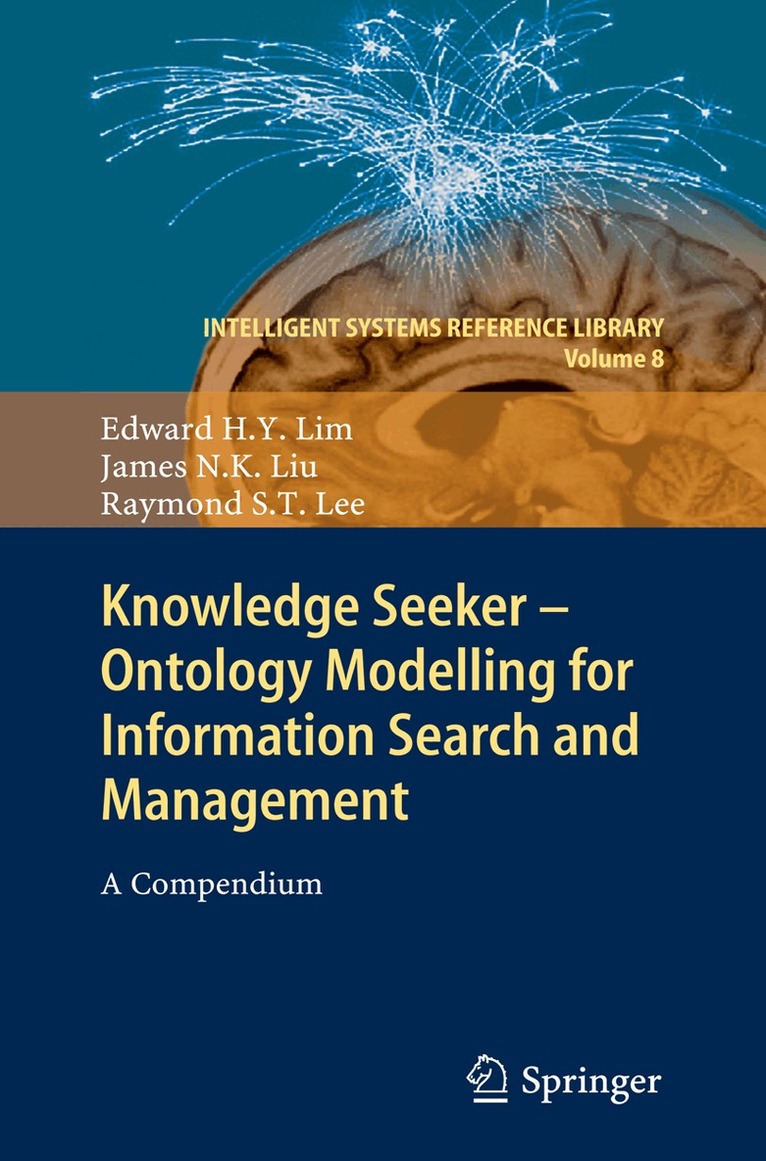
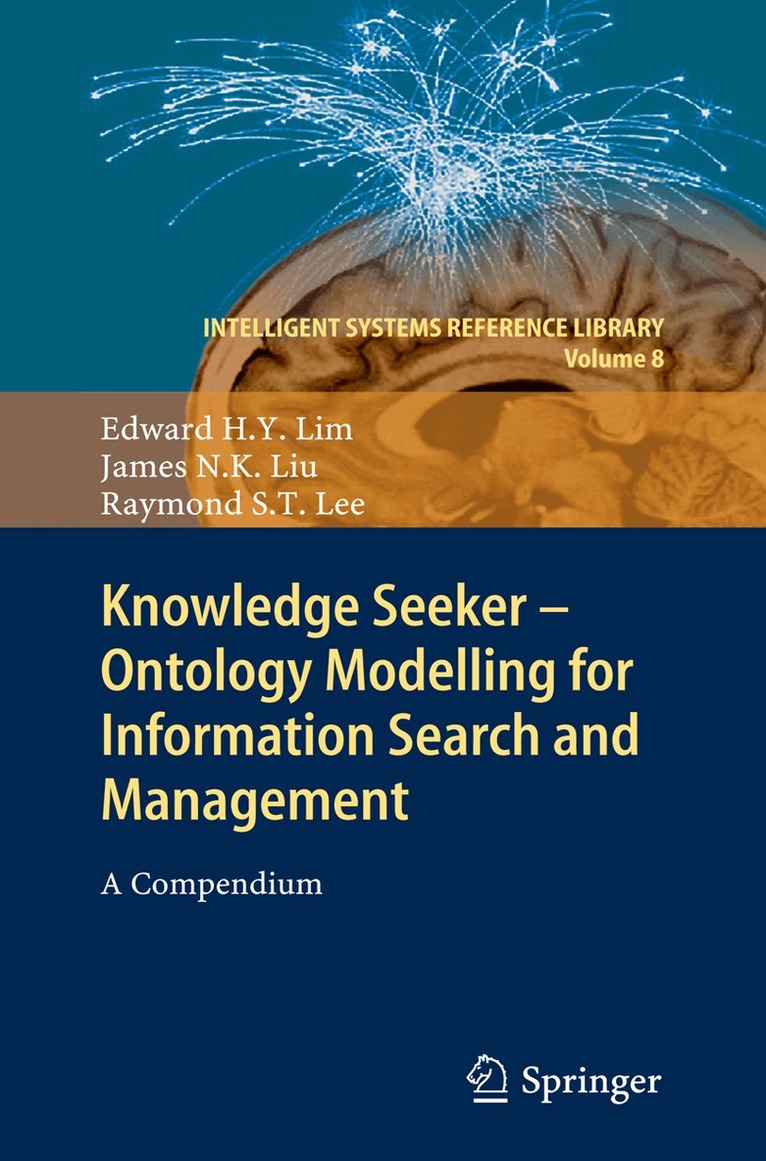
Knowledge Seeker - Ontology Modelling for Information Search and Management
A Compendium
Inbunden, Engelska, 2011
1 095 kr
Skickas inom 10-15 vardagar
The Knowledge Seeker is a useful system to develop various intelligent applications such as ontology-based search engine, ontology-based text classification system, ontological agent system, and semantic web system etc. The Knowledge Seeker contains four different ontological components. First, it defines the knowledge representation model ¡V Ontology Graph. Second, an ontology learning process that based on chi-square statistics is proposed for automatic learning an Ontology Graph from texts for different domains. Third, it defines an ontology generation method that transforms the learning outcome to the Ontology Graph format for machine processing and also can be visualized for human validation. Fourth, it defines different ontological operations (such as similarity measurement and text classification) that can be carried out with the use of generated Ontology Graphs. The final goal of the KnowledgeSeeker system framework is that it can improve the traditional information system with higher efficiency. In particular, it can increase the accuracy of a text classification system, and also enhance the search intelligence in a search engine. This can be done by enhancing the system with machine processable ontology.
Knowledge Seeker - Ontology Modelling for Information Search and Management
A Compendium
Häftad, Engelska, 2013
1 095 kr
Skickas inom 10-15 vardagar
The Knowledge Seeker is a useful system to develop various intelligent applications such as ontology-based search engine, ontology-based text classification system, ontological agent system, and semantic web system etc. The Knowledge Seeker contains four different ontological components. First, it defines the knowledge representation model ¡V Ontology Graph. Second, an ontology learning process that based on chi-square statistics is proposed for automatic learning an Ontology Graph from texts for different domains. Third, it defines an ontology generation method that transforms the learning outcome to the Ontology Graph format for machine processing and also can be visualized for human validation. Fourth, it defines different ontological operations (such as similarity measurement and text classification) that can be carried out with the use of generated Ontology Graphs. The final goal of the KnowledgeSeeker system framework is that it can improve the traditional information system with higher efficiency. In particular, it can increase the accuracy of a text classification system, and also enhance the search intelligence in a search engine. This can be done by enhancing the system with machine processable ontology.