Rebecca K.C. Hersman – författare
Visar alla böcker från författaren Rebecca K.C. Hersman. Handla med fri frakt och snabb leverans.
7 produkter
7 produkter
Häftad, Engelska, 2016
565 kr
Skickas inom 10-15 vardagar
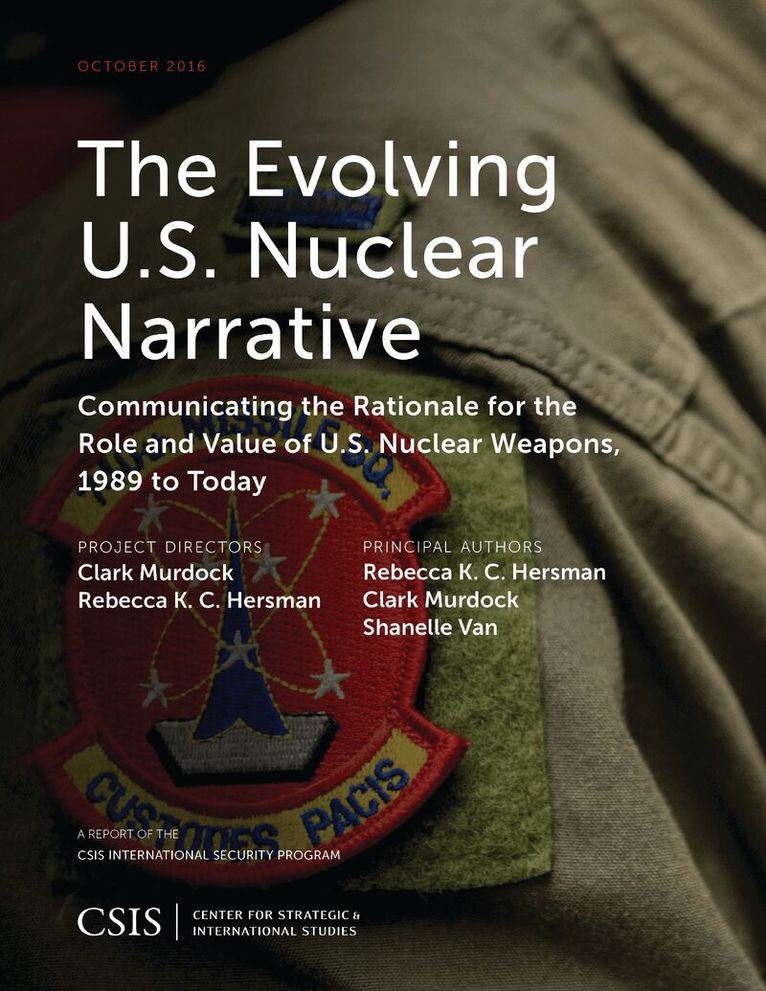
In recent years, it has become increasingly clear to many observers that the Department of Defense must better communicate to the officers at the tactical end of the nuclear mission a rationale for nuclear weapons and deterrence, the critical role that they play in the post–Cold War strategy of the United States, and the value of nuclear weapons to the security of the American people. This report tracks the changing conceptual and political landscape of U.S. nuclear deterrence to illuminate the gap in prioritizing the nuclear arsenal and to build a compelling rationale for tactical personnel explaining the role and value of U.S. nuclear weapons.
E-bok
Engelska, 2016587 kr
Läs direkt efter köp
In recent years, it has become increasingly clear to many observers that the Department of Defense must better communicate to the officers at the tactical end of the nuclear mission a rationale for nuclear weapons and deterrence, the critical role that they play in the post–Cold War strategy of the United States, and the value of nuclear weapons to the security of the American people. This report tracks the changing conceptual and political landscape of U.S. nuclear deterrence to illuminate the gap in prioritizing the nuclear arsenal and to build a compelling rationale for tactical personnel explaining the role and value of U.S. nuclear weapons.
Häftad, Engelska, 2017
618 kr
Skickas inom 10-15 vardagar
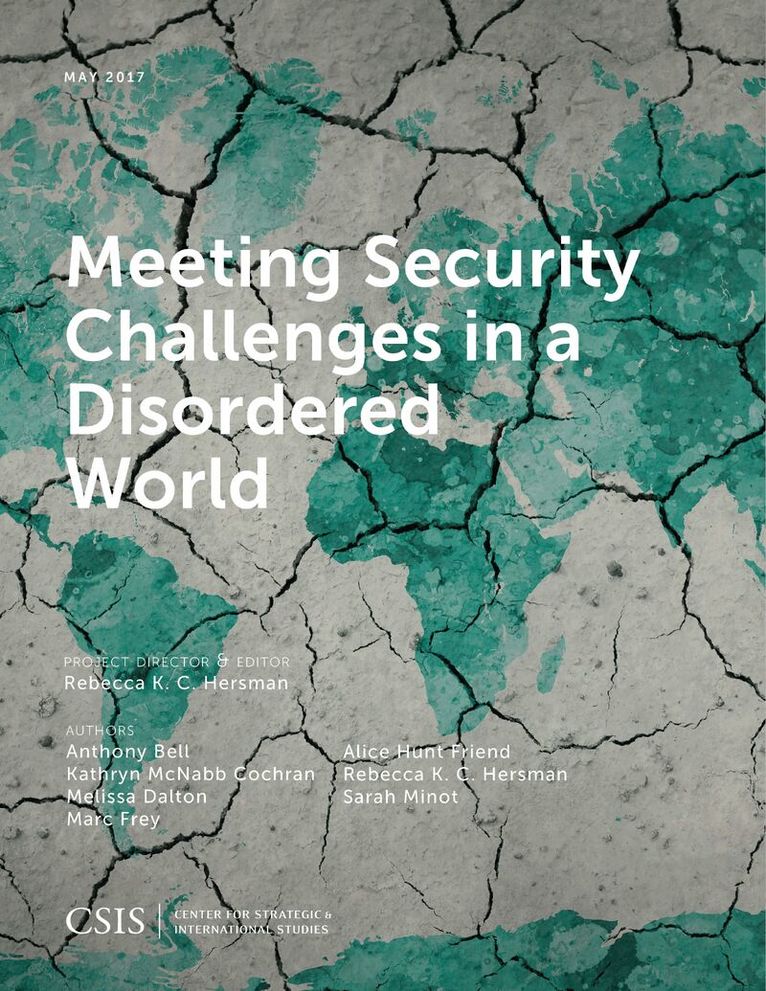
The United States must be prepared to operate in a range of complex environments to meet a range of security challenges and threats, such as humanitarian emergencies, terrorism and violent extremism, great power aggression, health security crises, and international criminal violence. This study focuses on these five functional security imperatives and illustrates each imperative through regionally or subnationally defined operating environments. In each case, the selected security imperative must be addressed in the near term to help meet other U.S. objectives. The goal of the case studies is to characterize the operating environment, identify key tasks and responsibilities to address the security imperative, and develop a set of tools and policy recommendations for operating in those specific environments.
E-bok
Engelska, 2017643 kr
Läs direkt efter köp
The United States must be prepared to operate in a range of complex environments to meet a range of security challenges and threats, such as humanitarian emergencies, terrorism and violent extremism, great power aggression, health security crises, and international criminal violence. This study focuses on these five functional security imperatives and illustrates each imperative through regionally or subnationally defined operating environments. In each case, the selected security imperative must be addressed in the near term to help meet other U.S. objectives. The goal of the case studies is to characterize the operating environment, identify key tasks and responsibilities to address the security imperative, and develop a set of tools and policy recommendations for operating in those specific environments.
E-bok
Engelska, 2018642 kr
Läs direkt efter köp
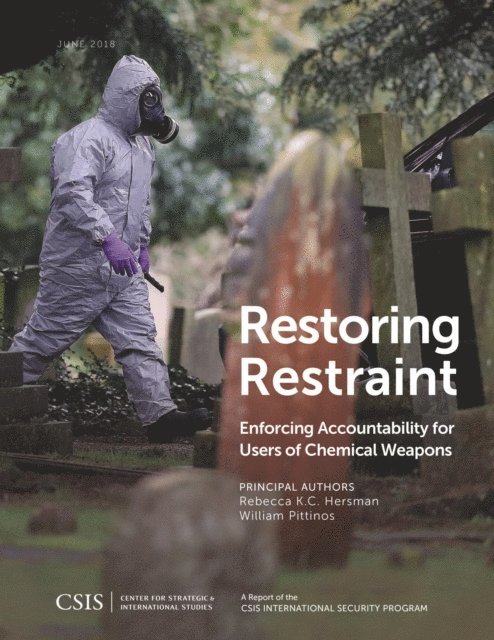
In 2012, a 20-year moratorium on state employment of chemical weapons use was broken. Since then, there have been more than 200 uses, against civilians, military targets, and political enemies. These attacks have broken norms against the use of weapons of mass destruction and create a gap in the nonproliferation fabric—despite the robust international architecture of laws, treaties, agreements, and norms designed to restrain the proliferation and use of these weapons. Accountability for these recent attacks has been limited or nonexistent, which threatens the credibility of the nonproliferation regime and only encourages further use. Leaders must find the political and moral strength to use a full spectrum of tools to reestablish this system of restraint. By understanding the system—built on taboos, norms, deterrence, and a lack of benefits—and corresponding accountability approaches—military, legal, political, diplomatic, economic, and educational—leaders can utilize a menu of potential actions for building more diverse, flexible, scalable, and implementable options to hold accountable users of chemical weapons.
E-bok
Engelska, 2021570 kr
Läs direkt efter köp
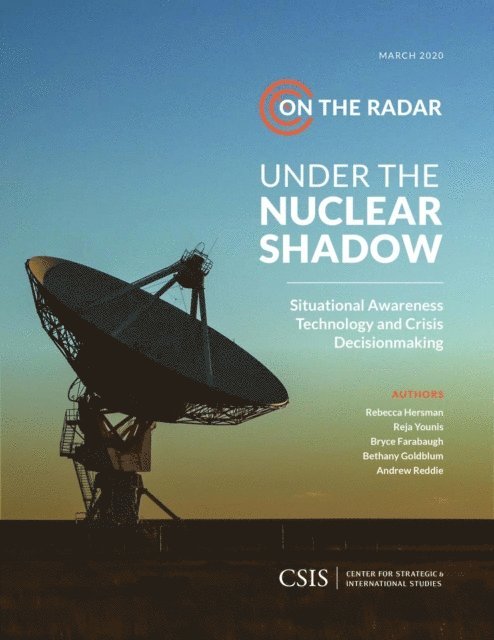
Improvements to strategic situational awareness (SA)—the ability to characterize the operating environment, detect and respond to threats, and discern actual attacks from false alarms across the spectrum of conflict—have long been assumed to reduce the risk of conflict and help manage crises more successfully when they occur. However, with the development of increasingly capable strategic SA-related technology, growing comingling of conventional and nuclear SA requirements and capabilities, and the increasing risk of conventional conflict between nuclear-armed adversaries, this may no longer be the case. The Project on Nuclear Issues (PONI) at the Center for Strategic and International Studies (CSIS) and the University of California, Berkeley’s Nuclear Policy Working Group undertook a two-year study to examine the implications of emerging situational awareness technologies for managing crises between nuclear-armed adversaries.
E-bok
Engelska, 2022541 kr
Läs direkt efter köp
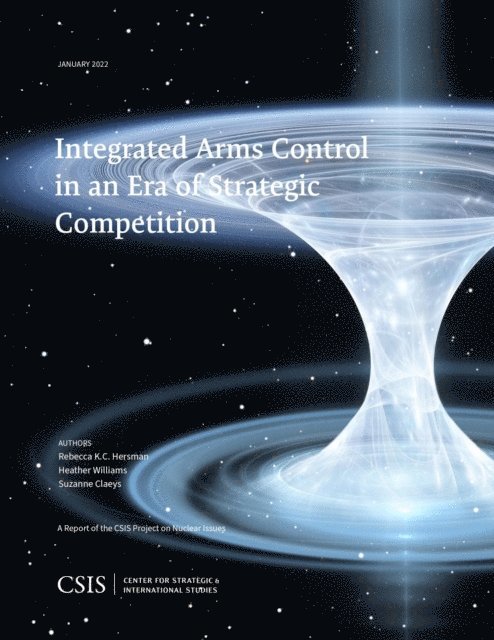
Can contemporary arms control keep pace with the rapid rate of change in both geopolitics and technology? While the challenges to future arms control point to a rocky road ahead, measures that build confidence, reduce miscalculation, enhance transparency, restrain costly and dangerous military competition, and offer useful mechanisms and venues for addressing sources of conflict will be of increasing value. For arms control tools to succeed, however, they must be adapted to the current security environment, account for rapidly evolving technological and informational factors, and consider alternative structures, modalities, and participation models. Indeed, now is the time for a recoupling of arms control with deterrence in a way that recognizes these new realities. Now is the time for integrated arms control that enhances stability, embraces plurality, and reinforces resiliency. This CSIS study examines the implication and prospects for the future of arms control in a highly competitive security environment in which challenges from advanced technologies and diminished state control over processes of verification become increasingly prominent features, even as the scope and modalities of arms control grow more complex and multifaceted. The report offers a reexamination of the broad contours of arms control and its role in managing competitive security risks and challenges and the implications for U.S. policymakers, academics, and strategic thinkers engaged in U.S. nuclear policy.