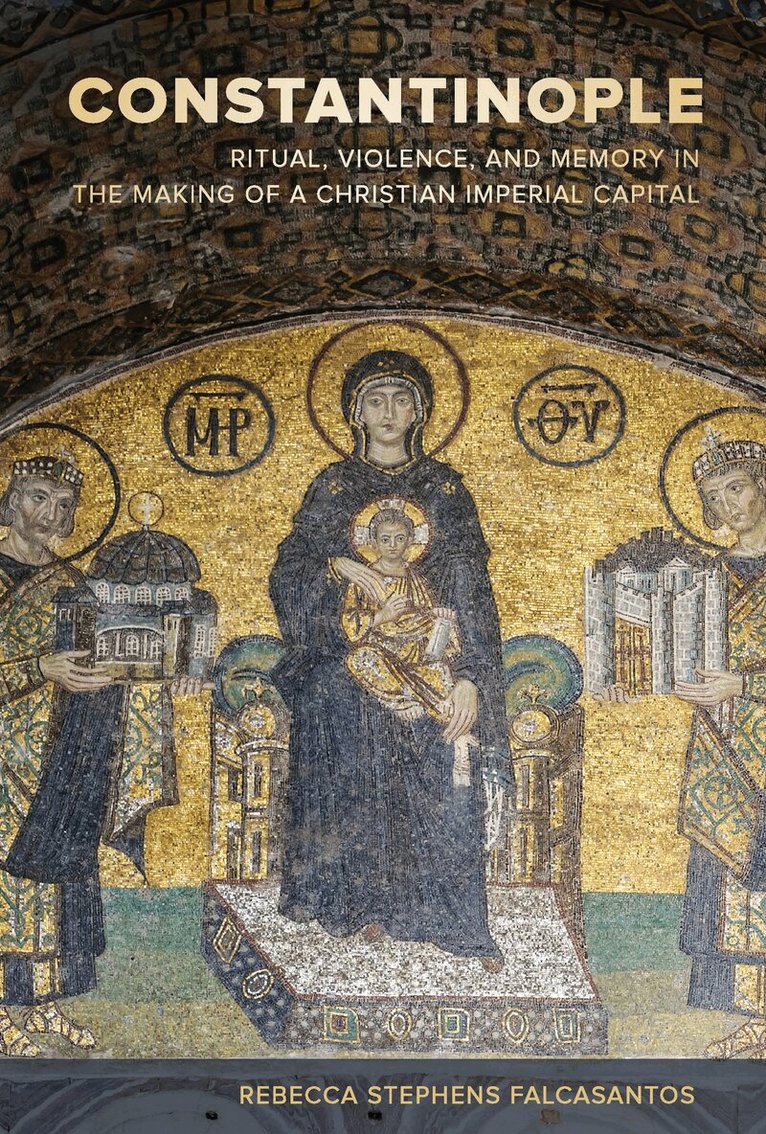
As Christian spaces and agents assumed prominent positions in civic life, the end of the long span of the fourth century was marked by large-scale religious change. Churches had overtaken once-thriving pagan temples, old civic priesthoods were replaced by prominent bishops, and the rituals of the city were directed toward the Christian God. Such changes were particularly pronounced in the newly established city of Constantinople, where elites from various groups contended to control civic and imperial religion.Rebecca Stephens Falcasantos argues that imperial Christianity was in fact a manifestation of traditional Roman religious structures. In particular, she explores how deeply established habits of ritual engagement in shared social spaces—ones that resonated with imperial ideology and appealed to the memories of previous generations—constructed meaning to create a new imperial religious identity. By examining three dynamics—ritual performance, rhetoric around violence, and the preservation and curation of civic memory—she distinguishes the role of Christian practice in transforming the civic and cultic landscapes of the late antique polis.
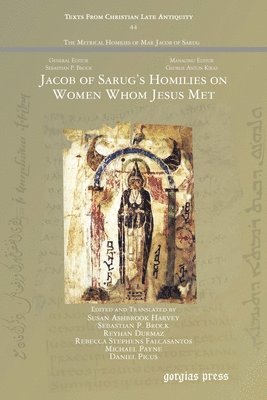
Five homilies by Jacob of Sarug on women whom Jesus met: the Canaanite Woman, the Samaritan Woman, the Hemorrhaging Woman, the Woman Bent Double, and Jairus' Daughter.
Band 8 der Biblia Americana von Cotton Mather (1693-1728) enthält einen umfangreichen Kommentar zum Johannesevangelium und zur Apostelgeschichte. Bei der Untersuchung des Johannesevangeliums liegt der Schwerpunkt auf der Christologie und der Verwendung von Typen und Allegorien. Mather beschreibt eine Geschichte der Duldung und Verfolgung jüdischer Siedlungen auf drei Kontinenten bis zum achtzehnten Jahrhundert. In der Einleitung wird Mathers Methode mit der Tradition der sozialen Epistemologie und den fortschrittlichen historiographischen Entwicklungen von Pierre Bayle und den sephardischen Juden in Verbindung gebracht.
As Christian spaces and agents assumed prominent positions in civic life, the end of the long span of the fourth century was marked by large-scale religious change. Churches had overtaken once-thriving pagan temples, old civic priesthoods were replaced by prominent bishops, and the rituals of the city were directed toward the Christian God. Such changes were particularly pronounced in the newly established city of Constantinople, where elites from various groups contended to control civic and imperial religion.Rebecca Stephens Falcasantos argues that imperial Christianity was in fact a manifestation of traditional Roman religious structures. In particular, she explores how deeply established habits of ritual engagement in shared social spaces—ones that resonated with imperial ideology and appealed to the memories of previous generations—constructed meaning to create a new imperial religious identity. By examining three dynamics—ritual performance, rhetoric around violence, and the preservation and curation of civic memory—she distinguishes the role of Christian practice in transforming the civic and cultic landscapes of the late antique polis.
Five homilies by Jacob of Sarug on women whom Jesus met: the Canaanite Woman, the Samaritan Woman, the Hemorrhaging Woman, the Woman Bent Double, and Jairus' Daughter.
Band 8 der Biblia Americana von Cotton Mather (1693-1728) enthält einen umfangreichen Kommentar zum Johannesevangelium und zur Apostelgeschichte. Bei der Untersuchung des Johannesevangeliums liegt der Schwerpunkt auf der Christologie und der Verwendung von Typen und Allegorien. Mather beschreibt eine Geschichte der Duldung und Verfolgung jüdischer Siedlungen auf drei Kontinenten bis zum achtzehnten Jahrhundert. In der Einleitung wird Mathers Methode mit der Tradition der sozialen Epistemologie und den fortschrittlichen historiographischen Entwicklungen von Pierre Bayle und den sephardischen Juden in Verbindung gebracht.