Reiko Hayashi – författare
Visar alla böcker från författaren Reiko Hayashi. Handla med fri frakt och snabb leverans.
4 produkter
4 produkter
Inbunden, Engelska, 1996
1 075 kr
Skickas inom 10-15 vardagar
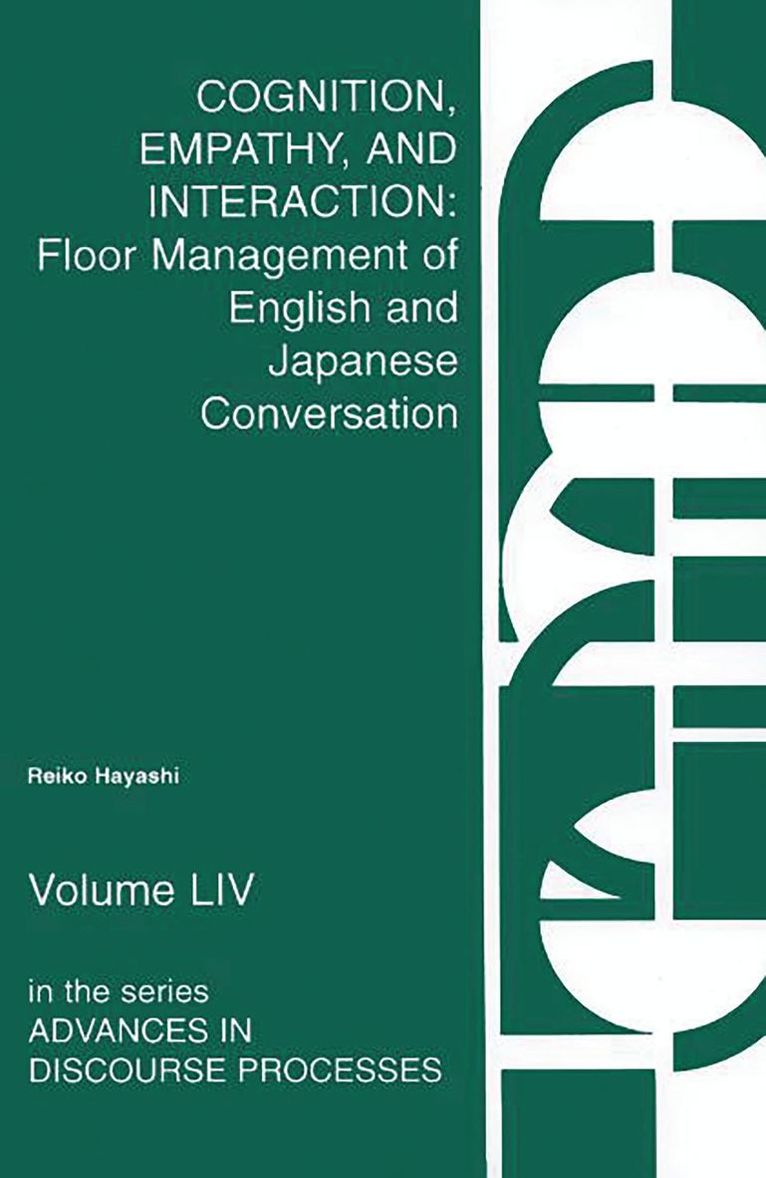
Conversational analysis is an interdisciplinary field that draws on cognitive science, social psychology, sociology, pragmatics, and the ethnography of communication. These various disciplines provide both qualitative and quantitative foundations for conversational analysis. The ultimate goal of this study is to investigate what communication is: what its goals are, why people talk, and how conversational goals are achieved. The primary concerns of this study are to investigate the interactions among cognition, emotion, and social norms, using the floor model proposed by Edelsky (1981) and Schultz, Florio, and Erickson (1982), and to further develop their model for the analysis of conversational interaction.
Häftad, Engelska, 1996
746 kr
Skickas inom 10-15 vardagar
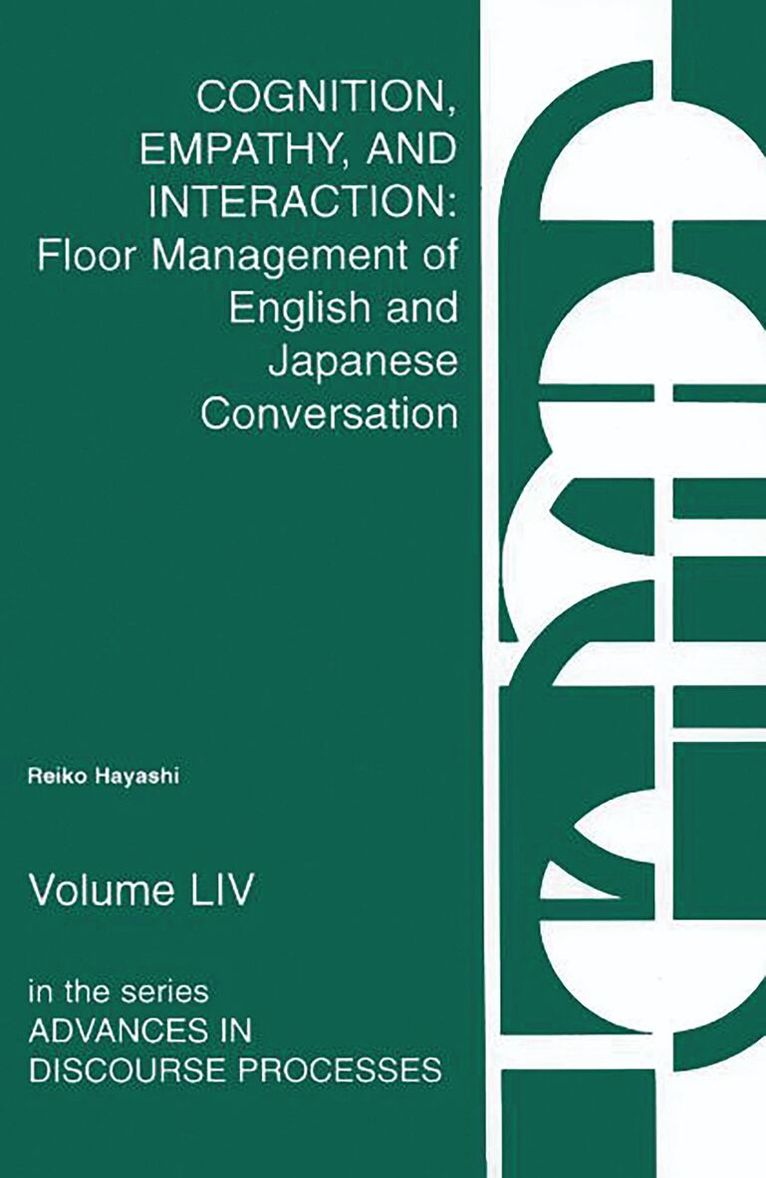
Conversational analysis is an interdisciplinary field that draws on cognitive science, social psychology, sociology, pragmatics, and the ethnography of communication. These various disciplines provide both qualitative and quantitative foundations for conversational analysis. The ultimate goal of this study is to investigate what communication is: what its goals are, why people talk, and how conversational goals are achieved. The primary concerns of this study are to investigate the interactions among cognition, emotion, and social norms, using the floor model proposed by Edelsky (1981) and Schultz, Florio, and Erickson (1982), and to further develop their model for the analysis of conversational interaction.
Häftad, Engelska, 2026
492 kr
Skickas inom 5-8 vardagar
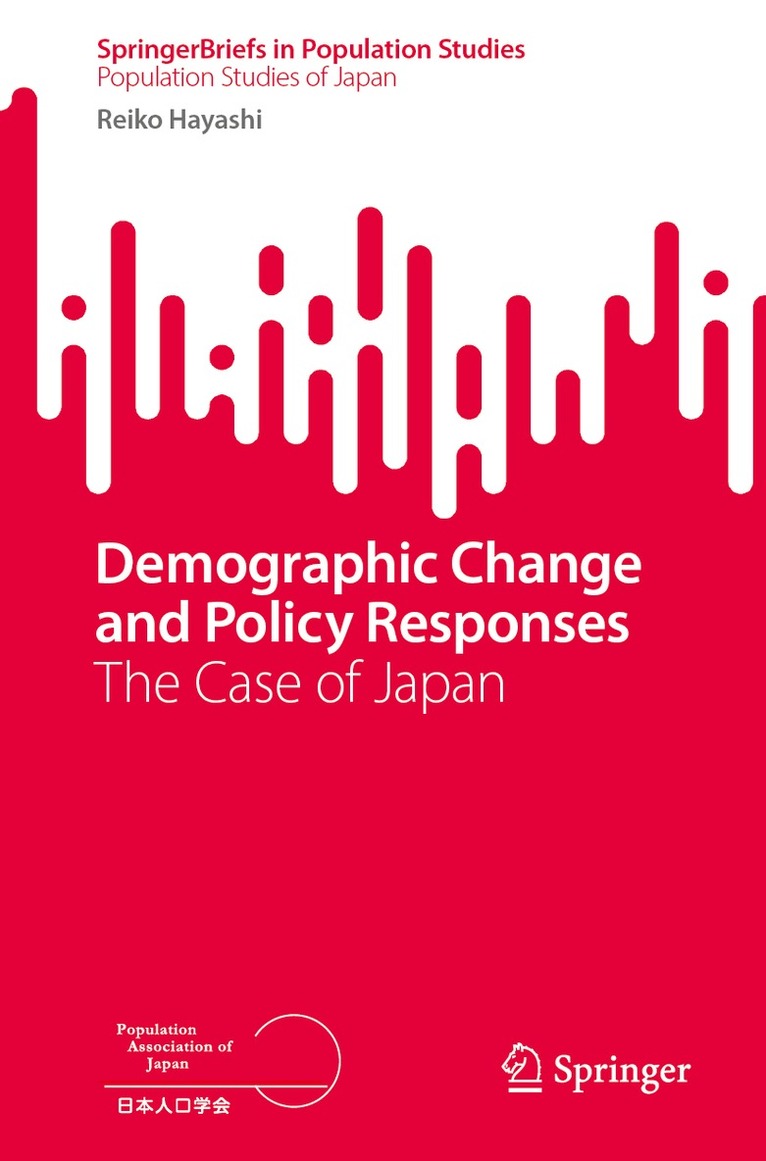
This book explores how people have perceived and acted on the changes in four different population components, namely, fertility, mortality, and mobility, through the creation and development of Modern Japan to the present day. With the highest life expectancy in the world; the highest proportion of the elderly; very low fertility, below the replacement level; and a limited number of international migrants, Japan’s population indicators are unique. Around 2008, the population of the archipelago started to decrease at the same pace as it had previously increased. To understand this phenomenon, it is necessary to look back in history and examine the facts and ideas that shaped the Japanese population. From the Meiji to the Heisei eras (1868–present), substantial changes occurred not only in the numbers but also in the perception and norms that people take for granted. These changes are traced, side by side, through the chapters on fertility control, health and population ageing, urbanization and internal migration, international migration, and international cooperation in the field of population and development. The book illustrates not the uniqueness that isolates Japan from the rest of the world, but the reality of a population that has faced one situation at a time, offering readers a perspective for understanding human society at large.
E-bok
Engelska, 2026633 kr
Läs direkt efter köp
This book explores how people have perceived and acted on the changes in four different population components, namely, fertility, mortality, and mobility, through the creation and development of Modern Japan to the present day. With the highest life expectancy in the world; the highest proportion of the elderly; very low fertility, below the replacement level; and a limited number of international migrants, Japan's population indicators are unique. Around 2008, the population of the archipelago started to decrease at the same pace as it had previously increased. To understand this phenomenon, it is necessary to look back in history and examine the facts and ideas that shaped the Japanese population. From the Meiji to the Heisei eras (1868-present), substantial changes occurred not only in the numbers but also in the perception and norms that people take for granted. These changes are traced, side by side, through the chapters on fertility control, health and population ageing, urbanization and internal migration, international migration, and international cooperation in the field of population and development. The book illustrates not the uniqueness that isolates Japan from the rest of the world, but the reality of a population that has faced one situation at a time, offering readers a perspective for understanding human society at large.