Rein Raud – författare
Visar alla böcker från författaren Rein Raud. Handla med fri frakt och snabb leverans.
15 produkter
15 produkter
643 kr
Skickas inom 7-10 vardagar
Contemporary understanding of human subjectivity has come a long way since the Cartesian 'thinking thing' or Freud's view of the self struggling with its unconscious. We no longer think of ourselves as stable and indivisible units or combinations thereof - instead, we see the self as constantly reinvented and reorganised in interaction with others and with its social and cultural environments. But the world in which we live today is one of uncertainty where nothing can be taken for granted. Coping with change is a challenge but it also presents new opportunities.Uncertainty can be both liberating and oppressive. How does an individual understand her or his position in the world? Are we as human beings determined by our genetic heritage, social circumstances and cultural preferences, or are we free in our choices? How does selfhood emerge? Does it follow the same pattern of development in all people, all cultures, all ages? Or is it a socio-cultural construction that cannot be understood outside its historical context? Are the patterns of selfhood fundamentally changing in the present world? Does new technology allow us more autonomy or does it tempt us to give up the freedoms we have?These are the questions that Zygmunt Bauman and Rein Raud explore in their engaging and wide-ranging dialogue, combining their competences in sociology, philosophy and cultural theory to look at how selfhood is produced in social practice, through language, efforts of self-presentation and self-realisation as well as interaction with others. An indispensable text for understanding the complexities of selfhood in our contemporary liquid-modern world.
263 kr
Skickas inom 5-8 vardagar
Contemporary understanding of human subjectivity has come a long way since the Cartesian 'thinking thing' or Freud's view of the self struggling with its unconscious. We no longer think of ourselves as stable and indivisible units or combinations thereof - instead, we see the self as constantly reinvented and reorganised in interaction with others and with its social and cultural environments. But the world in which we live today is one of uncertainty where nothing can be taken for granted. Coping with change is a challenge but it also presents new opportunities.Uncertainty can be both liberating and oppressive. How does an individual understand her or his position in the world? Are we as human beings determined by our genetic heritage, social circumstances and cultural preferences, or are we free in our choices? How does selfhood emerge? Does it follow the same pattern of development in all people, all cultures, all ages? Or is it a socio-cultural construction that cannot be understood outside its historical context? Are the patterns of selfhood fundamentally changing in the present world? Does new technology allow us more autonomy or does it tempt us to give up the freedoms we have?These are the questions that Zygmunt Bauman and Rein Raud explore in their engaging and wide-ranging dialogue, combining their competences in sociology, philosophy and cultural theory to look at how selfhood is produced in social practice, through language, efforts of self-presentation and self-realisation as well as interaction with others. An indispensable text for understanding the complexities of selfhood in our contemporary liquid-modern world.
188 kr
Tillfälligt slut
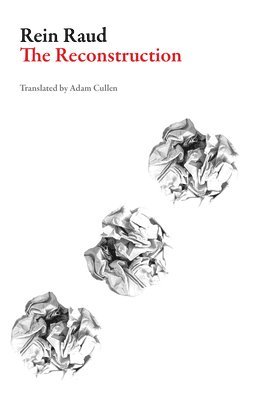
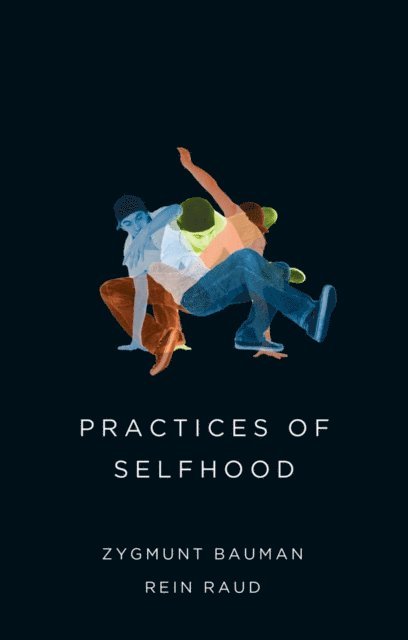
For five years, Enn Padrik has postponed the investigation into theapparently religiously inspired suicides of his daughter and herfriends at a commune near Viljandi, but now he can postpone it nolonger. He must travel all over Estonia and even as far as Franceinterviewing anyone who might remember anything relevant.Some of these people seem to have been waiting for him, othersrefuse to talk. And little by little, a bigger and quite unexpectedpicture starts to emerge. From the late 1970s through 2011, TheReconstruction spans the lives of two generations, going from thelate 1970s through 2011, narrating the changes in the wider worldand Estonian society in particular, the transition from a world ofright and wrong to a world where most things are neither, but theyearning for absolute truths still won’t go away.
320 kr
Skickas inom 7-10 vardagar
An ambitious comparative introduction to Asian thought, expertly written for undergraduate courses in Asian Studies, Asian philosophy and neighboring disciplinesRecent decades have witnessed a sharp increase of interest in the cultures and regions of South and East Asia, owing in part to the prominent role Asian economies have played in the era of globalization. Asian Worldviews: Religions, Philosophies, Political Theories is a unique, reader-friendly introduction to the intellectual heritage of the region. Assuming no previous background in Asian cultural history, Asian Worldviews moves beyond chronological and geographic boundaries to present an integrated treatment of the beliefs, teachings, and ideologies that have shaped the worldviews of approximately half of the global population. Rein Raud explores forms of knowledge in China, India, Tibet, Japan, Korea, and Southeast Asia, providing balanced coverage of all historical periods from antiquity to the modern day.Asian Worldviews embraces the connections rather than the divisions between the religious and philosophical dimensions of South and East Asian thought, and emphasizes a robust engagement with each culture's political, social, and economic contexts. Clear, accessible chapters discuss the development of religious, philosophical, and political thought in India, China, and Japan, and provide succinct overviews of the history of ideas in Korea, Tibet, and Southeast Asia. Throughout the book, Raud uses a comparative approach to examine the mutual influence and productive dialogue, past and present, between Asian cultures as well as with the West, and considers the impact of various worldviews on the development of modern Asian societies.Comprehensive and well-informed by recent developments in the scholarship, Asian Worldviews: Religions, Philosophies, Political Theories is an unparalleled resource for a broad range of courses in Asian studies, philosophy, religious studies, and global politics, as well as an excellent introduction for non-specialist readers looking for a contextual foothold in the rich cultural and intellectual history of South and East Asia.
719 kr
Skickas inom 7-10 vardagar
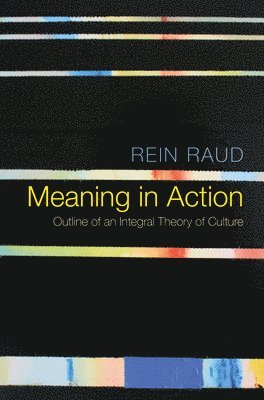
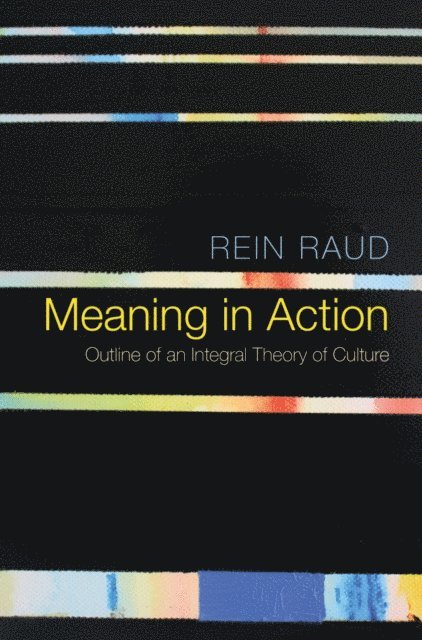
In this important new book Rein Raud develops an original theory of culture understood as a loose and internally contradictory system of texts and practices that are shared by intermittent groups of people and used by them to make sense of their life-worlds. This theory views culture simultaneously in two ways: as a world of texts, tangible and shareable products of signifying acts, and as a space of practices, repeatable activities that produce, disseminate and interpret these clusters of meaning. Both approaches are developed into corresponding models of culture which, used together, are able to provide a rich understanding of any meaning in action. In developing this innovative theory, Raud draws on a wide range of disciplines, from anthropology, sociology and cultural studies to semiotics and philosophy. The theory is illustrated throughout with examples drawn from both �high� and popular culture, and from Western and Asian traditions, dealing with both contemporary and historical topics. The book concludes with two case studies from very different contexts one dealing with Italian poetry in the 13th century, the other dealing with the art scene in Eastern Europe in the 1990s. This timely and original work makes a major new contribution to the theory of culture and will be welcomed by students and scholars throughout the social sciences and humanities.
244 kr
Skickas inom 7-10 vardagar
In this important new book Rein Raud develops an original theory of culture understood as a loose and internally contradictory system of texts and practices that are shared by intermittent groups of people and used by them to make sense of their life-worlds. This theory views culture simultaneously in two ways: as a world of texts, tangible and shareable products of signifying acts, and as a space of practices, repeatable activities that produce, disseminate and interpret these clusters of meaning. Both approaches are developed into corresponding models of culture which, used together, are able to provide a rich understanding of any meaning in action. In developing this innovative theory, Raud draws on a wide range of disciplines, from anthropology, sociology and cultural studies to semiotics and philosophy. The theory is illustrated throughout with examples drawn from both �high� and popular culture, and from Western and Asian traditions, dealing with both contemporary and historical topics. The book concludes with two case studies from very different contexts one dealing with Italian poetry in the 13th century, the other dealing with the art scene in Eastern Europe in the 1990s. This timely and original work makes a major new contribution to the theory of culture and will be welcomed by students and scholars throughout the social sciences and humanities.
692 kr
Skickas inom 7-10 vardagar
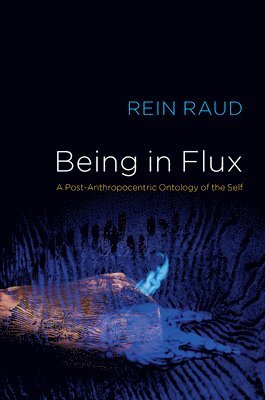
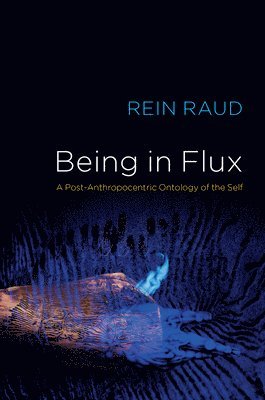
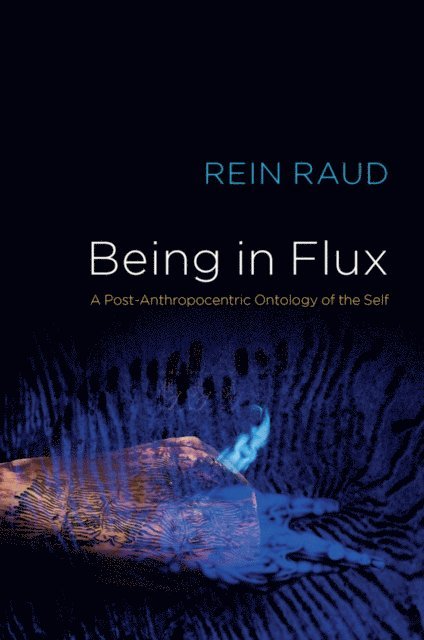
Reality exists independently of human observers, but does the same apply to its structure? Realist ontologies usually assume so: according to them, the world consists of objects, these have properties and enter into relations with each other, more or less as we are accustomed to think of them.Against this view, Rein Raud develops a radical process ontology that does not credit any vantage point, any scale or speed of being, any range of cognitive faculties with the privilege to judge how the world ‘really’ is. In his view, what we think of as objects are recast as fields of constitutive tensions, cross-sections of processes, never in complete balance but always striving for it and always reconfiguring themselves accordingly. The human self is also understood as a fluctuating field, not limited to the mind but distributed all over the body and reaching out into its environment, with different constituents of the process constantly vying for control.The need for such a process philosophy has often been voiced, but rarely has there been an effort to develop it in a systematic and rigourous manner that leads to original accounts of identity, continuity, time, change, causality, agency and other topics. Throughout his new book, Raud engages with an unusually broad range of philosophical schools and debates, from New Materialism and Object-Oriented Ontology to both phenomenological and analytical philosophy of mind, from feminist philosophy of science to neurophilosophy and social ontology.Being in Flux will be of interest to students and scholars in philosophy and the humanities generally and to anyone interested in current debates about realism, materialism and ontology.
257 kr
Skickas inom 7-10 vardagar
Reality exists independently of human observers, but does the same apply to its structure? Realist ontologies usually assume so: according to them, the world consists of objects, these have properties and enter into relations with each other, more or less as we are accustomed to think of them.Against this view, Rein Raud develops a radical process ontology that does not credit any vantage point, any scale or speed of being, any range of cognitive faculties with the privilege to judge how the world ‘really’ is. In his view, what we think of as objects are recast as fields of constitutive tensions, cross-sections of processes, never in complete balance but always striving for it and always reconfiguring themselves accordingly. The human self is also understood as a fluctuating field, not limited to the mind but distributed all over the body and reaching out into its environment, with different constituents of the process constantly vying for control.The need for such a process philosophy has often been voiced, but rarely has there been an effort to develop it in a systematic and rigourous manner that leads to original accounts of identity, continuity, time, change, causality, agency and other topics. Throughout his new book, Raud engages with an unusually broad range of philosophical schools and debates, from New Materialism and Object-Oriented Ontology to both phenomenological and analytical philosophy of mind, from feminist philosophy of science to neurophilosophy and social ontology.Being in Flux will be of interest to students and scholars in philosophy and the humanities generally and to anyone interested in current debates about realism, materialism and ontology.
Linguistic Carnival of Thought
Comparative Philosophy and the Dynamics of Language
Inbunden, Engelska, 2025
1 108 kr
Skickas inom 10-15 vardagar
The Linguistic Carnival of Thought: Comparative Philosophy and the Dynamics of Language argues that the practice of philosophizing is significantly influenced by linguistic structures. Against the widespread view that all languages are reducible to the same matrix on a deep-structural level, Rein Raud presents ample evidence to the contrary, demonstrating how different strategies of predication, postulation, negation, individuation, and so on vary greatly and present incompatible combinations in natural languages, which are nonetheless suitable for precise and rational argumentation. This book compares the views of language presented by Plato, Kongzi/Xunzi, and Bhartrhari; discusses “pansemioticism,” or the view that reality itself is significant (addressing Yijing, East Asian Buddhism, the Kabbalah, the philosophies of Peirce, Derrida, and others); juxtaposes the set-theoretical ontology of Badiou and the mereological worldview of Huayan Buddhism; and discusses various critiques of the idea of “truth” (Wittgenstein, Deleuze, Foucault) and a way to accommodate them through the logic of Dignaga, among other topics. With examples from languages and philosophical traditions across the world, the book is an ideal introduction to the problematic for monolingual speakers of English and a scintillating exploration for polyglots.
The Linguistic Carnival of Thought: Comparative Philosophy and the Dynamics of Language
Häftad, Engelska, 2027
519 kr
Kommande
194 kr
Skickas
A political thriller set mainly in Estonia during the dying days of the Soviet Union, but also in Russia, Finland and Sweden. It follows a group of young pro-independence dissidents who have an elaborate scheme for smuggling copies of KGB files out of the country, and whose fates are entangled, through family and romantic ties, with the security services who are tracking them. It describes the curious minutiae of everyday life, offers wry observations on the period through personal experience, and asks universal questions about how interpersonal relationships are affected when caught up in momentous historical changes. This sometimes wistful examination of how the Estonian Republic was reborn after a long hiatus speaks also of the courage and complex chemistry of those who pushed against a regime whose then weakness could not have been known to them.
319 kr
Skickas inom 5-8 vardagar
169 kr
Skickas inom 5-8 vardagar
280 kr
Skickas inom 3-6 vardagar
309 kr
Skickas inom 3-6 vardagar