Reinhard Niener – författare
488 kr
Läs direkt efter köp
Dieses Buch ist Teil unserer neuen Datenbank Anorganik Online.
Das Trennen eines Gemisches in seine einzelnen Komponenten ist eines der grundlegendsten Verfahrender Analytischen und Technischen Chemie. Dieses klassische Lehrbuch der Analytischen Chemie bietet eine zugleich umfassende und doch systematische Gliederung aller bekannten Trennverfahren. Durch seine ausführliche Behandlung der Grundprinzipien der Separationsmöglichkeiten erfasst es nicht nur das derzeit Bekannte, sondern stellt zugleich eine Fundgrube für Verfahren dar, die noch einer Weiterentwicklung harren. Das Lehrbuch ist klar strukturiert und enthält interessante Beispiele, weiterführende Literatur und ein ausführliches Register. Ein unverzichtbares Buch für fortgeschrittene Studenten der Naturwissenschaften (Chemie, Biochemie, Lebensmittelchemie, Pharmazie, Klinische Chemie, Umweltwissenschaften) und Technik (Chemische Verfahrenstechnik, Chemisch-physikalische Meßtechnik & Biotechnologie), sowie Lehrende dieser Disziplinen.
488 kr
Läs direkt efter köp
Dieses Buch ist Teil unserer neuen Datenbank Anorganik Online.
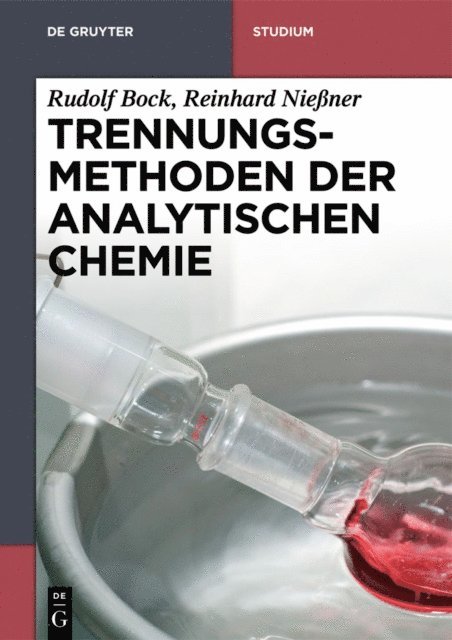
Das Trennen eines Gemisches in seine einzelnen Komponenten ist eines der grundlegendsten Verfahrender Analytischen und Technischen Chemie. Dieses klassische Lehrbuch der Analytischen Chemie bietet eine zugleich umfassende und doch systematische Gliederung aller bekannten Trennverfahren. Durch seine ausführliche Behandlung der Grundprinzipien der Separationsmöglichkeiten erfasst es nicht nur das derzeit Bekannte, sondern stellt zugleich eine Fundgrube für Verfahren dar, die noch einer Weiterentwicklung harren. Das Lehrbuch ist klar strukturiert und enthält interessante Beispiele, weiterführende Literatur und ein ausführliches Register. Ein unverzichtbares Buch für fortgeschrittene Studenten der Naturwissenschaften (Chemie, Biochemie, Lebensmittelchemie, Pharmazie, Klinische Chemie, Umweltwissenschaften) und Technik (Chemische Verfahrenstechnik, Chemisch-physikalische Meßtechnik & Biotechnologie), sowie Lehrende dieser Disziplinen.
984 kr
Läs direkt efter köp
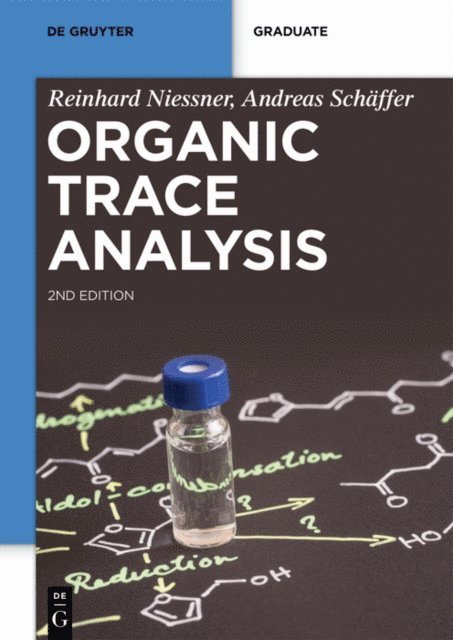
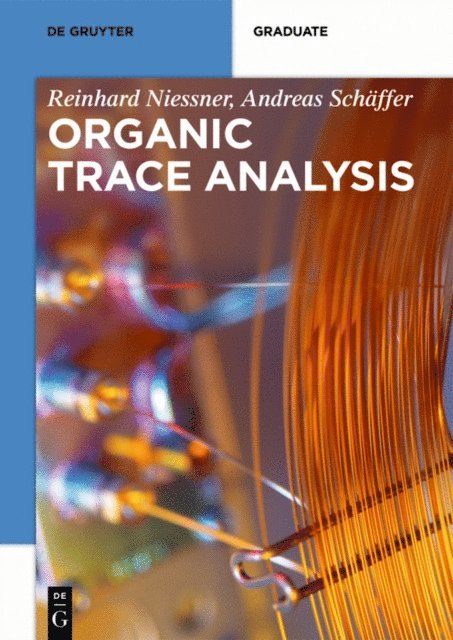
"Organic Trace Analysis" presents the basics of trace analysis, from sample preparation to the measurement: Students are introduced to statistical evaluation, quality control technologies, sampling and preparation of organic traces, as well as to enrichment and separation of samples. Spectroscopic techniques as chromatography, capillary electrophoresis, mass spectrometry, and receptor-based bioanalysis are presented in detail.
976 kr
Läs direkt efter köp
"Organic Trace Analysis" presents the basics of trace analysis, from sample preparation to the measurement: Students are introduced to statistical evaluation, quality control technologies, sampling and preparation of organic traces, as well as to enrichment and separation of samples. Spectroscopic techniques as chromatography, capillary electrophoresis, mass spectrometry, and receptor-based bioanalysis are presented in detail.
2 659 kr
Läs direkt efter köp
Die 10. Auflage dieses etablierten Standardwerks für Wasserfachleute bietet dem Leser einen breiten Überblick zu chemischen, hydrogeologischen und (mikro-)biologischen Themen rund um das Wasser. Außerdem enthalten sind aktuelle Informationen zu modernen chemischen und biologischen Verfahren der Wasseranalytik, praktische Aspekte der Aufbereitung, Desinfektion und Verwendung von Wasser sowie zur Abwasserreinigung und zum Schutz von Gewässern.
2 659 kr
Läs direkt efter köp
Die 10. Auflage dieses etablierten Standardwerks für Wasserfachleute bietet dem Leser einen breiten Überblick zu chemischen, hydrogeologischen und (mikro-)biologischen Themen rund um das Wasser. Außerdem enthalten sind aktuelle Informationen zu modernen chemischen und biologischen Verfahren der Wasseranalytik, praktische Aspekte der Aufbereitung, Desinfektion und Verwendung von Wasser sowie zur Abwasserreinigung und zum Schutz von Gewässern.
1 096 kr
Läs direkt efter köp
Organic contaminants even in very low concentrations can have toxic and ecotoxic effects on exposed organisms. Detection and quantification of such trace amounts in diverging matrices (e.g., water, air, soil, food, tissue, organisms) is challenging and great carefulness and strategic thinking is needed to get reliable results along the way from taking samples up to the final analysis. In the 2nd edition, besides revisions of existing chapters, new analytical technologies and recent application examples are presented: non-target mass spectrometric analysis, trace analysis of per- and polyfluoroalkylated "forever chemicals", organophosphorus esters (nerve agents), and micro- and nanoplastic particles in the environment.
Students will learn about peculiarities and state of the art organic trace analysis and acquire basic and advanced principles of
statistical evaluation of analytical results quality control strategies and good laboratory practices sampling techniques from various matrices sample treatment, enrichment and clean-up techniques chromatographic analyses including hyphenated techniques, and spectroscopy as well mass spectrometry and bioanalytical tools.An extended chapter on selected applications will transfer the theoretical understanding into applied scientific problems. Students will profit from a comprehensive and state of the art overview of organic trace analyses and from an extensive collection of relevant literature.
1 096 kr
Läs direkt efter köp
Organic contaminants even in very low concentrations can have toxic and ecotoxic effects on exposed organisms. Detection and quantification of such trace amounts in diverging matrices (e.g., water, air, soil, food, tissue, organisms) is challenging and great carefulness and strategic thinking is needed to get reliable results along the way from taking samples up to the final analysis. In the 2nd edition, besides revisions of existing chapters, new analytical technologies and recent application examples are presented: non-target mass spectrometric analysis, trace analysis of per- and polyfluoroalkylated "forever chemicals", organophosphorus esters (nerve agents), and micro- and nanoplastic particles in the environment.
Students will learn about peculiarities and state of the art organic trace analysis and acquire basic and advanced principles of
statistical evaluation of analytical results quality control strategies and good laboratory practices sampling techniques from various matrices sample treatment, enrichment and clean-up techniques chromatographic analyses including hyphenated techniques, and spectroscopy as well mass spectrometry and bioanalytical tools.An extended chapter on selected applications will transfer the theoretical understanding into applied scientific problems. Students will profit from a comprehensive and state of the art overview of organic trace analyses and from an extensive collection of relevant literature.
962 kr
Läs direkt efter köp
The separation of a mixture into its individual components is one of the most fundamental procedures in analytical and industrial chemistry. This classic book in analytical chemistry provides a comprehensive yet systematic outline of all known separation methods. Through its detailed treatment of the basic principles of separation possibilities, it not only covers what is currently known, but also represents a treasure trove of methods that are still awaiting further development. It is clearly structured and contains interesting examples, further reading and a detailed index. An indispensable book for advanced students of natural sciences (chemistry, biochemistry, food chemistry, pharmacy, clinical chemistry, environmental sciences) and technology (chemical engineering, chemical-physical measurement & biotechnology), as well as teachers of these disciplines.
962 kr
Läs direkt efter köp
The separation of a mixture into its individual components is one of the most fundamental procedures in analytical and industrial chemistry. This classic book in analytical chemistry provides a comprehensive yet systematic outline of all known separation methods. Through its detailed treatment of the basic principles of separation possibilities, it not only covers what is currently known, but also represents a treasure trove of methods that are still awaiting further development. It is clearly structured and contains interesting examples, further reading and a detailed index. An indispensable book for advanced students of natural sciences (chemistry, biochemistry, food chemistry, pharmacy, clinical chemistry, environmental sciences) and technology (chemical engineering, chemical-physical measurement & biotechnology), as well as teachers of these disciplines.