R.G. Ford - Böcker
Visar alla böcker från författaren R.G. Ford. Handla med fri frakt och snabb leverans.
3 produkter
3 produkter
3 168 kr
Skickas inom 10-15 vardagar
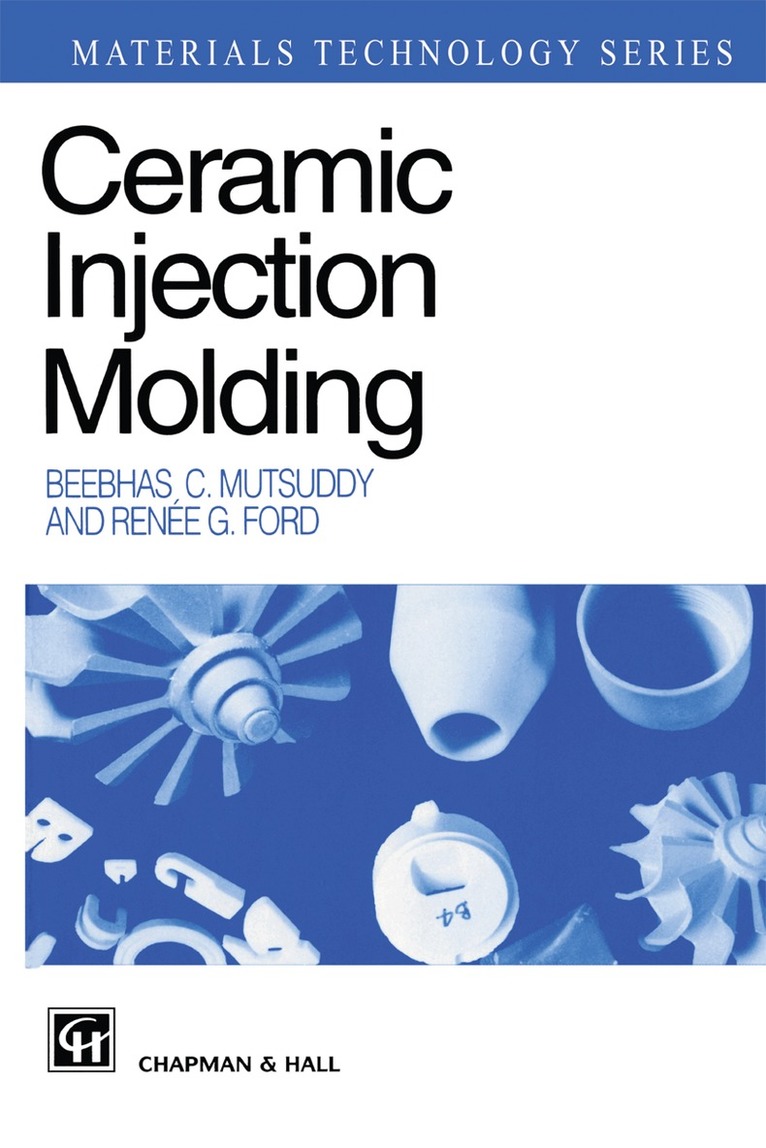
In recent years, injection molding has received special attention as a method for forming complex ceramic parts. High temperature applications in aerospace, advanced heat engines and electronics are but a few of the market areas that have opened up for these special materials. The aim of this book is to provide a comprehensive overview of the steps involved in the ceramic injection molding process. The particular binder systems, the molding and dewaxing processes serve as illustrative examples to indicate how problems can be solved. It is dedicated to providing the reader with a convenient and authoritative source of information and guidance on the use of materials, equipment and testing procedures associated with processing powders and additives into moldable formulations and for injection molding them into satisfactory ceramic products. Emphasis is placed on the applied aspects of the various process steps and the underlying theories are presented in sufficient detail that the reader will appreciate the significance of the various process parameters. All involved in the manufacture of complex ceramic parts will find this book invaluable.Ceramic engineers and anyone involved in the production of ceramics at any stage will find it of great interest and it provides a source of information for those studying ceramics at any level.
2 431 kr
Skickas inom 10-15 vardagar
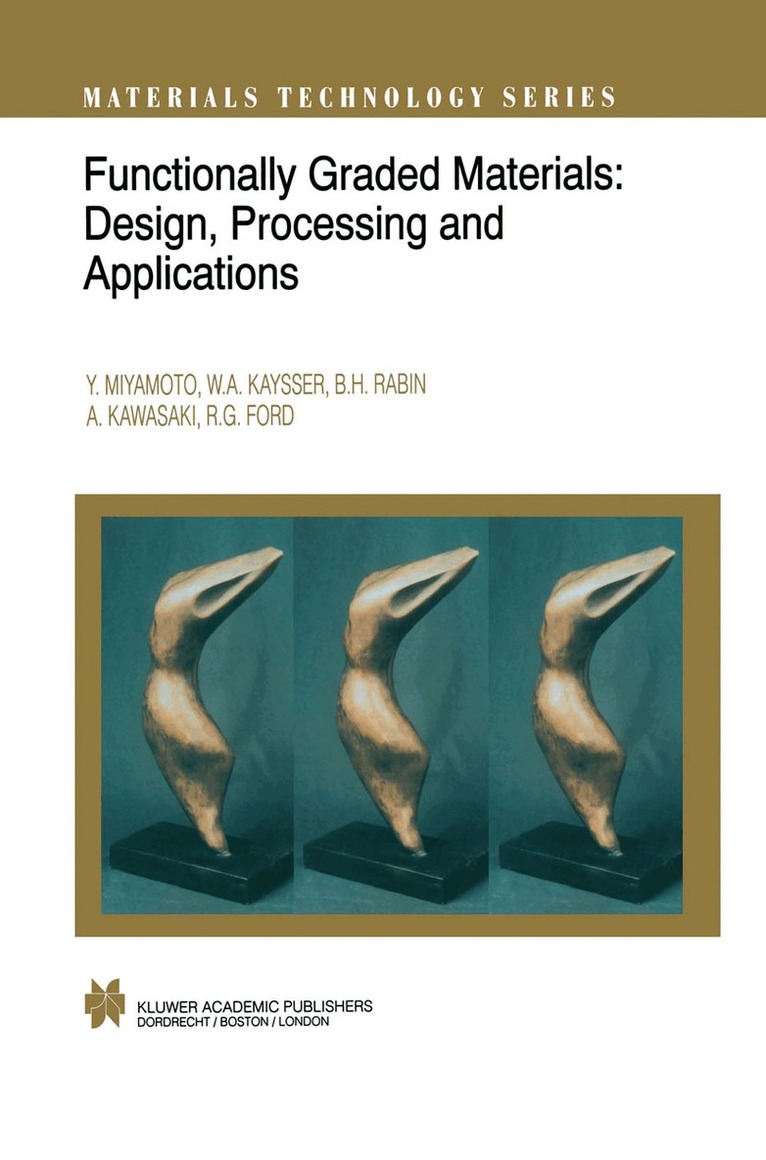
In a Functionally Graded Material (FGM), the composition and structure gradually change over volume, resulting in corresponding changes in the properties of the material. By applying the many possibilities inherent in the FGM concept, it is anticipated that materials will be improved and new functions for them created. A comprehensive description of design, modelling, processing, and evaluation of FGMs as well as their applications is covered in this book. In the simplest FGMs, two different material ingredients change gradually from one to the other. Discontinuous changes such as a stepwise gradation of the material ingredients can also be considered an FGM. The most familiar FGM is compositionally graded from a refractory ceramic to a metal. It can incorporate incompatible functions such as the heat, wear, and oxidation resistance of ceramics and the high toughness, high strength, machinability and bonding capability of metals without severe internal thermal stress. Pores are also important material ingredients for FGMs.The gradual increase of pore distribution from the interior to the surface can impart many properties such as mechanical shock resistance, thermal insulation, catalytic efficiency and relaxation of thermal stress. Even if the gradation of material ingredients is limited to a specific location in the material such as the interface, a joint, or a surface, it can be considered a functionally graded material because it includes the FGM concept. Although the FGM concept can be extended to materials with functions that are designed to change gradually over time or with changes in environmental conditions (e.g. a drug delivery system), these time-dependent functions are produced by tailoring the spatial distribution of the material ingredients. The production of multiple or new functions with graded structures rather than the graded material itself is the basis of the FGM concept reflected in this book.
2 642 kr
Skickas inom 10-15 vardagar
Seven years have elapsed since Dr. Renee Ford, editor-in-chief of Materials Technology, first suggested to me to publish a book on Functionally Graded Materials (FGMs). She said that the FGM concept, then largely unknown outside of Japan and a relatively few laboratories elsewhere, would be of great interest to everyone working in the materials field because of its potentially universal applicability. There was no book about FGMs in English at that time, although the number of research papers, review articles, and FGM conference proceedings had been increasing yearly. We discussed what the book should cover, and decided it should present a comprehensive description from basic theory to the most recent applications of FGMs. This would make it useful both as an introduction to FGMs for those simply curious about what this new materials field was all about, and also as a textbook for researchers, engineers, and graduate students in various material fields. The FGM Forum in Japan generously offered to support this publication program. is very difficult for an individual author to write a book that Because it covers such a wide range of various aspects of many different materials, I invited more than 30 eminent materials scientists throughout the world, who were associated with FGM research, to contribute selected topics. I also asked several leading researchers in this field to edit selected chapters: Dr. Barry H. Rabin, then at the U. S.