Richard A. Lobban Jr. - Böcker
Visar alla böcker från författaren Richard A. Lobban Jr.. Handla med fri frakt och snabb leverans.
6 produkter
6 produkter
695 kr
Skickas inom 10-15 vardagar
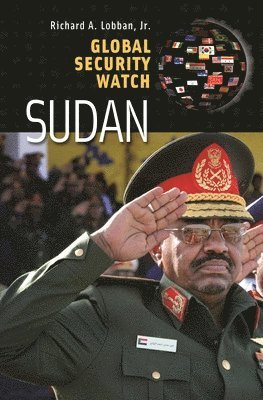
This book provides an overview of contemporary issues in Sudan, Africa's largest nation, examining the country's history and current scene to help readers develop a deeper understanding of how much Sudan matters in today's world. With deep connections to the Sahel and savanna to the west, the African world to the south, the Horn of Africa to the east, and the Middle East to the north, Sudan is important strategically, legally, geopolitically, and militarily—but too often overlooked, or underestimated. Sudan, the country of residence of Osama bin Laden for six years, has played, and will continue to play, a significant role in worldwide security matters. An analysis of the causes, resolutions, and implications of the ongoing Sudanese conflicts (including the genocide in Darfur), this book is essential reading for policymakers, researchers, and students alike.This book considers Sudan's historical foundations, examining how the agendas of countries to the south, east, and north have influenced Sudan's people and government. The author also explains the origins and context of the Darfur conflict, laying out possible steps toward a resolution. Questions concerning Sudanese oil—where is it? how much is there? to whom does it belong?—help focus any discussion of Sudan's emerging importance in the contemporary world. Other issues—such as the influence of Islamism or the Sudanese activities of the Arab League, China, or the African Union—underline the uncertainties that confront the people of Sudan today.
2 560 kr
Skickas inom 10-15 vardagar
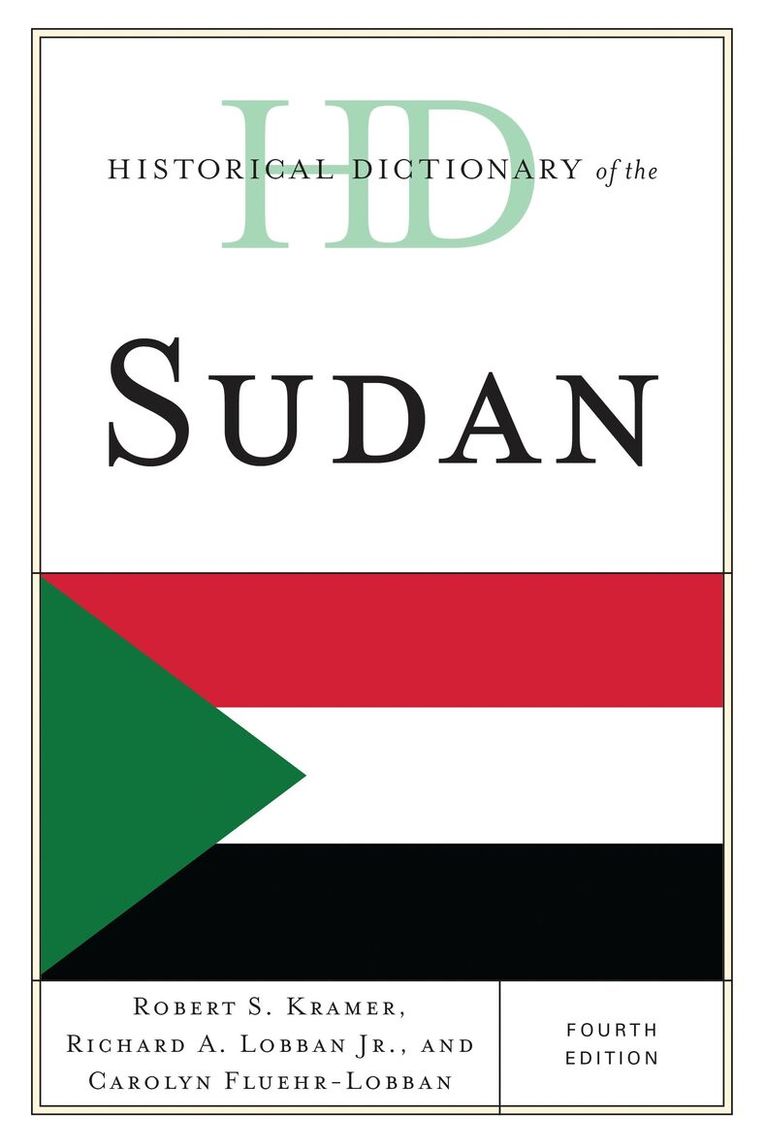
The Republic of the Sudan was long the largest country in Africa and, according to the general consensus, also one of the least successful in many ways. This was not entirely its fault since it lay along the fault line between Muslim and Christian Africa and between the Nile Valley civilizations and African Sudanic cultures. This partly explains the long and bloody warfare waged by the Southerners to achieve independence, which they did in July 2011. So this hefty book actually covers not one but two states.This fourth edition of the Historical Dictionary of the Sudan does so, first, through a lengthy and detailed chronology tracing its relatively few successes and numerous failures. The introductory essay does an admirable job of putting it all in perspective. But the most informative part is the dictionary, with now over 700 entries for this fourth edition. They deal with important personalities, politics, the economy, society, culture, religion and inevitably the civil war. There are also appendixes and an extensive bibliography.
695 kr
Skickas inom 10-15 vardagar
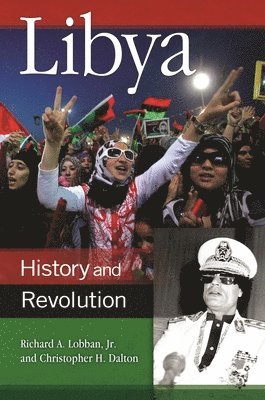
This narrative chronicles Libya's, and to a vast extent Muammar Gaddafi's, remarkable past, meteoric rise to prominence, and convoluted reign, and introduces potential scenarios that may play out in the near term.After four decades of tyrannical, erratic—and pioneering—changes fueled by oil wealth, Muammar Gaddafi's government fell in 2011, and Libya embarked on a new course without known charts. Libya: History and Revolution covers the nation from its origins as independent land masses and kingdoms to its present as a consolidated nation. The work does not focus on the "old" Libya, but aims to bridge yesterday's Libya with tomorrow's, looking at the nation as a regional economic power and military player in North Africa and the Middle East. The result is a comprehensive yet easy-to-understand introduction to the political, economic, and military history and events that led to Gaddafi's downfall, coupled with a consideration of Libya's past and present.Opening with historical underpinnings, the book focuses on the conflict and revolution in Libya during the Arab Spring that brought Gaddafi down, a change that opened a new future for the oil-rich nation. The book closes with a thoughtful discussion of what may be next for Libya and of possible perils for the nation, the region, and the world, as Libya matures as an independent, representatively governed country.
970 kr
Skickas inom 10-15 vardagar
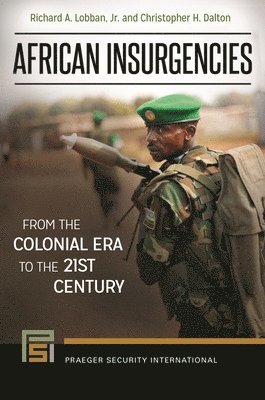
Presenting a continent-wide comparative analysis of ethnic, political, and colonially based insurgencies, this text examines the causes, tactics, outcomes, and key individuals of African insurgent events and assesses a range of foreseeable outcomes in Africa's multiple regions of continuing political instability.Insurgencies continue to erupt in many nations of Africa. The techniques and intended purposes of today's insurgencies are evolutions of historical versions of insurgencies, long-standing strife among ethnic and political groups, and modern-era movements reflective of the ever-shrinking planet, leading to revolutions in the region. This book spans the African continent to address a diverse classification of insurgencies and revolutions, weaving them together thematically and enabling readers to make connections between their purposes, tactics, outcome, and impact. Providing researchers in African and security studies with a comprehensive body of work for further studies, this eminently readable work examines the many past and current insurgencies that have occurred in Africa, identifying their causes and predominantly common bases and rationales.Coauthored by an acclaimed scholar of African studies and a U.S. Marine Corps Lieutenant Colonel with a master's degree in national security and strategic studies, this single-volume book provides an in-depth examination into the drivers, actors, tactics, weapons, intended outcomes, and sweeping consequences of the many events in Africa that have overturned existing rule or implemented rule where none existed—and in a few cases, resulted in stabilization of a nation. Readers will better understand the causal, contextual, tactical, ideological, and philosophical factors that launch insurgencies through coverage of pre-colonial insurgencies; anti-colonial resistance and national liberation movements; separatist and irredentist movements; reformist, revolutionary, and Islamist insurgencies; and genocide, warlord, and proxy insurgencies. The book's last chapter discusses how insurgent movements might be prevented through better governance, or contained or defeated with diplomatic and/or military means.
1 520 kr
Skickas inom 10-15 vardagar
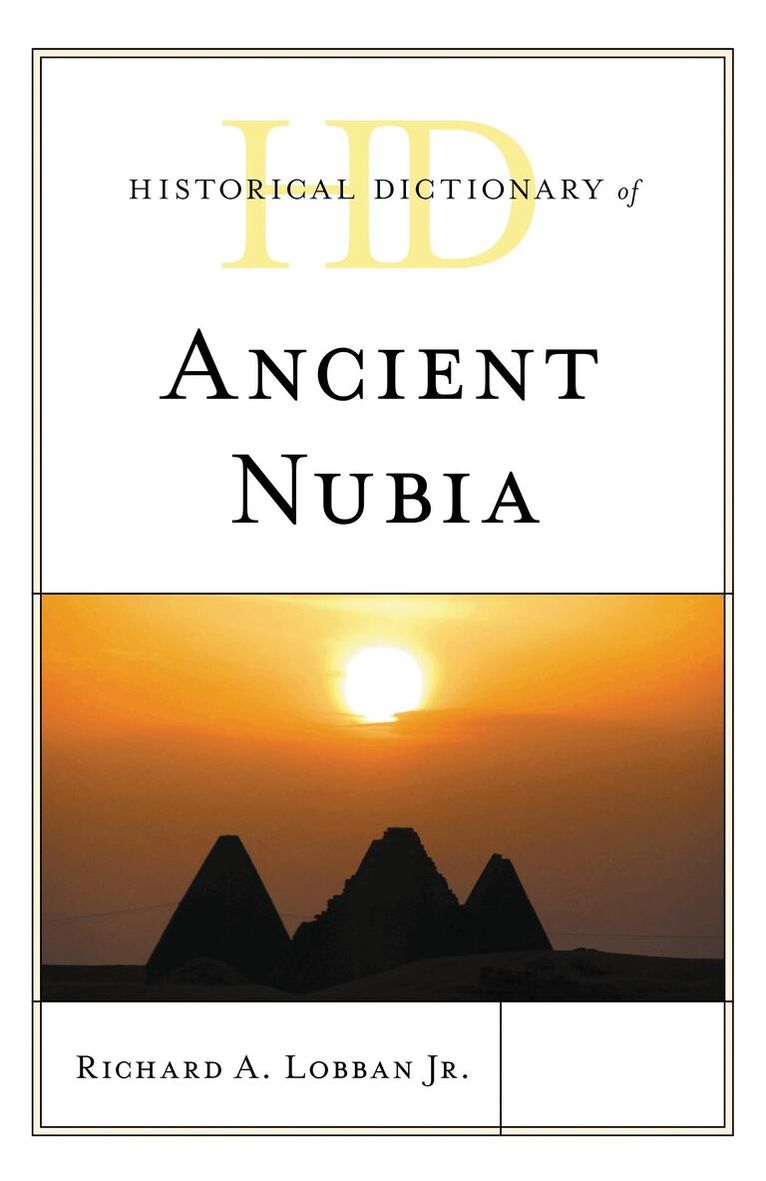
This new book descends from a former combined reference book on Ancient and Medieval Nubia but now expands and focuses primarily on Prehistoric and Ancient times. It contextualizes the foundational roots of human evolution in the Paleolithic and Mesolithic stone ages and on to the Neolithic revolution built on farming and livestock. Meanwhile, Kerma was the most ancient African states and their relationship with dynastic Egypt. Precisely, ancient Kerma a was a serious political, economic and military rival to Old and Middle Kingdoms of Egypt. But in the New Kingdom the balance of regional forces was dramatically changed with Egyptians defeating Kerma and occupying and colonizing Kush/Nubia for 500 years. In the 11th century BCE the political unity of Egypt withered away and after recovering from foreign exploitation, Nubians began to reconstitute a small state at Kurru with renewed pyramid building and then finding no Egyptian resistance, these Nubians kings advanced on Egyptian Nubia and then on to Upper Egypt. Finally, Nubians were able to take over all of Egypt as the pharaohs of century-long Dynasty XXV. This so-called ‘Ethiopian” dynasty had the famed pharaohs of Piankhy, Shabaka, Shabataka, Taharka and Tanutamun ruling for various terms, three of who are mentioned in the Biblical Old Testament.Even when Nubians were expelled from Egypt by foreign Assyrian invaders, they retreated to Napata to carry on their ancient state for three more independent centuries as Egyptian remained conquered by various foreigners for 2,500 years. Most notable of these foreign conquers of Egypt were the Greeks (Ptolemies) and the Roman (who arrived and polytheists and left as Christians. During this Greco-Roman period in Egypt, Nubians strategically withdrew still further south to the Kingdom of Meroë (from the 4th century BCEE to the 4th century CE. Meroe is also covered in great detail as it was famed for many regnant queens, a unique and undeciphered writing system, iron-production and important monumental works including more pyramids than found in Egypt, Yes, smaller and later but many more pyramids that are still standing in several World Heritage sites in Nubia. After Meroë began a long decline it was finally vulnerable to attack from Christian Axum on the 4th century CE. Two murky centuries of regional rule, known as the X-Group were to follow, but by the 6th century Nubians recreated three Christian states that are covered in detail in the following Historical Dictionary of Medieval Christian Nubia and the Historical Dictionary of Sudan for Islamic and modern times.
1 619 kr
Skickas inom 10-15 vardagar
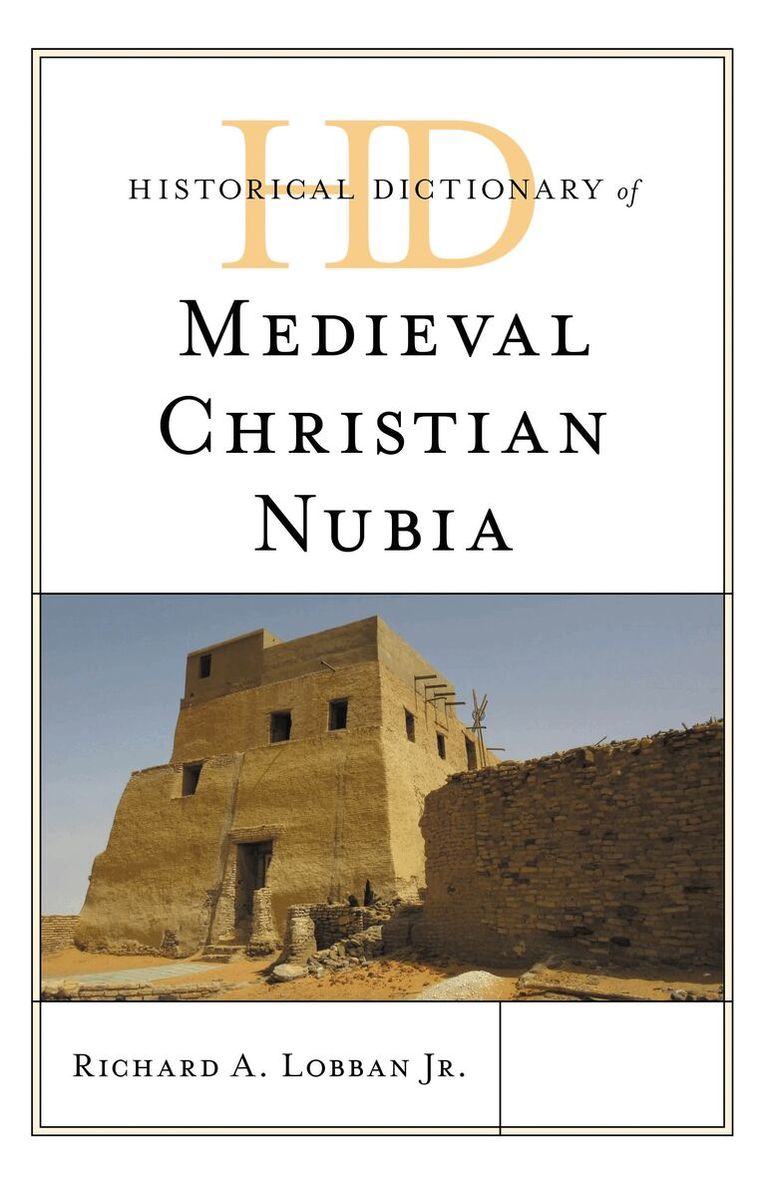
Medieval Christian Nubia is often a neglected period of medieval African history. Because meaning is determined largely by context this work traces the Greco-Roman, Meroitic and Jewish precursors. The regional, historical and theological schisms within Christianity are also a highlight. The dynamics of the three Nubian kingdoms of Nobatia, Mukurra, and Alwa are the centerpiece of this book that covers mural arts, architecture, and the names of the leading kings and bishops. Another strength of the book is the analysis of the 700-year baqt peace treaty between Christian Nubia and Islamic Egypt; this is considered to be the longest lasting treaty in diplomatic history. The complex transition from Christianity to Islam in the 14th century is analyzed in great personal, political, and military detail.Historical Dictionary of Medieval Christian Nubia contains a chronology, an introduction, and an extensive bibliography. The dictionary section has over 200 cross-referenced entries on politics, economy, foreign relations, religion, and culture of the medieval Nubians. This book is an excellent resource for students, researchers, and anyone wanting to know more about Medieval Christian Nubia.