Richard A. Watson – författare
Visar alla böcker från författaren Richard A. Watson. Handla med fri frakt och snabb leverans.
10 produkter
10 produkter
Inbunden, Engelska, 1993
496 kr
Skickas inom 5-8 vardagar
A study of the actual effect of the use of the veto, focusing on those elements of the policy-making process that influence presidential decisions on vetoes. Watson's analysis of presidential vetoes ranges from Franklin Roosevelt to Jimmy Carter.
E-bok
Engelska, 1993499 kr
Läs direkt efter köp
The veto power, claimed Woodrow Wilson, is the presidents most formidable prerogative. Despite that assertion, Richard Watson shows that the presidential veto of significant legislation is frequently overridden by Congress.Although the veto has a major impact on public policy, past research on it has dealt only with legal and historical issues. This is the first systematic, in-depth study of the actual effect of the use of the veto. Watson focuses on those elements of the policy-making process that influence presidential veto decisions. His analysis of presidential vetoes from Franklin Roosevelt through Jimmy Carter clarifies the problems caused by the veto and reveals how it has shaped public policy. He tells what conditions provoke the presidents reliance on the veto and Congresss decision whether to try to override it. He also explores why vetoes have often triggered bitter disputes over the degree and scope of presidential power and its role in the legislative process.Watson concludes that the veto power has operated well in terms of both public policy and relations between Congress and the president and argues that it would be a mistake to alter it through the adoption of an item veto.
Häftad, Engelska, 1987
279 kr
Skickas inom 5-8 vardagar
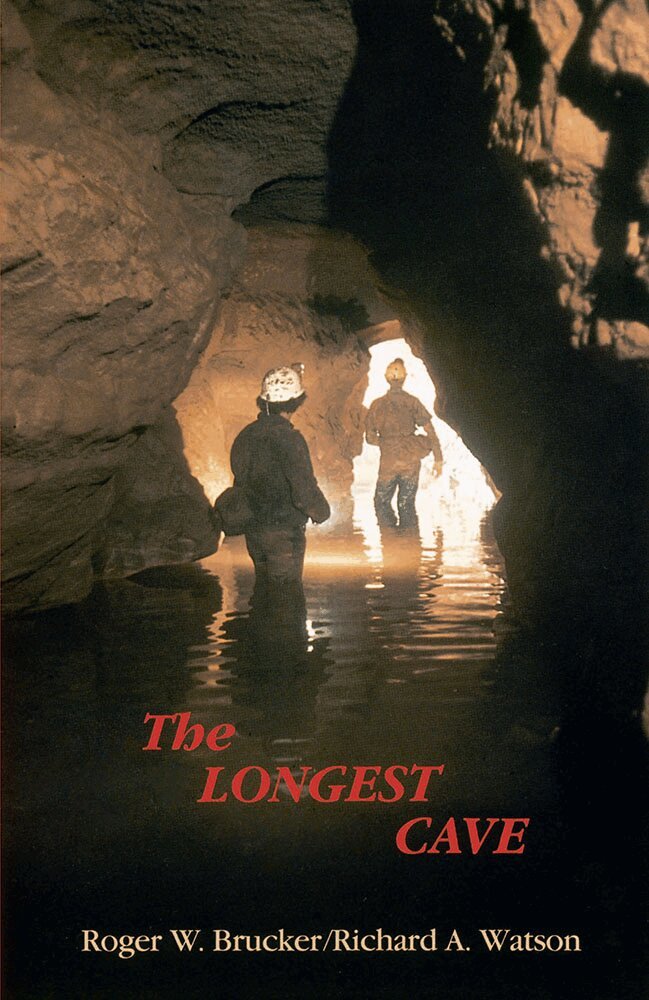
In 1925 the geological connection between Flint Ridge and Mammoth Cave was proved when dye placed in a Flint Ridge spring showed up in Echo River at Mammoth Cave. That tantalizing swirl of dye confirmed speculations that were to tempt more than 650 cavers over half a century with the thrill of being the first to make human passage of the cave connection. Roger Brucker and Richard Watson tell not only of their own twenty-year effort to complete the link but the stories of many others who worked their way through mud-choked crawlways less than a foot high only to find impenetrable blockages. Floyd Collins died a grisly death in nearby Sand Cave in 1925, after being trapped there for 15 days. The wide press coverage of the rescue efforts stirred the imagination of the public and his body was on macabre display in a glass-topped coffin in Crystal Cave into the 1940s. Agents of a rival cave owner once even stole his corpse, which was recovered and still is in a coffin in the cave. Modern cavers still have a word with Floyd as they start their downward treks. Brucker and Watson joined the parade of cavers who propelled themselves by wiggling kneecaps, elbows, and toes through quarter-mile long crawlways, clinging by fingertips and boot toes across mud-slick walls, over bottomless pits, into gurgling streams beneath stone ceilings that descend to water level, down crumbling crevices and up mountainous rockfalls, into wondrous domed halls, and straight ahead into a blackness intensified rather than dispelled by the carbide lamps on their helmets. Over two decades they explored the passages with others who sought the final connection as vigorously as themselves. Pat Crowther, a young mother of two, joined them and because of her thinness became the member of the crew to go first into places no human had ever gone before. In that role, in July 1972, she wiggled her way through the Tight Spot and found the route that would link the Flint Ridge and Mammoth Cave systems into one cave extending 144.4 miles through the Kentucky limestone. In a new afterword to this edition the authors summarize the subsequent explorations that have more than doubled the established length of the cave system. Based upon geological evidence, the authors predict that new discoveries will add another 200 miles to the length of the world’ s longest cave, making it over 500 miles long.
Häftad, Engelska, 1995
316 kr
Skickas inom 5-8 vardagar
In this engrossing double volume, the work and thought of Nicolas Malebranche is examined through the eyes of Simon Foucher and Dortous de Mairan. Part 1 consists of Richard A. Watson’s translation of the first published critique, by Simon Foucher, of Malebranche’s main philosophical work, Of the Search for the Truth. In the second part, Marjorie Grene presents a meticulous translation of the long correspondence between Malebranche and Jean-Jacques Dortous de Mairan that ended shortly before Malebranche’s death. Both Watson and Grene provide insightful introductions to their translations.The influence of the works of Malebranche has been extensive, as has the influence of the lesser works of his first critic, Simon Foucher. Although Foucher was a minor philosopher of the seventeenth century, he provided arguments that led to a crucial turning point in modern philosophy. Listened to with care and treated with respect by Leibniz, Foucher’s arguments were utilized by Bayle, Berkeley, and Hume toward the destruction not only of Cartesian metaphysics but of substance philosophy as well. In this translation of Foucher’s work, it is now possible for readers of Malebranche’s Of the Search for the Truth to evaluate the immediate response of a young philosopher about town to one of the most important philosophical works of his day.The correspondence between Jean-Jacques Dortous de Mairan, an obscure provincial, and Nicolas Malebranche has usually been viewed as a small addendum to the works of Malebranche. Marjorie Grene, however, in her translation of this correspondence, considers it not only a contribution to the Malebranchian corpus but also an example of a reaction to Spinoza. Born at Béziers in the south of France in 1678, Mairan went to Paris in 1698, where he studied mathematics with Malebranche. Their correspondence began four years later when Mairan returned to Béziers to accept a position with the local bishop. In his letters to Malebranche, Mairan reveals himself to be one of no more than a handful of known readers of Spinoza who, in the early eighteenth century, admitted fascination with Spinoza’s presentation of his thoroughly unorthodox God and his equally unorthodox nature.
Häftad, Engelska, 1998
230 kr
Skickas inom 11-20 vardagar
Combines historical research and philosophical analysis to cast light on why and how Cartesianism failed as a complete metaphysical system. Far more radical in its conclusions than his 1966 study The Downfall of Cartesianism (a slightly revised version of which forms the main body of the current work), Watson argues that Descartes's ontology is incoherent and vacuous, his epistemology deceptive, and his theology unorthodox--indeed, that Descartes knows nothing.
Inbunden, Engelska, 1998
491 kr
Skickas inom 11-20 vardagar
Combines historical research and philosophical analysis to cast light on why and how Cartesianism failed as a complete metaphysical system. Far more radical in its conclusions than his 1966 study The Downfall of Cartesianism (a slightly revised version of which forms the main body of the current work), Watson argues that Descartes's ontology is incoherent and vacuous, his epistemology deceptive, and his theology unorthodox--indeed, that Descartes knows nothing.
Inbunden, Engelska, 2008
233 kr
Skickas inom 5-8 vardagar
Inbunden, Engelska, 2013
225 kr
Skickas inom 5-8 vardagar
Häftad, Engelska, 2004
776 kr
Tillfälligt slut
Häftad, Engelska, 1987
164 kr
Tillfälligt slut