Richard Brody – författare
Visar alla böcker från författaren Richard Brody. Handla med fri frakt och snabb leverans.
3 produkter
3 produkter
Häftad, Engelska, 2020
280 kr
Skickas
Jean-Luc Godard is one the most influential filmmakers of the last fifty years. Scorsese, Tarantino, Wong Kar-Wai and Lars von Trier are but a few of the directors who have fallen under the spell of his freewheeling style. In his 1960s heyday Godard - always in dark shades, cigarette in hand - epitomised European cool. But he subsequently grew into one of the most formidable artists the cinema has produced. Writer and film-maker Richard Brody, one of the few to have interviewed Godard in his Swiss retreat, here offers an accessible account of this extraordinary and fascinating artist.

Häftad, Engelska, 2009
429 kr
Skickas inom 3-6 vardagar
E-bok
PDF, Engelska, 2013783 kr
Läs direkt efter köp
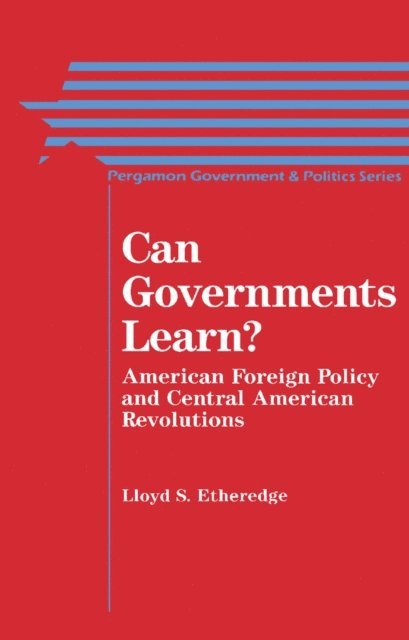
Can Governments Learn? American Foreign Policy and Central American Revolutions examines U.S. foreign policy toward revolutions which use Marxist rhetoric, receive material aid from the Soviet Union, and are directed against a repressive government that has been the beneficiary of substantial material and political assistance from the United States. The case material is drawn from the history of American policy in Latin America; the 1954 overthrow of a leftist government in Guatemala; the evolution of Cuban policy from 1958 to 1962; and the repetition of similar policies in the 1980s. This book is comprised of seven chapters and begins by reviewing the history of America''s failed Bay of Pigs invasion in 1961, Operation MONGOOSE, and the Cuban nuclear confrontation crisis of 1962. The successful use of the Bay of Pigs model in 1954 (against a government in Guatemala) is examined, along with the U.S. government''s contract with the Mafia to assassinate Premier Fidel Castro at the time of the Bay of Pigs invasion. The following chapters look at three vectors reflecting the blockage of government learning: the adoption of similar policies across historical encounters; the repetition of collectively self-blocking behavior within the national security decision process; and the repetition of a common syndrome of errors in judgment and perception. The final chapter analyzes American foreign policy toward Central America in the 1980s and offers suggestions to improve the foreign policy learning rate. This monograph will be of interest to diplomats, politicians, political scientists, and others concerned with international relations.