Richard Dienst – författare
Visar alla böcker från författaren Richard Dienst. Handla med fri frakt och snabb leverans.
3 produkter
3 produkter
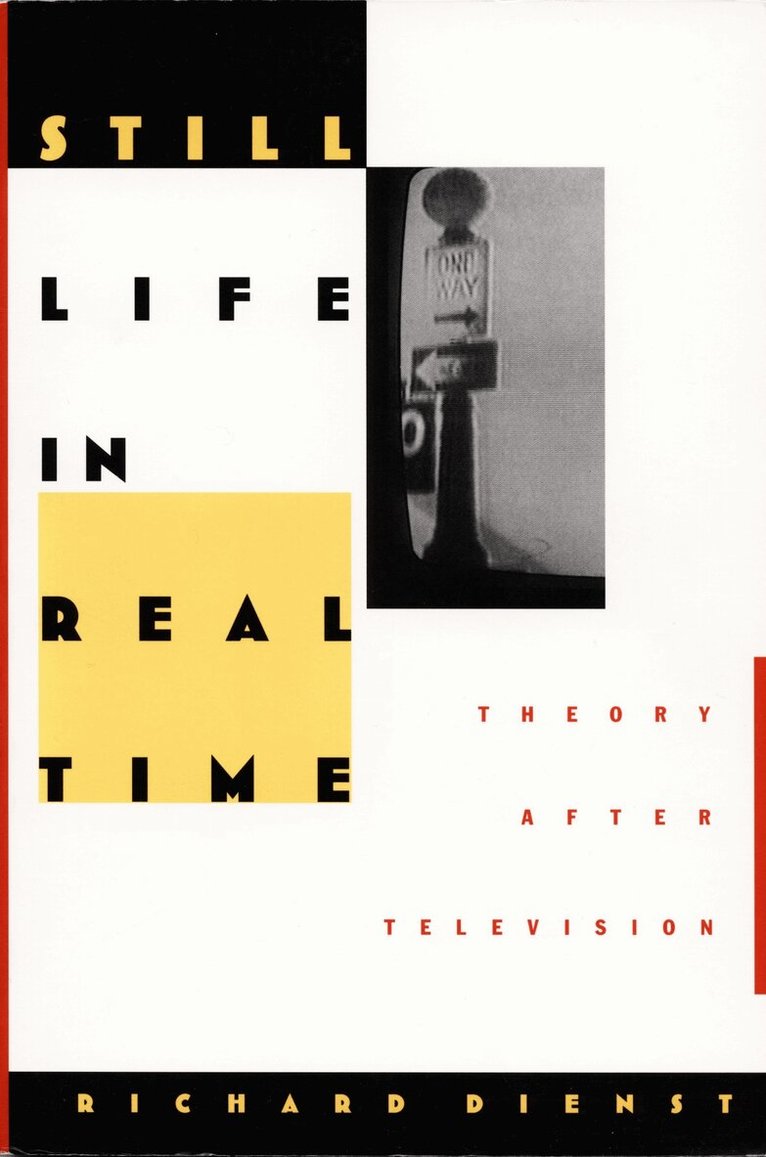
Häftad, Engelska, 1994
489 kr
Skickas inom 3-6 vardagar
Television can be imagined in a number of ways: as a profuse flow of images, as a machine that produces new social relationships, as the last lingering gasp of Western metaphysical thinking, as a stuttering relay system of almost anonymous messages, as a fantastic construction of time. Richard Dienst engages each of these possibilities as he explores the challenge television has posed for contemporary theories of culture, technology, and media.Five theoretical projects provide Still Life in Real Time with its framework: the cultural studies tradition of Raymond Williams; Marxist political economy; Heideggerian existentialism; Derridean deconstruction; and a Deleuzian anatomy of images. Drawing lessons from television programs like Twin Peaks and Crime Story, television events like the Gulf War, and television personalities like Madonna, Dienst produces a remarkable range of insights on the character of the medium and on the theories that have been affected by it.From the earliest theorists who viewed television as a new metaphor for a global whole, a liberal technology empty of ideological or any other content, through those who saw it as a tool for consumption, making time a commodity, to those who sense television’s threat to being and its intimate relation to power, Dienst exposes the rich pattern of television’s influence on philosophy, and hence on the deepest levels of contemporary experience.A book of theory, Still Life in Real Time will compel the attention of all those with an interest in the nature of the ever present, ever shifting medium and its role in the thinking that marks our time.
E-bok
PDF, Engelska, 1994488 kr
Läs direkt efter köp
Television can be imagined in a number of ways: as a profuse flow of images, as a machine that produces new social relationships, as the last lingering gasp of Western metaphysical thinking, as a stuttering relay system of almost anonymous messages, as a fantastic construction of time. Richard Dienst engages each of these possibilities as he explores the challenge television has posed for contemporary theories of culture, technology, and media.Five theoretical projects provide Still Life in Real Time with its framework: the cultural studies tradition of Raymond Williams; Marxist political economy; Heideggerian existentialism; Derridean deconstruction; and a Deleuzian anatomy of images. Drawing lessons from television programs like Twin Peaks and Crime Story, television events like the Gulf War, and television personalities like Madonna, Dienst produces a remarkable range of insights on the character of the medium and on the theories that have been affected by it.From the earliest theorists who viewed television as a new metaphor for a global whole, a liberal technology empty of ideological or any other content, through those who saw it as a tool for consumption, making time a commodity, to those who sense television’s threat to being and its intimate relation to power, Dienst exposes the rich pattern of television’s influence on philosophy, and hence on the deepest levels of contemporary experience.A book of theory, Still Life in Real Time will compel the attention of all those with an interest in the nature of the ever present, ever shifting medium and its role in the thinking that marks our time.
E-bok
Engelska, 2017123 kr
Läs direkt efter köp
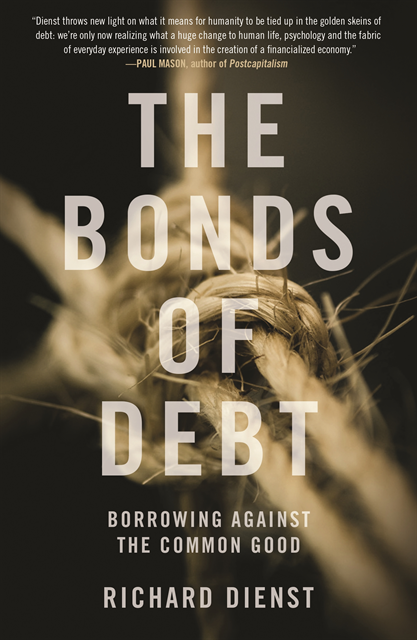
The credit crisis has pushed the whole world so far into the red that the gigantic sums involved defy understanding. On a human level, what does such an enormous degree of debt and insolvency mean? In this timely book, cultural critic Richard Dienst considers the financial crisis, global poverty, media politics and radical theory to parse the various implications of a world where man is born free but everywhere is in debt. Written with humor and verve, Bonds of Debt ranges across subjects-such as Obama''s national security strategy, the architecture of Prada stores, press photos of Bono, and a fairy tale told by Karl Marx-to capture a modern condition that is founded on fiscal imprudence.