Richard E. Silverman – författare
339 kr
Läs direkt efter köp
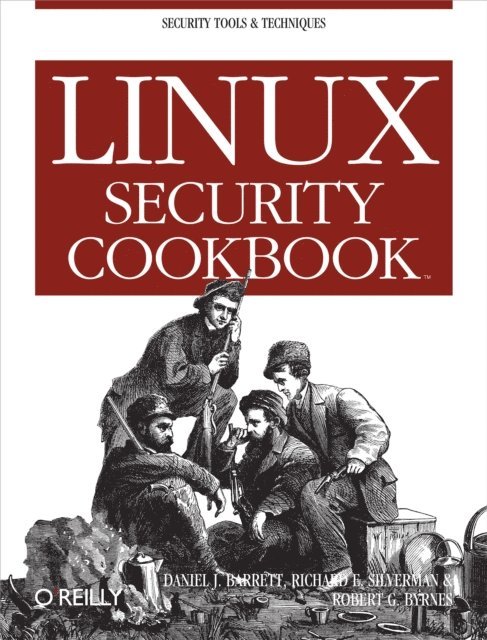
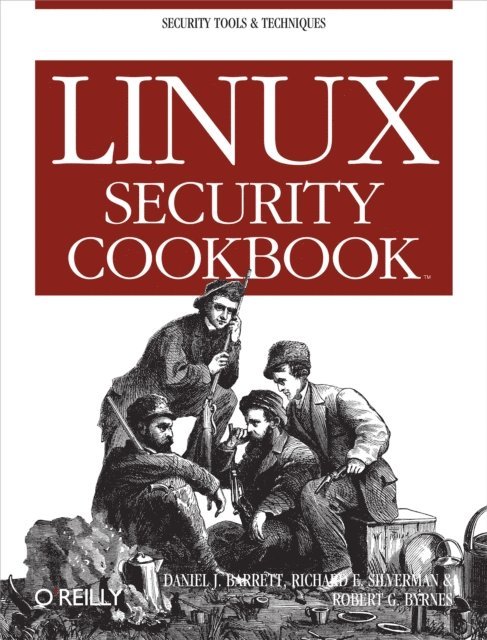
Computer security is an ongoing process, a relentless contest between system administrators and intruders. A good administrator needs to stay one step ahead of any adversaries, which often involves a continuing process of education. If you''re grounded in the basics of security, however, you won''t necessarily want a complete treatise on the subject each time you pick up a book. Sometimes you want to get straight to the point. That''s exactly what the new Linux Security Cookbook does. Rather than provide a total security solution for Linux computers, the authors present a series of easy-to-follow recipes--short, focused pieces of code that administrators can use to improve security and perform common tasks securely.The Linux Security Cookbook includes real solutions to a wide range of targeted problems, such as sending encrypted email within Emacs, restricting access to network services at particular times of day, firewalling a webserver, preventing IP spoofing, setting up key-based SSH authentication, and much more. With over 150 ready-to-use scripts and configuration files, this unique book helps administrators secure their systems without having to look up specific syntax. The book begins with recipes devised to establish a secure system, then moves on to secure day-to-day practices, and concludes with techniques to help your system stay secure.Some of the "recipes" you''ll find in this book are:
Controlling access to your system from firewalls down to individual services, using iptables, ipchains, xinetd, inetd, and moreMonitoring your network with tcpdump, dsniff, netstat, and other toolsProtecting network connections with Secure Shell (SSH) and stunnelSafeguarding email sessions with Secure Sockets Layer (SSL)Encrypting files and email messages with GnuPGProbing your own security with password crackers, nmap, and handy scriptsThis cookbook''s proven techniques are derived from hard-won experience. Whether you''re responsible for security on a home Linux system or for a large corporation, or somewhere in between, you''ll find valuable, to-the-point, practical recipes for dealing with everyday security issues. This book is a system saver.376 kr
Läs direkt efter köp
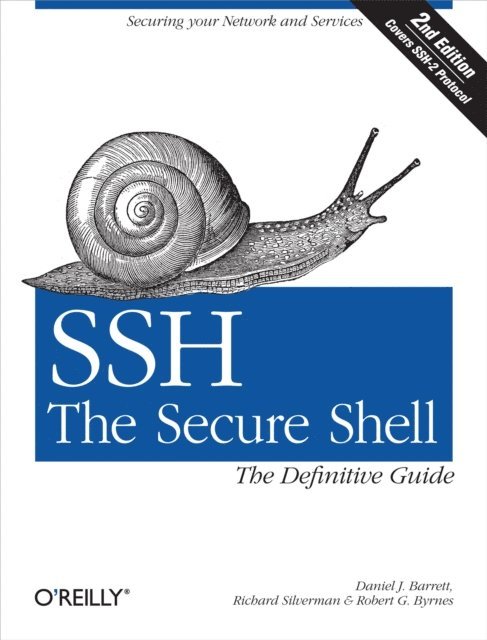
Are you serious about network security? Then check out SSH, the Secure Shell, which provides key-based authentication and transparent encryption for your network connections. It''s reliable, robust, and reasonably easy to use, and both free and commercial implementations are widely available for most operating systems. While it doesn''t solve every privacy and security problem, SSH eliminates several of them very effectively.Everything you want to know about SSH is in our second edition of SSH, The Secure Shell: The Definitive Guide. This updated book thoroughly covers the latest SSH-2 protocol for system administrators and end users interested in using this increasingly popular TCP/IP-based solution.How does it work? Whenever data is sent to the network, SSH automatically encrypts it. When data reaches its intended recipient, SSH decrypts it. The result is "transparent" encryption-users can work normally, unaware that their communications are already encrypted. SSH supports secure file transfer between computers, secure remote logins, and a unique "tunneling" capability that adds encryption to otherwise insecure network applications. With SSH, users can freely navigate the Internet, and system administrators can secure their networks or perform remote administration.Written for a wide, technical audience, SSH, The Secure Shell: The Definitive Guide covers several implementations of SSH for different operating systems and computing environments. Whether you''re an individual running Linux machines at home, a corporate network administrator with thousands of users, or a PC/Mac owner who just wants a secure way to telnet or transfer files between machines, our indispensable guide has you covered. It starts with simple installation and use of SSH, and works its way to in-depth case studies on large, sensitive computer networks.No matter where or how you''re shipping information, SSH, The Secure Shell: The Definitive Guide will show you how to do it securely.
380 kr
Läs direkt efter köp
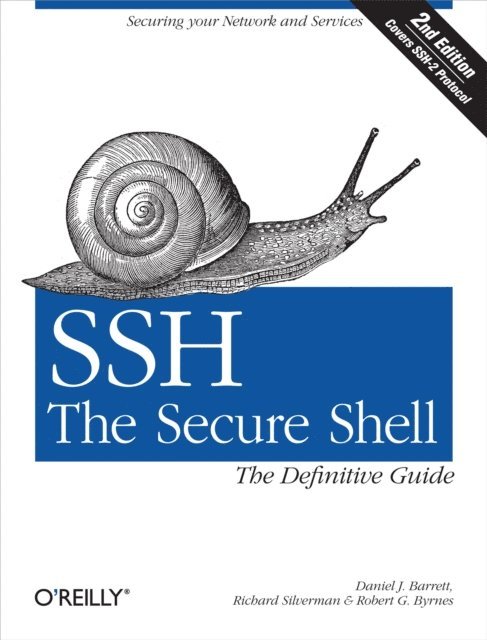
Are you serious about network security? Then check out SSH, the Secure Shell, which provides key-based authentication and transparent encryption for your network connections. It''s reliable, robust, and reasonably easy to use, and both free and commercial implementations are widely available for most operating systems. While it doesn''t solve every privacy and security problem, SSH eliminates several of them very effectively.Everything you want to know about SSH is in our second edition of SSH, The Secure Shell: The Definitive Guide. This updated book thoroughly covers the latest SSH-2 protocol for system administrators and end users interested in using this increasingly popular TCP/IP-based solution.How does it work? Whenever data is sent to the network, SSH automatically encrypts it. When data reaches its intended recipient, SSH decrypts it. The result is "transparent" encryption-users can work normally, unaware that their communications are already encrypted. SSH supports secure file transfer between computers, secure remote logins, and a unique "tunneling" capability that adds encryption to otherwise insecure network applications. With SSH, users can freely navigate the Internet, and system administrators can secure their networks or perform remote administration.Written for a wide, technical audience, SSH, The Secure Shell: The Definitive Guide covers several implementations of SSH for different operating systems and computing environments. Whether you''re an individual running Linux machines at home, a corporate network administrator with thousands of users, or a PC/Mac owner who just wants a secure way to telnet or transfer files between machines, our indispensable guide has you covered. It starts with simple installation and use of SSH, and works its way to in-depth case studies on large, sensitive computer networks.No matter where or how you''re shipping information, SSH, The Secure Shell: The Definitive Guide will show you how to do it securely.
141 kr
Läs direkt efter köp
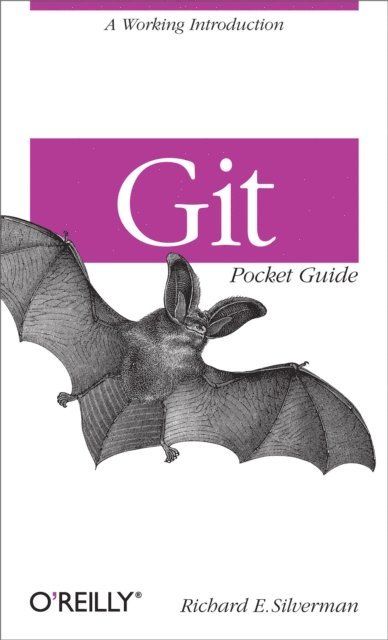
This pocket guide is the perfect on-the-job companion to Git, the distributed version control system. It provides a compact, readable introduction to Git for new users, as well as a reference to common commands and procedures for those of you with Git experience.
Written for Git version 1.8.2, this handy task-oriented guide is organized around the basic version control functions you need, such as making commits, fixing mistakes, merging, and searching history.
Examine the state of your project at earlier points in timeLearn the basics of creating and making changes to a repositoryCreate branches so many people can work on a project simultaneouslyMerge branches and reconcile the changes among themClone an existing repository and share changes with push/pull commandsExamine and change your repositoryâ??s commit historyAccess remote repositories, using different network protocolsGet recipes for accomplishing a variety of common tasks339 kr
Läs direkt efter köp
Computer security is an ongoing process, a relentless contest between system administrators and intruders. A good administrator needs to stay one step ahead of any adversaries, which often involves a continuing process of education. If you''re grounded in the basics of security, however, you won''t necessarily want a complete treatise on the subject each time you pick up a book. Sometimes you want to get straight to the point. That''s exactly what the new Linux Security Cookbook does. Rather than provide a total security solution for Linux computers, the authors present a series of easy-to-follow recipes--short, focused pieces of code that administrators can use to improve security and perform common tasks securely.The Linux Security Cookbook includes real solutions to a wide range of targeted problems, such as sending encrypted email within Emacs, restricting access to network services at particular times of day, firewalling a webserver, preventing IP spoofing, setting up key-based SSH authentication, and much more. With over 150 ready-to-use scripts and configuration files, this unique book helps administrators secure their systems without having to look up specific syntax. The book begins with recipes devised to establish a secure system, then moves on to secure day-to-day practices, and concludes with techniques to help your system stay secure.Some of the "recipes" you''ll find in this book are:
Controlling access to your system from firewalls down to individual services, using iptables, ipchains, xinetd, inetd, and moreMonitoring your network with tcpdump, dsniff, netstat, and other toolsProtecting network connections with Secure Shell (SSH) and stunnelSafeguarding email sessions with Secure Sockets Layer (SSL)Encrypting files and email messages with GnuPGProbing your own security with password crackers, nmap, and handy scriptsThis cookbook''s proven techniques are derived from hard-won experience. Whether you''re responsible for security on a home Linux system or for a large corporation, or somewhere in between, you''ll find valuable, to-the-point, practical recipes for dealing with everyday security issues. This book is a system saver.