Richard F Williams – författare
Visar alla böcker från författaren Richard F Williams. Handla med fri frakt och snabb leverans.
10 produkter
10 produkter
Häftad, Engelska, 2012
436 kr
Skickas inom 5-8 vardagar
Häftad, Engelska, 2012
551 kr
Skickas inom 5-8 vardagar
Häftad, Engelska, 2013
324 kr
Skickas inom 5-8 vardagar
Häftad, Engelska, 2014
520 kr
Skickas inom 5-8 vardagar
Häftad, Engelska, 2014
486 kr
Skickas inom 5-8 vardagar
E-bok
Engelska, 2014405 kr
Läs direkt efter köp
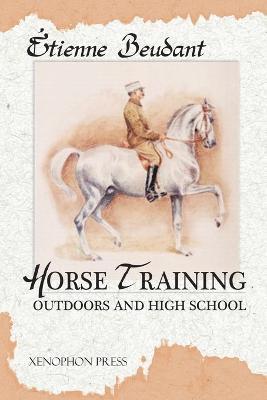
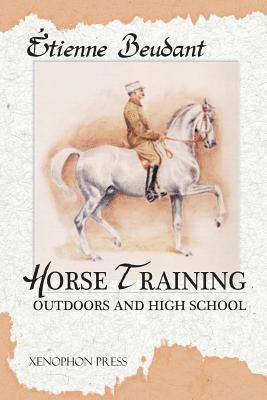
"My principle of dressage is to have the horse equally light to the spur and the hand and which does not allow the displacement of the rider''s seat as an aid, and leaves the horse to move on his own once he has been given the correct position by the rider" for if we "Let the horse believe that he is our master, then he is our slave. Therein lays my opinion: the equestrian truth." -Étienne Beudant (1863-1949)For dressage enthusiasts who believe that there is no incompatibility between sport riding and academic riding, this is a veritable"Bible." Its author''s Étienne Beudant (1863-1949) writings belong to the golden legend of the French riding. Gifted disciple of the illustrious Faverot de Kerbrech (himself a student of Baucher) Beudant won the admiration of his contemporaries. General Decarpentry called him "a whopping squire." Others called him the"Mozartof riding."Horse Training: Outdoors and High School includes general principles of dressage and even the philosophy of dressage) and some technical considerations that are good to consider long before making implementation. Finally, Beudant recounts important memories of horses (often very difficult ones) that he had trained or corrected or simply occasionally mounted. An important theme runs through the book and explains its title: the full compatibility or continuity between the correct work of an ordinary saddle horse and that of high school horse.Horse Training: Outdoors and High School provides an important historical bridge between Faverot de Kerbrech of the 19th century and the later writers of the 20th century, Nuno Oliveira and Albert Decarpentry. Reserve your advance reservation copy today. Expected to ship in November 2014."The horse is the sole master of his forces; even with all of our vigor, by himself, the rider is powerless to increase the horse''s forces. Therefore, it is for the horse to employ his forces in his own way, for himself to calculate the manner of that employment so as best to fulfill the demands of his rider. If the rider tries to do it all, the horse permits him to do so, but the horse merely drifts, and limits his efforts to those which the rider demands. On the contrary, if the horse knows that he must rely on himself, he uses himself completely, with all of his energy." -Étienne Beudant (1863-1949)
Häftad, Engelska, 2015
492 kr
Skickas inom 3-6 vardagar
414 kr
Läs direkt efter köp
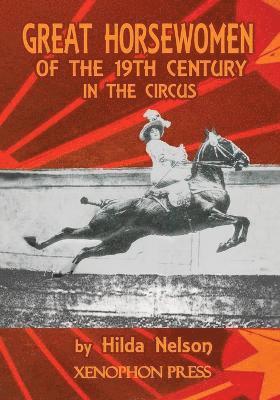
"Circus was quite a serious thing in nineteenth and early twentieth century Europe. Edmond and Jules de Goncourt noted in their Journal "We go to only one theater--the Circus. There we see clowns, tumblers....there is no false exhibition of talent..." Balzac believed that a circus equestrienne was worth more respect than an actress, a prima ballerina or an opera prima donna. And indeed, equestrians were the kings of the circus--and equestriennes, its idolized queens. For horsemanship was important then. It was more than mere entertainment. Wars had been won by good horsemen. Horses were still man''s most valuable partner in so many aspects of everyday life.And the circus had been created by and for equestrians...Nelson takes us to a wonderful, often surprising journey with the greatest circus equestriennes of the nineteenth century, who reigned with so much flair over the most prestigious rings of Europe...puts back the spotlight on these unjustly forgotten stars of the circus of yore...'' Many of the moves illustrated are very familiar ''haute ecole'' moves in classical dressage--piaffe, Spanish walk, passage; as well as the more esoteric ''airs above of the ground'' most familiar today as performed by the Spanish Riding School in Vienna and the Cadre Noir in Saumur. These moves include the courbette, capriole, levade, pesade, etc. And these circuses were housed in grand, theatrical palaces, not movable tents; but in buildings as exquisite as the equestrians/equestriennes and their horses, a fitting setting for these memorable equine artists. Includes an extensive glossary.The book is further enhanced by an Epilogue containing an account of the equestrian accomplishments of four contemporary écuyeres: Catherine Durand Henriquet, Eloise Schwarz King, Géraldine Katharina Knie, and Katja Schumann Binder.
Häftad, Engelska, 2015
699 kr
Skickas inom 3-6 vardagar
Häftad, Engelska, 2023
425 kr
Skickas inom 5-8 vardagar