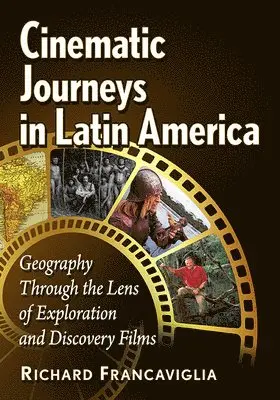
This book critically examines how movies that feature real or imagined explorers and expeditions creatively feature the geography of Latin America. It focuses on how locales are scripted into film plots and artistically depicted, and demonstrates that place is as important as any character in a film, especially in this genre. Nineteen key films are analyzed. Some, like Aguirre, the Wrath of God, Fitzcarraldo, The Other Conquest, Embrace of the Serpent, and The Lost City of Z are based on the exploits of real explorers. Others are fictional, including Apocalypto, Indiana Jones and the Kingdom of the Crystal Skull, and Dora and the Lost City of Gold. The author also discusses the evolution of exploration-discovery films, including trends that will likely be found in forthcoming movies.
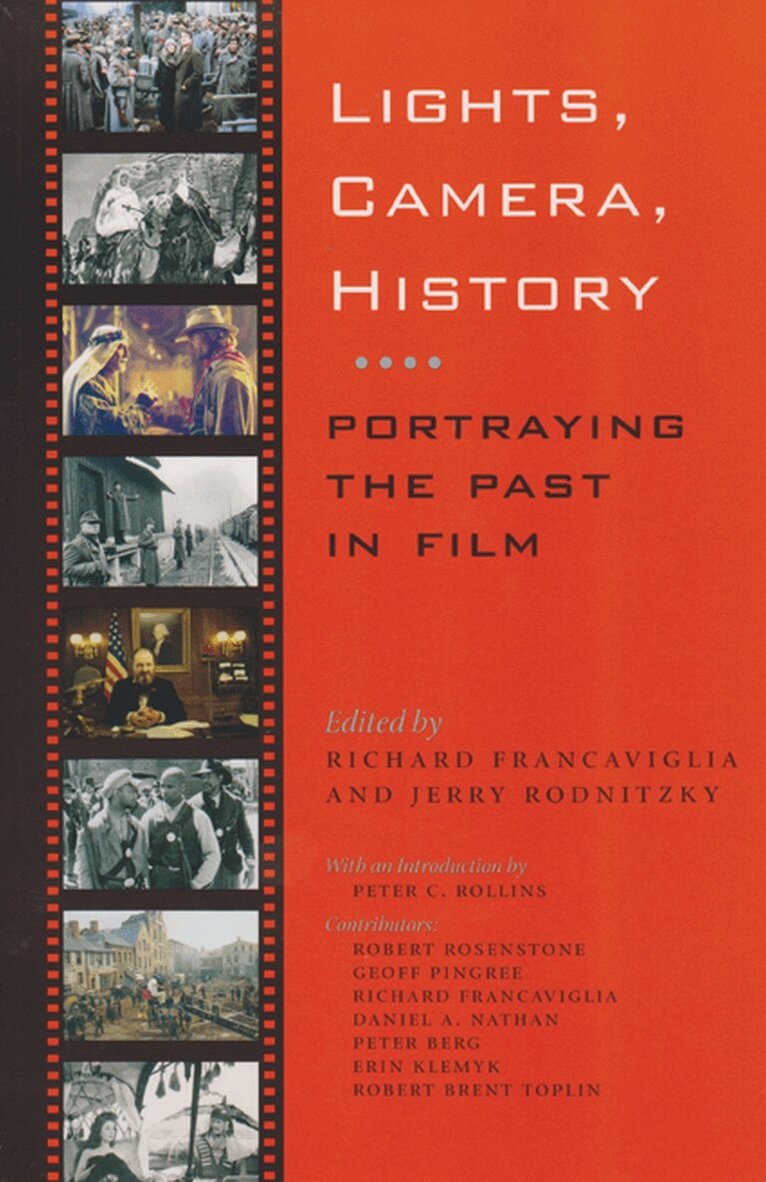
This important volume addresses a number of central topics concerning how history is depicted in film. In the preface, the volume editors emphasize the importance of using film in teaching history: students will see historical films, and if they are not taught critical viewing, they will be inclined simply to accept what they see as fact. Authors of the individual chapters then explore the portrayal of history - and the uses of history - in specific films and film genres. Robert Rosenstone's ""In Praise of the Biopic"" considers such films as ""Reds"", ""They Died with Their Boots On"", ""Little Big Man"", ""Seabiscuit"", ""Cinderella Man"", and ""The Grapes of Wrath"". In his chapter, Geoff Pingree focuses on the big questions posed in Jay Rosenblatt's 1998 film ""Human Remains"". Richard Francaviglia's chapter on films about the Middle East is especially timely in the post-9/11 world. One chapter, by Daniel A. Nathan, Peter Berg, and Erin Klemyk, is devoted to a single film: Martin Scorsese's urban history ""The Gangs of New York"", which the authors see as a way of exploring complex themes of the immigrant experience. Finally, Robert Brent Toplin addresses the paradox of using an art form (film) to present history. Among other themes, he considers the impact of Patton and Platoon on military decisions and interpretations, and of Birth of a Nation and Glory on race relations. The cumulative effect is to increase the reader's understanding of the medium of film in portraying history and to stimulate the imagination as to how it can and how it should not be used. Students and teachers of history and cinema will benefit deeply from this informative and thoughtful discussion.
This book critically examines how movies that feature real or imagined explorers and expeditions creatively feature the geography of Latin America. It focuses on how locales are scripted into film plots and artistically depicted, and demonstrates that place is as important as any character in a film, especially in this genre. Nineteen key films are analyzed. Some, like Aguirre, the Wrath of God, Fitzcarraldo, The Other Conquest, Embrace of the Serpent, and The Lost City of Z are based on the exploits of real explorers. Others are fictional, including Apocalypto, Indiana Jones and the Kingdom of the Crystal Skull, and Dora and the Lost City of Gold. The author also discusses the evolution of exploration-discovery films, including trends that will likely be found in forthcoming movies.
This important volume addresses a number of central topics concerning how history is depicted in film. In the preface, the volume editors emphasize the importance of using film in teaching history: students will see historical films, and if they are not taught critical viewing, they will be inclined simply to accept what they see as fact. Authors of the individual chapters then explore the portrayal of history - and the uses of history - in specific films and film genres. Robert Rosenstone's ""In Praise of the Biopic"" considers such films as ""Reds"", ""They Died with Their Boots On"", ""Little Big Man"", ""Seabiscuit"", ""Cinderella Man"", and ""The Grapes of Wrath"". In his chapter, Geoff Pingree focuses on the big questions posed in Jay Rosenblatt's 1998 film ""Human Remains"". Richard Francaviglia's chapter on films about the Middle East is especially timely in the post-9/11 world. One chapter, by Daniel A. Nathan, Peter Berg, and Erin Klemyk, is devoted to a single film: Martin Scorsese's urban history ""The Gangs of New York"", which the authors see as a way of exploring complex themes of the immigrant experience. Finally, Robert Brent Toplin addresses the paradox of using an art form (film) to present history. Among other themes, he considers the impact of Patton and Platoon on military decisions and interpretations, and of Birth of a Nation and Glory on race relations. The cumulative effect is to increase the reader's understanding of the medium of film in portraying history and to stimulate the imagination as to how it can and how it should not be used. Students and teachers of history and cinema will benefit deeply from this informative and thoughtful discussion.