Richard Frankham – författare
Visar alla böcker från författaren Richard Frankham. Handla med fri frakt och snabb leverans.
14 produkter
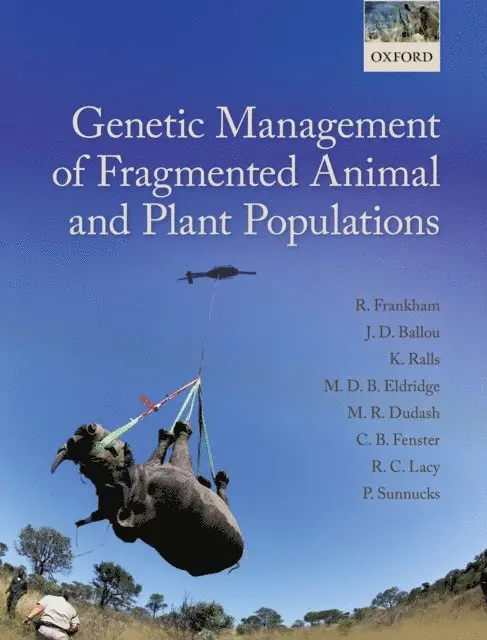
Genetic Management of Fragmented Animal and Plant Populations
Av Paul Sunnucks, Robert C. Lacy m. fl.
E-bok, 2017
815 kr
Lägg i varukorg
One of the greatest unmet challenges in conservation biology is the genetic management of fragmented populations of threatened animal and plant species. More than a million small, isolated, population fragments of threatened species are likely suffering inbreeding depression and loss of …
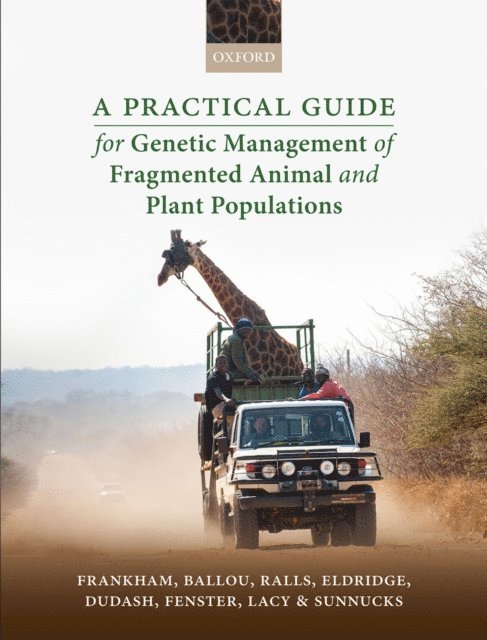
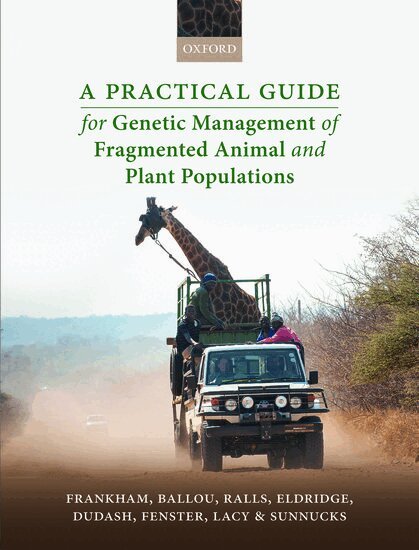
Practical Guide for Genetic Management of Fragmented Animal and Plant Populations
Av Paul Sunnucks, Robert C. Lacy m. fl.
E-bok, 2019
636 kr
Lägg i varukorg
The habitats of most species have been fragmented by human actions, isolating small populations that consequently develop genetic problems. Millions of small, isolated, fragmented populations are likely suffering from inbreeding depression and loss of genetic diversity, greatly increasing their …
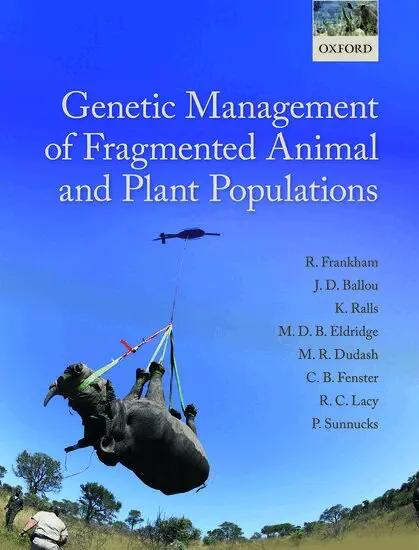
Genetic Management of Fragmented Animal and Plant Populations
Av Richard Frankham, Jonathan D. Ballou m. fl.
Inbunden, 2017
2444 kr
Lägg i varukorg
One of the greatest unmet challenges in conservation biology is the genetic management of fragmented populations of threatened animal and plant species. More than a million small, isolated, population fragments of threatened species are likely suffering inbreeding depression and loss of …
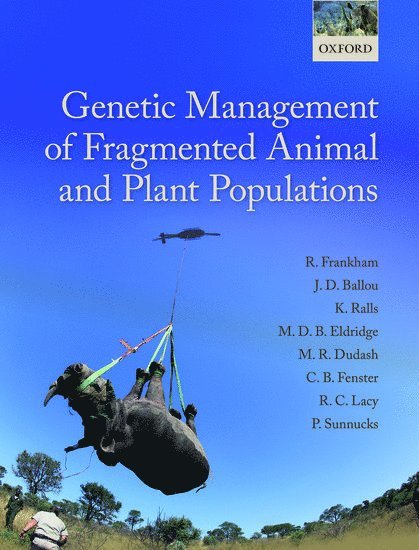
Genetic Management of Fragmented Animal and Plant Populations
Av Richard Frankham, Jonathan D. Ballou m. fl.
Häftad, 2017
1316 kr
Lägg i varukorg
One of the greatest unmet challenges in conservation biology is the genetic management of fragmented populations of threatened animal and plant species. More than a million small, isolated, population fragments of threatened species are likely suffering inbreeding depression and loss of …
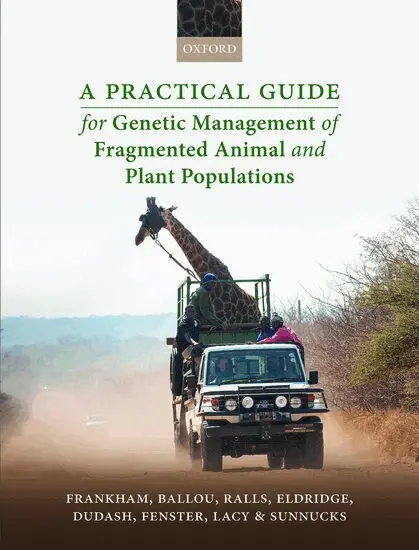
A Practical Guide for Genetic Management of Fragmented Animal and Plant Populations
Av Richard Frankham, Jonathan D. Ballou m. fl.
Inbunden, 2019
1759 kr
Lägg i varukorg
The habitats of most species have been fragmented by human actions, isolating small populations that consequently develop genetic problems. Millions of small, isolated, fragmented populations are likely suffering from inbreeding depression and loss of genetic diversity, greatly increasing their …
A Practical Guide for Genetic Management of Fragmented Animal and Plant Populations
Av Richard Frankham, Jonathan D. Ballou m. fl.
Häftad, 2019
763 kr
Lägg i varukorg
The habitats of most species have been fragmented by human actions, isolating small populations that consequently develop genetic problems. Millions of small, isolated, fragmented populations are likely suffering from inbreeding depression and loss of genetic diversity, greatly increasing their …
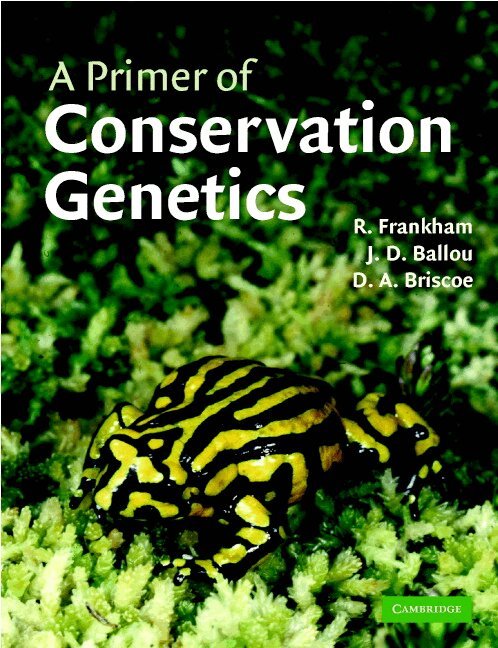
A Primer of Conservation Genetics
Av Richard Frankham, Jonathan D. Ballou m. fl.
Häftad, 2004
786 kr
Lägg i varukorg
This concise, entry level text provides an introduction to the importance of genetic studies in conservation and presents the essentials of the discipline in an easy-to-follow format, with main points and terms clearly highlighted. The authors assume only a basic knowledge of Mendelian genetics and …
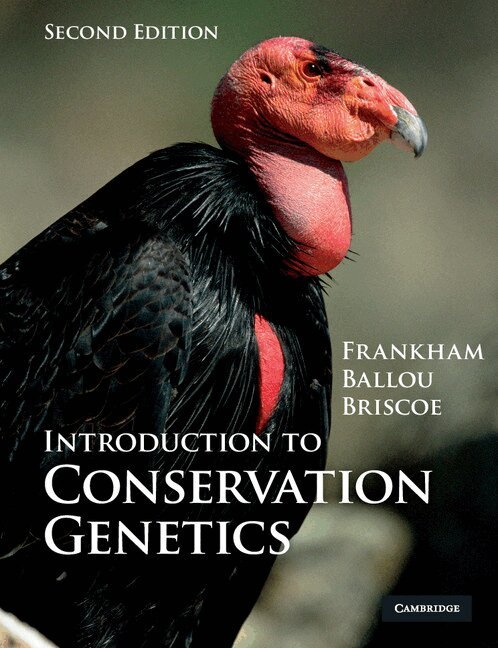
Introduction to Conservation Genetics
Av Richard Frankham, Jonathan D. Ballou m. fl.
Häftad, 2010
1058 kr
Lägg i varukorg
This impressive author team brings the wealth of advances in conservation genetics into the new edition of this introductory text, including new chapters on population genomics and genetic issues in introduced and invasive species. They continue the strong learning features for students - main …
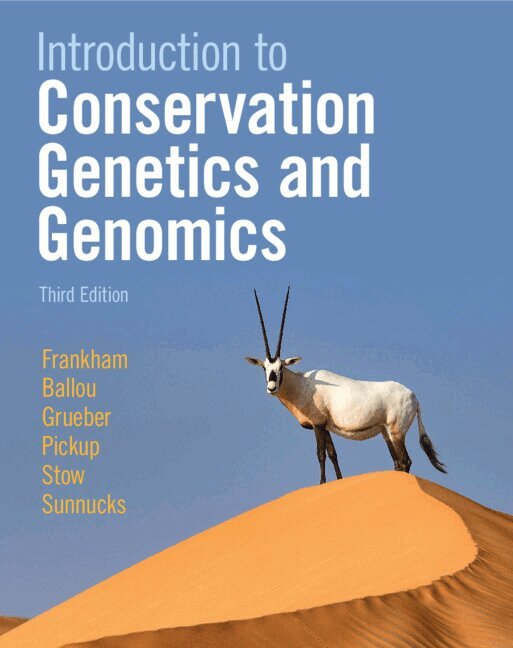
Introduction to Conservation Genetics and Genomics
Av Richard Frankham, Jonathan D. Ballou m. fl.
Häftad, 2026
817 kr
Kommande
The third edition of this essential introductory text has been fully updated in light of the genomics revolution. Providing authoritative and engaging coverage for students and professionals of conservation genetics and genomics, conservation biology, and wildlife biology, the authors explain the …
Introduction to Conservation Genetics
Av David A. Briscoe, Jonathan D. Ballou m. fl.
E-bok, 2010
1043 kr
Lägg i varukorg
This impressive author team brings the wealth of advances in conservation genetics into the new edition of this introductory text, including new chapters on population genomics and genetic issues in introduced and invasive species. They continue the strong learning features for students - main …
Introduction to Conservation Genetics
Av David A. Briscoe, Jonathan D. Ballou m. fl.
E-bok, 2010
1021 kr
Lägg i varukorg
This impressive author team brings the wealth of advances in conservation genetics into the new edition of this introductory text, including new chapters on population genomics and genetic issues in introduced and invasive species. They continue the strong learning features for students - main …
Adaptation and Fitness in Animal Populations
Evolutionary and Breeding Perspectives on Genetic Resource Management
Av Julius van der Werf, Hans-Ulrich Graser m. fl.
Inbunden, 2008
2188 kr
Lägg i varukorg
Fitness and adaptation are fundamental characteristics of plant and animal species, enabling them to survive in their environment and to adapt to the inevitable changes in this environment. This is true for both the genetic resources of natural ecosystems as well as those used in agricultural …
Adaptation and Fitness in Animal Populations
Evolutionary and Breeding Perspectives on Genetic Resource Management
Av Cedric Gondro, Richard Frankham m. fl.
E-bok, 2008
2925 kr
Lägg i varukorg
Fitness and adaptation are fundamental characteristics of plant and animal species, enabling them to survive in their environment and to adapt to the inevitable changes in this environment. This is true for both the genetic resources of natural ecosystems as well as those used in agricultural …
Adaptation and Fitness in Animal Populations
Evolutionary and Breeding Perspectives on Genetic Resource Management
Av Julius van der Werf, Hans-Ulrich Graser m. fl.
Häftad, 2010
2183 kr
Lägg i varukorg
Fitness and adaptation are fundamental characteristics of plant and animal species, enabling them to survive in their environment and to adapt to the inevitable changes in this environment. This is true for both the genetic resources of natural ecosystems as well as those used in agricultural …