Richard Fuchs – författare
Visar alla böcker från författaren Richard Fuchs. Handla med fri frakt och snabb leverans.
10 produkter
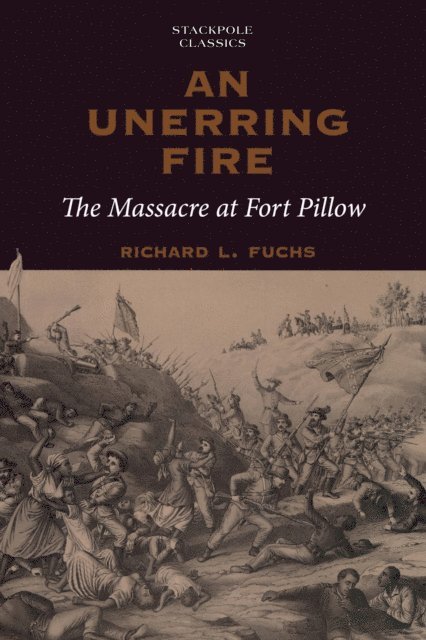
Unerring Fire
The Massacre at Fort Pillow
Häftad, 2017
250 kr
Lägg i varukorg
What really happened at Fort Pillow on April 12, 1864?The Union called it a massacre.The Confederacy called it necessity.TheTennessee spring came early that year, “awakening regional plants as warmer air and mois soil nurtured new life. Across the landscape could be seen the faint hint of green as …
Unerring Fire
E-bok, 2017
126 kr
Lägg i varukorg
What really happened at Fort Pillow on April 12, 1864? The Union called it a massacre. The Confederacy called it necessity. TheTennessee spring came early that year, “awakening regional plants as warmer air and mois soil nurtured new life. Across the landscape could be seen the faint hint of green …
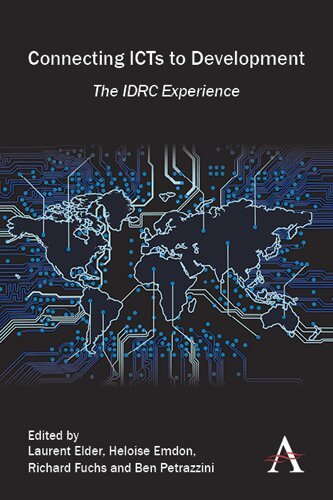
Connecting ICTs to Development
The IDRC Experience
Av Heloise Emdon, Laurent Elder m. fl.
Inbunden, 2013
1190 kr
Lägg i varukorg
Over the past two decades, projects supported by the International Development Research Centre (IDRC) have critically examined the ways in which information and communications technologies (ICTs) can be used to improve learning, empower the disenfranchised, generate income opportunities for the …
Gesammelte mathematische Werke. Hrsg. von Richard Fuchs und Ludwig Schlesinger
03
Av Lazarus Fuchs, Richard Fuchs m. fl.
Inbunden, 2023
470 kr
Lägg i varukorg
Gesammelte mathematische Werke. Hrsg. von Richard Fuchs und Ludwig Schlesinger
03
Av Lazarus Fuchs, Richard Fuchs m. fl.
Häftad, 2023
345 kr
Lägg i varukorg
Connecting ICTs to Development
The IDRC Experience
Av Heloise Emdon, Laurent Elder m. fl.
Häftad, 2014
435 kr
Lägg i varukorg
Over the past two decades, projects supported by the International Development Research Centre (IDRC) have critically examined the ways in which information and communications technologies (ICTs) can be used to improve learning, empower the disenfranchised, generate income opportunities for the …
Europe and the United States, and in-between the International Criminal Court (ICC)
E-bok, 2003
203 kr
Lägg i varukorg
Seminar paper from the year 2003 in the subject Politics - Topic: Public International Law and Human Rights, grade: 1,0 (A), Western Michigan University (Department of Political Science), language: English, abstract: [...] The paper attempts to make this transatlantic conflict more transparent …