Richard G. Lesure - Böcker
Visar alla böcker från författaren Richard G. Lesure. Handla med fri frakt och snabb leverans.
6 produkter
6 produkter
862 kr
Skickas inom 7-10 vardagar
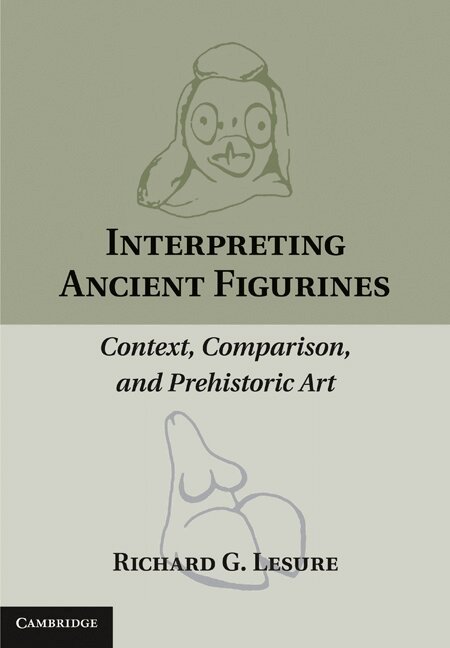
This book examines ancient figurines from several world areas to address recurring challenges in the interpretation of prehistoric art. Sometimes figurines from one context are perceived to resemble those from another. Richard G. Lesure asks whether such resemblances play a role in our interpretations. Early interpreters seized on the idea that figurines were recurringly female and constructed the fanciful myth of a primordial Neolithic Goddess. Contemporary practice instead rejects interpretive leaps across contexts. Dr Lesure offers a middle path: a new framework for assessing the relevance of particular comparisons. He develops the argument in case studies that consider figurines from Paleolithic Europe, the Neolithic Near East and Formative Mesoamerica.
618 kr
Skickas inom 7-10 vardagar
This book examines ancient figurines from several world areas to address recurring challenges in the interpretation of prehistoric art. Sometimes figurines from one context are perceived to resemble those from another. Richard G. Lesure asks whether such resemblances play a role in our interpretations. Early interpreters seized on the idea that figurines were recurringly female and constructed the fanciful myth of a primordial Neolithic Goddess. Contemporary practice instead rejects interpretive leaps across contexts. Dr Lesure offers a middle path: a new framework for assessing the relevance of particular comparisons. He develops the argument in case studies that consider figurines from Paleolithic Europe, the Neolithic Near East and Formative Mesoamerica.
Del 33 - Monumenta Archaeologica
Formative Lifeways in Central Tlaxcala, Volume 1
Excavations, Ceramics, and Chronology
Inbunden, Engelska, 2014
1 142 kr
Skickas inom 5-8 vardagar
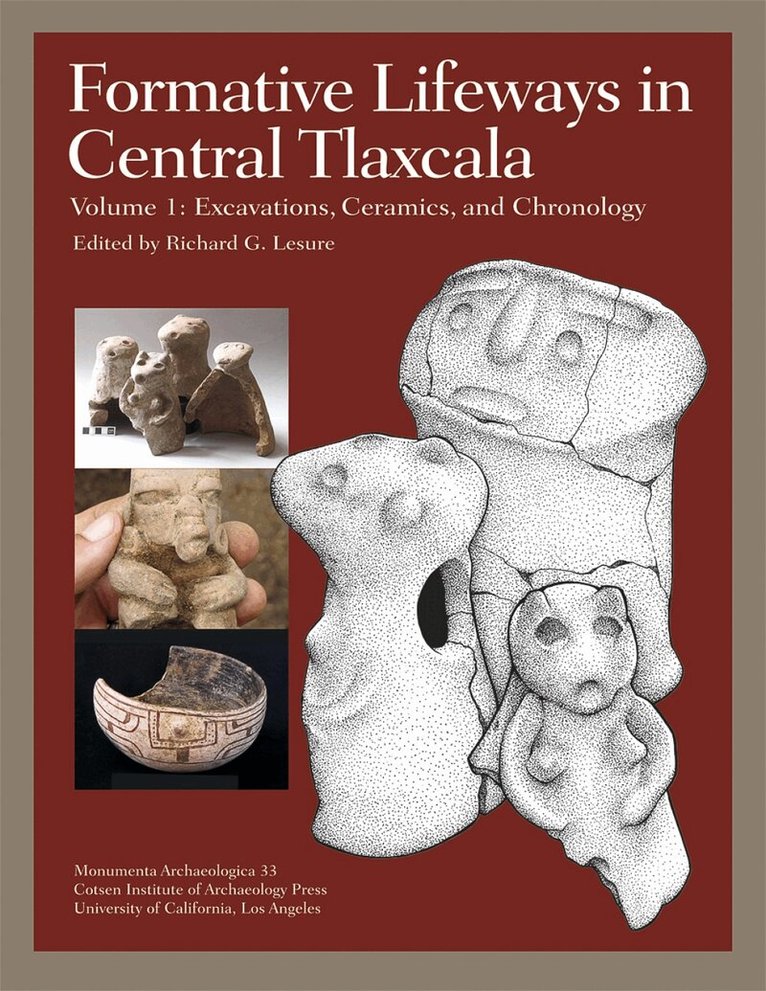
This book, the first of a projected three, reports on excavations at Formative-period sites in the state of Tlaxcala, Mexico. The transition to the Formative in the relatively high-altitude study region is later than in choice regions for early agriculture elsewhere in Mesoamerica. From 900 BC, however, population growth and sociopolitical development were rapid. A central claim in the research presented here is that a macroregional perspective is essential for understanding the local Formative sequence. In this volume, excavations at three village sites (Amomoloc, Tetel, and Las Mesitas) and one modest regional center (La Laguna) are reported. Ceramics are described in detail. An innovative approach to the classification of figurines is presented, and a Formative chronology for the region is proposed based on seriation of refuse contexts and radiocarbon dates. The work concludes with a macroregional framework to be used in the analysis of subsistence, social relations, and political economy in forthcoming volumes 2 and 3.
Del 65 - Monographs
Settlement and Subsistence in Early Formative Soconusco
El Varal and the Problem of Inter-Site Assemblage Variation
Inbunden, Engelska, 2010
769 kr
Skickas inom 5-8 vardagar
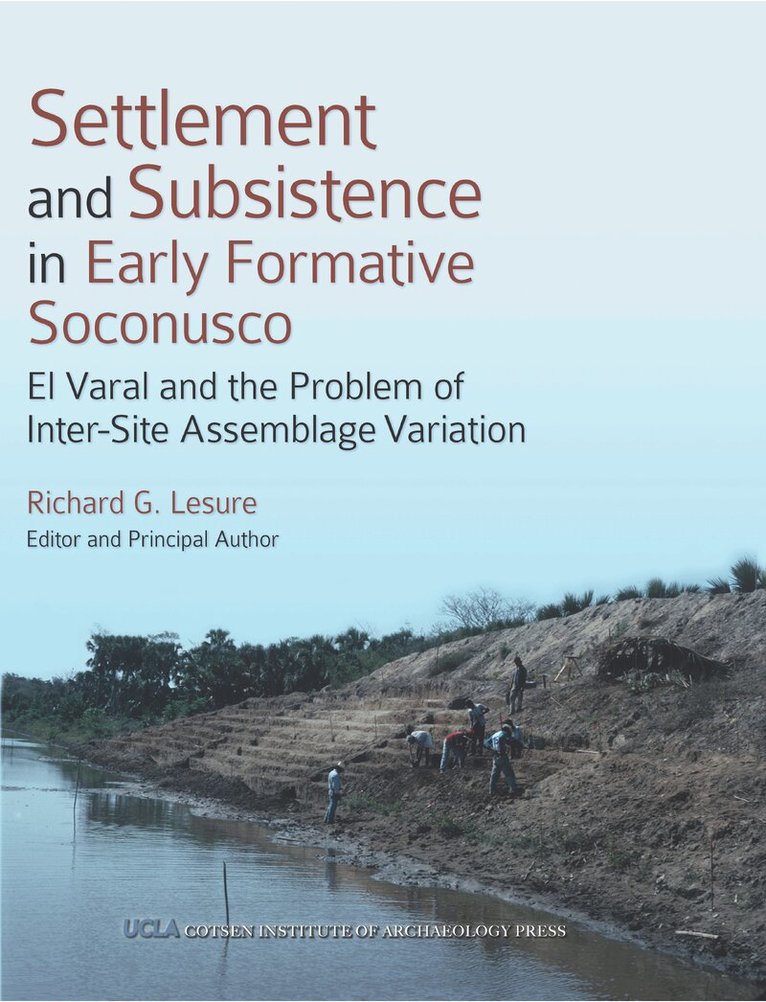
The Soconusco region, a narrow strip of the Pacific coast of Mexico and Guatemala, is the location of some of the earliest pottery-using villages of ancient Mesoamerica. Mobile early inhabitants of the area harvested marsh clams in the estuaries, leaving behind vast mounds of shell. With the introduction of pottery and the establishment of permanent villages (from 1900 B.C.), use of the resource-rich estuary changed. The archaeological manifestation of that new estuary adaptation is a dramatic pattern of inter-site variability in pottery vessel forms. Vessels at sites within the estuary were about seventy percent neckless jars --"tecomates"-- while vessels at contemporaneous sites a few kilometers inland were seventy percent open dishes. The pattern is well-known, but the the settlement arrangements or subsistence practices that produced it have remained unclear. Archaeological investigations at El Varal, a special-purpose estuary site of the later Early Formative (1250-1000 B.C.) expand possibilities for an anthropological understanding of the archaeological patterns. The goal of this volume is to describe excavations and finds at the site and to propose, based on a variety of analyses, a new understanding of Early Formative assemblage variability.
Del 65 - Monographs
Settlement and Subsistence in Early Formative Soconusco
El Varal and the Problem of Inter-Site Assemblage Variation
Häftad, Engelska, 2010
406 kr
Skickas inom 5-8 vardagar
The Soconusco region, a narrow strip of the Pacific coast of Mexico and Guatemala, is the location of some of the earliest pottery-using villages of ancient Mesoamerica. Mobile early inhabitants of the area harvested marsh clams in the estuaries, leaving behind vast mounds of shell. With the introduction of pottery and the establishment of permanent villages (from 1900 B.C.), use of the resource-rich estuary changed. The archaeological manifestation of that new estuary adaptation is a dramatic pattern of inter-site variability in pottery vessel forms. Vessels at sites within the estuary were about seventy percent neckless jars --"tecomates"-- while vessels at contemporaneous sites a few kilometers inland were seventy percent open dishes. The pattern is well-known, but the the settlement arrangements or subsistence practices that produced it have remained unclear. Archaeological investigations at El Varal, a special-purpose estuary site of the later Early Formative (1250-1000 B.C.) expand possibilities for an anthropological understanding of the archaeological patterns. The goal of this volume is to describe excavations and finds at the site and to propose, based on a variety of analyses, a new understanding of Early Formative assemblage variability.
Del 45 - Monumenta Archaeologica
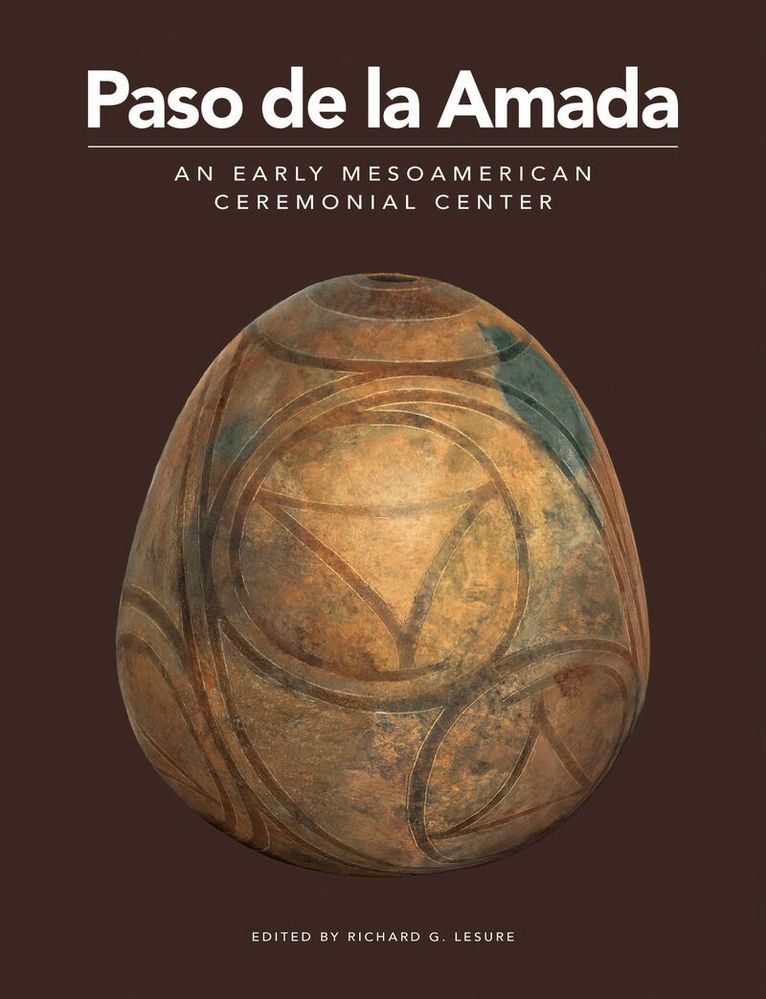
Paso de la Amada
An Early Mesoamerican Ceremonial Center
Inbunden, Engelska, 2021
1 815 kr
Skickas inom 5-8 vardagar
This monograph reports on large-scale excavations at Paso de la Amada, an archaeological site in the Soconusco region of the Pacific coast of Mexico, which was among the earliest sedentary, ceramic-using villages of Mesoamerica. With an occupation that extended across 140 ha in 1600 BC, it was also one of the largest communities of its era. First settled around 1900 BC, the site was abandoned 600 years later during what appears to have been a period of local political turmoil. The decline of Paso de la Amada corresponded with a rupture in local traditions of material culture and local adoption of the Early Olmec style. Stylistically, the material culture of Paso de la Amada corresponds predominantly to the pre-Olmec Mokaya tradition. Excavations at the site have revealed significant earthen constructions from as early as 1700 BC. Those include the earliest known Mesoamerican ball court and traces of a series of high-status residences. This monograph reports on large-scale excavations in Mounds 1, 12, and 32, as well as soundings in other locations. The volume covers all aspects of excavations and artifacts and includes three lengthy interpretive chapters dealing with the main research questions, which concern subsistence, social inequality, and the organizational history of the site.