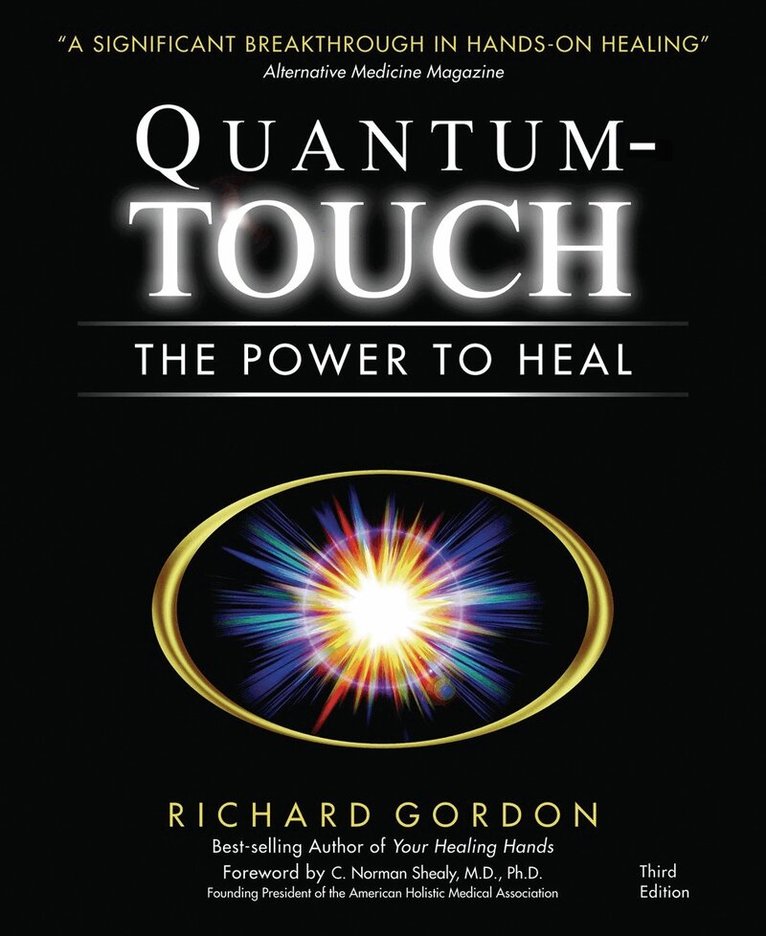
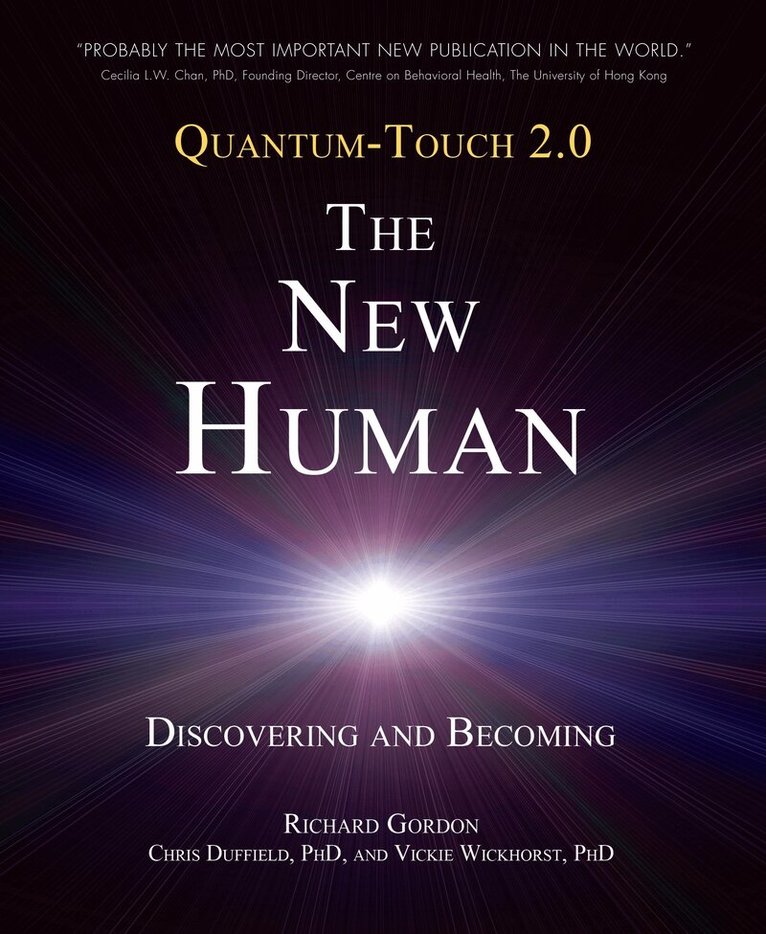
Richard Gordon – författare
1 113 kr
Kommande
579 kr
Skickas inom 10-15 vardagar
665 kr
Läs direkt efter köp
Crisis and Disaster Management for Sport is the first book to introduce key concepts and best practice in crisis and disaster management in sport and international sports events.
The book draws from multiple disciplines to provide insight into the issues and challenges involved in planning for, and managing, crises and disasters in the context of sport. With an initial focus on sports event and venue resilience, the book also explores social, community and individual resilience within sport and examines concepts and issues such as fandom, risk perception, crowd control and management, crisis communication and reputational risk and the growing challenges posed by climate change. The book includes real-world case studies as well as disaster management-related simulation and scenario-building exercises and looks ahead to what might be the most significant threats in future to the safe and sustainable management of sport.
With the devastating impacts of COVID-19 illustrating the central importance of resilience and proper preparation for crises and disasters, this book is an essential read for all researchers, students, practitioners and policy-makers working in sport, tourism, entertainment, leisure and critical event studies.
665 kr
Läs direkt efter köp
Crisis and Disaster Management for Sport is the first book to introduce key concepts and best practice in crisis and disaster management in sport and international sports events.
The book draws from multiple disciplines to provide insight into the issues and challenges involved in planning for, and managing, crises and disasters in the context of sport. With an initial focus on sports event and venue resilience, the book also explores social, community and individual resilience within sport and examines concepts and issues such as fandom, risk perception, crowd control and management, crisis communication and reputational risk and the growing challenges posed by climate change. The book includes real-world case studies as well as disaster management-related simulation and scenario-building exercises and looks ahead to what might be the most significant threats in future to the safe and sustainable management of sport.
With the devastating impacts of COVID-19 illustrating the central importance of resilience and proper preparation for crises and disasters, this book is an essential read for all researchers, students, practitioners and policy-makers working in sport, tourism, entertainment, leisure and critical event studies.
576 kr
Läs direkt efter köp
First published in 1997, this volume originates from the fourth cycle of GREMI (Groupe de Recherche Européen sur les Milieux Innovateurs) research, focusing on territorial innovative processes and the competitive advantages of the complex socio-economic fabric of milieu innovateurs.
The book is divided into three parts. The first, written by the editors, deals specifically with the multi-faced dimensions of local development, placing particular emphasis on the role of territory in producing/reproducing learning processes, tacit/codified knowledge storage and government structures. The second part reports different case studies and their theoretical systematisation, carried out with the same methodology by some ten équipes working in ten different European countries. The last part is devoted to a more general view on the structural adjustment dynamics of innovative milieu, raising useful questions of strategy and policy.
576 kr
Läs direkt efter köp
First published in 1997, this volume originates from the fourth cycle of GREMI (Groupe de Recherche Européen sur les Milieux Innovateurs) research, focusing on territorial innovative processes and the competitive advantages of the complex socio-economic fabric of milieu innovateurs.
The book is divided into three parts. The first, written by the editors, deals specifically with the multi-faced dimensions of local development, placing particular emphasis on the role of territory in producing/reproducing learning processes, tacit/codified knowledge storage and government structures. The second part reports different case studies and their theoretical systematisation, carried out with the same methodology by some ten équipes working in ten different European countries. The last part is devoted to a more general view on the structural adjustment dynamics of innovative milieu, raising useful questions of strategy and policy.
1 372 kr
Skickas inom 10-15 vardagar
310 kr
Skickas inom 3-6 vardagar
524 kr
Skickas inom 5-8 vardagar
931 kr
Skickas inom 5-8 vardagar
180 kr
Skickas inom 5-8 vardagar
117 kr
Skickas inom 5-8 vardagar
156 kr
Skickas inom 5-8 vardagar
167 kr
Skickas inom 5-8 vardagar
187 kr
Läs direkt efter köp
3 594 kr
Skickas inom 5-8 vardagar
4 152 kr
Läs direkt efter köp
The aim of this new book series (Diatoms: Biology and Applications) is to provide a comprehensive and reliable source of information on diatom biology and applications. The first book of the series, Diatoms Fundamentals & Applications, is wide ranging, starting with the contributions of amateurs and the beauty of diatoms, to details of how their shells are made, how they bend light to their advantage and ours, and major aspects of their biochemistry (photosynthesis and iron metabolism). The book then delves into the ecology of diatoms living in a wide range of habitats, and look at those few that can kill or harm us. The book concludes with a wide range of applications of diatoms, in forensics, manufacturing, medicine, biofuel and agriculture. The contributors are leading international experts on diatoms. This book is for a wide audience researchers, academics, students, and teachers of biology and related disciplines, written to both act as an introduction to diatoms and to present some of the most advanced research on them.
4 189 kr
Läs direkt efter köp
The aim of this new book series (Diatoms: Biology and Applications) is to provide a comprehensive and reliable source of information on diatom biology and applications. The first book of the series, Diatoms Fundamentals & Applications, is wide ranging, starting with the contributions of amateurs and the beauty of diatoms, to details of how their shells are made, how they bend light to their advantage and ours, and major aspects of their biochemistry (photosynthesis and iron metabolism). The book then delves into the ecology of diatoms living in a wide range of habitats, and look at those few that can kill or harm us. The book concludes with a wide range of applications of diatoms, in forensics, manufacturing, medicine, biofuel and agriculture. The contributors are leading international experts on diatoms. This book is for a wide audience researchers, academics, students, and teachers of biology and related disciplines, written to both act as an introduction to diatoms and to present some of the most advanced research on them.
2 785 kr
Skickas
3 328 kr
Läs direkt efter köp
A unique book presenting the range of silica structures formed by diatoms, theories and hypotheses of how they are made, and applications to nanotechnology by use or imitation of diatom morphogenesis.
There are up to 200,000 species of diatoms, each species of these algal cells bearing an ornate, amorphous silica glass shell. The silica is structured at 7 orders of magnitude size range and is thus the most complex multiscalar solid structure known. Recent research is beginning to unravel how a single cell marshals chemical, physical, biochemical, genetic, and cytoskeletal processes to produce these single-cell marvels. The field of diatom nanotechnology is advancing as this understanding matures.
Diatoms have been actively studied over the recent 10-20 years with various modern equipment, experimental and computer simulation approaches, including molecular biology, fluorescence-based methods, electron, confocal, and AFM microscopy. This has resulted in a huge amount of information but the key stages of their silica morphogenesis are still not clear. This is the time to reconsider and consolidate the work performed so far and to understand how we can go ahead.
The main objective of this book is to describe the actual situation in the science of diatom morphogenesis, to specify the most important unresolved questions, and to present the corresponding hypotheses. The following areas are discussed:
A tutorial chapter, with a glossary for newcomers to the field, who are often from outside of biology, let alone phycology; Diatom Morphogenesis: general issues, including symmetry and size issues; Diatom Morphogenesis: simulation, including analytical and numerical methods for description of the diatom valve shape and pore structure; Diatom Morphogenesis: physiology, biochemistry, and applications, including the relationship between taxonomy and physiology, biosilicification hypotheses, and ideas about applications of diatoms.Audience
Researchers, scientists, and graduate students in the fields of phycology, general biology, marine sciences, the chemistry of silica, materials science, and ecology.
3 357 kr
Läs direkt efter köp
A unique book presenting the range of silica structures formed by diatoms, theories and hypotheses of how they are made, and applications to nanotechnology by use or imitation of diatom morphogenesis.
There are up to 200,000 species of diatoms, each species of these algal cells bearing an ornate, amorphous silica glass shell. The silica is structured at 7 orders of magnitude size range and is thus the most complex multiscalar solid structure known. Recent research is beginning to unravel how a single cell marshals chemical, physical, biochemical, genetic, and cytoskeletal processes to produce these single-cell marvels. The field of diatom nanotechnology is advancing as this understanding matures.
Diatoms have been actively studied over the recent 10-20 years with various modern equipment, experimental and computer simulation approaches, including molecular biology, fluorescence-based methods, electron, confocal, and AFM microscopy. This has resulted in a huge amount of information but the key stages of their silica morphogenesis are still not clear. This is the time to reconsider and consolidate the work performed so far and to understand how we can go ahead.
The main objective of this book is to describe the actual situation in the science of diatom morphogenesis, to specify the most important unresolved questions, and to present the corresponding hypotheses. The following areas are discussed:
A tutorial chapter, with a glossary for newcomers to the field, who are often from outside of biology, let alone phycology; Diatom Morphogenesis: general issues, including symmetry and size issues; Diatom Morphogenesis: simulation, including analytical and numerical methods for description of the diatom valve shape and pore structure; Diatom Morphogenesis: physiology, biochemistry, and applications, including the relationship between taxonomy and physiology, biosilicification hypotheses, and ideas about applications of diatoms.Audience
Researchers, scientists, and graduate students in the fields of phycology, general biology, marine sciences, the chemistry of silica, materials science, and ecology.
2 881 kr
Skickas inom 5-8 vardagar
3 175 kr
Läs direkt efter köp
Moving photosynthetic organisms are still a great mystery for biologists and this book summarizes what is known and reports the current understanding and modeling of those complex processes.
The book covers a broad range of work describing our current state of understanding on the topic, including: historic knowledge and misconceptions of motility; evolution of diatom motility; diatom ecology & physiology; cell biology and biochemistry of diatom motility, anatomy of motile diatoms; observations of diatom motile behavior; diatom competitive ability, unique forms of diatom motility as found in the genus Eunotia; and models of motility.
This is the first book attempting to gather such information surrounding diatom motility into one volume focusing on this single topic. Readers will be able to gather both the current state of understanding on the potential mechanisms and ecological regulators of motility, as well as possible models and approaches used to help determine how diatoms accomplish such varied behaviors as diurnal movements, accumulation into areas of light, niche partitioning to increase species success. Given the fact that diatoms remain one of the most ecologically crucial cells in aquatic ecosystems, we hope that this volume will act as a springboard towards future research into diatom motility and even better resolution of some of the issues in motility.
Audience
Diatomists, phycologists, aquatic ecologists, cellular physiologists, environmental biologists, biophysicists, diatom nanotechnologists, algal ecologists, taxonomists.
2 631 kr
Skickas inom 5-8 vardagar
3 003 kr
Läs direkt efter köp
Conflicting Models for the Origin of Life
Conflicting Models for the Origin of Life provides a forum to compare and contrast the many hypotheses that have been put forward to explain the origin of life.
There is a revolution brewing in the field of Origin of Life: in the process of trying to figure out how Life started, many researchers believe there is an impending second creation of life, not necessarily biological. Up-to-date understanding is needed to prepare us for the technological, and societal changes it would bring. Schrodinger’s 1944 “What is life?” included the insight of an information carrier, which inspired the discovery of the structure of DNA. In “Conflicting Models of the Origin of Life” a selection of the world’s experts are brought together to cover different aspects of the research: from progress towards synthetic life – artificial cells and sub-cellular components, to new definitions of life and the unexpected places life could (have) emerge(d). Chapters also cover fundamental questions of how memory could emerge from memoryless processes, and how we can tell if a molecule may have emerged from life. Similarly, cutting-edge research discusses plausible reactions for the emergence of life both on Earth and on exoplanets. Additional perspectives from geologists, philosophers and even roboticists thinking about the origin of life round out this volume. The text is a state-of-the-art snapshot of the latest developments on the emergence of life, to be used both in graduate classes and by citizen scientists.
Audience
Researchers in any area of astrobiology, as well as others interested in the origins of life, will find a modern and current review of the field and the current debates and obstacles. This book will clearly illustrate the current state-of-the-art and engage the imagination and creativity of experts across many disciplines.
2 976 kr
Läs direkt efter köp
Conflicting Models for the Origin of Life
Conflicting Models for the Origin of Life provides a forum to compare and contrast the many hypotheses that have been put forward to explain the origin of life.
There is a revolution brewing in the field of Origin of Life: in the process of trying to figure out how Life started, many researchers believe there is an impending second creation of life, not necessarily biological. Up-to-date understanding is needed to prepare us for the technological, and societal changes it would bring. Schrodinger’s 1944 “What is life?” included the insight of an information carrier, which inspired the discovery of the structure of DNA. In “Conflicting Models of the Origin of Life” a selection of the world’s experts are brought together to cover different aspects of the research: from progress towards synthetic life – artificial cells and sub-cellular components, to new definitions of life and the unexpected places life could (have) emerge(d). Chapters also cover fundamental questions of how memory could emerge from memoryless processes, and how we can tell if a molecule may have emerged from life. Similarly, cutting-edge research discusses plausible reactions for the emergence of life both on Earth and on exoplanets. Additional perspectives from geologists, philosophers and even roboticists thinking about the origin of life round out this volume. The text is a state-of-the-art snapshot of the latest developments on the emergence of life, to be used both in graduate classes and by citizen scientists.
Audience
Researchers in any area of astrobiology, as well as others interested in the origins of life, will find a modern and current review of the field and the current debates and obstacles. This book will clearly illustrate the current state-of-the-art and engage the imagination and creativity of experts across many disciplines.
2 138 kr
Skickas
3 144 kr
Läs direkt efter köp
An in-depth view of the panspermia hypothesis examined against the latest knowledge of planetary formation and related processes.
Panspermia is the concept that life can be passively transported through space on various bodies and seed, habitable planets and moons, which we are beginning to learn may exist in large numbers. It is an old idea, but not popular with those who prefer that life on Earth started on Earth, an alternative, also unproven hypothesis. This book updates the concept of panspermia in the light of new evidence on planet formation, molecular clouds, solar system motions, supernovae ejection mechanisms, etc. Thus, it is to be a book about newly understood prospects for the movement of life through space.
The novel approach presented in this book gives new insights into the panspermia theory and its connection with planetary formation and the evolution of galaxies. This offers a good starting point for future research proposals about exolife and a better perspective for empirical scrutiny of panspermia theory. Also, the key to understanding life in the universe is to understand that the planetary formation process is convolved with the evolution of stellar systems in their galactic environment. The book provides the synthesis of all these elements and gives the readers an up-to-date insight on how panspermia might fit into the big picture.
Audience Given the intrinsic interdisciplinary nature of the panspermia hypothesis the book will have a wide audience across various scientific disciplines covering astronomy, biology, physics and chemistry. Apart from scientists, the book will appeal to engineers who are involved in planning and realization of future space missions.
3 144 kr
Läs direkt efter köp
An in-depth view of the panspermia hypothesis examined against the latest knowledge of planetary formation and related processes.
Panspermia is the concept that life can be passively transported through space on various bodies and seed, habitable planets and moons, which we are beginning to learn may exist in large numbers. It is an old idea, but not popular with those who prefer that life on Earth started on Earth, an alternative, also unproven hypothesis. This book updates the concept of panspermia in the light of new evidence on planet formation, molecular clouds, solar system motions, supernovae ejection mechanisms, etc. Thus, it is to be a book about newly understood prospects for the movement of life through space.
The novel approach presented in this book gives new insights into the panspermia theory and its connection with planetary formation and the evolution of galaxies. This offers a good starting point for future research proposals about exolife and a better perspective for empirical scrutiny of panspermia theory. Also, the key to understanding life in the universe is to understand that the planetary formation process is convolved with the evolution of stellar systems in their galactic environment. The book provides the synthesis of all these elements and gives the readers an up-to-date insight on how panspermia might fit into the big picture.
Audience Given the intrinsic interdisciplinary nature of the panspermia hypothesis the book will have a wide audience across various scientific disciplines covering astronomy, biology, physics and chemistry. Apart from scientists, the book will appeal to engineers who are involved in planning and realization of future space missions.
2 259 kr
Skickas inom 5-8 vardagar