Richard H. K. Vietor – författare
Visar alla böcker från författaren Richard H. K. Vietor. Handla med fri frakt och snabb leverans.
5 produkter
5 produkter
1 485 kr
Skickas inom 7-10 vardagar
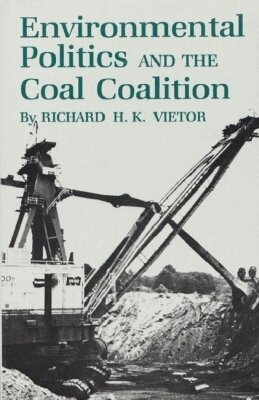
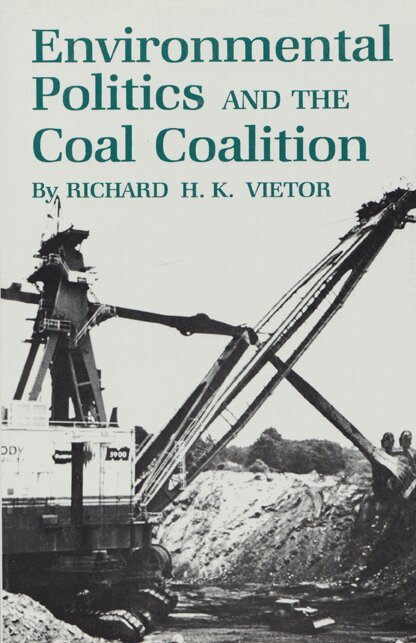
In the political economy of energy, World War II was a significant watershed: it accelerated the transition from dependence on coal to petroleum and natural gas. At the same time, mobilization provided an unprecedented experience in the management of energy markets by a forced partnership of business and government. In this 1985 book, Vietor covers American policy from 1945 to 1980. For readers convinced that big business contrived the energy crisis of the 1970s, this story will be disappointing, but enlightening. For those committed to theories of regulatory capture or public interest reform it should be frustrating. More than a history of government policy making, this book provides us with an innovative and insightful approach to the study of business-government relations in modern America. For managers, bureaucrats, and anyone interested in seeing a more effective national industrial policy, this history should put the relationship of business and government in a critical new perspective.
523 kr
Skickas inom 7-10 vardagar
In the political economy of energy, World War II was a significant watershed: it accelerated the transition from dependence on coal to petroleum and natural gas. At the same time, mobilization provided an unprecedented experience in the management of energy markets by a forced partnership of business and government. In this 1985 book, Vietor covers American policy from 1945 to 1980. For readers convinced that big business contrived the energy crisis of the 1970s, this story will be disappointing, but enlightening. For those committed to theories of regulatory capture or public interest reform it should be frustrating. More than a history of government policy making, this book provides us with an innovative and insightful approach to the study of business-government relations in modern America. For managers, bureaucrats, and anyone interested in seeing a more effective national industrial policy, this history should put the relationship of business and government in a critical new perspective.
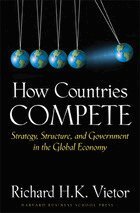
How Countries Compete
Strategy, Structure, and Government in the Global Economy
Inbunden, Engelska, 2007
374 kr
Skickas inom 5-8 vardagar
Business and political leaders often talk about what their respective countries must do to compete in the world economy. But what does it really mean for a country to compete, and how do they do this successfully? As the world has globalized, countries develop strategies to compete for the markets, technologies, and skills that will raise their standards of living. These government strategies can make - or break - a nation's efforts to drive and sustain growth. In How Countries Compete: Strategy, Structure and Government in the Global Economy, Richard Vietor shows how governments set direction and create the climate for a nation's economic development and profitable private enterprise. Drawing on history, economic analysis, and interviews with executives and officials around the globe, Vietor provides rich and insightful examinations of different government approaches to growth and development - leading to both success and failure. Individual chapters focus on the unique social, economic, cultural, and historical forces that shape governments' approach to economic growth.The countries discussed include: China, India, Japan, Singapore, the United States Mexico, Russia, Saudi Arabia, and South Africa. Vietor challenges the widespread notion that, in market-driven economies such as the United States, a strong government can only hinder business success. A provocative account and a rich resource, How Countries Compete offers potent insights into how the business environment has evolved in crucial nations--and what its trajectory might look like in the future.
Environmental Protection and the Social Responsibility of Firms
Perspectives from Law, Economics, and Business
Inbunden, Engelska, 2005
2 886 kr
Skickas inom 5-8 vardagar
Everyone agrees that firms should obey the law. But beyond what the law requires-beyond bare compliance with regulations-do firms have additional social responsibilities to commit resources voluntarily to environmental protection? How should we think about firms sacrificing profits in the social interest? Are they permitted to do so, given their fiduciary responsibilities to their shareholders? Even if permissible, is the practice sustainable, or will the competitive marketplace render such efforts and their impacts transient at best? Furthermore, is the practice, however well intended, an efficient use of social and economic resources? And, as an empirical matter, to what extent do firms already behave this way? Until now, public discussion has generated more heat than light on both the normative and positive questions surrounding corporate social responsibility (CSR) in the environmental realm. In Environmental Protection and the Social Responsibility of Firms, some of the nation‘s leading scholars in law, economics, and business examine commonly accepted assumptions at the heart of current debates on corporate social responsibility and provide a foundation for future research and policymaking.
Environmental Protection and the Social Responsibility of Firms
Perspectives from Law, Economics, and Business
Häftad, Engelska, 2005
749 kr
Skickas inom 10-15 vardagar
Everyone agrees that firms should obey the law. But beyond what the law requires-beyond bare compliance with regulations-do firms have additional social responsibilities to commit resources voluntarily to environmental protection? How should we think about firms sacrificing profits in the social interest? Are they permitted to do so, given their fiduciary responsibilities to their shareholders? Even if permissible, is the practice sustainable, or will the competitive marketplace render such efforts and their impacts transient at best? Furthermore, is the practice, however well intended, an efficient use of social and economic resources? And, as an empirical matter, to what extent do firms already behave this way? Until now, public discussion has generated more heat than light on both the normative and positive questions surrounding corporate social responsibility (CSR) in the environmental realm. In Environmental Protection and the Social Responsibility of Firms, some of the nation‘s leading scholars in law, economics, and business examine commonly accepted assumptions at the heart of current debates on corporate social responsibility and provide a foundation for future research and policymaking.