Richard Heath – författare
Visar alla böcker från författaren . Handla med fri frakt och snabb leverans.
20 produkter
20 produkter
Inbunden, Engelska, 2025
271 kr
Skickas
Rulers (and would-be rulers) have always faced the possibility of a violent death. Between the seventh and eighteenth centuries over 20% of all British and European monarchs suffered such a fate. Some died in battle or in accidents but most of them were murdered or executed.During the time of the Tudors and Stuarts some monarchs were the victims of lone assassins, some were killed after palace coups led by relatives or royal officials, and others after being defeated in a civil war. Their manner of death included public beheading, internal injury as a result of a knife attack, being hacked down by a group of noblemen, and ritual strangulation with a silk cord.Killing Monarchs takes us on a journey across Europe. Starting in England and Scotland (Lady Jane Grey and Mary Queen of Scots), it moves to France (Kings Henry III and Henry IV), and then further east to Russia (Tsar Feodor II and various pretenders to the throne) and the Ottoman Empire (Sultans Osman II and Ibrahim I). It then returns to Britain to consider why Charles I was executed.It provides a clear picture of the various forces that existed in society at the time and these are reflected in the motives of the regicides - the killers of monarchs – even though many were not honest about them. The lust for power, the desire for a more effective leader, religious differences, and occasionally the wish to do away with monarchy altogether, all played a significant role.
Häftad, Engelska, 2011
521 kr
Skickas inom 7-10 vardagar
Richard Heath, about whom very little is known, travelled around England, and wrote a series of essays on agricultural workers, towards the end of the nineteenth century, when rural life and agriculture were undergoing great changes. The English Peasant was published in book form in 1893. It begins with an outline history of peasant life, which presents a very depressing picture. Agricultural workers' housing may have been picturesque but was primitive in the extreme, and enclosure of common land had worsened their lot, especially in the south and west of England. Heath gives graphic pictures of the conditions in which peasant families lived and worked, dwelling especially on the high figures for infant mortality. He was understandably shocked that a Christian country could let its workers live like this, but hoped that the foundation of the National Agricultural Labourers' Union in 1872 would result in improvements in the workers' condition.
Häftad, Engelska, 2009
376 kr
Skickas inom 3-6 vardagar
Inbunden, Engelska, 2009
477 kr
Skickas inom 3-6 vardagar
Inbunden, Engelska, 2023
240 kr
Skickas
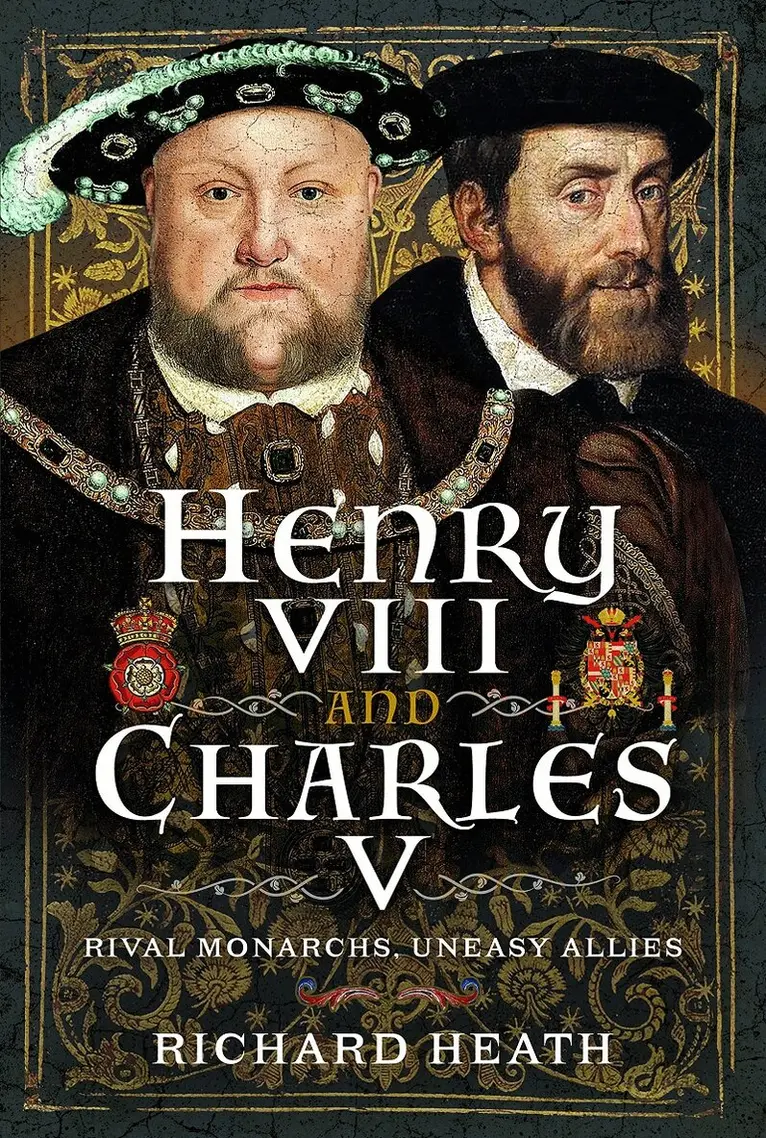
King Henry VIII and Emperor Charles V both ruled for almost forty years at a time when momentous changes in society, politics and religion were taking place in England and across Europe. Richard Heath takes a fresh look at these two individuals and the importance of their relationship in determining both their immediate policies and the future of their lands.Although always rivals for status, Henry and Charles, despite their very different temperaments, had much in common. Both had been brought up as devout Christians and in the chivalric tradition. Ties between their lands (by 1520 Charles was Holy Roman Emperor as well as ruling Spain, the Low Countries and much of Italy) were close. There were alliances against a common enemy, France, valuable trading links and a personal connection - Henry was married to Charles' aunt, Catherine of Aragon.The book provides a clear account of their complex and ever-changing relationship, both personal and political. It reveals the goodwill that existed between them, particularly during Emperor Charles' lengthy state visit to England in 1522. It also shows how this proved impossible to maintain once Henry decided to end his marriage to Catherine and his subsequent rejection of papal authority. On the occasions when they planned military action together their alliance collapsed in mutual recriminations. Yet they were officially at war for only a few months and their armies never faced each other.The duplicitous world of international diplomacy, with dynastic marriages, fine words and broken promises, provides the backdrop to this fascinating story. In their search for honour and dynastic security, so important to both monarchs, the decisions of one could rarely be ignored by the other.
E-bok
Engelska, 2023214 kr
Läs direkt efter köp
King Henry VIII and Emperor Charles V both ruled for almost forty years at a time when momentous changes in society, politics and religion were taking place in England and across Europe. Richard Heath takes a fresh look at these two individuals and the importance of their relationship in determining both their immediate policies and the future of their lands. Although always rivals for status, Henry and Charles, despite their very different temperaments, had much in common. Both had been brought up as devout Christians and in the chivalric tradition. Ties between their lands (by 1520 Charles was Holy Roman Emperor as well as ruling Spain, the Low Countries and much of Italy) were close. There were alliances against a common enemy, France, valuable trading links and a personal connection – Henry was married to Charles'' aunt, Catherine of Aragon. The book provides a clear account of their complex and ever-changing relationship, both personal and political. It reveals the goodwill that existed between them, particularly during Emperor Charles'' lengthy state visit to England in 1522. It also shows how this proved impossible to maintain once Henry decided to end his marriage to Catherine and his subsequent rejection of papal authority. On the occasions when they planned military action together their alliance collapsed in mutual recriminations. Yet they were officially at war for only a few months and their armies never faced each other. The duplicitous world of international diplomacy, with dynastic marriages, fine words and broken promises, provides the backdrop to this fascinating story. In their search for honor and dynastic security, so important to both monarchs, the decisions of one could rarely be ignored by the other.
E-bok
PDF, Engelska, 2023214 kr
Läs direkt efter köp
King Henry VIII and Emperor Charles V both ruled for almost forty years at a time when momentous changes in society, politics and religion were taking place in England and across Europe. Richard Heath takes a fresh look at these two individuals and the importance of their relationship in determining both their immediate policies and the future of their lands. Although always rivals for status, Henry and Charles, despite their very different temperaments, had much in common. Both had been brought up as devout Christians and in the chivalric tradition. Ties between their lands (by 1520 Charles was Holy Roman Emperor as well as ruling Spain, the Low Countries and much of Italy) were close. There were alliances against a common enemy, France, valuable trading links and a personal connection – Henry was married to Charles'' aunt, Catherine of Aragon. The book provides a clear account of their complex and ever-changing relationship, both personal and political. It reveals the goodwill that existed between them, particularly during Emperor Charles'' lengthy state visit to England in 1522. It also shows how this proved impossible to maintain once Henry decided to end his marriage to Catherine and his subsequent rejection of papal authority. On the occasions when they planned military action together their alliance collapsed in mutual recriminations. Yet they were officially at war for only a few months and their armies never faced each other. The duplicitous world of international diplomacy, with dynastic marriages, fine words and broken promises, provides the backdrop to this fascinating story. In their search for honor and dynastic security, so important to both monarchs, the decisions of one could rarely be ignored by the other.
E-bok
Engelska, 2004101 kr
Läs direkt efter köp
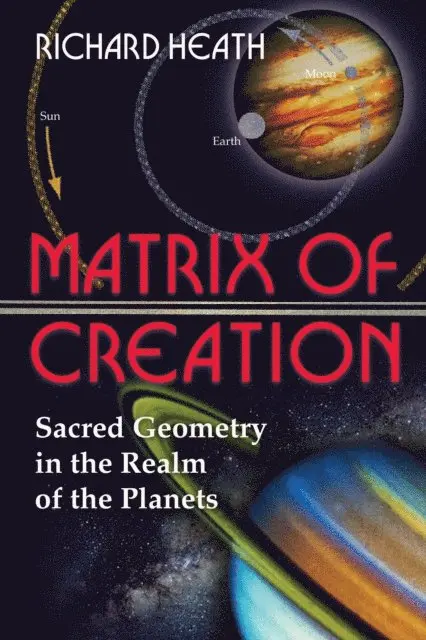
Reveals the ancient mathematical principles refuting the notion of the solar system as an accidental creation• Reveals how ancient civilizations encoded their secret knowledge of the sky in mythology, music, and sacred measures• Shows how modern culture can benefit from the ancient astronomical and astrological worldview based on number• Shows the role of ratio and harmonic proportions in the creation of the material worldHumanity’s understanding of number was deeper and richer when the concept of creation was rooted in direct experience. But modern sensibility favors knowledge based exclusively on physical laws. We have forgotten what our ancestors once knew: that numbers and their properties create the forms of the world. Ancient units of measurement held within them the secrets of cosmic proportion and alignment that are hidden by the arbitrary decimal units of modern mathematical thinking.Sacred numbers arose from ancient man’s observations of the heavens. Just as base ten numbers relate to the fingers and toes in terms of counting, each celestial period divides into the others like fingers revealing the base numbers of planetary creation. This ancient system made the art of counting a sacramental art, its units being given spiritual meanings beyond just measurement. The imperial yard, for example, retains a direct relationship to the Equator, the length of a day and a year, and the angular values of Earth, Moon, and Jupiter.The ancients encoded their secret knowledge of the skies within mythology, music, monuments, and units of sacred measurement. They understood that the ripeness of the natural world is the perfection of ratio and realized that the planetary environment--and time itself--is a creation of number.
E-bok
Engelska, 2006131 kr
Läs direkt efter köp
An exploration of the origins and influences of number from prehistory to modern time • Reveals the deeper meaning of the symbols and esoteric knowledge of secret societies • Explains the numerical sophistication of ancient monuments • Shows how the Templar design for Washington, D.C., represents the New Jerusalem The ubiquitous use of certain sacred numbers and ratios can be found throughout history, influencing everything from art and architecture to the development of religion and secret societies. In Sacred Number and the Origins of Civilization, Richard Heath reveals the origins, widespread influences, and deeper meaning of these synchronous numerical occurrences and how they were left within our planetary environment during the creation of the earth, the moon, and our solar system. Exploring astronomy, harmony, geomancy, sacred centers, and myth, Heath reveals the secret use of sacred number knowledge in the building of Gothic cathedrals and the important influence of sacred numbers in the founding of modern Western culture. He explains the role secret societies play as a repository for this numerical information and how those who attempt to decode its meaning without understanding the planetary origins of this knowledge are left with contradictory, cryptic, and often deceptive information. By examining prehistoric and monumental cultures through the Dark Ages and later recorded history, Sacred Number and the Origins of Civilization provides a key to understanding the true role and meaning of number.
117 kr
Läs direkt efter köp
How stories enable us to identify the inner spiritual aspects within our material world and participate in the evolution of human consciousness foretold by ancient myths • Reveals the heightened creativity necessary and available during a precessional shift between ages • Identifies where and how cosmic energies of consciousness and creativity can be found using principles developed by G. I. Gurdjieff and John G. Bennett • Explores how myths, megaliths, language, and cave art enabled narratives shaped by sacred proportion All of culture can be said to be made up of stories. In fact it is stories, more than language, tools, or intellect, that make us human. Our Neolithic and Megalithic ancestors recognized this and stored, within their mythic narratives, an understanding of how sky changes evoke changes in consciousness as human cultures progress through each Zodiacal Age of the precessional cycle. As we enter the Age of Aquarius, it is time to recognize the profound power of stories to give our world meaning. Exploring how ancient myths, megalithic structures, the formation of language, and even prehistoric cave art are narratives shaped by sacred proportion, Richard Heath explains that stories enable us to identify the inner spiritual aspects within our material world and participate in the evolution of human consciousness. He reveals how the precessional myth of the hero’s journey to steal fire from heaven describes a necessary search for new cultural modes that occurs at the end of an Age as the dominant culture begins to falter--and how the massive information bubble created by our modern world, while drowning us in meaningless narratives, also contains the components for an evolutionary shift in consciousness. Presenting key principles advanced by G. I. Gurdjieff and John Bennett to help us awaken to the continuing evolution of our consciousness, Heath shows how to access the spiritual intelligence and heightened creativity available during the galactic alignment of the current “twilight” between two precessional ages.
E-bok
Engelska, 2014130 kr
Läs direkt efter köp
An exploration of sacred geometry, space, and time encoded in stone structures during four successive ages of megalithic building • Examines the sacred knowledge carefully preserved in the Stone Age structures of Carnac, Stonehenge, Giza, and Teotihuacan • Shows how our Stone Age ancestors created a practical system of mathematics, sophisticated enough to discern cycles lasting up to thousands of years • Reveals how the Earth’s shape and proportions mirror the time cycles of the heavens above Our Stone Age ancestors discovered that the geometry of the Earth provided a sacred connection between human experience and the spiritual worlds. Exploring the numerical patterns of time and then the size and shape of the Earth, they created an exact science of measures and preserved their discoveries within sacred structures, spiritualized landscapes, and mythologies, which interpreted the religious ideas associated with their science. In this way, the ancient measures of space and time reached our present age and still embody the direct but forgotten truths of our sacred planet. By recovering the megalithic secrets of space and time, carefully preserved in megalithic stone structures, Richard Heath tells an untold story of four megalithic ages. He identifies a first age of astronomical discovery in the French sites around Carnac, where, using only counted lengths and simple geometries, the ancients created a sophisticated cosmic clockwork. A second age centered in Britain, and including Stonehenge, successfully measured the Earth and revealed a simple pattern held within the Earth’s shape, using metrological ratios. A third age, centered in Egypt and Greece, saw a perfecting of the monumental arts, associated metrology, and religious ideas, revealing the Earth and the heavens as the work of a numerical genius. The fourth age saw pyramids and other metrological buildings spread to the New World, at Teotihuacan in Mexico, and also to the Far East. Examining Earth’s harmonic relevance to the Universe as a whole, Heath shows how we can recognize the long-forgotten foundations of our own civilization and revive the sacred teaching preserved by the four great megalithic ages.
Häftad, Engelska, 2018
242 kr
Skickas inom 3-6 vardagar
A profound exploration of the simple numerical ratios that underlie our solar system, its musical harmony, and our earliest religious beliefs.As modern humans first walked the Earth roughly 70,000 years ago, the Moon’s orbit came into harmonic resonance with the outer planets of Jupiter, Saturn, and Uranus. The common denominators underlying these harmonic relationships are the earliest prime numbers of the Fibonacci series--two, three, and five--the same numbers that interact to give us the harmonic relationships of music.Exploring the simple mathematical relationships that underlie the cycles of the solar system and the music of Earth, Richard Heath reveals how Neolithic astronomers discovered these ratios using megalithic monuments like Stonehenge and the Carnac stones. He explains how this harmonic planetary knowledge formed the basis of the earliest religious systems, in which planets were seen as gods, and shows how they spread through Sumer, Egypt, and India into Babylon, Judea, Mexico, and archaic Greece.Revealing the mysteries of the octave and of our musical scales, Heath shows how the orbits of the outer and inner planets gave a structure to time, which our Moon’s orbit could then turn into a harmonic matrix. He explains how planetary time came to function as a finely tuned musical instrument, leading to the rise of intelligent life on our planet.Heath seeks to reawaken humanity’s understanding of how sacred numbers structure reality, offering an opportunity to recover this lost harmonic doctrine and reclaim our intended role in the outer life of our planet.
E-bok
Engelska, 2018115 kr
Läs direkt efter köp
A profound exploration of the simple numerical ratios that underlie our solar system, its musical harmony, and our earliest religious beliefs • Reveals how the orbits of Jupiter, Saturn, and Uranus relate to the Moon and the inner planets as an octave with musical scales • Explores how this harmonic planetary knowledge was encoded within ancient monuments and temples then spread within oral traditions • Explains how the solar system functions as a musical instrument and how this led to the rise of intelligent life, civilization, and culture on our planet As modern humans first walked the Earth roughly 70,000 years ago, the Moon’s orbit came into harmonic resonance with the outer planets of Jupiter, Saturn, and Uranus. The common denominators underlying these harmonic relationships are the earliest prime numbers of the Fibonacci series--two, three, and five--the same numbers that interact to give us the harmonic relationships of music. Exploring the simple mathematical relationships that underlie the cycles of the solar system and the music of Earth, Richard Heath reveals how Neolithic astronomers discovered these ratios using megalithic monuments like Stonehenge and the Carnac stones, discoveries that informed later myths and stories including the Epic of Gilgamesh, the Resurrection of Osiris, the Rg Veda, the Hebrew Bible, Homer’s epic tales, and the Return of Quetzalcoatl. He explains how this harmonic planetary knowledge formed the basis of the earliest religious systems, in which planets were seen as gods, and shows how they spread through Sumer, Egypt, and India into Babylon, Judea, Mexico, and archaic Greece. He exposes how the secret knowledge encoded within the Bible’s god YHWH was lost as Greek logic and reason steadily weakened mythological beliefs. Revealing the mysteries of the octave and of our musical scales, Heath shows how the orbits of the outer and inner planets gave a structure to time, which our Moon’s orbit could then turn into a harmonic matrix. He explains how planetary time came to function as a finely tuned musical instrument, leading to the rise of intelligent life on our planet. He demonstrates how this harmonic science of numbers can be read in the secret symbolism and sacred geometry of ancient cities such as Teotihuacan and in temples such as the Parthenon, connecting the higher worlds of planetary time and harmonics with the spiritual and physical life on Earth. Recasting our understanding of the solar system, Heath seeks to reawaken humanity’s understanding of how sacred numbers structure reality, offering an opportunity to recover this lost harmonic doctrine and reclaim our intended role in the outer life of our planet.
Inbunden, Engelska, 2021
427 kr
Skickas inom 3-6 vardagar
Reveals how the number science found in ancient sacred monuments reflects wisdom transmitted from the angelic orders • Explains how the angels transmitted megalithic science to early humans to further our conscious development • Decodes the angelic science hidden in a wide range of monuments, including Carnac in Brittany, the Great Pyramid in Egypt, early Christian pavements, the Hagia Sophia in Istanbul, Stonehenge in England, and the Kaaba in Mecca • Explores how the number science behind ancient monuments gave rise to religions and spiritual practices The angelic mind is founded on a deep understanding of number and the patterns they produce. These patterns provided a constructive framework for all manifested life on Earth. The beauty and elegance we see in sacred geometry and in structures built according to those proportions are the language of the angels still speaking to us. Examining the angelic science of number first manifested on Earth in the Stone Age, Richard Heath reveals how the resulting development of human consciousness was no accident: just as the angels helped create the Earth’s environment, humans were then evolved to make the planet self-aware. To develop human minds, the angels transmitted their own wisdom to humanity through a numerical astronomy that counted planetary and lunar time periods. Heath explores how this early humanity developed an expert understanding of sacred number through astronomical geometries, leading to the unified range of measures employed in their observatories and later in cosmological monuments such as the Giza Pyramids and Stonehenge. The ancient Near East transformed megalithic science into our own mathematics of notational arithmetic and trigonometry, further developing the human mind within the early civilizations. Heath decodes the angelic science hidden within a wide range of monuments and sites, including Carnac in Brittany, the Great Pyramid in Egypt, Teotihuacan in Mexico, early Christian pavements, the Hagia Sophia in Istanbul, and the Kaaba in Mecca. Exploring the techniques used to design these monuments, he explains how the number science behind them gave rise to ancient religions and spiritual practices. He also explores the importance of lunar astronomy, first in defining a world suitable for life and then in providing a subject accessible to pre-arithmetic humans, for whom the Moon was a constant companion.
E-bok
Engelska, 2020212 kr
Läs direkt efter köp
Reveals how the number science found in ancient sacred monuments reflects wisdom transmitted from the angelic orders • Explains how the angels transmitted megalithic science to early humans to further our conscious development • Decodes the angelic science hidden in a wide range of monuments, including Carnac in Brittany, the Great Pyramid in Egypt, early Christian pavements, the Hagia Sophia in Istanbul, Stonehenge in England, and the Kaaba in Mecca • Explores how the number science behind ancient monuments gave rise to religions and spiritual practices The angelic mind is founded on a deep understanding of number and the patterns they produce. These patterns provided a constructive framework for all manifested life on Earth. The beauty and elegance we see in sacred geometry and in structures built according to those proportions are the language of the angels still speaking to us. Examining the angelic science of number first manifested on Earth in the Stone Age, Richard Heath reveals how the resulting development of human consciousness was no accident: just as the angels helped create the Earth’s environment, humans were then evolved to make the planet self-aware. To develop human minds, the angels transmitted their own wisdom to humanity through a numerical astronomy that counted planetary and lunar time periods. Heath explores how this early humanity developed an expert understanding of sacred number through astronomical geometries, leading to the unified range of measures employed in their observatories and later in cosmological monuments such as the Giza Pyramids and Stonehenge. The ancient Near East transformed megalithic science into our own mathematics of notational arithmetic and trigonometry, further developing the human mind within the early civilizations. Heath decodes the angelic science hidden within a wide range of monuments and sites, including Carnac in Brittany, the Great Pyramid in Egypt, Teotihuacan in Mexico, early Christian pavements, the Hagia Sophia in Istanbul, and the Kaaba in Mecca. Exploring the techniques used to design these monuments, he explains how the number science behind them gave rise to ancient religions and spiritual practices. He also explores the importance of lunar astronomy, first in defining a world suitable for life and then in providing a subject accessible to pre-arithmetic humans, for whom the Moon was a constant companion.
E-bok
Engelska, 2024289 kr
Läs direkt efter köp
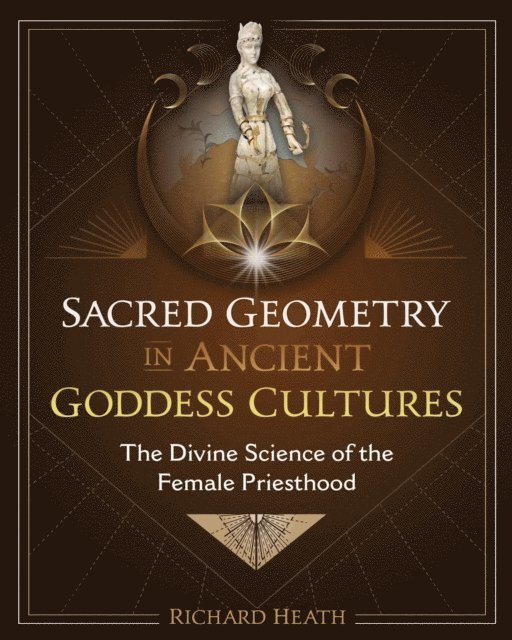
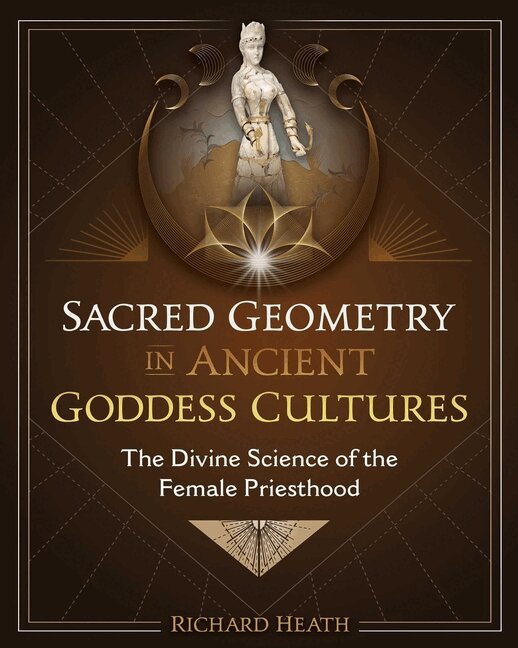
Examines the ancient cosmic science of the female megalithic astronomers• Describes the shared sacred geometry and astronomy knowledge in the megalithic monuments, temples, and secret calendars of the matrilineal cultures of Malta, Gobekli Tepe, and the Minoans of Crete• Shows how early Christians helped preserve ancient science by encoding it in the rock-cut churches of the Cappadocia region of Turkey• Explains how Greek myths reveal the transition from matriarchy to patriarchyLong before Pythagoras and Plato, before arithmetic and Christianity, there existed matrilineal societies around the Mediterranean, led by women with a sophisticated understanding of astronomy and sacred science. In this detailed exploration, Richard Heath decodes the cosmological secrets hidden by ancient goddess-centered cultures on the island of Malta, at Göbekli Tepe in Turkey, and on the Greek island of Crete. Heath reveals how the female astronomers of Malta built megaliths to study the sun, moon, and planets, counting time as lengths and comparing lengths using geometry. He shows how they encoded their cosmological and astronomical discoveries, their “astronomy of the goddesses,” in the geometries of their temples and monuments. Examining Maltese and Cretan artifacts, including secret calendars, he details how the Minoans of Crete transformed Maltese astronomy into a matriarchal religion based on a Saturnian calendar of 364 days. He also reveals evidence of the precursors of Maltese astronomical knowledge in the monuments of Göbekli Tepe. Looking at the shift from sacred geometry to arithmetic in ancient Mediterranean cultures, the author parallels this change in mindset with the transition from matriarchal to patriarchal cultures. He reveals how Greek myths present a way to see the matriarchal past through patriarchal eyes, detailing how Saturn’s replacement by Jupiter-Zeus symbolizes the transition from matriarchy to patriarchy. The author examines how the early Christians helped preserve the ancient astronomy of the goddesses, due to its connections to Christ’s cosmological teachings, by encoding this astronomy in the artwork of the rock-cut churches and monasteries of the Cappadocia region of Turkey. Revealing how our planet—with its specific harmonics and geometries within our star system—is uniquely designed to support intelligent life, the author shows how this divine spiritual truth was known to the ancient astronomers.
Inbunden, Engelska, 2024
423 kr
Skickas
Examines the ancient cosmic science of the female megalithic astronomers.Long before Pythagoras and Plato, before arithmetic and Christianity, there existed matrilineal societies around the Mediterranean, led by women with a sophisticated understanding of astronomy and sacred science. In this detailed exploration, Richard Heath decodes the cosmological secrets hidden by ancient goddess-centered cultures on the island of Malta, at Gobekli Tepe in Turkey, and on the Greek island of Crete.Heath reveals how the female astronomers of Malta built megaliths to study the sun, moon, and planets, counting time as lengths and comparing lengths using geometry. He shows how they encoded their cosmological and astronomical discoveries, their “astronomy of the goddesses,” in the geometries of their temples and monuments. Examining Maltese and Cretan artifacts, including secret calendars, he details how the Minoans of Crete transformed Maltese astronomy into a matriarchal religion based upon a Saturnian calendar of 364 days. He also reveals evidence of the precursors of Maltese astronomical knowledge in the monuments of Gobekli Tepe.Looking at the shift from sacred geometry to arithmetic in ancient Mediterranean cultures, the author parallels this change in mindset with the transition from matriarchal to patriarchal cultures. He reveals how Greek myths present a way to see the matriarchal past through patriarchal eyes, detailing how Saturn’s replacement by Jupiter-Zeus symbolizes the transition from matriarchy to patriarchy. The author examines how the early Christians helped preserve the ancient astronomy of the goddesses, due to its connections to Christ’s cosmological teachings, by encoding it in the artwork of the rock-cut churches and monasteries of the Cappadocia region of Turkey.Revealing how our planet, with its specific harmonics and geometries within our star system, is uniquely designed to support intelligent life, the author shows how this divine spiritual truth was known to the ancient astronomers.
Häftad, Engelska, 2023
110 kr
Skickas inom 5-8 vardagar
Häftad, Engelska, 2016
450 kr
Skickas inom 5-8 vardagar
Häftad, Engelska, 2007
213 kr
Tillfälligt slut
An exploration of the origins and influences of number from prehistory to modern time • Reveals the deeper meaning of the symbols and esoteric knowledge of secret societies • Explains the numerical sophistication of ancient monuments • Shows how the Templar design for Washington, D.C., represents the New Jerusalem The ubiquitous use of certain sacred numbers and ratios can be found throughout history, influencing everything from art and architecture to the development of religion and secret societies. In Sacred Number and the Origins of Civilization, Richard Heath reveals the origins, widespread influences, and deeper meaning of these synchronous numerical occurrences and how they were left within our planetary environment during the creation of the earth, the moon, and our solar system. Exploring astronomy, harmony, geomancy, sacred centers, and myth, Heath reveals the secret use of sacred number knowledge in the building of Gothic cathedrals and the important influence of sacred numbers in the founding of modern Western culture. He explains the role secret societies play as a repository for this numerical information and how those who attempt to decode its meaning without understanding the planetary origins of this knowledge are left with contradictory, cryptic, and often deceptive information. By examining prehistoric and monumental cultures through the Dark Ages and later recorded history, Sacred Number and the Origins of Civilization provides a key to understanding the true role and meaning of number.