Richard J. B. Bosworth – författare
Visar alla böcker från författaren Richard J. B. Bosworth. Handla med fri frakt och snabb leverans.
8 produkter
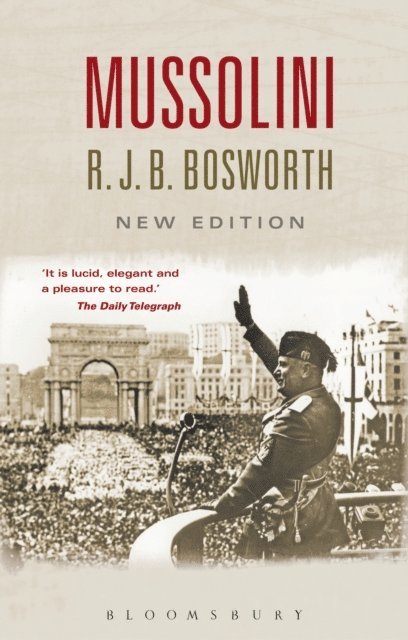
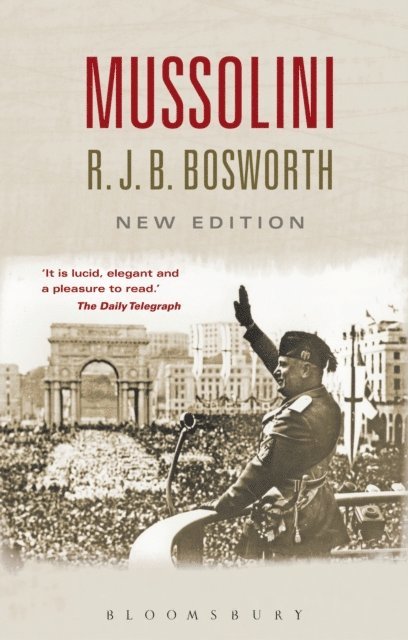
Mussolini
E-bok, 2014
418 kr
Lägg i varukorg
In 1945, disguised in German greatcoat and helmet, Mussolini attempted to escape from the advancing Allied armies. Unfortunately for him, the convoy of which he was part was stopped by partisans and his features, made so familiar by Fascist propaganda, gave him away. Within 24 hours he was executed …
Italian Dictatorship
Problems and Perspectives in the Interpretation of Mussolini and Fascism
Häftad, 1998
400 kr
Lägg i varukorg
What was Italian Fascism? Was it the ideology and experience of the trenches brought to political authority? Or did it express the hopes and ideals of an emerging middle class which had done well out of the First World War? To what extent was fascism a boys' ideology? And to what degree did …
Mussolini
Häftad, 2010
385 kr
Lägg i varukorg
In 1945, disguised in German greatcoat and helmet, Mussolini attempted to escape from the advancing Allied armies. Unfortunately for him, the convoy of which he was part was stopped by partisans and his features, made so familiar by Fascist propaganda, gave him away. Within 24 hours he was executed …
Explaining Auschwitz and Hiroshima
Historians and the Second World War, 1945-1990
Inbunden, 1993
2586 kr
Lägg i varukorg
Explaining Auschwitz and Hiroshima explores the way in which the main combatant societies of the Second World War have historicised that experience. Since 1945, debates in Germany about `the past that would not fade away' have been reasonably well-known. But in this book, Richard Bosworth maintains …
Explaining Auschwitz and Hiroshima
Historians and the Second World War, 1945-1990
Häftad, 1994
667 kr
Lägg i varukorg
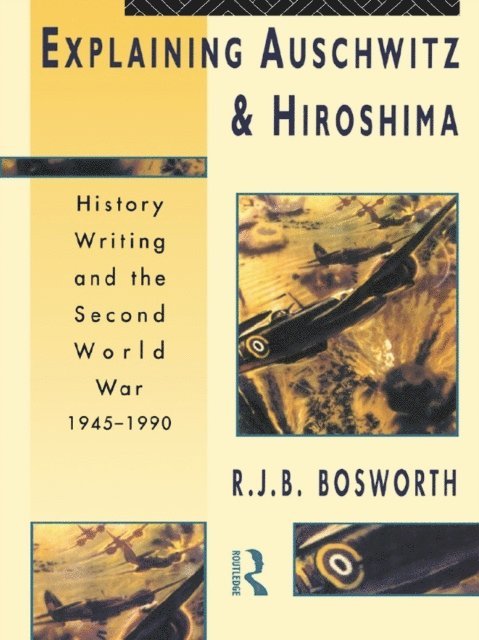
Explaining Auschwitz and Hiroshima explores the way in which the main combatant societies of the Second World War have historicised that experience. Since 1945, debates in Germany about `the past that would not fade away' have been reasonably well-known. But in this book, Richard Bosworth maintains …
Explaining Auschwitz and Hiroshima
Historians and the Second World War, 1945-1990
E-bok, 2002
785 kr
Lägg i varukorg
Explaining Auschwitz and Hiroshima explores the way in which the main combatant societies of the Second World War have historicised that experience. Since 1945, debates in Germany about `the past that would not fade away'' have been reasonably well-known. But in this book, Richard Bosworth …
Explaining Auschwitz and Hiroshima
Historians and the Second World War, 1945-1990
E-bok, 2002
785 kr
Lägg i varukorg
Explaining Auschwitz and Hiroshima explores the way in which the main combatant societies of the Second World War have historicised that experience. Since 1945, debates in Germany about `the past that would not fade away'' have been reasonably well-known. But in this book, Richard Bosworth …
Mussolini
E-bok, 2014
409 kr
Lägg i varukorg
In 1945, disguised in German greatcoat and helmet, Mussolini attempted to escape from the advancing Allied armies. Unfortunately for him, the convoy of which he was part was stopped by partisans and his features, made so familiar by Fascist propaganda, gave him away. Within 24 hours he was executed …