Richard Labunski – författare
Visar alla böcker från författaren Richard Labunski. Handla med fri frakt och snabb leverans.
5 produkter
5 produkter
Inbunden, Engelska, 2006
392 kr
Skickas inom 7-10 vardagar
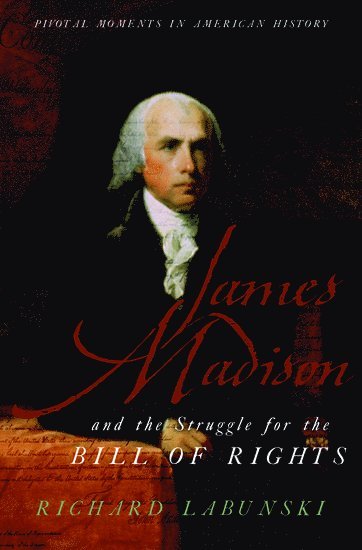
Today we hold the Constitution in such high regard that we can hardly imagine how hotly contested was its adoption. In fact, many of the thirteen states saw fierce debate over the document, and ratification was by no means certain. Virginia, the largest and most influential state, approved the Constitution by the barest of margins, and only after an epic political battle between James Madison and Patrick Henry. Now Richard Labunski offers a dramatic account of a time when the entire American experiment hung in the balance, only to be saved by the most unlikely of heroes--the diminutive and exceedingly shy Madison. Here is a vividly written account of not one but several major political struggles which changed the course of American history. Labunski takes us inside the sweltering converted theater in Richmond, where for three grueling weeks, the soft-spoken Madison and the charismatic Patrick Henry fought over whether Virginia should ratify the Constitution. The stakes were enormous. If Virginia voted no, George Washington could not become president, New York might follow suit and reject the Constitution, and the young nation would be thrust into political chaos. But Madison won the day by a handful of votes, mollifying Anti-Federalist fears by promising to add a bill of rights to the Constitution. To do this, Madison would have to win a seat in the First Congress. Labunski shows how the vengeful Henry prevented Madison's appointment to the Senate and then used his political power to ensure that Madison would run against his good friend, Revolutionary War hero James Monroe, in a House district teeming with political enemies. Overcoming great odds, Madison won by a few hundred votes, allowing him to attend the First Congress and sponsor the Bill of Rights. Packed with colorful details about life in early America, this compelling and important narrative is the first serious book about Madison written in many years. It will return this under-appreciated patriot to his rightful place among the Founding Fathers and shed new light on a key turning point in our nation's history.
Häftad, Engelska, 2008
205 kr
Skickas inom 5-8 vardagar
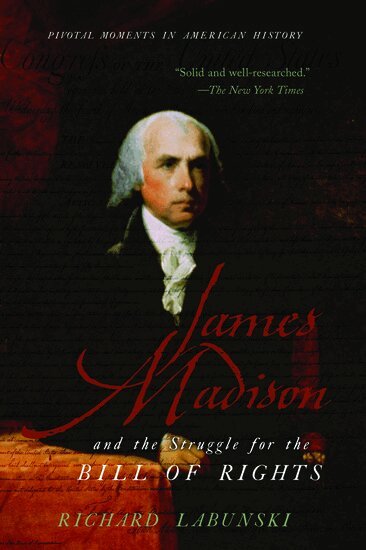
Today we hold the Constitution in such high regard that we can hardly imagine how hotly contested was its adoption. In fact, many of the thirteen states saw fierce debate over the document, and ratification was by no means certain. Virginia, the largest and most influential state, approved the Constitution by the barest of margins, and only after an epic political battle between James Madison and Patrick Henry. Now Richard Labunski offers a dramatic account of a time when the entire American experiment hung in the balance, only to be saved by the most unlikely of heroes--the diminutive and exceedingly shy Madison. Here is a vividly written account of not one but several major political struggles which changed the course of American history. Labunski takes us inside the sweltering converted theater in Richmond, where for three grueling weeks, the soft-spoken Madison and the charismatic Patrick Henry fought over whether Virginia should ratify the Constitution. The stakes were enormous. If Virginia voted no, George Washington could not become president, New York might follow suit and reject the Constitution, and the young nation would be thrust into political chaos. But Madison won the day by a handful of votes, mollifying Anti-Federalist fears by promising to add a bill of rights to the Constitution. To do this, Madison would have to win a seat in the First Congress. Labunski shows how the vengeful Henry prevented Madison's appointment to the Senate and then used his political power to ensure that Madison would run against his good friend, Revolutionary War hero James Monroe, in a House district teeming with political enemies. Overcoming great odds, Madison won by a few hundred votes, allowing him to attend the First Congress and sponsor the Bill of Rights. Packed with colorful details about life in early America, this compelling and important narrative is the first serious book about Madison written in many years. It will return this under-appreciated patriot to his rightful place among the Founding Fathers and shed new light on a key turning point in our nation's history.
Inbunden, Engelska, 1981
817 kr
Skickas inom 10-15 vardagar
Inbunden, Engelska, 2017
2 133 kr
Skickas inom 10-15 vardagar
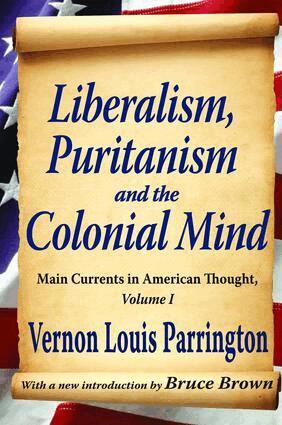
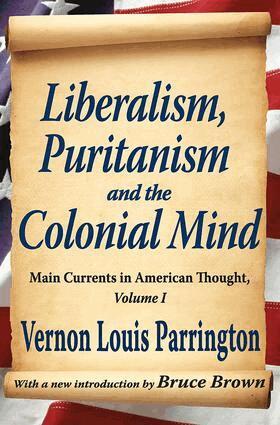
In Liberalism, Puritanism and the Colonial Mind, Parrington gives a brilliant account of the beginning and development in American letters, the early ideas that have come to be reckoned as traditionally American how they came into being, how they were opposed, and what influence they have exerted in determining the form and scope of our ideals and institutions. In doing so, the author follows the path of political, economic, and social development. This first of a three-volume work carries the account from early beginnings in Puritan New England to the triumph of Jefferson and back-country agrarianism.This first part of Main Currents in American Thought deals with intellectual backgrounds, especially with those diverse systems of European thought that have domesticated themselves in America. Parrington examines the legacies of seventeenth- and eighteenth-century Europe to the colonial settlements and, in particular, the transplanting to America of old-world liberalisms.The liberalisms discussed in this book derive from two primary sources, English Independency and French Romantic theory, supplemented by English Whiggery. From the first came the revolutionary doctrine of natural rights, clarified by thinkers ranging from Roger Williams to John Locke. A doctrine that destroyed the philosophical sanction of divine right and substituted it for the traditional absolutism was formed. This struggle largely determined the course of development in early New England. A new introduction by Bruce Brown highlights the life of Vernon Louis Parrington and explains the importance of this Pulitzer-Prize winning study.
Häftad, Engelska, 2011
699 kr
Skickas inom 10-15 vardagar
In Liberalism, Puritanism and the Colonial Mind, Parrington gives a brilliant account of the beginning and development in American letters, the early ideas that have come to be reckoned as traditionally American—how they came into being, how they were opposed, and what influence they have exerted in determining the form and scope of our ideals and institutions. In doing so, the author follows the path of political, economic, and social development. This first of a three-volume work carries the account from early beginnings in Puritan New England to the triumph of Jefferson and back-country agrarianism.This first part of Main Currents in American Thought deals with intellectual backgrounds, especially with those diverse systems of European thought that have domesticated themselves in America. Parrington examines the legacies of seventeenth- and eighteenth-century Europe to the colonial settlements and, in particular, the transplanting to America of old-world liberalisms.The liberalisms discussed in this book derive from two primary sources, English Independency and French Romantic theory, supplemented by English Whiggery. From the first came the revolutionary doctrine of natural rights, clarified by thinkers ranging from Roger Williams to John Locke. A doctrine that destroyed the philosophical sanction of divine right and substituted it for the traditional absolutism was formed. This struggle largely determined the course of development in early New England. A new introduction by Bruce Brown highlights the life of Vernon Louis Parrington and explains the importance of this Pulitzer-Prize winning study.