Richard Litz - Böcker
Visar alla böcker från författaren Richard Litz. Handla med fri frakt och snabb leverans.
2 produkter
2 produkter
3 097 kr
Skickas inom 7-10 vardagar
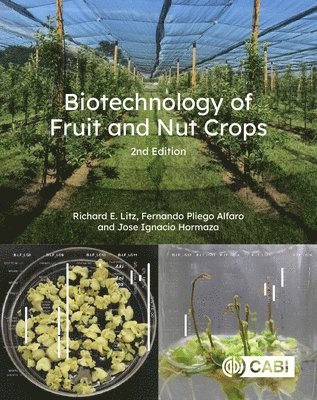
This book covers the biotechnology of all the major perennial fruit and nut species. Since the publication of the first edition of this book in 2005, there has been significant progress in cell culture, genomics and genetic transformation for many of these species. This book covers these biotechnologies and also traditional ones, such as regeneration pathways, protoplast culture, in vitro mutagenesis, and ploidy manipulation that have been applied to many of these species. Three species, Diospyros kaki (persimmon), Punica granatum (pomegranate) and Eriobotrya japonica (loquat) are included for the first time, and several Prunus species now receive separate coverage. The species are organized by plant family to facilitate comparisons among related ones. Each species is discussed in relation to its family and its related wild forms, and most are accompanied by full colour illustrations. This book is a vital resource for those working on the improvement of perennial fruit, nut and plantation crops. The book features: Detailed coverage of major perennial fruit and crop species. Coverage of traditional and new biotechnologies. Full colour illustrations to aid identification This book is an essential resource for scientists and postgraduate students who are engaged in the improvement of perennial fruit, nut and plantation crops and will also be an important accession for university and agricultural research libraries.
2 951 kr
Skickas inom 7-10 vardagar
Mangoes are grown throughout the tropics, subtropics and in some warm temperate regions of Europe. Production is largest in Asia followed by Africa, the Americas, Oceania and Europe. Building on the previous successful editions, The Mango: Botany, Production and Uses 3e continues the exploration of this important crop species and provides a comprehensive review of mango research and production. Contributors represent some of the largest centres of mango production such as India, China, Mexico and Brazil, as well as some smaller producers recognised for their important scientific innovation e.g. the USA, Israel, Spain and Australia. This third edition covers production and postharvest practices, cultivars, rootstocks, mineral nutrition, canopy management, pests and diseases and their underlying physiology and scientific understanding. It reviews advances in molecular genetics and applications in gene discovery, mango breeding and physiology; the understanding and challenges of floral biology and pollination; the physiological role of carbohydrates and stress; and the contribution of mango to human nutrition and health. Relevant for researchers, agronomists and mango growers, this book is essential for anyone who wants to understand the mango and its importance as an internationally traded fruit.