Richard M. Billow – författare
Visar alla böcker från författaren Richard M. Billow. Handla med fri frakt och snabb leverans.
12 produkter
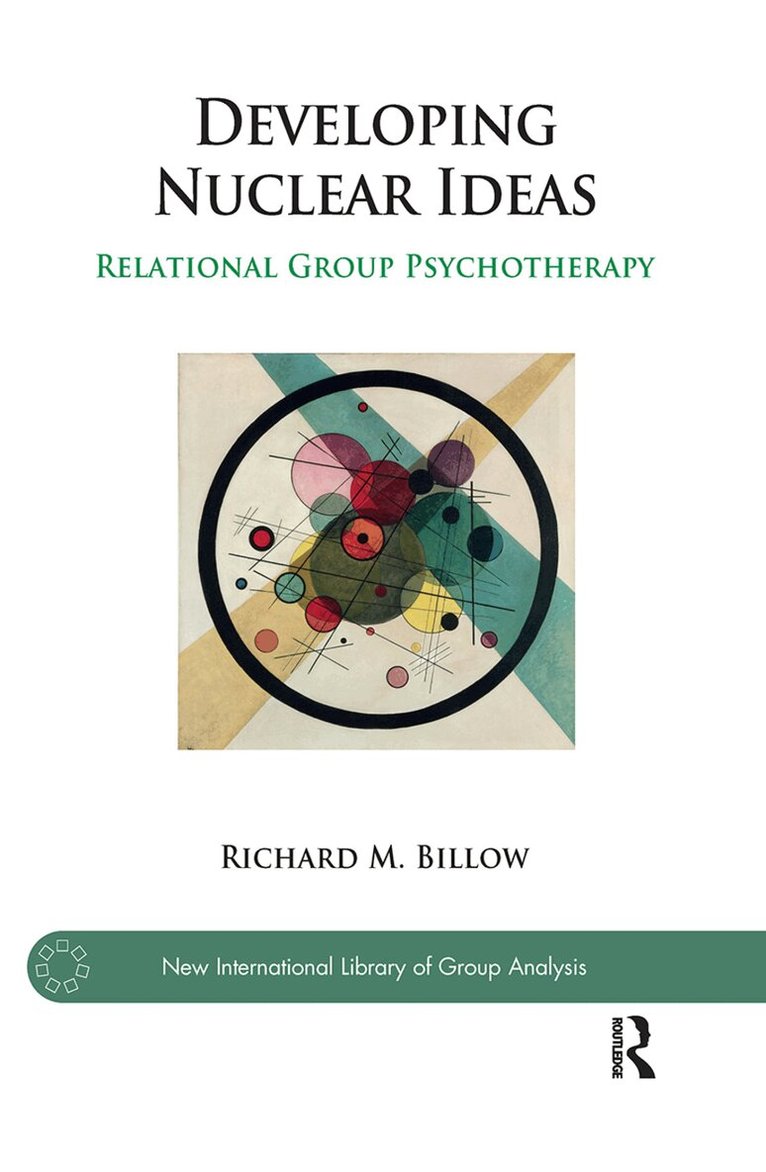
Developing Nuclear Ideas
Relational Group Psychotherapy
Inbunden, 2019
2442 kr
Lägg i varukorg
Building and expanding on concepts presented in his previous volumes (Relational Group Psychotherapy: From Basic Assumptions to Passion, and Resistance, Rebellion and Refusal in Groups: The 3Rs), Richard M. Billow presents a coherent and innovative model of group psychotherapy. Developing Nuclear …
Developing Nuclear Ideas
Relational Group Psychotherapy
E-bok, 2018
607 kr
Lägg i varukorg
Building and expanding on concepts presented in his previous volumes (Relational Group Psychotherapy: From Basic Assumptions to Passion, and Resistance, Rebellion and Refusal in Groups: The 3Rs), Richard M. Billow presents a coherent and innovative model of group psychotherapy. Developing Nuclear …
Resistance, Rebellion and Refusal in Groups
The 3 Rs
E-bok, 2018
607 kr
Lägg i varukorg
The author expands and develops his ideas, first presented in Relational Group Psychotherapy: From Basic Assumptions to Passion . He constructs a theoretically sophisticated, yet experience-near approach to contemporary group therapy. Building on Bion''s striking theoretical realignment, replacing …
Developing Nuclear Ideas
Relational Group Psychotherapy
E-bok, 2018
607 kr
Lägg i varukorg
Building and expanding on concepts presented in his previous volumes (Relational Group Psychotherapy: From Basic Assumptions to Passion, and Resistance, Rebellion and Refusal in Groups: The 3Rs), Richard M. Billow presents a coherent and innovative model of group psychotherapy. Developing Nuclear …
Resistance, Rebellion and Refusal in Groups
The 3 Rs
E-bok, 2018
593 kr
Lägg i varukorg
The author expands and develops his ideas, first presented in Relational Group Psychotherapy: From Basic Assumptions to Passion . He constructs a theoretically sophisticated, yet experience-near approach to contemporary group therapy. Building on Bion''s striking theoretical realignment, replacing …
Psychoanalytic Group Psychotherapy
A Contemporary Introduction
Häftad, 2025
382 kr
Lägg i varukorg
In this comprehensive volume, Richard M. Billow provides a thorough introduction to group psychotherapy from a psychoanalytic perspective. Billow integrates contemporary psychoanalytic thinking with Freudian and Kleinian core concepts, as well as Bion’s early group theory and his later …
Psychoanalytic Group Psychotherapy
A Contemporary Introduction
Inbunden, 2025
2588 kr
Lägg i varukorg
In this comprehensive volume, Richard M. Billow provides a thorough introduction to group psychotherapy from a psychoanalytic perspective. Billow integrates contemporary psychoanalytic thinking with Freudian and Kleinian core concepts, as well as Bion’s early group theory and his later …
Psychoanalytic Group Psychotherapy
A Contemporary Introduction
E-bok, 2025
393 kr
Lägg i varukorg
In this comprehensive volume, Richard M. Billow provides a thorough introduction to group psychotherapy from a psychoanalytic perspective. Billow integrates contemporary psychoanalytic thinking with Freudian and Kleinian core concepts, as well as Bion’s early group theory and his later …
Psychoanalytic Group Psychotherapy
A Contemporary Introduction
E-bok, 2025
393 kr
Lägg i varukorg
In this comprehensive volume, Richard M. Billow provides a thorough introduction to group psychotherapy from a psychoanalytic perspective. Billow integrates contemporary psychoanalytic thinking with Freudian and Kleinian core concepts, as well as Bion’s early group theory and his later …
Developing Nuclear Ideas
Relational Group Psychotherapy
Häftad, 2015
624 kr
Lägg i varukorg
Building and expanding on concepts presented in his previous volumes (Relational Group Psychotherapy: From Basic Assumptions to Passion, and Resistance, Rebellion and Refusal in Groups: The 3Rs), Richard M. Billow presents a coherent and innovative model of group psychotherapy.Developing Nuclear …
Resistance, Rebellion and Refusal in Groups
The 3 Rs
Häftad, 2010
624 kr
Lägg i varukorg
Richard M. Billow expands and develops his ideas, first presented in Relational Group Psychotherapy: From Basic Assumptions to Passion. He constructs a theoretically sophisticated, yet experience-near approach to contemporary group therapy. Building on Bion's striking theoretical realignment, …
Resistance, Rebellion and Refusal in Groups
The 3 Rs
Inbunden, 2010
1015 kr
Tillfälligt slut
Richard M. Billow expands and develops his ideas, first presented in Relational Group Psychotherapy: From Basic Assumptions to Passion. He constructs a theoretically sophisticated, yet experience-near approach to contemporary group therapy. Building on Bion's striking theoretical realignment, …