Richard N. Rosecrance - Böcker
Visar alla böcker från författaren Richard N. Rosecrance. Handla med fri frakt och snabb leverans.
7 produkter
7 produkter
742 kr
Skickas inom 10-15 vardagar
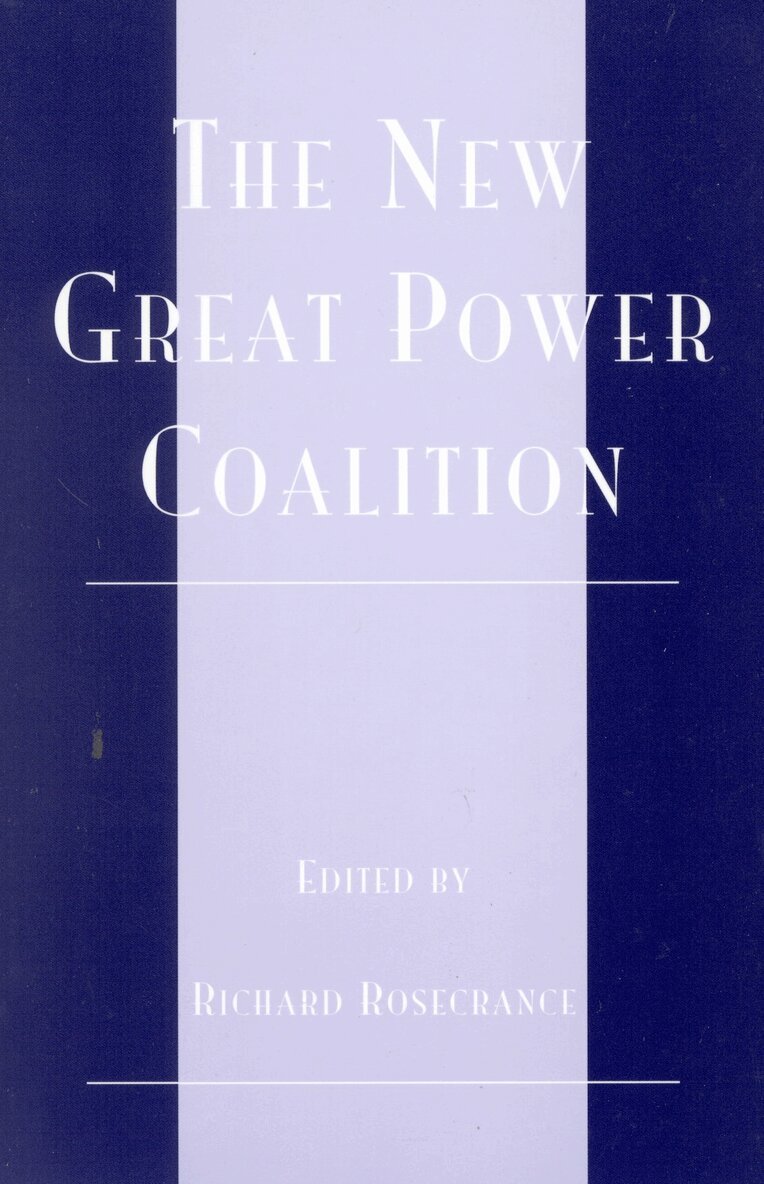
The Great Power coalition of the early 19th century succeeded in keeping the peace among the major states of England, France, Prussia, Russia, and Austria. For the last century and a half, however, no truly encompassing coalition has emerged, and in its absence the 20th century was plagued by world wars and peripheral conflicts.Only now, at the outset of the 21st century, is a new Great Power coalition possible. This book examines the prospect of a Great Power coalition that would be sustained by the development of "overlapping international clubs." The new set of Great Powers—the United States, Japan, the European Union, China, and Russia—can be increasingly bound together through a combination of status and economic incentives, international norms and regimes, and the emulation of national and regional "best practices."The construction of such a coalition presents special problems and opportunities for the United States. In the years ahead, America will need to adjust its policies to bring China and Russia into membership of such a group or see them progressively adopt recalcitrant and antagonistic attitudes toward world affairs.
1 873 kr
Skickas inom 5-8 vardagar
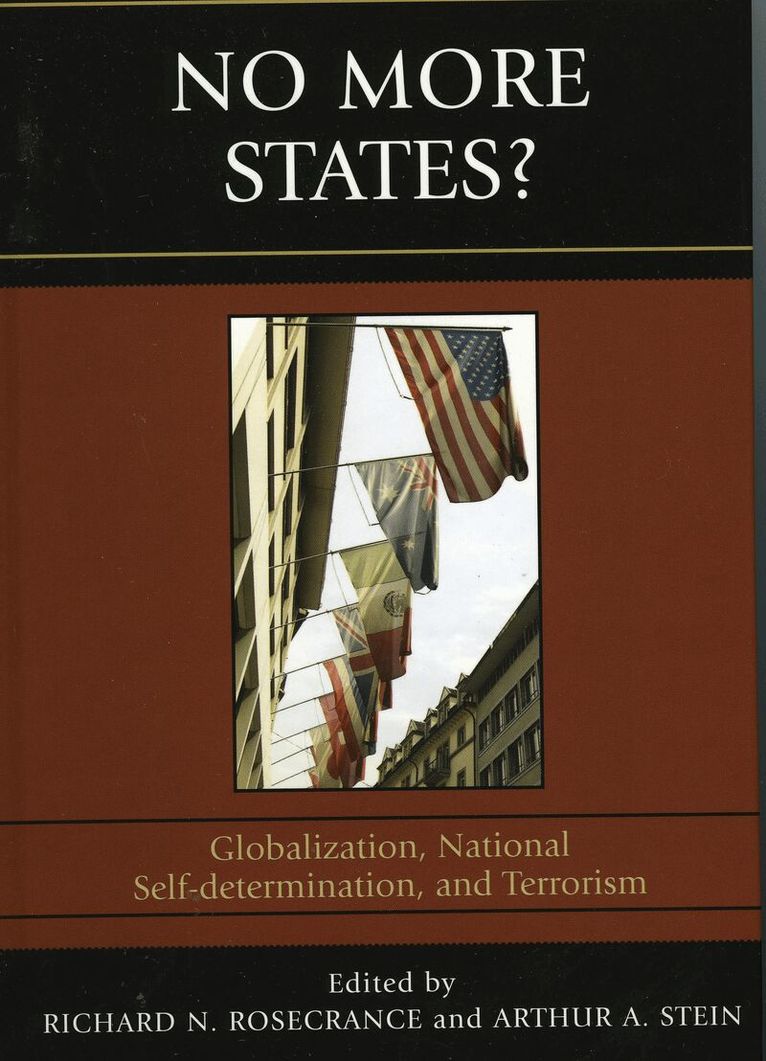
The twentieth century witnessed an explosion of new nations carved out of existing ramshackle empires and multiethnic states. Many observers contend that the creation of new states will continue indefinitely, with the two hundred of today becoming the four hundred of tomorrow as more groups seek independence. This provocative and compelling book explores the impact of globalization and terrorism on this trend, arguing convincingly that the era of national self-determination has finally come to an end. Examining the forces that determine the emergence of new nation-states, the distinguished contributors consider a rich array of specific cases from the Middle East, Asia, North America, Europe, and Russia where new states could be created. They contend that globalization, rather than expanding such opportunities, is not as friendly to new weak states with limited resources as it is to established rich nations. Given the vast sums circulating in the world market, few fledgling nations can be financially independent. They find it more prudent to shelter within the protective embrace of existing federations. Equally, governments of federal states can induce restive petitioners_such as Quebec, Scotland, and the Basques_to remain inside the metropolitan boundary through a system of tangible restraints and rewards. Those who reject the benefits, such as rebels in Chechnya and Aceh, will fail in their bids for independence. Taiwan_poised on a knife-edge between integration with China and independence_faces a series of costs and diminished returns if it seeks full statehood. Finally, terrorism has lost its legitimacy as a technique for gaining independence in the eyes of the international community. Despite the stall in new state formation, there has been no sign of successful military or imperial expansion by established countries toward consolidation into fewer, larger national units. Neither aggression by regional states_such as the Iraq invasion of Kuwait in 1990, nor intervention_such as the U.S. occupation of Iraq in 2003, are likely to succeed. On balance, the book concludes, discontented national movements will have to find ways to exist within current geopolitical boundaries.
665 kr
Skickas inom 5-8 vardagar
The twentieth century witnessed an explosion of new nations carved out of existing ramshackle empires and multiethnic states. Many observers contend that the creation of new states will continue indefinitely, with the two hundred of today becoming the four hundred of tomorrow as more groups seek independence. This provocative and compelling book explores the impact of globalization and terrorism on this trend, arguing convincingly that the era of national self-determination has finally come to an end. Examining the forces that determine the emergence of new nation-states, the distinguished contributors consider a rich array of specific cases from the Middle East, Asia, North America, Europe, and Russia where new states could be created. They contend that globalization, rather than expanding such opportunities, is not as friendly to new weak states with limited resources as it is to established rich nations. Given the vast sums circulating in the world market, few fledgling nations can be financially independent. They find it more prudent to shelter within the protective embrace of existing federations. Equally, governments of federal states can induce restive petitioners_such as Quebec, Scotland, and the Basques_to remain inside the metropolitan boundary through a system of tangible restraints and rewards. Those who reject the benefits, such as rebels in Chechnya and Aceh, will fail in their bids for independence. Taiwan_poised on a knife-edge between integration with China and independence_faces a series of costs and diminished returns if it seeks full statehood. Finally, terrorism has lost its legitimacy as a technique for gaining independence in the eyes of the international community. Despite the stall in new state formation, there has been no sign of successful military or imperial expansion by established countries toward consolidation into fewer, larger national units. Neither aggression by regional states_such as the Iraq invasion of Kuwait in 1990, nor intervention_such as the U.S. occupation of Iraq in 2003, are likely to succeed. On balance, the book concludes, discontented national movements will have to find ways to exist within current geopolitical boundaries.
1 833 kr
Skickas inom 10-15 vardagar
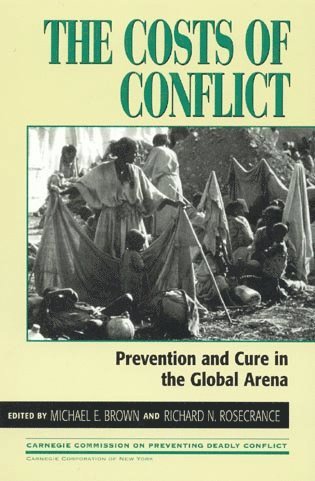
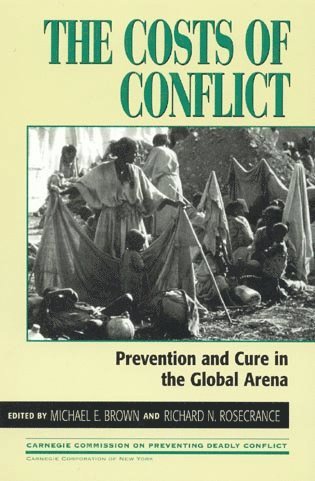
When it comes to conflict resolution, is an ounce of prevention worth a pound of cure? Leading scholars lay out an analytical and methodological framework for evaluating this question, and case studies on global hotspots from Bosnia to Somalia, Rwanda, Cambodia, and El Salvador (among others) put it to the test.
742 kr
Skickas inom 10-15 vardagar
When it comes to conflict resolution, is an ounce of prevention worth a pound of cure? Leading scholars lay out an analytical and methodological framework for evaluating this question, and case studies on global hotspots from Bosnia to Somalia, Rwanda, Cambodia, and El Salvador (among others) put it to the test.
504 kr
Skickas inom 3-6 vardagar
371 kr
Skickas inom 3-6 vardagar