Richard P. Barth – författare
624 kr
Skickas inom 5-8 vardagar
491 kr
Läs direkt efter köp
491 kr
Läs direkt efter köp
553 kr
Skickas inom 5-8 vardagar
1 033 kr
Skickas inom 3-6 vardagar
570 kr
Läs direkt efter köp
362 kr
Läs direkt efter köp
700 kr
Skickas inom 10-15 vardagar
2 198 kr
Skickas inom 10-15 vardagar
558 kr
Skickas inom 10-15 vardagar
700 kr
Skickas inom 10-15 vardagar
2 622 kr
Skickas inom 10-15 vardagar
714 kr
Skickas inom 10-15 vardagar
1 695 kr
Skickas inom 5-8 vardagar
27 kr
Läs direkt efter köp
445 kr
Läs direkt efter köp
2 905 kr
Skickas inom 10-15 vardagar
836 kr
Läs direkt efter köp
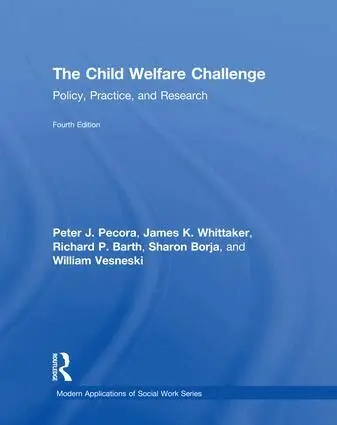
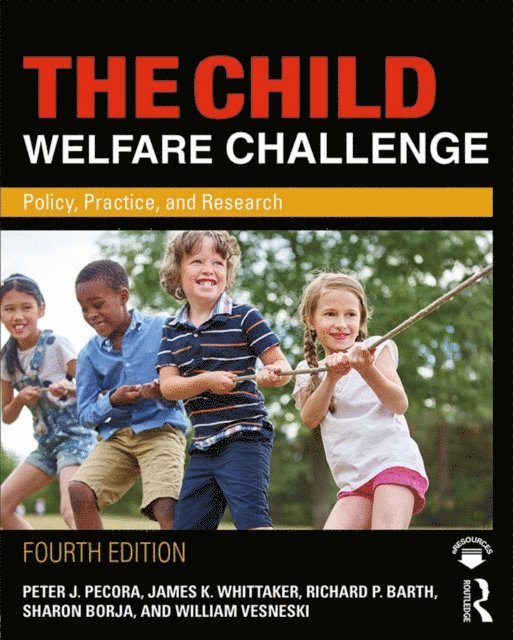
Using both historical and contemporary contexts, The Child Welfare Challenge examines major policy practice and research issues as they jointly shape child welfare practice and its future. This text focuses on families and children whose primary recourse to services has been through publicly funded child welfare agencies, and considers historical areas of service—foster care and adoptions, in-home family-centered services, child-protective services, and residential treatment services—where social work has an important role.
This fourth edition features new content on child maltreatment and prevention that is informed by key conceptual frameworks informed by brain science, public health, and other research. This edition uses cross-sector data and more sophisticated predictive and other analytical processes to enhance planning and practice design. The authors have streamlined content on child protective services (CPS) to allow for new chapters on juvenile justice/cross-over youth, and international innovations, as well as more content on biology and brain science. The fourth edition includes a glossary of terms as well as instructor and student resource papers available online.
866 kr
Läs direkt efter köp
Using both historical and contemporary contexts, The Child Welfare Challenge examines major policy practice and research issues as they jointly shape child welfare practice and its future. This text focuses on families and children whose primary recourse to services has been through publicly funded child welfare agencies, and considers historical areas of service—foster care and adoptions, in-home family-centered services, child-protective services, and residential treatment services—where social work has an important role.
This fourth edition features new content on child maltreatment and prevention that is informed by key conceptual frameworks informed by brain science, public health, and other research. This edition uses cross-sector data and more sophisticated predictive and other analytical processes to enhance planning and practice design. The authors have streamlined content on child protective services (CPS) to allow for new chapters on juvenile justice/cross-over youth, and international innovations, as well as more content on biology and brain science. The fourth edition includes a glossary of terms as well as instructor and student resource papers available online.
622 kr
Läs direkt efter köp
First Published in 2017. In this book the authors move easily and often between the worlds of policy, practice, and research in child and family welfare. Their own research delineates— better than any other to date— the particular factors associated with success>ful and unsuccessful older, special-needs adoptions.
600 kr
Läs direkt efter köp
First Published in 2017. In this book the authors move easily and often between the worlds of policy, practice, and research in child and family welfare. Their own research delineates— better than any other to date— the particular factors associated with success>ful and unsuccessful older, special-needs adoptions.
824 kr
Läs direkt efter köp
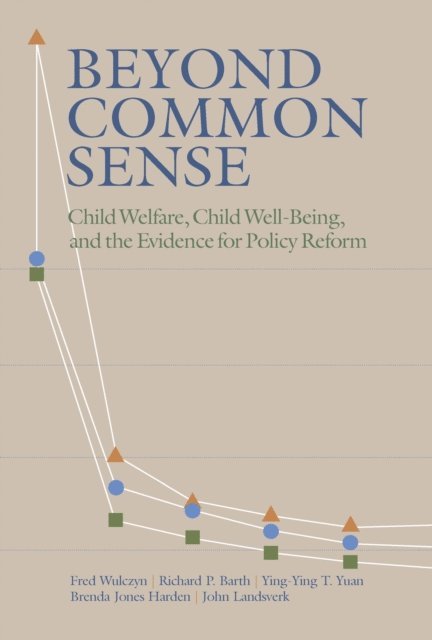
Helping vulnerable children develop their full potential is an attractive idea with broad common-sense appeal. However, child well-being is a broad concept, and the legislative mandate for addressing well-being in the context of the current child welfare system is not particularly clear. This volume asserts that finding a place for well-being on the list of outcomes established to manage the child welfare system is not as easy as it first appears. The overall thrust of this argument is that policy should be evidence-based, and the available evidence is a primary focus of the book. Because policymakers have to make decisions that allocate resources, a basic understanding of incidence in the public health tradition is important, as is evidence that speaks to the question of what works clinically. The rest of the book addresses the evidence. Chapter 2 integrates bio-ecological and public health perspectives to give the evidence base coherence. Chapters 3 and 4 combine evidence from the National Child Abuse and Neglect Data System, the Multistate Foster Care Data Archive, and the National Survey of Child and Adolescent Well-Being to offer an unprecedented profile of children as they enter the child welfare system. Chapters 5 and 6 address the broad question of what works. A concluding chapter focuses on policy and future directions, suggesting that children starting out, children starting school, and children starting adolescence are high-risk populations for which explicit strategies have to be formed. This timely volume offers useful insights into the child welfare system and will be of particular interest to policymakers, academics with an interest in Child Welfare Policy, Social Work educators, and Child Advocates.
824 kr
Läs direkt efter köp
Helping vulnerable children develop their full potential is an attractive idea with broad common-sense appeal. However, child well-being is a broad concept, and the legislative mandate for addressing well-being in the context of the current child welfare system is not particularly clear. This volume asserts that finding a place for well-being on the list of outcomes established to manage the child welfare system is not as easy as it first appears. The overall thrust of this argument is that policy should be evidence-based, and the available evidence is a primary focus of the book. Because policymakers have to make decisions that allocate resources, a basic understanding of incidence in the public health tradition is important, as is evidence that speaks to the question of what works clinically. The rest of the book addresses the evidence. Chapter 2 integrates bio-ecological and public health perspectives to give the evidence base coherence. Chapters 3 and 4 combine evidence from the National Child Abuse and Neglect Data System, the Multistate Foster Care Data Archive, and the National Survey of Child and Adolescent Well-Being to offer an unprecedented profile of children as they enter the child welfare system. Chapters 5 and 6 address the broad question of what works. A concluding chapter focuses on policy and future directions, suggesting that children starting out, children starting school, and children starting adolescence are high-risk populations for which explicit strategies have to be formed. This timely volume offers useful insights into the child welfare system and will be of particular interest to policymakers, academics with an interest in Child Welfare Policy, Social Work educators, and Child Advocates.
795 kr
Läs direkt efter köp
824 kr
Läs direkt efter köp
1 069 kr
Tillfälligt slut