Richard P. Lipka - Böcker
Visar alla böcker från författaren Richard P. Lipka. Handla med fri frakt och snabb leverans.
13 produkter
13 produkter
402 kr
Tillfälligt slut
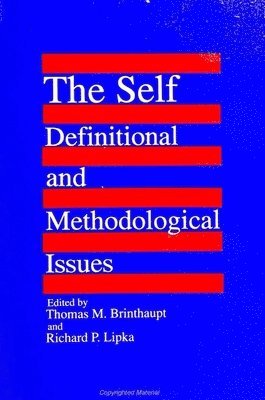
What are the characteristics and dimensions of the self? Is there a "best" way to measure the self? How does the researcher's definition of the self affect the choice of research measure and methods? These are the questions addressed by this book.Unlike previous books on the self, this one provides a systematic analysis of the theoretical and methodological issues involved. It offers a description of several alternative methods for studying the self, and discussions of the advantages and disadvantages of these different approaches. Emphasized here are the phenomenological and experiential nature of the self, its multidimensionality and hierarchical structure, and the relationship between defining and measuring the self. Among the methodological issues addressed are the impact of significant others on the self, the factors that affect the process of reporting about the self, between-group comparison of self-structure, the structure of the self in relationship to others, and the effects of differing cultural contexts.
372 kr
Tillfälligt slut
When and how is the self acquired and what characterizes its development and change over the life span? What are the implications of using different methodologies to study the self with different age groups? This book addresses these and related questions.The authors offer research on early and middle childhood, late childhood and adolescence, and adulthood and old age. Among the issues considered are the relationship between cognitive complexity and self-evaluation in childhood, the pivotal socio-emotional tasks that confront the adolescent, and effects of situational and structural factors on the self-esteem of adolescents and adults, and age and gender differences in the ideal and undesired selves of young and older adults. These contributions illustrate the different theoretical and methodological issues that are associated with differing stages of the life span and provide a summary of the current knowledge base of the self across the life span.Unlike previous books on study of the self, this one provides a systematic analysis of the theoretical and methodological issues and a selection of several alternative methodologies for studying the self across the life span.
402 kr
Tillfälligt slut
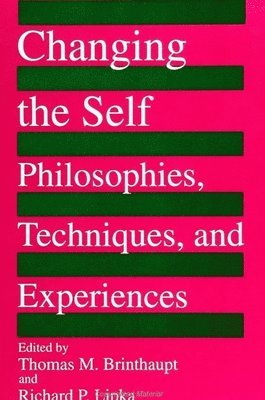
This book examines the varieties of self-exchange and factors that can influence it. It takes a much-needed step toward linking the concerns of the academic self-researcher and the consumer of research pertaining to changing the self. Throughout the book, understanding and accounting for change in the self emerges as a vitally important concern across a wide range of human experience.
1 027 kr
Tillfälligt slut
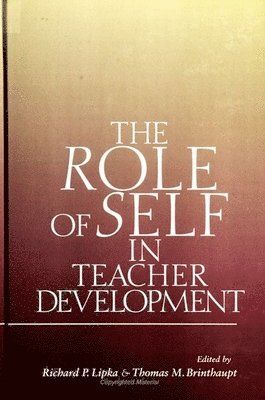
Reflects some of the major transition points in becoming a teacher and focuses explicitly on how issues of self and identity bear on these different points.The Role of Self in Teacher Development explores some of the major transition points in becoming a teacher and focuses explicitly on how issues of self and identity bear on these different points. The contributors examine not only pre-service teachers, but also the first years of teaching, the characteristics of the master teacher, and the processes of reexamining and affirming one's identity as a teacher. A recurrent theme throughout the book is the importance of balancing the personal development of teachers with their professional development.By recognizing and addressing the instrumental role of "self" in teacher development, this book provides a set of excellent road signs and maps for the journey to becoming a teacher who facilitates the growth, development, and education of his or her students.[Contributors include Karen J. Agne, Gary D. Borich, Thomas M. Brinthaupt, Don Hamachek, Richard P. Lipka, S. Vianne McLean, Paul G. Schempp, Andrew C. Sparkes, Thomas J. Templin, Les Tickle, Linda F. Tusin, Stanley J. Zehm.]
372 kr
Tillfälligt slut
Reflects some of the major transition points in becoming a teacher and focuses explicitly on how issues of self and identity bear on these different points.The Role of Self in Teacher Development explores some of the major transition points in becoming a teacher and focuses explicitly on how issues of self and identity bear on these different points. The contributors examine not only pre-service teachers, but also the first years of teaching, the characteristics of the master teacher, and the processes of reexamining and affirming one's identity as a teacher. A recurrent theme throughout the book is the importance of balancing the personal development of teachers with their professional development.By recognizing and addressing the instrumental role of "self" in teacher development, this book provides a set of excellent road signs and maps for the journey to becoming a teacher who facilitates the growth, development, and education of his or her students.[Contributors include Karen J. Agne, Gary D. Borich, Thomas M. Brinthaupt, Don Hamachek, Richard P. Lipka, S. Vianne McLean, Paul G. Schempp, Andrew C. Sparkes, Thomas J. Templin, Les Tickle, Linda F. Tusin, Stanley J. Zehm.]
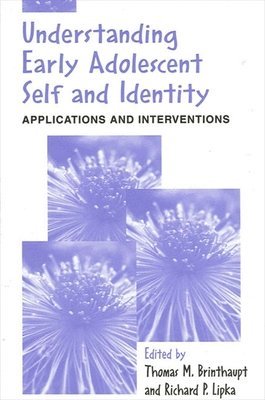
Understanding Early Adolescent Self and Identity
Applications and Interventions
Inbunden, Engelska, 2002
1 027 kr
Tillfälligt slut
Addresses adolescent identity issues and suggests practical approaches to facilitate development and adjustment.What are the major self and identity concerns for early adolescents? What are the applications and interventions that can address those concerns, helping to ease the transition into later adolescence and adulthood? Providing a broad and interdisciplinary approach to studying the self, the contributors emphasize the practical implications of their work for understanding early adolescent self and identity and for designing interventions that facilitate development and adjustment. The book consists of four major sections, in which contributors address conceptual issues, school transitions, peer and behavioral problems, and intervention programs.
Understanding Early Adolescent Self and Identity
Applications and Interventions
Häftad, Engelska, 2002
404 kr
Tillfälligt slut
Addresses adolescent identity issues and suggests practical approaches to facilitate development and adjustment.What are the major self and identity concerns for early adolescents? What are the applications and interventions that can address those concerns, helping to ease the transition into later adolescence and adulthood? Providing a broad and interdisciplinary approach to studying the self, the contributors emphasize the practical implications of their work for understanding early adolescent self and identity and for designing interventions that facilitate development and adjustment. The book consists of four major sections, in which contributors address conceptual issues, school transitions, peer and behavioral problems, and intervention programs.
642 kr
Skickas inom 7-10 vardagar
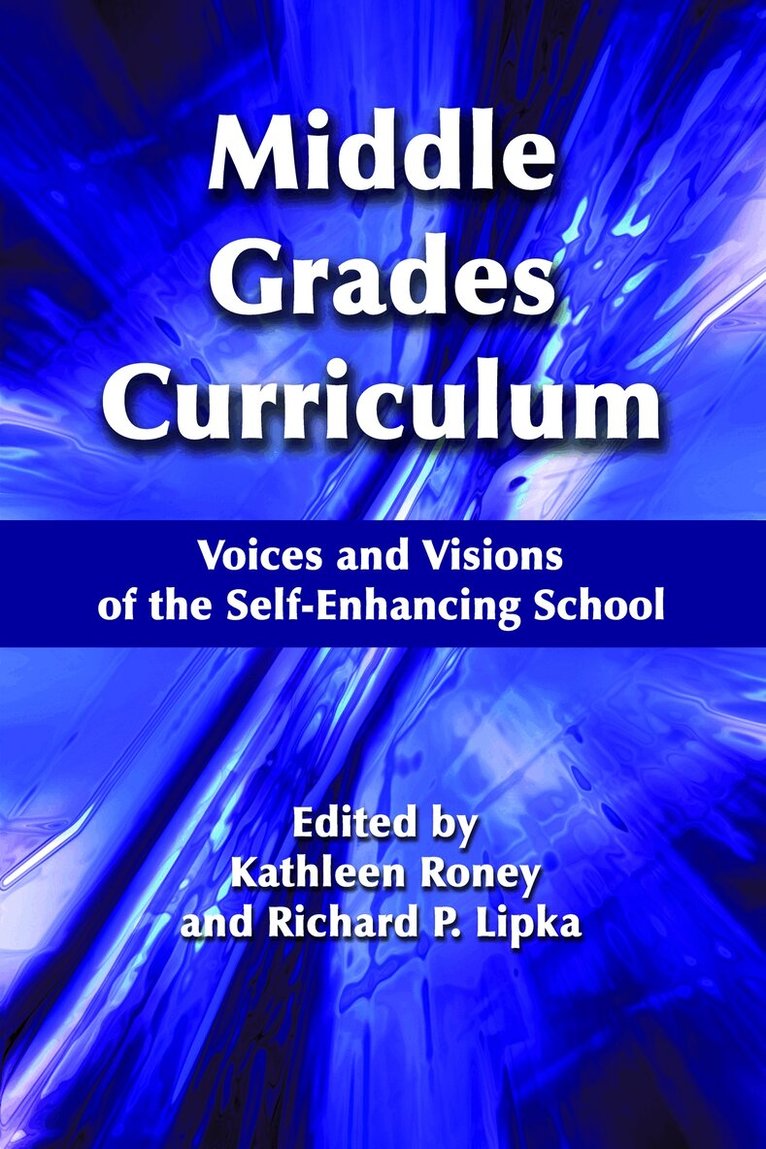
High stakes testing, standards, and accountability politics is taking us away from the importance of the affective domain in curriculum development. This critical learning domain is often an unrecognized and infrequently considered topic in the literature. Through this book we extend the current knowledge base by addressing a curriculum model developed in the 1980s. We add a 2012 knowledge base as we delineate the role of self-perceptions in school-related learning, how middle level curriculum affects self-perceptions, and the type of curriculum planning which enhances self-perceptions and improves learning in the cognitive, affective, and psychomotor domains.The combination of sound psychological principles and practical teaching and curriculum suggestions with an empirical basis makes the book attractive to both higher education and local school professional libraries. In the former it will serve as the primary text in graduate and advanced undergraduate middle level education programs and practices courses. It might also be a primary text in courses or workshops in affective education or other experiences which emphasize affective, values, and self-concept. It also has potential as a supplementary text in undergraduate educational psychology courses. At the in-service level this book could be used as a workshop resource or as a professional reference for middle level teachers, administrators, curriculum workers, and supervisors.Our interest in young adolescents and their school setting coincides with the fourth edition of This We Believe (NMSA, 2010). The self-enhancing school is characterized by “from-to” statements; for example, “from” avoiding parents “to” working with parents. Using theory and research we discuss the costs of staying in the “from” position and the benefits derived from moving to the “to” position. By combining educational psychology and curriculum development we make a unique contribution to middle grades curriculum developers.
1 087 kr
Skickas inom 7-10 vardagar
High stakes testing, standards, and accountability politics is taking us away from the importance of the affective domain in curriculum development. This critical learning domain is often an unrecognized and infrequently considered topic in the literature. Through this book we extend the current knowledge base by addressing a curriculum model developed in the 1980s. We add a 2012 knowledge base as we delineate the role of self-perceptions in school-related learning, how middle level curriculum affects self-perceptions, and the type of curriculum planning which enhances self-perceptions and improves learning in the cognitive, affective, and psychomotor domains.The combination of sound psychological principles and practical teaching and curriculum suggestions with an empirical basis makes the book attractive to both higher education and local school professional libraries. In the former it will serve as the primary text in graduate and advanced undergraduate middle level education programs and practices courses. It might also be a primary text in courses or workshops in affective education or other experiences which emphasize affective, values, and self-concept. It also has potential as a supplementary text in undergraduate educational psychology courses. At the in-service level this book could be used as a workshop resource or as a professional reference for middle level teachers, administrators, curriculum workers, and supervisors.Our interest in young adolescents and their school setting coincides with the fourth edition of This We Believe (NMSA, 2010). The self-enhancing school is characterized by “from-to” statements; for example, “from” avoiding parents “to” working with parents. Using theory and research we discuss the costs of staying in the “from” position and the benefits derived from moving to the “to” position. By combining educational psychology and curriculum development we make a unique contribution to middle grades curriculum developers.
607 kr
Skickas inom 5-8 vardagar
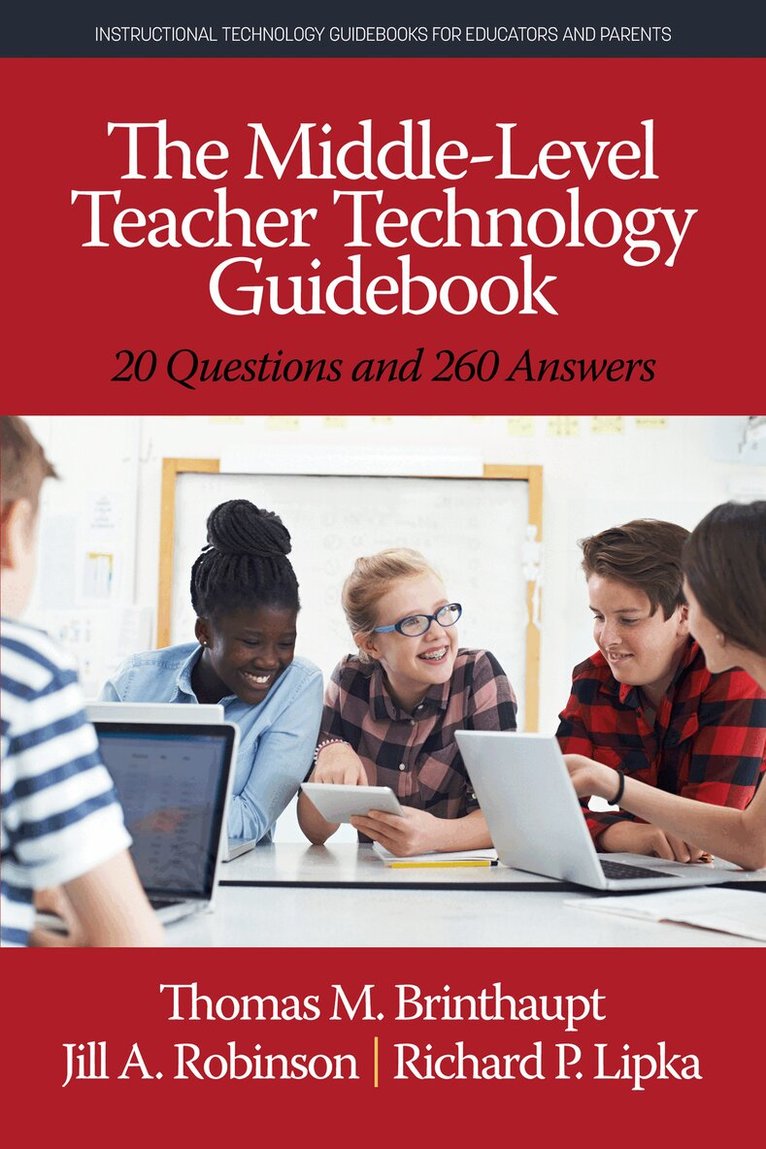
This guidebook is designed to be the middle-level teacher’s friend in addressing a wide variety of questions regarding the use of educational and instructional technologies. It can serve as a companion and guide through the myriad challenges and opportunities related to the effective use of technology in one’s classroom and school.A sample of middle level U.S. teachers provided us with detailed answers about their experiences with using technology in their teaching. Specifically, they shared their challenges, barriers, ideas, and suggestions for working successfully with administrators, technology specialists, students, fellow teachers, and parents when teaching with technology. We have organized the teachers’ experiences and recommendations according to each stakeholder.Rather than recommending or reviewing specific educational technology companies, applications, or tools, we provide a large number of strategies that are “built to last” and should be applicable regardless of the specific tool under consideration. We assume that it doesn’t ultimately matter what the tool or technology is that you’re using—it’s how and why you’re using it for teaching and learning that will determine whether it is successful or not. The “how” and “why” aspects encompass the built-to- last strategies included in this guidebook.
1 115 kr
Skickas inom 5-8 vardagar
This guidebook is designed to be the middle-level teacher’s friend in addressing a wide variety of questions regarding the use of educational and instructional technologies. It can serve as a companion and guide through the myriad challenges and opportunities related to the effective use of technology in one’s classroom and school.A sample of middle level U.S. teachers provided us with detailed answers about their experiences with using technology in their teaching. Specifically, they shared their challenges, barriers, ideas, and suggestions for working successfully with administrators, technology specialists, students, fellow teachers, and parents when teaching with technology. We have organized the teachers’ experiences and recommendations according to each stakeholder.Rather than recommending or reviewing specific educational technology companies, applications, or tools, we provide a large number of strategies that are “built to last” and should be applicable regardless of the specific tool under consideration. We assume that it doesn’t ultimately matter what the tool or technology is that you’re using—it’s how and why you’re using it for teaching and learning that will determine whether it is successful or not. The “how” and “why” aspects encompass the built-to- last strategies included in this guidebook.
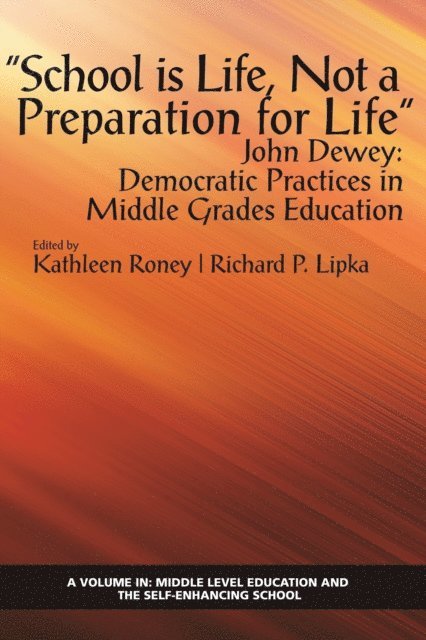
"School is Life, Not a Preparation for Life" - John Dewey
Democratic Practices in Middle Grades Education
Häftad, Engelska, 2021
515 kr
Skickas inom 7-10 vardagar
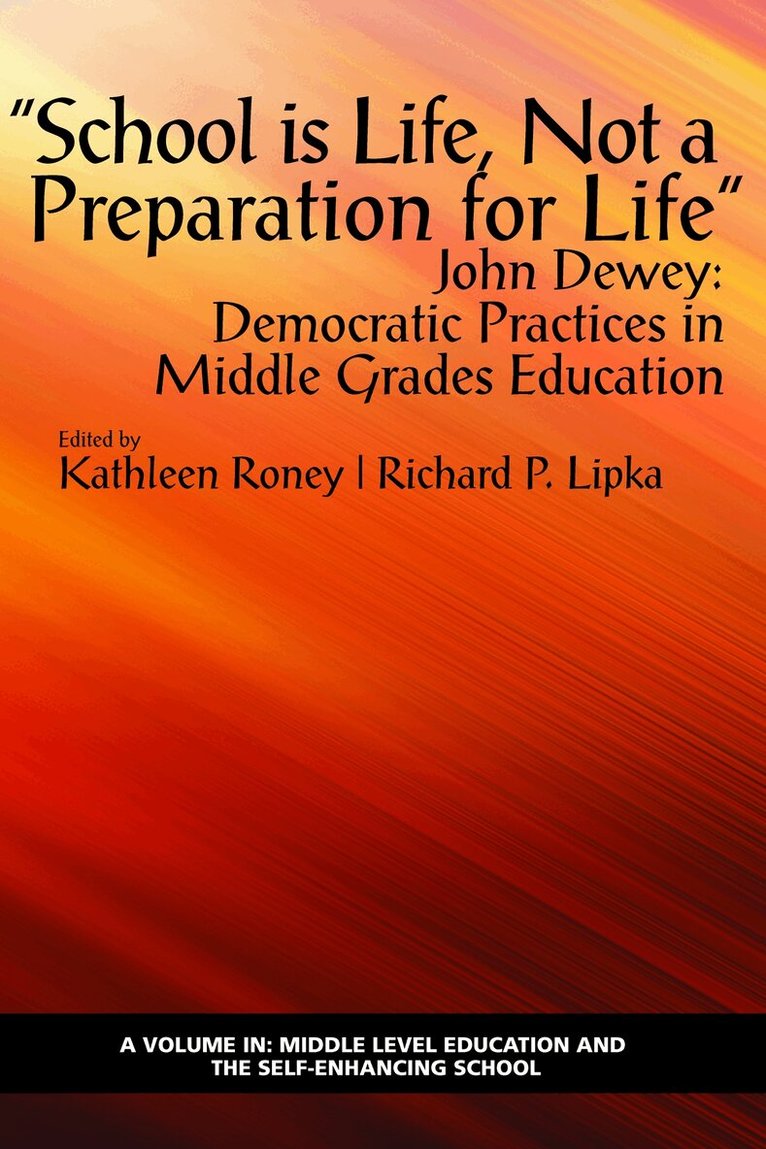
Teacher-pupil planning means teachers and students working in a partnership to articulate a problem/concern, develop objectives, locate materials/resources, and evaluate progress. The intent of this volume of Middle Level Education and the Self-Enhancing School titled, “School is Life, Not a Preparation for Life”-John Dewey: Democratic Practices in Middle Grades Education, is to take the thoughts about the middle grades school curriculum presented in volume one (Middle Grades Curriculum: Voices and Visions of the Self-Enhancing School) and demonstrate the efforts taking place in teacher education programs and middle grades classrooms today. Volume two is organized into two parts, efforts within teacher education programs and efforts of practitioners in the middle grades classrooms.We asked authors in both contexts to address the following questions:1. Antecedents: What knowledge, skills and dispositions must be in place in all stakeholders to have teacher-pupil planning serve a central role in the middle grades teacher education program or middle grades classroom?2. Implementation: What does the teacher-pupil planning process look like within your teacher education program or middle grades classroom?3. Outcomes: What benefits (knowledge, skills, and dispositions) are derived from the implementation of teacher-pupil planning in your teacher education program or your middle grades classroom?
950 kr
Skickas inom 7-10 vardagar
Teacher-pupil planning means teachers and students working in a partnership to articulate a problem/concern, develop objectives, locate materials/resources, and evaluate progress. The intent of this volume of Middle Level Education and the Self-Enhancing School titled, “School is Life, Not a Preparation for Life”-John Dewey: Democratic Practices in Middle Grades Education, is to take the thoughts about the middle grades school curriculum presented in volume one (Middle Grades Curriculum: Voices and Visions of the Self-Enhancing School) and demonstrate the efforts taking place in teacher education programs and middle grades classrooms today. Volume two is organized into two parts, efforts within teacher education programs and efforts of practitioners in the middle grades classrooms.We asked authors in both contexts to address the following questions:1. Antecedents: What knowledge, skills and dispositions must be in place in all stakeholders to have teacher-pupil planning serve a central role in the middle grades teacher education program or middle grades classroom?2. Implementation: What does the teacher-pupil planning process look like within your teacher education program or middle grades classroom?3. Outcomes: What benefits (knowledge, skills, and dispositions) are derived from the implementation of teacher-pupil planning in your teacher education program or your middle grades classroom?