Richard P. Taub – författare
Visar alla böcker från författaren Richard P. Taub. Handla med fri frakt och snabb leverans.
5 produkter
5 produkter
E-bok
Engelska, 2011185 kr
Läs direkt efter köp
From one of America’s most admired sociologists and urban policy advisers, There Goes the Neighborhood is a long-awaited look at how race, class, and ethnicity influence one of Americans’ most personal choices—where we choose to live. The result of a three-year study of four working- and lower-middle class neighborhoods in Chicago, these riveting first-person narratives and the meticulous research which accompanies them reveal honest yet disturbing realities—ones that remind us why the elusive American dream of integrated neighborhoods remains a priority of race relations in our time.From the Trade Paperback edition.
Häftad, Engelska, 2022
340 kr
Skickas inom 5-8 vardagar
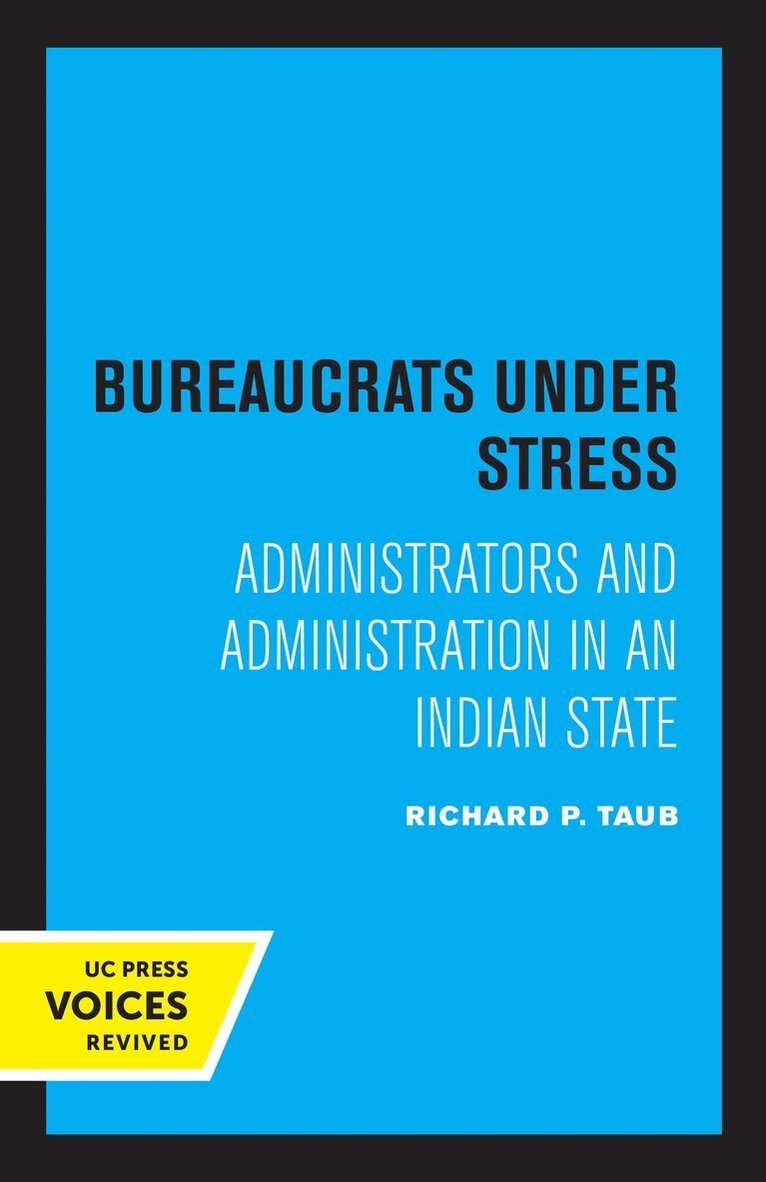
A mature and well-organized civil service is one of the items hight on almost any list of the needs of developing countries. The new nations, it is commonly argued, face almost insurmountable obstacles on the path toward economic development, and a civil service is a crucial necessity if they are to overcome their difficulties. Yet many commentators are critical of the existing civil services in these countries. Bureaucracy in developing countries, the critics suggest, is synonymous with red tape, nepotism, and corruption. Such critics complain either that the services have declined in efficiency since the departure of the colonial rulers or, conversely, that civil servants are still excessively wedded to obsolete colonial traditions. Remarkably few of these reports are based on careful empirical analysis of works at their work, or on systematic investigation of workers' attitudes toward it. Taub, who spent sixteen months in the capital of an Indian state studying the Indian Administrative Service, reprots here on his interviews with administrators, as well as with the politicians, technicians, and educators with whom administrators have to work. He examines both the attitudes that men bring to their jobs and to one another an the nature of the tasks that they must perform. His findings suggest that officials behave as they do because of the nature of the situation in which they must function--reflecting the bureaucratic systems and the tasks that they are required to perform--rather than because of any defect in their training or deficiencies in their cultural background. Taub identifies four sources of strain that affect administrators in India: the changing nature of their work, the democratization of government, the limitations on their income, and the impact of the British legacy. He indicates how these strains interact and place severe limits on the potential performance of administrators. IN an appraisal of the analytic framework used in previous discussions of bureaucracy in developing nations, he suggests that the prevailing commitment to democratic socialism--that is, to a democratic government responsible for large-scale economic development--may be more an act of faith than a statement of empirical possibility. This title is part of UC Press's Voices Revived program, which commemorates University of California Press's mission to seek out and cultivate the brightest minds and give them voice, reach, and impact. Drawing on a backlist dating to 1893, Voices Revived makes high-quality, peer-reviewed scholarship accessible once again using print-on-demand technology. This title was originally published in 1969.
E-bok
Engelska, 2023325 kr
Läs direkt efter köp
A mature and well-organized civil service is one of the items hight on almost any list of the needs of developing countries. The new nations, it is commonly argued, face almost insurmountable obstacles on the path toward economic development, and a civil service is a crucial necessity if they are to overcome their difficulties. Yet many commentators are critical of the existing civil services in these countries. Bureaucracy in developing countries, the critics suggest, is synonymous with red tape, nepotism, and corruption. Such critics complain either that the services have declined in efficiency since the departure of the colonial rulers or, conversely, that civil servants are still excessively wedded to obsolete colonial traditions. Remarkably few of these reports are based on careful empirical analysis of works at their work, or on systematic investigation of workers' attitudes toward it. Taub, who spent sixteen months in the capital of an Indian state studying the Indian Administrative Service, reprots here on his interviews with administrators, as well as with the politicians, technicians, and educators with whom administrators have to work. He examines both the attitudes that men bring to their jobs and to one another an the nature of the tasks that they must perform. His findings suggest that officials behave as they do because of the nature of the situation in which they must function--reflecting the bureaucratic systems and the tasks that they are required to perform--rather than because of any defect in their training or deficiencies in their cultural background. Taub identifies four sources of strain that affect administrators in India: the changing nature of their work, the democratization of government, the limitations on their income, and the impact of the British legacy. He indicates how these strains interact and place severe limits on the potential performance of administrators. IN an appraisal of the analytic framework used in previous discussions of bureaucracy in developing nations, he suggests that the prevailing commitment to democratic socialism--that is, to a democratic government responsible for large-scale economic development--may be more an act of faith than a statement of empirical possibility. This title is part of UC Press's Voices Revived program, which commemorates University of California Press's mission to seek out and cultivate the brightest minds and give them voice, reach, and impact. Drawing on a backlist dating to 1893, Voices Revived makes high-quality, peer-reviewed scholarship accessible once again using print-on-demand technology. This title was originally published in 1969.
Inbunden, Engelska, 2022
1 083 kr
Skickas inom 5-8 vardagar
A mature and well-organized civil service is one of the items hight on almost any list of the needs of developing countries. The new nations, it is commonly argued, face almost insurmountable obstacles on the path toward economic development, and a civil service is a crucial necessity if they are to overcome their difficulties. Yet many commentators are critical of the existing civil services in these countries. Bureaucracy in developing countries, the critics suggest, is synonymous with red tape, nepotism, and corruption. Such critics complain either that the services have declined in efficiency since the departure of the colonial rulers or, conversely, that civil servants are still excessively wedded to obsolete colonial traditions. Remarkably few of these reports are based on careful empirical analysis of works at their work, or on systematic investigation of workers' attitudes toward it. Taub, who spent sixteen months in the capital of an Indian state studying the Indian Administrative Service, reprots here on his interviews with administrators, as well as with the politicians, technicians, and educators with whom administrators have to work. He examines both the attitudes that men bring to their jobs and to one another an the nature of the tasks that they must perform. His findings suggest that officials behave as they do because of the nature of the situation in which they must function--reflecting the bureaucratic systems and the tasks that they are required to perform--rather than because of any defect in their training or deficiencies in their cultural background. Taub identifies four sources of strain that affect administrators in India: the changing nature of their work, the democratization of government, the limitations on their income, and the impact of the British legacy. He indicates how these strains interact and place severe limits on the potential performance of administrators. IN an appraisal of the analytic framework used in previous discussions of bureaucracy in developing nations, he suggests that the prevailing commitment to democratic socialism--that is, to a democratic government responsible for large-scale economic development--may be more an act of faith than a statement of empirical possibility. This title is part of UC Press's Voices Revived program, which commemorates University of California Press's mission to seek out and cultivate the brightest minds and give them voice, reach, and impact. Drawing on a backlist dating to 1893, Voices Revived makes high-quality, peer-reviewed scholarship accessible once again using print-on-demand technology. This title was originally published in 1969.
Häftad, Engelska, 2007
253 kr
Skickas inom 3-6 vardagar