Richard Q. Ford – författare
Visar alla böcker från författaren Richard Q. Ford. Handla med fri frakt och snabb leverans.
10 produkter
10 produkter
Inbunden, Engelska, 1994
1 116 kr
Skickas inom 10-15 vardagar
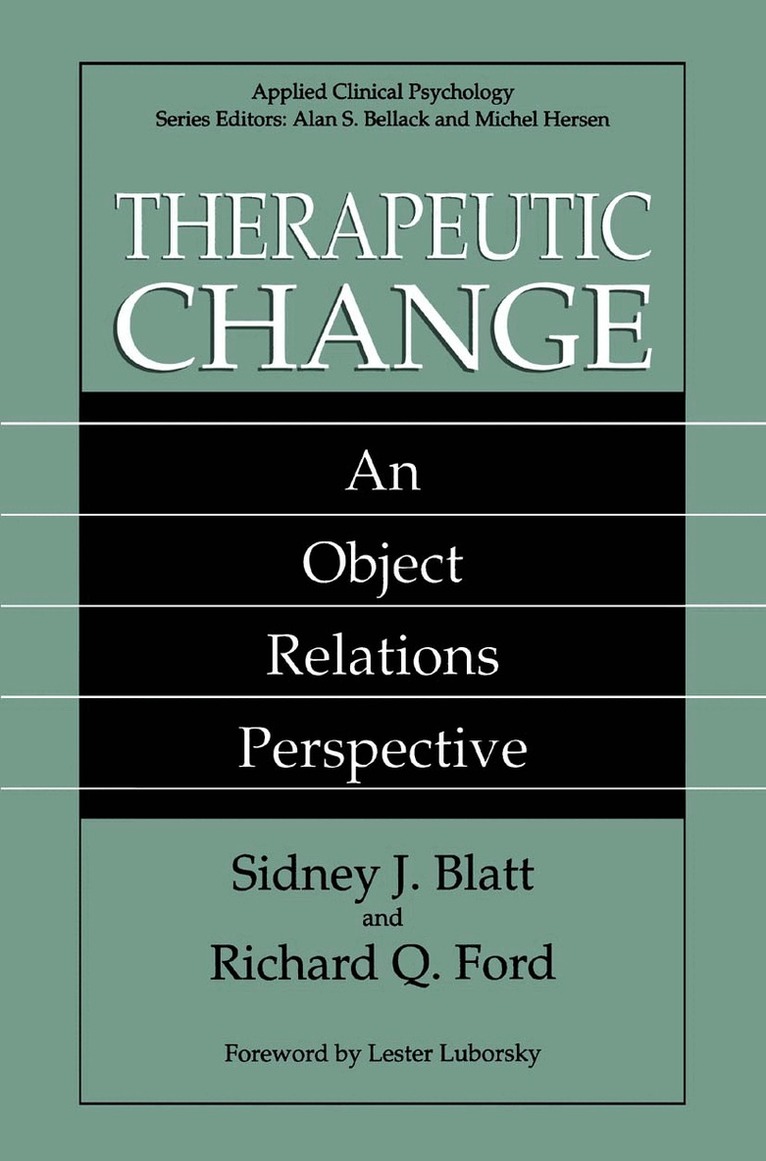
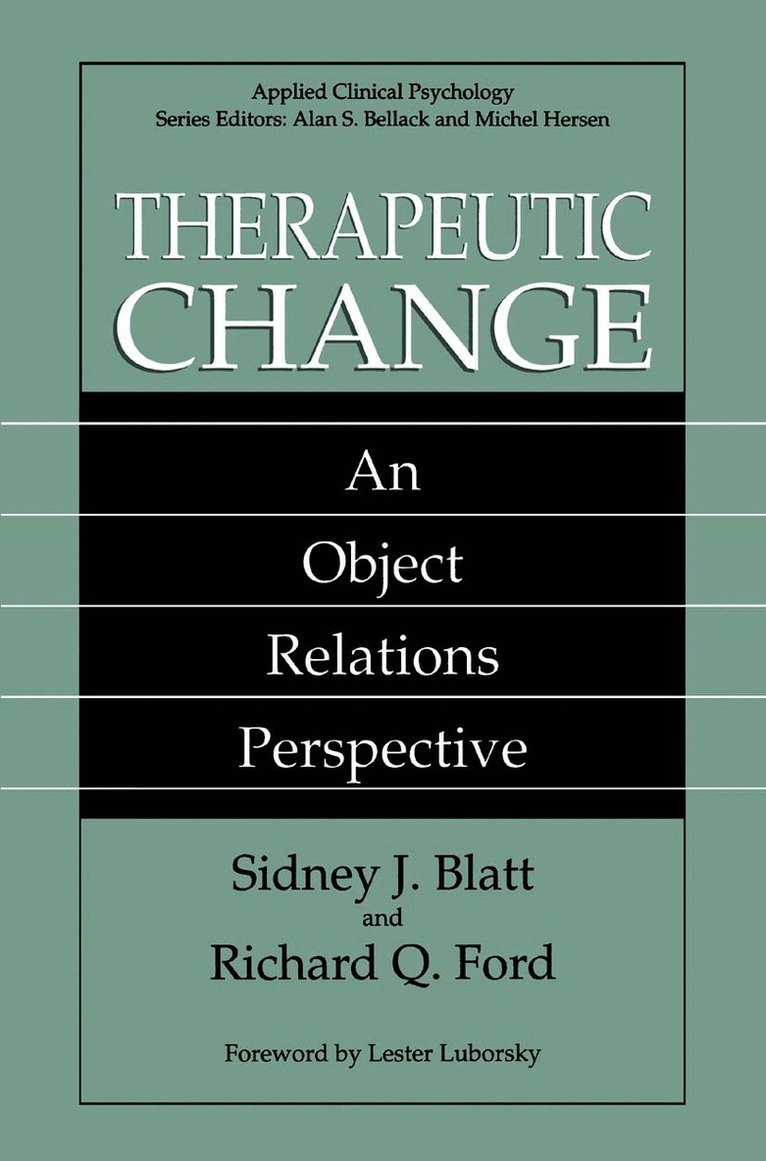
Dynamic psychotherapy research has become revitalized, especially in the last three decades. This major study by Sidney Blatt, Richard Ford, and their associates evaluates long-term intensive treatment (hospital ization and 4-times-a-week psychotherapy) of very disturbed patients at the Austen Riggs Center. The center provides a felicitous setting for recovery-beautiful buildings on lovely wooded grounds just off the quiet main street of the New England town of Stockbridge, Massa chusetts. The center, which has been headed in succession by such capable leaders as Robert Knight, Otto Will, Daniel Schwartz, and now Edward Shapiro, has been well known for decades for its type of inten sive hospitalization and psychotherapy. Included in its staff have been such illustrious contributors as Erik Erikson, David Rapaport, George Klein, and Margaret Brenman. The Rapaport-Klein study group has been meeting there yearly since Rapaport's death in 1960. Although the center is a long-term care treatment facility, it remains successful and solvent even in these days of increasingly short-term treatment. Sidney Blatt, Professor of Psychology and Psychiatry at Yale Univer sity, and Richard Ford of the Austen Riggs Center, and their associates assembled a sample of 90 patients who had been in long-term treatment and who had been given (initially and at 15 months) a set of psychologi cal tests, including the Rorschach, the Thematic Apperception Test, a form of the Wechsler Intelligence Test, and the Human Figure Drawings.
Häftad, Engelska, 1997
365 kr
Skickas inom 3-6 vardagar
E-bok
PDF, Engelska, 20131 459 kr
Läs direkt efter köp
Dynamic psychotherapy research has become revitalized, especially in the last three decades. This major study by Sidney Blatt, Richard Ford, and their associates evaluates long-term intensive treatment (hospital ization and 4-times-a-week psychotherapy) of very disturbed patients at the Austen Riggs Center. The center provides a felicitous setting for recovery-beautiful buildings on lovely wooded grounds just off the quiet main street of the New England town of Stockbridge, Massa chusetts. The center, which has been headed in succession by such capable leaders as Robert Knight, Otto Will, Daniel Schwartz, and now Edward Shapiro, has been well known for decades for its type of inten sive hospitalization and psychotherapy. Included in its staff have been such illustrious contributors as Erik Erikson, David Rapaport, George Klein, and Margaret Brenman. The Rapaport-Klein study group has been meeting there yearly since Rapaport''s death in 1960. Although the center is a long-term care treatment facility, it remains successful and solvent even in these days of increasingly short-term treatment. Sidney Blatt, Professor of Psychology and Psychiatry at Yale Univer sity, and Richard Ford of the Austen Riggs Center, and their associates assembled a sample of 90 patients who had been in long-term treatment and who had been given (initially and at 15 months) a set of psychologi cal tests, including the Rorschach, the Thematic Apperception Test, a form of the Wechsler Intelligence Test, and the Human Figure Drawings.
Häftad, Engelska, 2013
1 116 kr
Skickas inom 10-15 vardagar
Dynamic psychotherapy research has become revitalized, especially in the last three decades. This major study by Sidney Blatt, Richard Ford, and their associates evaluates long-term intensive treatment (hospital ization and 4-times-a-week psychotherapy) of very disturbed patients at the Austen Riggs Center. The center provides a felicitous setting for recovery-beautiful buildings on lovely wooded grounds just off the quiet main street of the New England town of Stockbridge, Massa chusetts. The center, which has been headed in succession by such capable leaders as Robert Knight, Otto Will, Daniel Schwartz, and now Edward Shapiro, has been well known for decades for its type of inten sive hospitalization and psychotherapy. Included in its staff have been such illustrious contributors as Erik Erikson, David Rapaport, George Klein, and Margaret Brenman. The Rapaport-Klein study group has been meeting there yearly since Rapaport's death in 1960. Although the center is a long-term care treatment facility, it remains successful and solvent even in these days of increasingly short-term treatment. Sidney Blatt, Professor of Psychology and Psychiatry at Yale Univer sity, and Richard Ford of the Austen Riggs Center, and their associates assembled a sample of 90 patients who had been in long-term treatment and who had been given (initially and at 15 months) a set of psychologi cal tests, including the Rorschach, the Thematic Apperception Test, a form of the Wechsler Intelligence Test, and the Human Figure Drawings.
Häftad, Engelska, 2016
240 kr
Skickas inom 5-8 vardagar
E-bok
Engelska, 2016374 kr
Läs direkt efter köp
Remarkable is how extensively in each parable Jesus provides a subtle but rich array of unexpected possibilities hidden within the hierarchies of power so commonplace in his world. By doing so he profoundly addresses the perils inherent in the prerogatives of many of us living in today''s world. In these ancient interpersonal tragedies, readers can discover modern global analogues--where the powerful still control the powerless and where others of us, immersed as we are in privilege, are still willing to side with control.
Inbunden, Engelska, 2016
421 kr
Skickas inom 5-8 vardagar
Häftad, Engelska, 2022
240 kr
Skickas inom 5-8 vardagar
Inbunden, Engelska, 2022
376 kr
Skickas inom 5-8 vardagar
E-bok
Engelska, 2022309 kr
Läs direkt efter köp
The psychological process of denial involves refusing to see what is in front of us, and for some time we have been struggling to shape master narratives to encompass climate breakdown. Jesus'' longer parables offer insight into the possibilities that are hidden within the hierarchies of power. Through the work of understanding the experiences of all the parable actors, we are invited to practice the empathy required to face the global challenges of the twenty-first century.